Furosemide Fresenius Kabi 20 mg/2 ml solution for injection and infusion EFG
Spain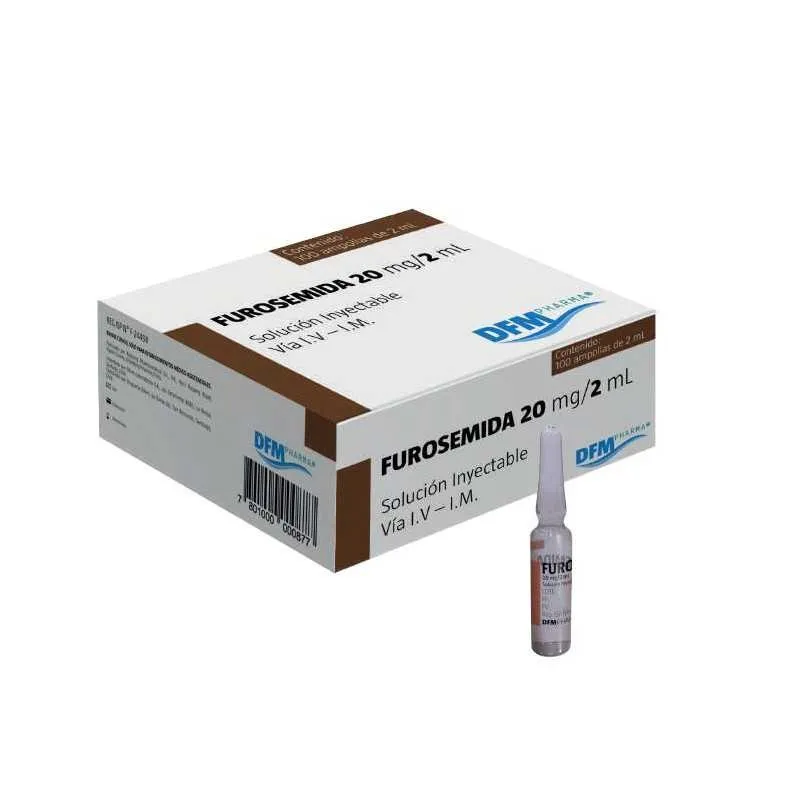
Table of Contents
- Package leaflet: Information for the user
- Introduction
- 1. What Furosemide Fresenius Kabi is and what it is used for
- 2. What you need to know before using Furosemide Fresenius Kabi
- 3. How to use Furosemide Fresenius Kabi
- 4. Possible adverse effects
- 5. Storage of Furosemide Fresenius Kabi
- 6. Contents of the pack and other information.
Package leaflet: Information for the user
Introduction
Package leaflet: information for the user
Furosemide Fresenius Kabi 20 mg/2 ml solution for injection and infusion EFG
furosemide
Read the entire leaflet carefully before you start using this medicine, because it contains important information for you.
- Keep this leaflet as you may need to read it again.
- If you have any questions, ask your doctor or nurse.
- This medicine has been prescribed for you only and must not be given to other people, even if they have the same symptoms as you, because it could harm them.
- If you experience any adverse effects, consult your doctor or nurse, even if they are effects not listed in this leaflet.
Contents of the leaflet
- What Furosemide Fresenius Kabi is and what it is used for
- What you need to know before using Furosemide Fresenius Kabi
- How to use Furosemide Fresenius Kabi
- Possible adverse effects
- How to store Furosemide Fresenius Kabi
- Contents of the pack and other information
1. What Furosemide Fresenius Kabi is and what it is used for
Furosemide Fresenius Kabi belongs to a group of medicines called diuretics.
Furosemide increases the amount of urine produced by your body.
Furosemide is used to remove excess fluid from the body (also called edema). Excess fluid may occur due to:
- heart problems
- liver problems
- kidney problems
Furosemide is also used during episodes in which blood pressure is extremely high, potentially posing a risk to health (hypertensive crises).
2. What you need to know before using Furosemide Fresenius Kabi
Do not use Furosemide Fresenius Kabi:
- If you are allergic to furosemide or any of the other ingredients of this
medicinal product (listed in section 6)
- If you are allergic to sulfonamides
- If you are severely dehydrated (you have lost a large amount of body fluid, for example due to severe vomiting or diarrhoea)
- If you have kidney failure and are unable to pass urine, despite treatment with furosemide
- If you have kidney failure caused by poisoning with substances toxic to the kidneys or liver
- If you have very low levels of potassium or sodium in your blood
- If the patient is in a coma due to liver failure
- If you are breastfeeding
If you are unsure whether you can use this medicine, consult your doctor or pharmacist.
Warnings and precautions
Consult your doctor or nurse before starting to use Furosemide Fresenius Kabi:
- If you usually have difficulty passing urine due to an obstruction (such as
prostate enlargement)
-
If you have diabetes
-
If you have low blood pressure or occasionally suffer from marked drops in blood
pressure (your blood vessels supplying the heart or brain are very narrow)
- If you have a liver disease (e.g. cirrhosis)
- If you have kidney problems (such as nephrotic syndrome)
- If you are dehydrated (you have lost a large amount of fluid due to severe vomiting or diarrhoea),
which may lead to circulatory collapse and blood clot formation.
- If you suffer from gout (inflamed or painful joints) due to high levels of uric acid
(metabolism by-product) in the blood
- If you have an inflammatory disease called “systemic lupus erythematosus” (SLE)
- If you have hearing problems
- If you are taking sorbitol (a sugar substitute used by people with diabetes)
- If you are taking medicines that may cause a life-threatening irregular heart rhythm (QT interval prolongation)
- If you are taking lithium
- If you have porphyria (a disease in which oxygen cannot bind properly to proteins in red blood cells, and the urine becomes purple)
- If your skin is highly sensitive to sunlight (photosensitivity)
- If you are an athlete; this medicine may result in a positive doping test
- If you have systemic lupus erythematosus (SLE), an autoimmune disease affecting the skin, bones, joints, and internal organs
- If you are elderly, if you are being treated with medicines that may lower blood pressure, or if you have other medical conditions associated with a risk of low blood pressure
If administered to premature infants, it may cause kidney stones or calcification in the kidneys.
If any of these conditions apply to you, your doctor may need to change your treatment or
give you special advice.
While using Furosemide Fresenius Kabi, your doctor may recommend regular blood tests to monitor your blood sugar and uric acid levels. They may also wish to check blood levels of important electrolytes such as potassium and sodium. This monitoring is particularly important if you are ill or have diarrhoea.
Other medicines and Furosemide Fresenius Kabi
Inform your doctor or nurse if you are taking, have recently taken, or might need to take any other medicines. This is important because some medicines should not be taken together with Furosemide Fresenius Kabi.
Specifically, inform your doctor or pharmacist if you are taking:
- Lithium – used for behavioural disorders, as its adverse effects may be increased
by furosemide. Your doctor should prescribe this medicine only if absolutely
essential, and must monitor lithium blood levels and possibly adjust the
prescribed dose.
- Risperidone – used to treat certain psychoses
- Medicines for the heart, such as digoxin. Your doctor may need to adjust the dose.
- Any medicines for high blood pressure, including thiazide diuretics (such as
bendroflumethiazide or hydrochlorothiazide), ACE inhibitors (such as lisinopril),
angiotensin II antagonists (such as losartan), as furosemide may cause a marked drop in blood pressure. Your doctor may need to adjust the dose of furosemide.
- Medicines to lower cholesterol or lipids, such as fibrates (clofibrate,
fenofibrate or bezafibrate), as they may enhance the effect of furosemide
- Medicines for diabetes, such as metformin and insulin, as they may increase
blood sugar levels.
- Anti-inflammatory medicines, including non-steroidal anti-inflammatory drugs (NSAIDs) (such as aspirin or celecoxib),
as they may reduce the effect of furosemide; high doses of analgesics (salicylates)
may increase the adverse effects of furosemide.
- Anti-inflammatory or antiallergic medicines such as corticosteroids, medicines for stomach ulcers such as carbenoxolone, or laxatives, as when combined with furosemide
they may affect potassium and sodium levels. Liquorice has the same effect as carbenoxolone. Your doctor will check your blood potassium levels.
- Injections used during surgery, including tubocurarine, succinylcholine and
curare derivatives.
- Chloral hydrate – for sleep problems. In isolated cases, intravenous administration
(injection into a vein) of furosemide within 24 hours prior to
administration of chloral hydrate may cause flushing, increased sweating, anxiety,
nausea, increased blood pressure and heart rate. Therefore, the combined use of furosemide and chloral hydrate is not recommended.
-
Phenytoin or phenobarbital – for epilepsy, as the effect of furosemide may be reduced.
-
Theophylline – for asthma, may enhance the effect of furosemide.
-
Some antibiotics, including certain cephalosporins, polymyxins, aminoglycosides or
quinolones, or other medicines that may affect your kidneys such as immunosuppressants, iodinated contrast agents, foscarnet or pentamidine, as furosemide may worsen kidney function.
- Amphotericin B – used for fungal infections (if used for prolonged periods)
- Probenecid – used with certain other medicines to protect the kidneys, may
reduce the effect of furosemide.
- Organoplatinum compounds – used in certain types of cancer, as furosemide may
increase their adverse effects.
- Methotrexate – used in certain types of cancer and for severe arthritis, may reduce the
effect of furosemide
-
Medicines to increase blood pressure (vasopressor amines), as they may be ineffective when taken with furosemide.
-
Aminoglutethimide – used to suppress corticosteroid production (Cushing's syndrome), may increase the effect of furosemide
-
Carbamazepine – used to treat epilepsy or schizophrenia, may increase the adverse effects of furosemide
-
Cyclosporine – used to prevent transplant rejection, there is a risk of gouty arthritis (joint pain)
-
Medicines that may alter heart rhythm such as amiodarone, sotalol, dofetilide, ibutilide,
as they may increase the effect of furosemide
- Injectable medicines used before X-ray examinations
- Levothyroxine – used for thyroid problems
Use of Furosemide Fresenius Kabi with food, drinks and alcohol
Food is not expected to affect this medicine when administered intravenously. You may eat and drink normally while taking furosemide. You do not need to change your diet
unless advised by your doctor.
Pregnancy, breastfeeding and fertility
Furosemide should not be used during pregnancy unless there are very strong medical reasons for its use.
If you are pregnant or breastfeeding, think you may be pregnant, or plan to become pregnant, consult your doctor or pharmacist before using this medicine.
- Furosemide can pass from mother to child
- Therefore, this medicine is only given to pregnant women if absolutely
necessary.
Do not use Furosemide Fresenius Kabi if you are breastfeeding
- This medicine passes into breast milk.
Consult your doctor or pharmacist before using any medicine.
Driving and using machines
Furosemide Fresenius Kabi may reduce your ability to concentrate and react. If you experience these symptoms, do not drive or operate machinery (see section 4, “Possible side effects”)
Furosemide Fresenius Kabi contains sodium
This medicine contains 3.7 mg of sodium (main component of table salt) per ml. This corresponds to 0.2% of the maximum daily recommended dietary intake for an adult.
3. How to use Furosemide Fresenius Kabi
Follow exactly the instructions for administering this medicine as given by your doctor or nurse. If in doubt, consult your doctor or nurse again.
Usually, a doctor or nurse will administer Furosemide Fresenius Kabi to you. It will be administered:
- by slow injection into a vein (intravenous), or
- exceptionally, into a muscle (intramuscular).
Your doctor will decide the dose. The dose depends on your particular condition, the severity of the illness, and the duration of treatment.
- The recommended initial dose for adults (including adolescents from 15 years of age) is 20 to 40 mg.
- If your doctor considers a higher dose necessary, additional 20 mg injections may be given. These are usually administered every 2 hours until the desired fluid loss is achieved.
- In some cases, instead of injections, your doctor may recommend administering this medicine by continuous intravenous infusion (drip).
- In children (children under 15 years of age will only be treated in exceptional cases), the dose depends on body weight. The initial dose is 0.5 to 1 mg/kg per day.
- In elderly patients, the initial dose is usually 20 mg/day. This may be gradually increased until the desired fluid loss is achieved.
Fluid loss leading to weight reduction should not exceed 1 kg of body weight per day.
If you continue to require Furosemide Fresenius Kabi, your doctor will likely recommend, as soon as possible, switching from injections to an oral form (tablets) of this medicine.
If you have used more Furosemide Fresenius Kabi than you should:
If you think you have received too much of the medicine, inform your doctor immediately.
Symptoms that may indicate you have received too high a dose include: dry mouth, increased thirst, irregular heartbeat, changes in mood, muscle pain or cramps, discomfort, unusual weakness or fatigue, weak pulse, or loss of appetite.
In case of overdose or accidental ingestion, contact the Toxicology Information Service. Telephone: 91 562 04 20.
If you forget to use Furosemide Fresenius Kabi
If you think you have missed an injection, consult your doctor or nurse. Do not use a double dose to make up for missed doses.
If you have any further questions about the use of this medicine, consult your doctor or nurse.
4. Possible adverse effects
Like all medicines, this medicine can cause adverse effects, although not everyone experiences them. The following adverse effects may occur during treatment with furosemide:
Frequent
Hepatic encephalopathy in patients with hepatocellular insufficiency (symptoms include memory loss, seizures, mood changes, and coma).
Uncommon (affects between 1 and 10 out of every 1,000 patients):
- Skin rashes (including redness, itching, peeling), tendency to bruise easily, or sensitivity to sunlight
- Changes in blood cells that may lead to coagulation disorders (increased risk of bleeding)
- Deafness (sometimes irreversible)
Rare (affects between 1 and 10 out of every 10,000 patients):
- Malaise, diarrhea, constipation, loss of appetite, mouth and stomach discomfort
- Hearing problems (more common in people with kidney failure) and tinnitus (ringing in the ears)
- Anaphylaxis, a severe allergic reaction that may cause skin rash, swelling, difficulty breathing, and loss of consciousness. Seek medical help immediately.
- Kidney damage (interstitial nephritis)
- Very low levels of white blood cells in the blood (which may lead to life-threatening infections). Seek medical help immediately.
- Muscle problems, including muscle weakness and leg cramps
- Pain or discomfort at the injection site (especially after intramuscular administration)
- Lupus erythematosus or worsening of existing lupus
- Changes in blood test results (blood lipids)
- Dizziness, tingling, or numbness
- High fever
- Blurred vision, confusion, drowsiness
- Dry mouth
Very rare (affects fewer than 1 out of every 10,000 patients):
- Severe muscle problems including twitching, spasms, and cramps
- Changes in blood cells that may cause anemia and reduced ability to fight infections
- Pancreatitis (abdominal pain) due to inflammation of the pancreas
Frequency not known (cannot be estimated from available data):
- Stevens-Johnson syndrome (skin blistering or peeling, affecting lips, eyes, nose, and genitals, flu-like symptoms, and fever)
- Toxic epidermal necrolysis (layers of skin may peel off, leaving large areas of raw skin exposed throughout the body)
- Acute generalized exanthematous pustulosis (AGEP)
- Drug reaction with eosinophilia and systemic symptoms (DRESS)
- Dizziness, fainting, and loss of consciousness (caused by symptomatic hypotension or other causes), headache
- Exacerbation or activation of systemic lupus erythematosus (signs may include rash, joint pain, fever)
- Cases of muscle injury (rhabdomyolysis) have been reported, frequently associated with severe hypokalemia
Other possible effects:
- Drop in blood pressure, making you feel weak or dizzy. This may cause a sensation of pressure in the head, joint pain, formation of blood clots, or circulatory collapse (shock)
- Low levels of potassium in the blood. This may cause muscle weakness, tingling and numbness, slight difficulty moving parts of your body, dizziness, constipation, increased intestinal gas, increased urination, increased thirst, and irregular or slow heartbeat. These complications are more likely if you have liver problems, a very low-potassium diet, or are taking other medications (see “Use of other medicines”). Severe potassium loss may temporarily reduce intestinal movement or your level of alertness, in some cases leading to profound and prolonged loss of consciousness. Regular blood tests and potassium supplements may be necessary
- Low levels of magnesium, calcium, and sodium in the blood due to increased excretion in urine. Low sodium levels typically cause lack of interest, calf cramps, loss of appetite, weakness, drowsiness, confusion, and dizziness. Low calcium levels cause muscle cramps. Low magnesium levels may also cause muscle cramps or irregular heartbeat
- Gout, or worsening of pre-existing gout
- Existing fluid elimination problems may worsen
- Diabetes, or worsening of pre-existing diabetes
- Liver problems or changes in blood may cause jaundice (yellow skin, dark urine, fatigue)
- Reduced body fluid volume, especially in the elderly. Severe loss of body fluids may increase blood cell concentration and thus the tendency to form blood clots
- Premature infants may develop kidney calcifications or kidney stones
- In premature infants, the duct between the aorta and the pulmonary artery, which is open in fetuses, may remain open
Reporting of adverse effects
If you experience any adverse effect, talk to your doctor, pharmacist, or nurse, even if it is a possible adverse effect not listed in this leaflet. You can also report them directly via the Spanish Pharmacovigilance System for Human Medicines: www.notificaram.es. By reporting adverse effects, you can help provide more information on the safety of this medicine.
5. Storage of Furosemide Fresenius Kabi
-
Keep this medicine out of the sight and reach of children.
-
Do not use this medicine after the expiry date stated on the packaging after EXP. The expiry date refers to the last day of that month.
-
Keep the ampoules in their outer carton to protect them from light.
-
Medicines should not be disposed of via wastewater or household waste. Dispose of unused containers and medicines at the SIGRE Point at your pharmacy. If you have any doubts, ask your pharmacist how to dispose of unused containers and medicines. This will help protect the environment.
6. Contents of the pack and other information.
Composition of Furosemide Fresenius Kabi
-
The active substance is furosemide.
-
The other components are: sodium chloride, sodium hydroxide, and water for injections.
Appearance of the product and contents of the pack
Furosemide Fresenius Kabi is a clear, colourless or almost colourless solution.
The pack may contain 5, 50 or 100 amber-coloured ampoules with 2 ml of Furosemide Fresenius Kabi 20 mg/2 ml.
Only certain pack sizes may be marketed.
Marketing Authorisation Holder and Manufacturer
Marketing Authorisation Holder:
Fresenius Kabi España, S.A.
C/ Marina 16-18, planta 17
Torre Mapfre
E-08005 Barcelona
Tel: +34 932256580
Manufacturer:
LABESFAL – Laboratórios Almiro S.A. (Fresenius Kabi Group)
Lagedo, 3465-157 Santiago de Besteiros
Portugal
Tel: +351 232 831100
This medicinal product is authorised in the Member States of the European Economic Area and in the United Kingdom (Northern Ireland) under the following names:
Belgium | Furosemide Fresenius Kabi 20 mg/2 ml solution for injection/infusion Furosemide Fresenius Kabi 20 mg/2 ml solution injectable /for perfusion Furosemide Fresenius Kabi 20 mg/2 ml Injektionslösung/Infusionslösung |
Czech Republic | Furosemid Kabi |
Finland | Furosemide Fresenius Kabi 10 mg/ml injection/infusion solution |
Ireland | Furosemide 20mg/2ml solution for injection/infusion |
Portugal | Furosemida Fresenius Kabi 20mg/2ml injectable solution or for perfusion |
Poland | Furosemid Kabi |
Netherlands | Furosemide Fresenius Kabi 20 mg/2 ml solution for injection/infusion |
Slovakia | Furosemid Kabi 20 mg/2 ml, injectable/infusion solution |
Spain | Furosemida Fresenius Kabi 20 mg/2 ml solution for injection and perfusion EFG |
United Kingdom (Northern Ireland) | Furosemide 20mg/2ml solution for injection/infusion |
Date of the last review of this leaflet: 05/2023
Detailed and up-to-date information on this medicine is available on the website of the Spanish Agency of Medicines and Health Products (Agencia Española de Medicamentos y Productos Sanitarios - AEMPS): http://www.aemps.gob.es/.
This information is intended for healthcare professionals:
Administration
Intravenous administration of furosemide must be slow; the rate should not exceed 4 mg per minute, and it must never be administered in combination with other medications in the same syringe.
Intramuscular administration should be restricted to exceptional cases where oral or intravenous administration is not possible. It should be noted that intramuscular injection is not suitable for the treatment of acute conditions such as pulmonary edema.
The recommended initial dose in adults and adolescents over 15 years of age is 20 to 40 mg (1 or 2 ampoules) administered intravenously (or intramuscularly in exceptional cases); the maximum dose varies according to individual response. If higher doses are required, they should be administered in increments of 20 mg and not more frequently than every 2 hours.
In adults, the maximum recommended dose of furosemide is 1,500 mg.
Incompatibilities
Furosemide may be mixed with neutral and weakly alkaline solutions with a pH between 7 and 10, such as 0.9% sodium chloride and Ringer's solution.
Furosemide must not be mixed with strong acid solutions (pH below 5.5), such as solutions containing ascorbic acid, noradrenaline, and adrenaline, due to the risk of precipitation.
The product must not be used if visible particles are present.
Single-use product. Any remaining contents after use must be discarded.
Shelf life of the product: 3 years.
After first opening, the product must be used immediately.
After dilution:
Physical and chemical stability is guaranteed for 24 hours at 25°C and protected from light.
From a microbiological standpoint, the product should be used immediately. If not used immediately, the duration, storage conditions, and prior handling before use are the responsibility of the user and normally should not exceed 24 hours at a temperature between 2°C and 8°C, unless the solution has been prepared under controlled and validated aseptic conditions.