Fostipur 75 IU powder and solvent for solution for injection
Spain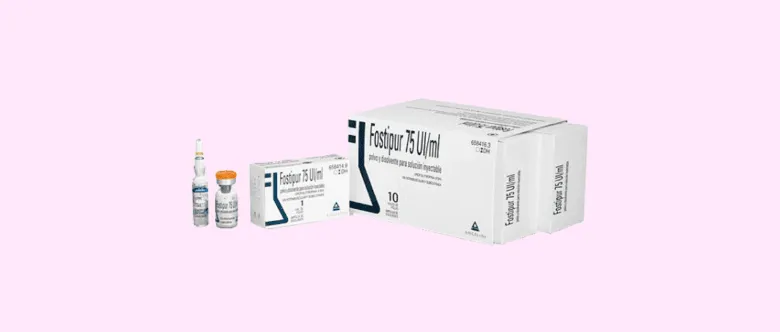
Table of Contents
- Patient Information Leaflet
- Introduction
- **Fostipur 75 IU powder and solvent for injectable solution**
- 1. What Fostipur is and what it is used for
- 2. What you need to know before starting Fostipur
- 3. How to use Fostipur
- 4. Possible adverse effects
- 5. Storage of Fostipur
- 6. Contents of the pack and other information
Patient Information Leaflet
Introduction
Patient Information Leaflet
Fostipur 75 IU powder and solvent for injectable solution
Urofollitropin
Read the entire package leaflet carefully before you start using this medicine, as it contains important information for you.
-
Keep this leaflet, as you may need to read it again.
-
If you have any questions, consult your doctor or pharmacist.
-
This medicine has been prescribed for you only; do not give it to others, even if they have the same symptoms as you, because it could harm them.
-
If you experience any adverse effects, consult your doctor or pharmacist, even if these effects are not listed in this leaflet. See section 4.
Leaflet contents
- What Fostipur is and what it is used for
- What you need to know before using Fostipur
- How to use Fostipur
- Possible adverse effects
- Storage of Fostipur
- Contents of the pack and other information
1. What Fostipur is and what it is used for
- Fostipur is used to stimulate ovulation in women who do not ovulate and who do not respond to other treatments (clomiphene citrate).
- For inducing multifollicular development (and thus, multiple eggs) in women undergoing fertility treatments.
Urofollitropin is a highly purified human follicle-stimulating hormone, belonging to a group of medicines called gonadotropins.
This medicine must be used under the supervision of your doctor.
2. What you need to know before starting Fostipur
Before starting treatment, the fertility of both partners should be assessed.
Do not use Fostipur
- If you are allergic to urofollitropin or to any of the other ingredients of this medicine (listed in section 6).
- Enlargement of the ovaries or ovarian cysts not caused by a
hormonal disorder (polycystic ovary syndrome).
- Unexplained vaginal bleeding.
- Ovarian, uterine, or breast cancer.
- Abnormal swelling (tumor) of the pituitary gland or hypothalamus (in the brain).
You should not use this medicine if you have conditions such as premature menopause, malformation of the genital organs, or tumors of the uterus that would prevent a normal pregnancy.
Warnings and precautions
Although there is no information available on allergic reactions with Fostipur, you should inform your doctor if you have ever had an allergic reaction to similar medicines.
This treatment increases the risk of developing a condition known as ovarian hyperstimulation syndrome (OHSS) (see Possible side effects). If ovarian hyperstimulation occurs, treatment must be stopped and you should avoid becoming pregnant. Early signs of ovarian hyperstimulation include pain in the lower abdomen, nausea (feeling unwell), vomiting, and weight gain. If these symptoms occur, you should see your doctor as soon as possible. In rare but severe cases, the ovaries may enlarge and fluid may accumulate in the abdomen or chest.
The medicine used to trigger final egg release (containing human chorionic gonadotropin, hCG) may increase the likelihood of OHSS. Therefore, hCG should not be used if ovarian hyperstimulation is developing, and you should avoid sexual intercourse, even when using barrier contraceptive methods, for at least 4 days.
It should be noted that women with fertility problems have a higher rate of spontaneous abortions than the general population.
The occurrence of multiple pregnancies and multiple births in patients receiving ovulation induction treatment is increased compared to natural conception. However, this risk can be reduced by using the recommended dose.
There is a slightly increased risk of ectopic pregnancy (pregnancy outside the uterus) in women with damaged fallopian tubes.
Multiple pregnancies and the characteristics of parents undergoing fertility treatments (e.g., maternal age, sperm characteristics) may be associated with an increased risk of birth abnormalities.
Treatment with Fostipur, as well as pregnancy itself, may increase the risk of thrombosis. Thrombosis is the formation of a blood clot in a blood vessel, most commonly in the veins of the legs or in the lungs.
Consult your doctor before starting treatment, especially:
- if you already know you have an increased risk of thrombosis.
- if you or a close family member has ever had thrombosis,
- if you have excessive overweight.
This medicine is prepared from human urine. The risk of transmitting infection or disease to the body cannot be completely eliminated. However, this risk is minimized by virus elimination steps during the manufacturing process, particularly for AIDS, Herpes virus, and Papillomavirus.
No cases of viral contamination have been reported.
Use of Fostipur with other medicines
Tell your doctor or pharmacist if you are taking, have recently taken, or might need to take any other medicines.
Pregnancy and breastfeeding
Fostipur must not be used if you are pregnant or breastfeeding.
Fostipur contains sodium
This medicine contains less than 1 mmol of sodium (23 mg) per dose, i.e., essentially "sodium-free".
3. How to use Fostipur
Dosage and duration of treatment:
Follow exactly the instructions given by your doctor for administering this medicine. If in doubt, consult your doctor or pharmacist again.
Women who do not ovulate and have irregular or incomplete menstruation:
If you are menstruating, treatment should begin within 7 days of the start of menstruation (the first 7 days of the menstrual cycle).
The dosage consists of 1 injection per day, under the skin (subcutaneously) or into the muscle (intramuscularly).
The usual starting dose is 75 IU to 150 IU of FSH (Fostipur) per day. This dose may be increased, if necessary, by 37.5 to 75 IU at intervals of 7 days or, preferably, 14 days, to achieve an adequate response.
The maximum daily dose of FSH should generally not exceed 225 IU.
If your doctor does not observe an adequate response after 4 weeks of treatment, this treatment cycle should be discontinued. For the next cycle, your doctor will prescribe a higher initial dose.
When a good response is achieved (satisfactory follicular growth), you will receive only one injection of another medication (hCG), used to induce final follicular maturation and ovulation. This will occur 24–48 hours after the last Fostipur injection. It is recommended to have sexual intercourse on the same day as the hCG injection and the following day.
If an excessive ovarian response occurs, treatment must be stopped and hCG will not be administered (see Possible side effects). For the next cycle, your doctor will prescribe a lower initial dose.
Women undergoing ovarian stimulation for multiple follicular development prior to in vitro fertilization or other assisted reproductive techniques:
Situation 1 – If you are menstruating.
Treatment should begin on day 2 or 3 of your menstrual period (the first 2 or 3 days of the menstrual cycle).
The dosage consists of 1 injection per day, administered subcutaneously or intramuscularly.
A commonly used superovulation dosage is 150 to 225 IU of Fostipur per day. Treatment continues, with dose adjustments based on your response, until adequate follicular development is achieved. This usually occurs around day 10 of treatment (average range: 5 to 20 days) and is assessed by blood sampling and/or ultrasound examinations.
The maximum dose is generally 450 IU/day.
Once adequate follicular development is achieved, a single injection of a medication used to trigger final oocyte maturation will be administered; this medication contains up to 10,000 IU of human chorionic gonadotropin (hCG). It will be given 24–48 hours after the last Fostipur injection.
Oocyte retrieval will be performed approximately 35 hours later.
Situation 2 – When using a gonadotropin-releasing hormone (GnRH) agonist:
Fostipur should be administered approximately 2 weeks after starting this treatment. Both treatments are continued until adequate follicular development is achieved. One daily injection of Fostipur is administered intramuscularly or subcutaneously. For example, after 2 weeks of treatment with a GnRH agonist, 150 to 225 IU of Fostipur may be administered for the first 7 days. The dose is then adjusted according to ovarian response.
Instructions for administration:
Fostipur is administered by injection either under the skin (subcutaneously) or into the muscle (intramuscularly).
Each vial is for single use only, and the injection must be administered immediately after preparation.
After proper instruction and practice, your doctor may ask you to self-administer the Fostipur injection.
First, your doctor must:
- Allow you to practice self-administering the subcutaneous injection.
- Indicate the suitable sites for self-injection.
- Instruct you on how to carefully prepare the injection solution.
- Explain how to prepare the correct dose to be administered.
Other presentations, different from vials, are intended for patient self-administration.
Before you administer the Fostipur injection, carefully read the following instructions:
How to prepare and inject Fostipur using 1 vial of powder
The solution must be prepared immediately before injection. Each vial is for single use only. The medicine must be reconstituted under aseptic conditions.
Fostipur must only be reconstituted with the solvent provided in the package.
Prepare a clean surface and wash your hands before reconstituting the solution. It is important that both your hands and the equipment you will use are as clean as possible.
Lay out the following materials on a clean surface:
- 2 alcohol swabs (not included in the package)
- 1 vial containing Fostipur powder
- 1 ampoule of solvent
- 1 syringe (not included in the package)
- 1 needle for preparing the injection (not included in the package)
- 1 fine needle for subcutaneous injection (not included in the package)
Reconstitution of the injection solution using 1 vial of powder
Preparing the injection solution:
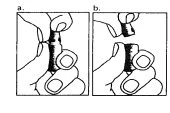
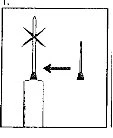
| 1. The neck of the ampoule is specifically designed to break more easily just below the colored mark. Gently tap the top portion of the ampoule to dislodge any residual liquid from the tip. Hold the ampoule with the colored mark facing outward and snap off the top portion as shown in the image. Using a cloth or an ampoule breaker to hold the ampoule will help protect your fingers. Carefully place the opened ampoule upright on a clean surface. |
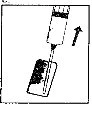
| 2. Remove the protective cap from the needle. Attach the reconstitution needle (large needle) to the syringe. Holding the syringe in one hand, pick up the opened solvent ampoule, insert the needle, and withdraw all the solvent into the syringe. Replace the needle protective cap. Carefully place the syringe on the surface. |
| 3. Remove the colored plastic cap from the powder vial by gently pushing it upward. Disinfect the top of the rubber stopper by wiping it with an alcohol-soaked cotton swab and allow it to dry. |
| 4. Pick up the syringe, remove the needle protective cap, and slowly inject the solvent through the center of the rubber stopper on the top of the powder vial. Press the plunger firmly to deliver all the solution onto the powder. DO NOT SHAKE, but gently roll the vial between your hands until the powder is completely dissolved, taking care to avoid foaming. |
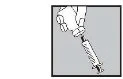
| 5. Once the powder has dissolved (which generally happens immediately), slowly withdraw the solution into the syringe.
|


Preparation of higher doses, using more than 1 vial of powder.
If your doctor has recommended higher doses, you can achieve this by using more than one vial of powder with one solvent ampoule.
When reconstituting more than one vial of Fostipur, at the end of step 4 described above, draw the reconstituted contents of the first vial back into the syringe and slowly inject it into a second vial. Repeat steps 2 to 4 for the second and subsequent vials, until the required number of vials corresponding to the prescribed dose has been dissolved (within the limit of the maximum total dose of 450 IU, corresponding to a maximum of 6 vials of Fostipur 75 IU or 3 vials of Fostipur 150 IU).
Your doctor may increase your dose by 37.5 IU, which represents half of a Fostipur 75 IU vial.
To do this, reconstitute the contents of the 75 IU vial according to steps 2 to 3 described above, and then draw half of this reconstituted solution (0.5 ml) into the syringe as described in step 4.
In this case, you will have two preparations to inject: the first reconstituted preparation in 1 ml and the second containing 37.5 IU in 0.5 ml.
Both preparations must be injected using separate syringes, according to the following
steps.
The solution must be clear and colourless.
Inject the medicine subcutaneously:
|
|
|
|
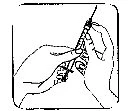
The injection site:
•Your doctor or nurse will have indicated which part of your body you can inject the medicine into. The most common sites are the thigh or the lower abdominal wall, below the navel.
- Clean the injection site with a cotton ball containing alcohol.
Insertion of the needle:
|
|
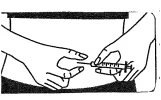
Injection of the solution:
• Inject it under the skin as you have been shown. Do not inject it directly into a vein. Push the plunger slowly and steadily, so that the solution is properly injected and the skin is not damaged.
Take all the time you need to inject the prescribed volume of solution. As described in the preparation of the solution, depending on the dose prescribed by your doctor, you may not need to use the entire volume of the solution.
Removal of the needle:
- Remove the syringe quickly and press a cotton swab with disinfectant onto the injection site. Gently massaging the area while still applying pressure helps to disperse the Fostipur solution and relieve discomfort.
Disposal of all used equipment:
Any unused product or waste material must be disposed of according to local requirements (after completing the injection, all needles and empty syringes must be discarded in an appropriate container).
If you use more Fostipur than you should
The effects of an overdose of Fostipur are unknown, although ovarian hyperstimulation syndrome may occur (see Possible side effects). If you have administered more Fostipur than you should, contact your doctor or pharmacist.
In case of overdose or accidental ingestion, contact your doctor or pharmacist or the Toxicology Information Service immediately, telephone: 915 620 420, stating the medication and the amount ingested.
If you forget to use Fostipur
Administer the next injection at the time scheduled. Do not use a double dose to make up for missed doses.
If you stop using Fostipur
Do not stop treatment on your own initiative. Always consult your doctor if you are considering stopping this medicine. If you have any further questions about the use of this medicine, consult your doctor or pharmacist.
4. Possible adverse effects
Like all medicines, Fostipur can cause adverse effects, although not everyone will experience them.
The following adverse effects are important and will require immediate action if they occur. You must stop administering Fostipur and contact your doctor immediately if you experience any of the following:
Frequent: may affect up to 1 in 10 people:
- Ovarian hyperstimulation syndrome (see section 2 for additional information).
The following adverse effects have also been reported:
Frequent: may affect up to 1 in 10 people:
- headache,
- abdominal bloating,
- constipation,
- pain at the injection site.
Uncommon: may affect up to 1 in 100 people:
- increased activity of the thyroid gland,
- mood changes,
- fatigue,
- dizziness,
- difficulty breathing (dyspnea),
- nosebleeds,
- nausea, indigestion, abdominal pain,
- skin rash, itching,
- hot flushes,
- cystitis,
- breast enlargement, breast pain,
- difficulty stopping bleeding.
Redness, pain, and bruising may occur at the injection site (frequency not known).
See section 2 for additional information on the risk of blood clots, ectopic pregnancy, multiple pregnancies, and miscarriages.
If you consider any of the adverse effects you experience to be severe, or if you notice any adverse effects not listed in this leaflet, inform your doctor or pharmacist.
Reporting of adverse effects:
If you experience any type of adverse effect, consult your doctor or pharmacist, even if it is a possible adverse effect not listed in this leaflet. You may also report them directly via the Spanish Pharmacovigilance System for Human Medicinal Products: https://www.notificaram.es.
By reporting adverse effects, you can help provide more information on the safety of this medicine.
5. Storage of Fostipur
Keep this medicine out of the sight and reach of children.
Do not store above 25°C. Store the vial and the solvent ampoule in the outer packaging to protect from light.
Do not use Fostipur after the expiry date stated on the carton and on the vial.
Use immediately after reconstitution.
Do not use Fostipur if the solution appears not to be clear. After reconstitution, the solution should be clear and colourless.
Medicines must not be disposed of via wastewater or household waste. Dispose of empty containers and unused medicines at the SIGRE collection point at your pharmacy. If you are unsure, ask your pharmacist how to properly dispose of unused medicines and their packaging. This will help protect the environment.
6. Contents of the pack and other information
Composition of Fostipur
The active substance is urofollitropin. Each vial contains 75 IU of urofollitropin (follicle-stimulating hormone: FSH): 1 ml of reconstituted solution may contain 75 IU, 150 IU, 225 IU, 300 IU, 375 IU, or 450 IU of urofollitropin when 1, 2, 3, 4, 5, or 6 vials are reconstituted, respectively, in 1 ml of solvent.
The specific in vivo activity is equal to or greater than 5,000 IU of FSH per mg of protein.
The other components are:
Powder: lactose monohydrate.
Solvent: sodium chloride and water for injections.
Appearance of the product and contents of the pack
Fostipur is presented as a powder and solvent for injectable solution.
Pack containing 1, 5, or 10 boxes. Each box contains: 1 vial with powder containing 75 IU of urofollitropin and 1 ampoule of solvent (1 ml).
The powder appears as a white to off-white compact mass, and the solvent is clear and colourless.
Marketing Authorisation Holder and Manufacturer
Marketing Authorisation Holder
IBSA Farmaceutici Italia srl
Via Martiri di Cefalonia 2
26900 Lodi (Italy)
Manufacturer
IBSA Farmaceutici Italia S.r.L, Via Martiri di Cefalonia - 26900 Lodi (Italy)
For further information regarding this medicinal product, please contact the local representative of the Marketing Authorisation Holder:
Instituto Bioquímico Ibérico IBSA S.L.
Avenida Diagonal 605,
8th floor, Local 1,
08028 Barcelona (Spain)
This medicinal product is authorised in the Member States of the European Economic Area under the following names (concentrations and pharmaceutical forms are identical in all countries; only the brand names differ):
Austria: Fostimon
Belgium: Fostimon
Cyprus: Fostimon
Denmark: Fostimon
Finland: Fostimon
France: Fostimon
Luxembourg: Fostimon
Ireland: Fostimon
Netherlands: Fostimon
Norway: Fostimon
Spain: Fostipur
Sweden: Fostimon
United Kingdom: Fostimon
Date of latest revision of the leaflet: February 2024
Detailed and up-to-date information on this medicinal product is available on the website of the Spanish Agency for Medicines and Health Products (AEMPS) http://www.aemps.gob.es/