Fosfocin 250 mg/5 ml powder for oral suspension
Spain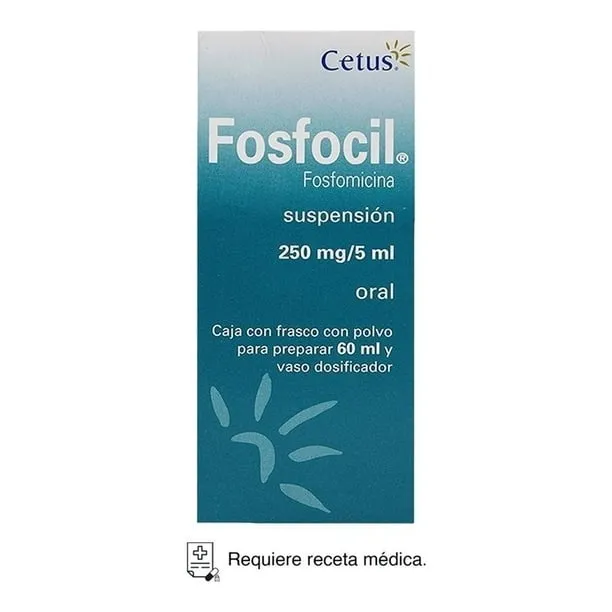
Table of Contents
Package leaflet: Information for the user
Introduction
Package leaflet: information for the patient
Fosfocina 250 mg/5 ml powder for oral suspension
Fosfomycin calcium
Read the entire leaflet carefully before you start taking this medicine, as it contains important information for you.
- Keep this leaflet, as you may need to read it again.
- If you have any questions, ask your doctor or pharmacist.
- This medicine has been prescribed for you only and should not be given to other people, even if they have the same symptoms as you, since it may harm them.
- If you experience any adverse effects, consult your doctor or pharmacist, even if they are effects not listed in this leaflet. See section 4.
Leaflet contents:
- What Fosfocina is and what it is used for
- What you need to know before taking Fosfocina
- How to take Fosfocina
- Possible adverse effects
- How to store Fosfocina
- Contents of the pack and other information
1. What Fosfocina is and what it is used for
Fosfocina contains the active substance fosfomycin (as fosfomycin calcium). It is an antibiotic that works by eliminating bacteria that can cause infections.
Antibiotics are used to treat bacterial infections and are not effective against viral infections such as the flu or the common cold. It is important to follow your doctor's instructions regarding dosage, dosing interval, and duration of treatment. Do not store or reuse this medicine. If you have any antibiotic left after completing treatment, return it to the pharmacy for proper disposal. Medicines must not be disposed of via the sink, toilet, or regular household waste. |
Fosfocin is used for the treatment of uncomplicated bladder infections in women.
2. What you need to know before starting to take Fosfocina
Do not take Fosfocina
If you are allergic to fosfomycin or to any of the other components of this medicine (listed in section 6).
Warnings and precautions
Consult your doctor, pharmacist, or nurse before starting to use Fosfocina if you are in any of the following situations:
- you suffer from persistent bladder infections,
- you have ever had diarrhoea after taking any other antibiotic.
Symptoms to watch for
Fosfocina may cause serious adverse effects. For example, allergic reactions and inflammation of the large intestine. You should pay attention to certain symptoms while taking this medicine in order to reduce the risk of complications. See “serious adverse effects” in section 4.
Children and adolescents
This medicine must not be given to children under 12 years of age, as safety and efficacy have not been established in this age group.
Other medicines and Fosfocina
Inform your doctor or pharmacist if you are taking, have recently taken, or might need to take any other medicines, even if they are medicines obtained without a prescription.
This is especially important if you are taking:
- metoclopramide or other medicines that increase the movement of food through the stomach and intestines, as they may reduce the absorption of fosfomycin in your body,
- anticoagulants, since fosfomycin and other antibiotics could alter your blood's ability to clot.
Taking Fosfocina with food and drinks
Food may delay the absorption of fosfomycin. Therefore, this medicine should be taken on an empty stomach (2–3 hours before or 2–3 hours after a meal).
Pregnancy, breastfeeding, and fertility
If you are pregnant or breastfeeding, think you may be pregnant, or are planning to become pregnant, consult your doctor or pharmacist before using this medicine.
If you are pregnant or breastfeeding, your doctor will only prescribe this medicine if strictly necessary.
Driving and using machines
You may experience adverse effects such as dizziness, which could affect your ability to drive or operate machinery.
Fosfocina contains fructose and sucrose
This medicine contains 2,000 mg of fructose per 5 ml. If your doctor has diagnosed you with an intolerance to certain sugars, or if you have been diagnosed with hereditary fructose intolerance (HFI), a rare genetic condition in which the patient cannot break down fructose, consult your doctor before taking this medicine.
It also contains sucrose. If your doctor has diagnosed you with an intolerance to certain sugars, consult him or her before taking this medicine.
3. How to take Fosfocina
Follow exactly the instructions for use of this medicine as given by your doctor or pharmacist. If in doubt, consult your doctor or pharmacist again.
For the treatment of uncomplicated bladder infections in women, the recommended dose is 2 teaspoons of 5 ml (500 mg of fosfomycin) or 4 teaspoons of 5 ml (1 g of fosfomycin) every 8 hours.
Fosfocina suspension is suitable for individuals with swallowing difficulties (difficulty swallowing food or medications) who cannot take Fosfocina 500 mg hard capsules.
Use in patients with renal impairment
This medicine must not be used in patients with severe renal impairment (creatinine clearance < 10 ml/min).
Use in children and adolescents
This medicine must not be used in individuals under 12 years of age.
Method of administration
For oral use.
This medicine should be taken orally on an empty stomach (approximately 2–3 hours before or 2–3 hours after a meal), with the last dose preferably taken at bedtime and after urination.
To prepare the extemporaneous suspension, invert the bottle to loosen any powder adhering to the bottom. Add a small amount of water and shake. Then add water up to the level indicated by the arrow on the label.
Record the preparation date in the designated box. Bear in mind the suspension's shelf life once reconstituted (15 days). Always shake well before use.
For accurate dosing, use the spoon provided in the package.
If you take more Fosfocina than you should
In case of overdose or accidental ingestion, contact your doctor or pharmacist immediately or call the Toxicology Information Service at telephone number: 91 562 04 20, indicating the medicine and the amount taken.
If you forget to take Fosfocina
Do not take a double dose to make up for missed doses.
If you forget to take a dose, take the next one as soon as possible and continue as before.
If you stop taking Fosfocina
Remember to take your medicine. Your doctor will inform you about the duration of your treatment with Fosfocina.
Do not stop the treatment, even if you feel better, unless your doctor tells you to.
If you have any further questions about the use of this medicine, ask your doctor or pharmacist.
4. Possible adverse effects
Like all medicines, this medicine may cause adverse effects, although not everyone experiences them.
Serious adverse effects
If you experience any of the following symptoms while taking Fosfocina, you must stop taking the medicine and contact your doctor immediately:
- anaphylactic shock, a type of potentially life-threatening allergic reaction (frequency not known). Symptoms include sudden onset of rash, itching or hives, and/or shortness of breath, wheezing (whistling sounds when breathing), or difficulty breathing,
- swelling of the face, lips, tongue, or throat with difficulty breathing (angioedema) (frequency not known),
- moderate to severe diarrhea, abdominal cramps, blood in the stool and/or fever, which may indicate an infection of the large intestine (antibiotic-associated colitis) (frequency not known). Do not take anti-diarrheal medicines that inhibit intestinal movements (antiperistaltics).
Other adverse effects
Common (may affect up to 1 in 10 people):
- headache
- dizziness
- diarrhea
- nausea
- indigestion
- abdominal pain
- genital infection in women with symptoms such as inflammation, irritation, or itching (vulvovaginitis)
Uncommon (may affect up to 1 in 100 people):
- vomiting
- rash
- urticaria
- itching
Rare (may affect up to 1 in 1,000 people):
- anemia
- superinfections caused by antibiotic-resistant bacteria
Frequency not known (cannot be estimated from available data):
- allergic reactions
- visual disturbances
- loss of appetite
- inflammation of the veins
- increase in the number of white blood cells and platelets
- appearance of petechiae (small skin hemorrhages)
- changes in liver enzymes
If any of these reactions or other symptoms you believe may be related to the treatment occur during therapy, you should inform your doctor as soon as possible.
Reporting of adverse effects
If you experience any type of adverse effect, consult your doctor or pharmacist, even if it is a possible adverse effect not listed in this leaflet. You may also report them directly through the Spanish Pharmacovigilance System for Human Medicinal Products: www.notificaram.es. By reporting adverse effects, you can help provide more information on the safety of this medicine.
5. Storage of Fosfocina
Keep this medicine out of the sight and reach of children.
This medicine does not require any special storage conditions. After reconstitution, the suspension can be used for 15 days, provided it is stored below 25°C.
Do not use this medicine after the expiry date stated on the packaging, after EXP. The expiry date refers to the last day of the month indicated.
Medicines must not be disposed of via wastewater or household waste. Dispose of unused containers and medicines at the SIGRE point located at your pharmacy. If you have any doubts, ask your pharmacist how to properly dispose of unused containers and medicines. This will help protect the environment.
6. Contents of the pack and other information
Composition of Fosfocina
- The active substance is calcium fosfomycin. Each 5 ml of reconstituted suspension contains 250 mg of fosfomycin in the form of the calcium salt.
- The other components are: sucrose palmitate (E-473), guar gum (E-412), banana flavouring, colloidal silica and fructose.
Description of the product and contents of the pack
Fosfocina is presented as a white powder for extemporaneous oral suspension, in amber glass bottles to prepare 60 ml or 120 ml of suspension, with an aluminium cap, together with a graduated spoon.
Marketing Authorization Holder
LABORATORIOS ERN, S.A.
Perú, 228 - 08020 Barcelona, Spain.
Manufacturer
LABORATORIOS ERN, S.A.
Gorgs Lladó, 188 – 08210 Barberà del Vallès, Barcelona, Spain.
Date of the most recent revision of this summary: February 2022.
Detailed and up-to-date information on this medicinal product is available on the website of the Spanish Agency for Medicines and Health Products (AEMPS) http://www.aemps.gob.es/.