Foscavir 24 mg/ml solution for infusion
Spain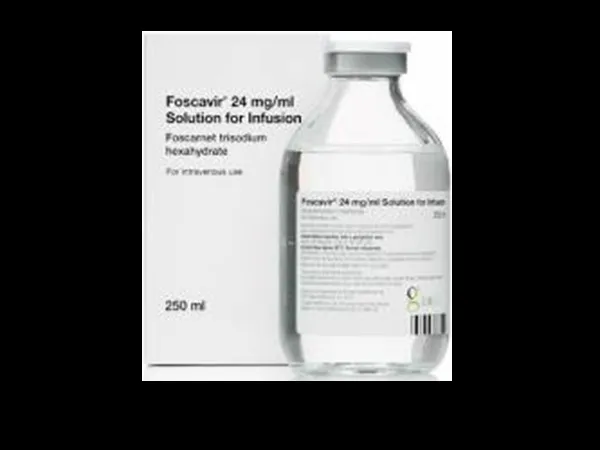
Table of Contents
- Patient Information Leaflet
- Introduction
- 1. What Foscavir 24 mg/ml infusion solution is and what it is used for
- 2. What you need to know before using Foscavir 24 mg/ml solution for infusion
- 3. How to use Foscavir 24 mg/ml solution for infusion
- 4. Possible adverse effects
- 5. Storage of Foscavir 24 mg/ml solution for infusion
- 6. Contents of the pack and other information
- **Marketing Authorization Holder and Manufacturing Responsible Person**
- **Manufacturer**
Patient Information Leaflet
Introduction
Package Leaflet: Information for the Patient
Foscavir 24 mg/ml solution for infusion
Foscarnet sodium hexahydrate
Read the entire leaflet carefully before you start using this medicine, as it contains important information for you.
- Keep this leaflet as you may need to read it again.
- If you have any questions, ask your doctor or nurse.
- This medicine has been prescribed for you only, and you should not give it to others, even if they have the same symptoms as you, because it may harm them.
- If you experience any adverse effects, consult your doctor or nurse, even if they are effects not listed in this leaflet. See section 4.
Leaflet Contents
- What Foscavir 24 mg/ml solution for infusion is and what it is used for
- What you need to know before using Foscavir 24 mg/ml solution for infusion
- How to use Foscavir 24 mg/ml solution for infusion
- Possible side effects
- How to store Foscavir 24 mg/ml solution for infusion
- Contents of the pack and other information
1. What Foscavir 24 mg/ml infusion solution is and what it is used for
The active substance foscarnet is an antiviral agent that works by inhibiting the replication of certain viruses.
Foscavir is used to treat the following viral infections:
- Cytomegalovirus (CMV) infection affecting the eye (retinitis) or the gastrointestinal tract in patients with HIV infection.
Foscavir is indicated for both induction and maintenance treatment of the disease, although it cannot reverse existing damage.
-
Skin or mucosal infections caused by herpes simplex virus (HSV) that have not responded to aciclovir, in immunosuppressed patients (patients with impaired immune function).
-
Viral infection caused by cytomegalovirus (CMV) following bone marrow transplantation, when other treatments have not been suitable.
2. What you need to know before using Foscavir 24 mg/ml solution for infusion
Do not use Foscavir 24 mg/ml solution for infusion
- If you are allergic to foscarnet or to any of the other ingredients of this medicine listed in section 6.
Warnings and precautions
Consult your doctor or nurse before starting treatment with Foscavir 24 mg/ml solution for infusion
- If you have renal impairment, as laboratory monitoring must be performed during treatment. Adequate hydration should be maintained in all patients.
- If you have heart problems.
Foscavir is excreted in high concentrations in urine and may cause significant genital irritation and/or ulcerations. To prevent irritation and ulcerations, meticulous personal hygiene and cleansing of the genital area after urination are recommended.
Foscavir deposits in teeth, bones, and cartilage. Animal data show that deposition is greater in younger animals. The safety of Foscavir and its effect on skeletal development have not been investigated in children.
Drug administration may be associated with a sudden decrease in calcium levels. For this reason, calcium and magnesium levels should be monitored before and during treatment with Foscavir, and deficiencies corrected if present. Electrolyte and mineral blood concentrations should also be periodically monitored, especially calcium and magnesium.
Children and adolescents
The safety and efficacy of Foscavir in children have not been established.
Other medicines and Foscavir
Inform your doctor or pharmacist if you are taking, have recently taken, or might take any other medicines, including those obtained without a prescription. Especially if you are taking aminoglycosides (a group of antibiotics); amphotericin B (for fungal infections); cyclosporine A, methotrexate, tacrolimus (immunosuppressants); aciclovir (antiviral); pentamidine (injections); quinidine, amiodarone, sotalol, or other medicines that may affect your heart rate and rhythm; tranquilizers (neuroleptics); as well as some protease inhibitors such as ritonavir and saquinavir.
Pregnancy and breastfeeding
If you are pregnant or breastfeeding, think you may be pregnant, or are planning to become pregnant, consult your doctor or pharmacist before using this medicine.
- Foscavir is not recommended during pregnancy.
- Attempting pregnancy should be avoided during Foscavir therapy; therefore, effective contraceptive methods should be used.
- Men undergoing treatment with Foscavir should not father a child during or for up to 6 months after therapy.
- Do not take Foscavir if you are breastfeeding.
Driving and use of machines
Foscavir may affect your ability to drive or operate machinery. Consult your doctor before engaging in such activities.
Foscavir contains sodium
The recommended maximum daily dose of this medicine contains 2.75 g of sodium (which is present in table salt). This is equivalent to 138% of the maximum daily dietary sodium intake recommended for adults.
Consult your doctor or pharmacist if you need to take Foscavir daily for a prolonged period, especially if you have been advised to follow a low-salt (low-sodium) diet.
3. How to use Foscavir 24 mg/ml solution for infusion
Foscavir must be administered by a healthcare professional via intravenous route.
Your doctor will calculate the correct dose of Foscavir for you based on your body weight and blood test results.
Your doctor will follow the guidelines outlined below depending on the infection and for as long as considered appropriate.
If you are being treated for cytomegalovirus (CMV) retinitis, treatment will consist of two stages: induction, followed by maintenance. Induction is the initial stage during which infusions lasting more than one hour are administered at 8- or 12-hour intervals daily for two to three weeks. Depending on the viral response, treatment may proceed to the maintenance stage, during which infusions are given once daily. If the viral infection worsens at any time, induction therapy may be reinstated. Your doctor will inform you at all times of any necessary changes in infusion schedules, adjusting the dose if needed to enhance antiviral effect or reduce the risk of kidney damage.
If you are being treated for gastrointestinal infection caused by cytomegalovirus (CMV), treatment will consist of a single stage. The infusion will be administered at 12-hour intervals for 2–4 weeks.
If you are being treated for skin or mucosal infections caused by herpes simplex virus (HSV), treatment will also consist of a single stage. The infusion will be administered at 8-hour intervals for 2–3 weeks, or until healing occurs.
If you are being treated following bone marrow transplantation for a cytomegalovirus (CMV) infection, treatment will consist of two stages: induction, followed by maintenance. Induction is the initial stage during which infusions lasting more than one hour are administered at 12-hour intervals daily for two weeks. Depending on the viral response, treatment may proceed to the maintenance stage, during which infusions are given 5 days per week for two weeks. If the viral infection worsens at any time, induction therapy may be reinstated. Your doctor will inform you at all times of any necessary changes in infusion schedules, adjusting the dose if needed to enhance antiviral effect or reduce the risk of kidney damage.
Hydration
Renal toxicity of this medication can be reduced by adequate hydration. Your doctor will follow the most appropriate hydration strategy for you.
Patients with impaired renal function
Your doctor will consider the degree of renal impairment when adjusting the dose according to the table above. Use of this medication is not recommended in patients undergoing hemodialysis.
Patients with impaired hepatic function
Dose reduction is not necessary in patients with hepatic impairment.
Elderly patients
No dose adjustment is required.
If you are given more Foscavir than you should
Relative overdoses have occurred in some patients with kidney problems due to inadequate dose adjustment; however, note that in some cases no clinical sequelae have resulted from such overdoses.
In case of overdose or accidental ingestion, contact your doctor or pharmacist immediately or call the Toxicology Information Service at telephone number: 91 562 04 20, indicating the medication and the amount ingested.
Information for healthcare professionals
Hemodialysis increases the elimination of the drug and may be beneficial in cases of overdose.
4. Possible adverse effects
Like all medicines, this medicine may cause adverse effects, although not everyone will experience them.
The adverse effects observed with Foscavir are:
Very common: may affect more than 1 in 10 people |
Disorders of the blood and lymphatic system: Decrease in certain blood cells called granulocytes (granulocytopenia) and anemia. |
Metabolic and nutritional disorders: Loss of appetite (anorexia), decrease in certain blood electrolytes (potassium, magnesium, and calcium). |
|
Nervous system disorders: Dizziness, headache, tingling sensation. |
|
Gastrointestinal disorders: Diarrhea, nausea, vomiting. |
|
Skin and subcutaneous tissue disorders: Skin rash. |
|
General disorders and administration site conditions: Feeling of weakness, chills, fatigue, fever (pyrexia). |
|
Investigations: Increased serum creatinine, decreased hemoglobin concentration. |
|
Common: may affect up to 1 in 10 people |
Disorders of the blood and lymphatic system: Decrease in certain blood cells (leukocytes including neutrophils and platelets). |
Immune system disorders: Systemic infection (sepsis). |
|
Metabolic and nutritional disorders: Increased or decreased blood phosphate levels, decreased blood sodium levels, increased levels of certain blood enzymes (alkaline phosphatase and LDH), increased blood calcium levels, dehydration. |
|
Psychiatric disorders: Mood changes. These include aggressive reactions, agitation, anxiety, confusion, depression, nervousness. |
|
Nervous system disorders: Abnormal coordination of movements, seizures, reduced touch sensitivity, involuntary muscle contractions, peripheral nervous system disorders, tremor. |
|
Cardiac disorders: Rapid heartbeat (palpitations or tachycardia). |
|
Vascular disorders: Increased or decreased blood pressure, inflammation of veins. |
|
Gastrointestinal disorders: Abdominal pain, constipation, sensation of indigestion (dyspepsia), inflammation of the pancreas, gastrointestinal bleeding. |
|
Hepatobiliary disorders: Abnormal liver function. |
|
Reproductive system and breast disorders: Genital discomfort and ulceration. |
|
Renal and urinary disorders: Renal failure, inability of the kidney to function (acute renal failure), burning sensation during urination, abnormally increased urination. There may be changes detected in urine tests (proteinuria). |
|
General disorders and administration site conditions: General malaise, swelling due to fluid accumulation, chest pain, swelling and pain at the injection site. |
|
Investigations: Decreased creatinine clearance, abnormal electrocardiogram, increased levels of certain liver enzymes in blood (gamma-GT, ALT and AST) or lipase enzyme. |
|
Uncommon: may affect up to 1 in 100 people |
Skin and subcutaneous tissue disorders: Itchy rash (urticaria), skin swelling (angioedema). |
Frequency not known (cannot be estimated from available data) |
Disorders of the blood and lymphatic system: Decrease in certain blood cells (erythrocytes, leukocytes including neutrophils, and platelets). Immune system disorders: Severe allergic reactions including a drop in blood pressure and shock. These are known as hypersensitivity, anaphylactic, or anaphylactoid reactions. If you experience any of the above symptoms, inform your doctor immediately or go to the nearest emergency unit. Endocrine disorders: Condition characterized by excessive thirst and frequent urination (diabetes insipidus). Metabolic and nutritional disorders: Increased blood sodium levels. Psychiatric disorders: Mental status changes. Nervous system disorders: Encephalopathy. Cardiac disorders: Abnormal electrocardiogram, ventricular arrhythmias, torsade de pointes. Gastrointestinal disorders: Ulceration in the esophagus (the tube through which food passes from the throat to the stomach). This may be painful. Skin and subcutaneous tissue disorders: Severe skin reactions. These types of reactions may be associated with redness, swelling, and ulcers on the skin, mouth, throat, eyes, and other internal areas, and may sometimes result in death. These are called erythema multiforme, Stevens-Johnson syndrome, and toxic epidermal necrolysis. If you experience any of the above symptoms, inform your doctor immediately or go to the nearest emergency unit. Musculoskeletal disorders: Muscle weakness, loss and weakness of muscle mass, muscle inflammation, breakdown of muscle cells (rhabdomyolysis). Renal and urinary disorders: Kidney pain and/or other kidney problems (renal tubular acidosis, renal tubular necrosis, acute tubular necrosis, crystal nephropathy), blood in urine. General disorders and administration site conditions: Swelling, pain, and redness in a vein or at the injection site. |
Note: In these clinical trials, hydration or monitoring of electrolyte balance was not systematically provided; therefore, the frequency of certain adverse reactions may be lower when current recommendations are followed (see section 3).
Reporting of adverse reactions
If you experience any type of adverse reaction, consult your doctor or nurse, even if it is a possible adverse reaction not listed in this leaflet. You may also report them directly through the Spanish Pharmacovigilance System for Human Medicinal Products: https://www.notificaram.es. By reporting adverse reactions, you can help provide more information on the safety of this medicine.
5. Storage of Foscavir 24 mg/ml solution for infusion
Keep this medicine out of the sight and reach of children.
Before opening: Store below 25°C. Do not store in the refrigerator.
If stored in the refrigerator or exposed to temperatures below freezing point, precipitation may occur. This precipitate can be redissolved by allowing the vial to reach room temperature and shaking repeatedly.
Before opening: Do not use this medicine after the expiry date stated on the vial. The expiry date refers to the last day of the month indicated.
After first opening: The solution must be used within 24 hours (it does not contain preservatives).
From a microbiological standpoint, the product should be used immediately. If not used immediately, the conditions of storage and the time before use are the responsibility of the professional user; storage must not exceed 24 hours at 2 to 8°C, unless reconstitution has taken place under controlled and validated aseptic conditions.
Medicines must not be disposed of via wastewater or household waste. Ask your pharmacist how to dispose of medicines and containers you no longer need. This will help protect the environment.
6. Contents of the pack and other information
Composition of Foscavir 24 mg/ml solution for infusion
- The active substance is foscarnet sodium hexahydrate. 1 ml of solution contains 24 mg of foscarnet sodium hexahydrate. See section 2, 'Foscavir contains sodium'.
- The other components are: hydrochloric acid (E507) and water for injections.
Nature of the product and pack contents
This medicine is a solution for infusion, supplied in a 250 ml vial.
Marketing Authorization Holder and Manufacturing Responsible Person
Marketing Authorization Holder
Clinigen Healthcare B.V.
Schiphol Boulevard 359
WTC Schiphol Airport, D Tower 11th floor
1118BJ Schiphol
The Netherlands
Manufacturer
Fresenius Kabi Austria GmbH
Hafnerstraße 36
A-8055 Graz
Austria
Date of the most recent review of this package leaflet: May 2023
Detailed information on this medicine is available on the website of the Spanish Agency of Medicines and Health Products (AEMPS) (http://www.aemps.gob.es/)
This information is intended for healthcare professionals only:
INSTRUCTIONS FOR CORRECT ADMINISTRATION
Foscavir does not contain preservatives, and once the sterility seal is broken, the solution must be used within 24 hours.
From a microbiological standpoint, the product should be used immediately. If not used immediately, storage conditions and duration prior to use are the responsibility of the user and must not exceed 24 hours when stored between 2 and 8 °C, unless reconstitution has taken place under controlled, validated aseptic conditions. Individual doses of Foscavir may be aseptically transferred to infusion bags by hospital pharmacy services. The physico-chemical stability of Foscavir and its dilutions in equal parts with sodium chloride 9% (9 mg/mL) or glucose 50 mg/mL in PVC bags is 7 days.
Posology
Adults
CMV Retinitis in HIV Patients
Induction treatment: Foscavir should be administered for 2–3 weeks, depending on clinical response, as intermittent infusions every 8 hours at a dose of 60 mg/kg or every 12 hours at a dose of 90 mg/kg in patients with normal renal function. The dose must be individually adjusted according to renal function (see Dosage Table below). The duration of each infusion must not be less than 2 hours for the 90 mg/kg dose or 1 hour for the 60 mg/kg dose.
Maintenance treatment: For maintenance therapy, after completion of induction treatment for CMV retinitis, Foscavir is administered 7 days per week for as long as considered appropriate. In patients with normal renal function, the dose ranges from 90 to 120 mg/kg, given as a single daily 2-hour infusion. Dosage must be individualized based on the patient's renal function (see Dosage Table below). Initiation at 90 mg/kg is recommended. The dose may be gradually increased up to 120 mg/kg in patients who tolerate the previous dose well.
Patients experiencing progression of retinitis during maintenance therapy may be switched back to induction treatment or to a combination therapy of Foscavir and ganciclovir. Once stabilized, maintenance therapy should be established with Foscavir alone or in combination with ganciclovir.
Due to physical incompatibility, Foscavir and ganciclovir must NOT be mixed.
Upper and Lower Gastrointestinal CMV Infections in HIV Patients
Foscavir treatment should be administered as intermittent infusions every 12 hours at a dose of 90 mg/kg in patients with normal renal function. Most patients will experience symptom remission within 2 to 4 weeks. The dose must be individualized according to renal function (see Dosage Table below). Infusion time must not be less than 2 hours.
Acyclovir-Resistant Mucocutaneous HSV Infections
For induction treatment, Foscavir should be administered as intermittent 1-hour infusions at a dose of 40 mg/kg every 8 hours in patients with normal renal function. The dose must be individually adjusted according to renal function (see Dosage Table below). Each infusion must last no less than 1 hour.
Time to healing depends on the initial size of the lesion, and Foscavir treatment should continue until complete re-epithelialization, typically 2–3 weeks. A clinical response to Foscavir should be evident within one week of treatment; therapy should be reconsidered in patients who do not respond within this timeframe.
The efficacy of maintenance therapy with Foscavir after induction treatment for acyclovir-resistant HSV infections has not been established. In case of recurrence, resistance to acyclovir should be confirmed.
Preemptive Treatment in High-Risk Patients and Treatment of CMV Infection in HSCT Patients
Induction treatment: A dose of 60 mg/kg is administered over 14 days as intermittent infusions every 12 hours in patients with normal renal function.
The dose must be individually adjusted according to renal function (see Dosage Table below).
The duration of each infusion must not be less than 1 hour.
Maintenance treatment: After completion of induction therapy for CMV disease, 90 mg/kg is administered 5 days per week for 14 days in patients with normal renal function, as a single daily 2-hour infusion.
Dosage must be individualized according to the patient's renal function (see Dosage Table below).
Patients experiencing progression of infection during maintenance therapy may be switched back to induction treatment.
Table 1 – Dosage Table for Foscavir
Induction Treatment
Creatinine clearance (ml/min/kg) | Prophylactic treatment and treatment for CMV (CMVIG) | CMV retinitis disease (HIV) and CMV gastrointestinal tract infection (HIV) | VHS infection | |||||||
60 mg/kg over 1 hour | 60 mg/kg over 1 hour | 90 mg/kg over at least 2 hours | 40 mg/kg over 1 hour | |||||||
(mg/kg) | (mg/kg) | (mg/kg) | (mg/kg) | |||||||
>1.4 | 60 | Every 12 h | 60 | Every 8 h | 90 | Every 12 h | 40 | Every 8 h | ||
<1.4 | - | >1 | 45 | Every 12 h | 45 | Every 8 h | 70 | Every 12 h | 30 | Every 8 h |
<1 | - | >0.8 | 35 | Every 12 h | 35 | Every 8 h | 50 | Every 12 h | 20 | Every 8 h |
<0.8 | - | >0.6 | 25 | Every 12 h | 40 | Every 12 h | 80 | Every 24 h | 25 | Every 12 h |
<0.6 | - | >0.5 | 20 | Every 12 h | 30 | Every 12 h | 60 | Every 24 h | 20 | Every 12 h |
<0.5 | - | >0.4 | 15 | Every 12 h | 25 | Every 12 h | 50 | Every 24 h | 15 | Every 12 h |
<0.4 | Treatment not recommended |
Maintenance treatment
Creatinine clearance (ml/min/kg) | 90 mg/kg for at least 2 hours | 120 mg/kg for at least 2 hours | ||||
(mg/kg) | (mg/kg) | |||||
>1.4 | 90 | Every 24 h | 120 | Every 24 h | ||
1.4> | >1 | 70 | Every 24 h | 90 | Every 24 h | |
1> | >0.8 | 50 | Every 24 h | 65 | Every 24 h | |
0.8> | >0.6 | 80 | Every 48 h | 105 | Every 48 h | |
0.6> | >0.5 | 60 | Every 48 h | 80 | Every 48 h | |
0.5> | >0.4 | 50 | Every 48 h | 65 | Every 48 h | |
<0.4 | Treatment not recommended |
Hydration
Clinically dehydrated patients should have their condition corrected before starting treatment with Foscavir.
The renal toxicity of Foscavir can be reduced by adequate patient hydration. To achieve this, diuresis should be promoted by administering 0.5 - 1.0 litre of physiological saline before the first Foscavir infusion, and adding subsequently 0.5 - 1.0 litre of physiological saline to each infusion. In cooperative patients, a similar hydration regimen may be used orally.
Patients with impaired renal function
Dosage must be reduced for patients with renal insufficiency according to creatinine clearance rates described in the table above. The use of Foscavir is not recommended in patients undergoing haemodialysis, as dosage regimens have not been established.
Patients with impaired hepatic function
Dosage reduction is not necessary for patients with hepatic insufficiency.
Elderly patients
No dose adjustment is required.
Paediatric population
The safety and efficacy of foscarnet in children has not been established.
Method of administration
Foscavir must be administered only intravenously, either via a central venous catheter or into a peripheral vein.
DO NOT administer this medicinal product by rapid intravenous injection.
For administration into a peripheral vein, the solution must be diluted immediately before administration in 5% glucose or physiological saline to a concentration of 12 mg/ml.
Foscavir solution may be administered undiluted via central venous route.
Accidental contact of Foscavir solution with skin or eyes may cause local irritation and a burning sensation. In case of accidental contact, the affected area should be washed thoroughly with water.