Foscarnet Kabi 24 mg/ml solution for infusion EFG
Spain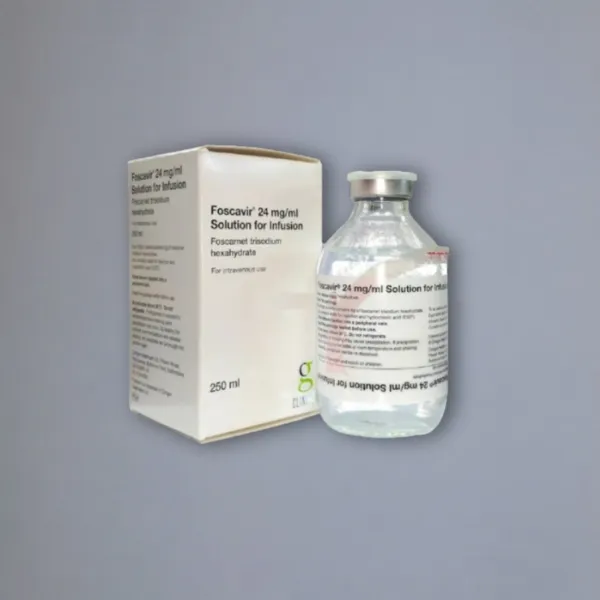
Table of Contents
Package leaflet: Information for the user
Introduction
Package leaflet: information for the user
Foscarnet Kabi 24 mg/ml infusion solution EFG
sodium foscarnet hexahydrate
Read the entire leaflet carefully before you start using this medicine, because it contains important information for you.
- Keep this leaflet, as you may need to read it again.
- If you have any questions, ask your doctor or nurse.
- This medicine has been prescribed for you only, and you should not give it to others, even if they have the same symptoms as you, because it may harm them.
- If you experience any adverse reactions, consult your doctor or nurse, even if they are adverse reactions not listed in this leaflet. See section 4.
Leaflet contents
- What Foscarnet Kabi is and what it is used for
- What you need to know before using Foscarnet Kabi
- How to use Foscarnet Kabi
- Possible adverse effects
- How to store Foscarnet Kabi
- Contents of the pack and other information
1. What Foscarnet Kabi is and what it is used for
This medicine belongs to a group of medicines called antivirals. It acts on certain viruses [all viruses belonging to the herpes group and some retroviruses such as cytomegalovirus (CMV)]. It prevents the virus from replicating in infected cells.
Foscarnet is used in people with a weakened immune system:
- To treat CMV retinitis in patients with AIDS.
- To treat herpes infections (of the lips, nose, eyes, and genitals).
- Foscarnet is administered to individuals with CMV infection following bone marrow transplantation. This is also known as hematopoietic stem cell transplantation (HSCT). Sometimes, the infection can be detected before the patient begins to show symptoms. This is known as CMV viremia.
2. What you need to know before using Foscarnet Kabi
Do not use Foscarnet Kabi:
- If you are allergic to foscarnet or to any of the other ingredients of this medicine (listed in section 6).
CONSULT YOUR DOCTOR OR PHARMACIST IF YOU ARE UNSURE.
Warnings and precautions
Talk to your doctor or nurse before starting to use this medicine:
- If you have kidney problems. In this case, your doctor may adjust the dose according to your condition.
- If you have low levels of calcium in your blood before receiving this medicine, or if you are taking a medicine that reduces calcium levels in the blood.
- If you have heart problems.
- If you experience tingling in your hands or lips, or nausea. In such cases, your nurse will reduce the infusion rate.
- In case of accidental contact with the product, rinse exposed skin or mucous membranes (inside of mouth, nose, ears, or genitals) with water.
Great attention should be paid to personal hygiene after urination: wash the penis (or vulva) with running water to prevent genital lesions (genital ulceration).
Blood tests
Before and during treatment, your doctor may ask you to have blood and urine tests. These tests are intended to monitor kidney function and levels of minerals in the blood.
Other medicines and Foscarnet Kabi
Inform your doctor or nurse if you are currently using, have recently used, or might need to use any other medicines, including over-the-counter medicines and herbal remedies. This is because foscarnet may affect how some medicines work, and some medicines may have effects on foscarnet.
In particular, inform your doctor or nurse if you are taking any of the following medicines:
- Pentamidine (for infections).
- Amphotericin B (for fungal infections).
- Acyclovir (for viral infections).
- Antibiotics known as aminoglycosides, such as gentamicin or streptomycin (for infections).
- Cyclosporine A, methotrexate, or tacrolimus (used to suppress the immune system).
- Protease inhibitors such as ritonavir and saquinavir.
- Quinidine, amiodarone, sotalol, or other medicines that may affect your heart rate and rhythm.
- Anxiolytics (neuroleptics).
Pregnancy and breastfeeding
If you are pregnant or breastfeeding, think you may be pregnant, or are planning to become pregnant, consult your doctor or pharmacist before using this medicine.
- The use of foscarnet during pregnancy is not recommended.
- You should avoid becoming pregnant during treatment with foscarnet; therefore, you should use effective contraceptive methods while being treated with foscarnet and for 7 months after the end of treatment.
- Men being treated with foscarnet are advised to use effective contraception and should not father a child during or within 4 months after treatment.
- Do not take foscarnet while breastfeeding.
Driving and using machines
Foscarnet may affect your ability to drive or operate machinery due to the risk of seizures, abnormal movements, and dizziness reported with this medicine. Consult your doctor before engaging in these activities.
Foscarnet Kabi contains sodium
This medicine contains 240 micromoles (5.5 mg) of sodium (main component of table/cooking salt) per ml. This should be taken into account by patients on a sodium-controlled diet, so please inform your doctor or nurse if you are on a low-sodium diet.
The maximum recommended dose of this medicine contains 2.89 grams of sodium (present in table salt).
This corresponds to 144.5% of the maximum daily sodium intake recommended for an adult.
Consult your doctor or pharmacist if you need to take foscarnet daily for a prolonged period, especially if you have been advised to follow a low-salt diet.
3. How to use Foscarnet Kabi
Follow exactly the instructions given by your doctor for the administration of this medicine. If in doubt, please consult your doctor again.
- Foscarnet will be administered to you by a doctor or nurse. It will be given as an intravenous infusion (drip). It may be administered through a central line in your chest if you already have one in place.
- Each infusion will last at least 1 hour. Do not interfere with the infusion flow during administration.
- The dose of foscarnet you receive will depend on your body weight and kidney function.
- It is important to maintain adequate fluid intake during the infusion, which will also help prevent kidney problems. If necessary, your doctor or nurse will administer the required hydration regimen at the same time as the foscarnet infusion.
Personal hygiene
Wash your genital area carefully after urinating. This will help prevent the development of sores.
If foscarnet solution comes into contact with the skin or eyes
If the foscarnet solution accidentally comes into contact with the skin or eyes, immediately rinse the affected area with water.
If you use more Foscarnet Kabi than you should
If you are administered an extremely high dose of foscarnet, inform your doctor or pharmacist immediately.
If you think you have been given too much foscarnet, inform your doctor immediately.
In case of overdose, contact your doctor or pharmacist or call the Toxicology Information Service at telephone number: 91 562 04 20, indicating the medicine and the amount administered.
4. Possible adverse effects
Like all medicines, this medicine can cause adverse effects, although not everyone gets them.
Some adverse effects can be serious and require immediate medical attention:
- Severe allergic reactions, including low blood pressure, shock, and skin swelling (angioedema). These are known as hypersensitivity, anaphylactic, or anaphylactoid reactions.
- Severe skin rashes. These types of rashes may be associated with redness, swelling, and blistering of the skin, mouth, throat, eyes, and other areas inside the body and, in some cases, may lead to death. They are known as erythema multiforme, Stevens-Johnson syndrome, and toxic epidermal necrolysis.
If you experience any of the above adverse effects, inform your doctor immediately or go to the nearest emergency unit.
Other side effects include:
Very common: may affect more than 1 in 10 people
- Decrease in red blood cell count (shown in blood tests). You may feel tired or look pale.
- Low white blood cell levels (granulocytopenia). Signs include infections and high temperature (fever).
- Reduction in blood potassium levels.
- Reduction in blood magnesium levels.
- Reduction in blood calcium levels.
- Dizziness.
- Headache.
- Tingling sensation.
- Diarrhea.
- Nausea, vomiting.
- Feeling weak or tired.
- High temperature or chills.
- Skin rash.
- Changes in kidney function (shown in blood tests), for example, increased serum creatinine, decreased hemoglobin concentration.
Common: may affect up to 1 in 10 people
- Low white blood cell levels (leukopenia and/or neutropenia). Signs include infections and high temperature (fever).
- Reduced platelet levels in the blood. This may cause you to bruise more easily.
- Systemic infection (sepsis).
- Increased or decreased blood phosphate levels.
- Reduction in blood sodium levels.
- Increase in blood calcium levels.
- Dehydration.
- Abnormal liver function.
- Elevated liver enzymes (gamma-GT, alanine aminotransferase (ALT), aspartate aminotransferase (AST), LDH).
- Mood changes. These include aggression, agitation, anxiety, confusion, depression, restlessness.
- Abnormal coordination of movements.
- Seizures.
- Reduced skin sensitivity.
- Unusual heartbeats (palpitations).
- Fast heart rate (tachycardia).
- Nerve disorders that may cause sensory changes or muscle weakness (neuropathy).
- Tremors.
- Hypertension.
- Hypotension, which may cause dizziness.
- Swelling, pain, and redness along a vein.
- Abdominal pain, constipation, and indigestion.
- Inflammation of the pancreas (pancreatitis) or changes in pancreatic function. Signs include severe stomach pain and may include changes in blood tests (increased lipase levels).
- Itching of the skin.
- Muscle pain.
- Kidney disorders, for example, kidney pain (lower back pain), renal failure, presence of protein in the urine.
- Pain when urinating.
- Genital sores or ulcers. These are single or multiple lesions that resolve upon discontinuation of treatment (see “Warnings and precautions”).
- General malaise.
- Pain and inflammation at the injection site.
- Swelling of feet and legs.
- Changes in tests showing heart function (ECG).
Uncommon: may affect up to 1 in 100 people
- Reduction in red blood cells, white blood cells, and platelets.
- Excess acid in the blood. This may cause you to breathe faster.
- Itchy rash (urticaria).
- Kidney and urinary disorders (tubular renal impairment, glomerulonephritis, nephrotic syndrome).
- Increase in certain blood enzymes, for example, amylase, creatine, and phosphokinase.
Frequency not known (cannot be estimated from available data)
- Unusual heartbeats.
- Diabetes. Signs include urinating more frequently than usual. Less commonly, you may also feel excessive thirst.
- Increase in blood sodium levels.
- Encephalopathy.
- Unusual heartbeats or changes in heart rate, for example, torsade de pointes.
- Muscle problems: muscle weakness, destruction of muscle tissue (rhabdomyolysis: abnormal urine color and severe muscle stiffness, tenderness, or weakness).
- Kidney problems, for example, pain, blood in urine, tubular necrosis, crystal nephropathy.
- Extravasation.
Reporting of adverse effects
If you experience any type of adverse effect, talk to your doctor or pharmacist, even if it is a possible adverse effect not listed in this leaflet. You can also report them directly through the Spanish Pharmacovigilance System for Human Medicines: https://www.notificaRAM.es. By reporting adverse effects, you can help provide more information on the safety of this medicine.
5. Storage of Foscarnet Kabi
- Keep this medicine out of the sight and reach of children.
- Do not use this medicine after the expiry date stated on the label after EXP. The expiry date refers to the last day of the month indicated.
- Do not refrigerate or freeze. If stored in the refrigerator or exposed to temperatures below freezing point, precipitation may occur. This precipitate can be re-dissolved by allowing the vial to stand at room temperature and repeated shaking.
- Chemical and physical in-use stability has been demonstrated for 9 days at 25 °C. From a microbiological standpoint, the product should be used immediately unless reconstitution and dilution have been carried out under conditions that exclude the risk of microbial contamination. If not used immediately, the duration and conditions of storage prior to use are the responsibility of the user.
- Foscarnet may be mixed with another liquid by a pharmacist to provide you with a ready-to-use medicine. The pharmacist will inform you how to store and when to use the medicine.
- Medicines should not be disposed of via wastewater or household waste. Ask your pharmacist how to dispose of medicines and containers you no longer need. This will help protect the environment.
6. Package Contents and Additional Information
Composition of Foscarnet Kabi
The active substance is foscarnet.
Each ml contains 24 mg of foscarbet sodium hexahydrate.
The other components are water for injections and hydrochloric acid.
Appearance of the product and contents of the container
Foscarnet is a sterile infusion solution.
The solution is clear and colourless.
Foscarnet is supplied in 250 ml vials.
Marketing Authorization Holder
Fresenius Kabi España, S.A.U
Torre Mapfre – Vila Olímpica
Marina 16-18
08005 Barcelona
Spain
Manufacturer
Fresenius Kabi Austria GmbH
Hafnerstrasse 36
A-8055 Graz
Austria
This medicinal product is authorized in the Member States of the European Economic Area under the following names:
Belgium: Foscarnet Fresenius Kabi 24 mg/ml oplossing voor infusie; Foscarnet Fresenius Kabi 24 mg/ml solution pour perfusion; Foscarnet Fresenius Kabi 24 mg/ml Infusionslösung
France: FOSCARNET KABI 24 mg/ml, solution pour perfusion
Germany: Foscarnet Kabi 24 mg/ml Infusionslösung
Italy: Foscarnet Kabi
Luxembourg: Foscarnet Sodium 24 mg/ml Solution for Infusion
Portugal: Foscarneto sódico Kabi
Spain: Foscarnet Kabi 24 mg/ml solución para perfusión EFG
United Kingdom: Foscarnet Sodium 24 mg/ml Solution for Infusion
Date of the most recent review of this summary: August 2022
Detailed information on this medicinal product is available on the website of the Spanish Agency of Medicines and Medical Devices (AEMPS) http://www.aemps.gob.es/.
This information is intended for healthcare professionals only:
Take special care with Foscarnet Kabi
- In patients with impaired renal function:
- Serum creatinine must be monitored regularly.
- Dose adjustment should be considered in patients with impaired renal function. Adequate hydration must be maintained to prevent changes in renal function that may occur during treatment.
- Do not use solutions that may contain calcium.
- In case of accidental contact, rinse exposed skin or mucous membranes with water.
Method of administration
Foscarnet must be administered only intravenously, either via a central venous line (catheter) or into a peripheral vein.
Precaution: Do not administer foscarnet by rapid intravenous injection.
Do not administer foscarnet without a hydration regimen.
Do not use solutions that may contain calcium, 30% glucose, amphotericin B, sodium aciclovir, ganciclovir, pentamidine isethionate, trimethoprim-sulfamethoxazole, or vancomycin hydrochloride.
As with all infusions, strict aseptic conditions must be maintained during handling.
When peripheral veins are used, the 24 mg/ml foscarnet solution must be diluted. Hospital pharmacy services should aseptically transfer individually dispensed doses of foscarnet into plastic infusion bags and dilute them with equal parts of 0.9% sodium chloride (9 mg/ml) or 5% dextrose (50 mg/ml). The physicochemical stability of foscarnet, foscarnet dilutions, and their dilutions in PVC bags is 9 days. Diluted solutions should be used as soon as possible after preparation but may be stored for up to 24 hours if refrigerated.
Renal toxicity of foscarnet can be reduced by adequate patient hydration. See the section “Hydration” below.
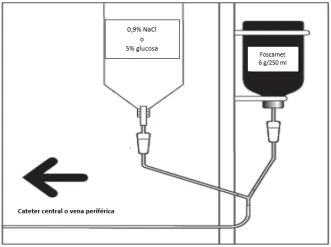
If a Y-site infusion system is used, simultaneously infuse 0.5 to 1 litre of 0.9% NaCl or 5% glucose.
Do not administer other products in the same infusion. When the product is administered via peripheral vein infusion, simultaneous intravenous hydration serves as dilution (see section “Hydration”).
Diagram of a Y-site infusion system
Hydration:
Special attention must be paid to preventing foscarnet-induced renal toxicity by ensuring patients receive adequate hydration.
If a Y-site infusion system is used, 0.5 to 1 litre of 0.9% NaCl or 5% glucose must be simultaneously infused. In eligible patients, oral hydration with similar hydration regimens has been used. Clinically dehydrated patients must have their condition corrected before initiating foscarnet treatment.
Each vial of foscarnet must be used to treat only one patient in a single infusion.
Accidental contact of foscarnet sodium solution with skin or eyes may cause local irritation and a burning sensation. In case of accidental contact, the affected area should be washed thoroughly with water.
Foscarnet that has been refrigerated or exposed to temperatures below freezing point may precipitate. The precipitate may redissolve by maintaining the vial at room temperature with constant agitation.
Disposal of unused medication and all materials that have come into contact with it must be carried out in accordance with local regulations.