Foradil Aerolizer 12 micrograms powder for inhalation (hard capsule)
Spain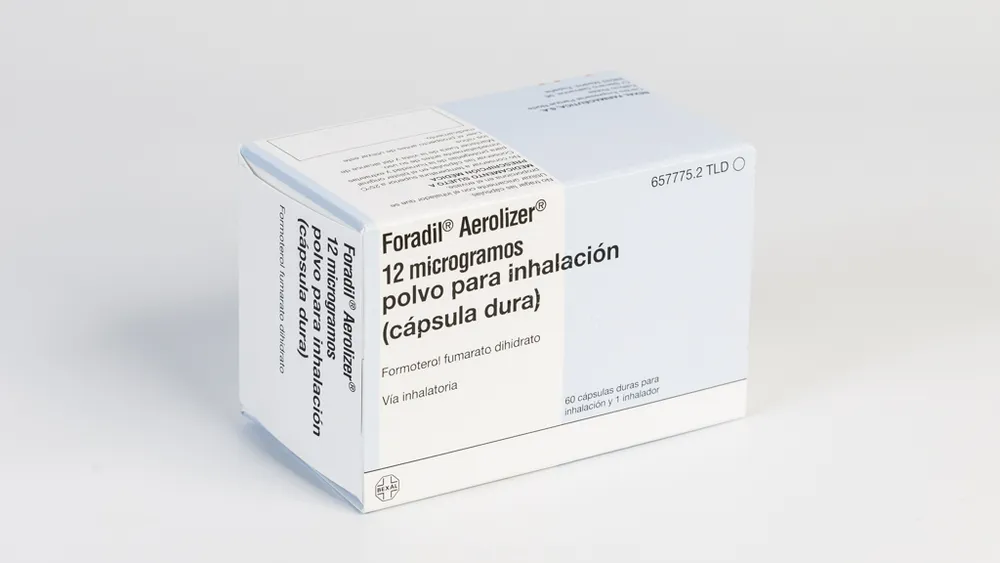
Instructions for Use
Package leaflet: Information for the user
Introduction
Package leaflet: information for the user
Foradil Aerolizer 12 micrograms inhalation powder (hard capsule)
Formoterol fumarate dihydrate
Read all of this leaflet carefully before you start using this medicine, because it contains important information for you.
If you have any questions, consult your doctor or pharmacist.
|
Package leaflet contents:
- What Foradil Aerolizer is and what it is used for
- What you need to know before using Foradil Aerolizer
- How to use Foradil Aerolizer
- Possible side effects
- Storage of Foradil Aerolizer
- Contents of the pack and other information
1. What Foradil Aerolizer is and what it is used for
Foradil Aerolizer contains a substance called formoterol fumarate dihydrate. It belongs to a group of medicines known as "bronchodilators" or "long-acting beta-agonists".
This medicine is used:
- In combination with inhaled corticosteroids as maintenance treatment for moderate to severe asthma.
- To prevent breathing difficulty caused by inhaling allergens (substances that cause allergies), cold air, or exercise.
- As maintenance treatment for relief of symptoms in patients with chronic obstructive pulmonary disease (COPD).
2. What you need to know before using Foradil Aerolizer
Carefully follow all instructions from your doctor or pharmacist, even if they differ from those contained in this leaflet.
Do not use Foradil Aerolizer:
- If you are allergic to formoterol, or to any of the other components of this medicine (listed in section 6).
Discuss with your doctor the risks and benefits of treating your asthma with this medicine.
Warnings and precautions
Talk to your doctor or pharmacist before starting to use Foradil Aerolizer.
Take special care with this medicine:
-
If you have heart disease or a condition such as “prolongation of the QT interval” (an abnormal electrical signal detected on your electrocardiogram).
-
If you have high blood pressure.
-
If you have hyperthyroidism (a disease of the thyroid gland).
-
If you have an aneurysm (a localized dilation in an artery caused by degeneration or weakening of the blood vessel wall).
-
If you are diabetic or have been advised by your doctor that you have an intolerance to certain sugars, consult your doctor before taking this medicine.
Treatment with Foradil Aerolizer may lead to increased blood sugar levels. Therefore, if you are diabetic, you will need to monitor your blood sugar levels.
-
If you have a phaeochromocytoma (a tumor of the adrenal gland that can affect blood pressure).
-
If you have asthma, do not use Foradil Aerolizer as your only asthma medication. Use this medicine only in combination with an inhaled corticosteroid (ICS).
-
If you feel you are experiencing difficulty breathing or wheezing while using this medicine, continue using Foradil Aerolizer but see your doctor as soon as possible, as you may need additional treatment.
Do not use this medicine to relieve sudden wheezing. Always carry with you a short-acting beta2 agonist medicine (a rescue inhaler prescribed by your doctor) to treat sudden asthma symptoms.
Important information about this medicine
- Do not change or stop any treatments used to control or treat your breathing problems, including inhaled corticosteroids. Your doctor will adjust your treatment according to your needs.
- Once your asthma is well controlled, your doctor may consider gradually reducing the dose of this medicine.
- If your asthma is well controlled with an inhaled corticosteroid, you should not use this medicine.
- Do not use this medicine if you only occasionally need a short-acting beta2 agonist (rescue inhaler).
- While using Foradil Aerolizer, do not use other medicines with a similar effect, such as salmeterol (long-acting beta2 agonists).
- Do not start treatment with this medicine or increase the dose recommended by your doctor during an asthma attack.
Treatment with Foradil Aerolizer may cause low potassium levels in the blood. This may make you more susceptible to an abnormal heart rhythm. Therefore, your doctor may need to monitor your blood potassium levels, especially if you have severe asthma.
Talk to your doctor if you have any questions about how Foradil Aerolizer works or why it has been prescribed for you.
Elderly patients (aged 65 years and older)
If you are 65 years of age or older, you may use this medicine at the same dose as adults.
Children and adolescents
Foradil Aerolizer is not suitable for children under 6 years of age.
Children aged 6 years and older should only use this medicine if they are able to use it correctly (see section "How to use the capsules of this medicine with your inhaler"). The inhaler should only be used under adult supervision.
Using Foradil Aerolizer with other medicines
Tell your doctor or pharmacist if you are taking, have recently taken, or might need to take any other medicines. This is especially important if you are taking any of the following:
- Monoamine oxidase inhibitors (MAOIs) or tricyclic antidepressants (TCAs), used to treat depression and mood disorders.
- Sympathomimetic agents, medicines similar to adrenaline used to treat asthma and nasal congestion.
- Antihistamines, commonly used to prevent or treat the main symptoms of an allergic reaction.
- Steroids, often used to treat asthma and other anti-inflammatory conditions.
- Diuretics, used to treat oedema (fluid retention), heart failure, and high blood pressure.
- Beta-blockers, used to treat high blood pressure, heart failure, angina, anxiety, and abnormal heart rhythms. Certain eye drops used to treat glaucoma may contain beta-blockers.
- Quinidine, disopyramide, and procainamide, used to treat abnormal heart rhythms.
- Phenothiazine derivatives, used to control mental disorders such as schizophrenia, mania, psychotic states, and anxiety.
- Digitalis, used to treat heart failure and abnormal heart rhythms.
- Xanthine derivatives, used to treat asthma and chronic obstructive pulmonary disease.
- Macrolides (e.g. erythromycin), used to treat bacterial infections.
- Anaesthetics such as halogenated hydrocarbons (e.g. halothane), used to induce anaesthesia during surgery.
- Anticholinergics (e.g. ipratropium bromide), used to treat gastrointestinal or genitourinary disorders.
Your doctor may need to change or even stop the dose of one of your medicines.
If your doctor has prescribed other medicines that you must take regularly for your respiratory condition, it is important that you continue taking them as usual and that you DO NOT STOP or reduce the dose, even if you start to feel much better.
Pregnancy and breastfeeding
If you are pregnant or breastfeeding, think you may be pregnant, or are planning to become pregnant, consult your doctor or pharmacist before using this medicine.
Pregnancy
You should not use this medicine during pregnancy unless instructed by your doctor. They will inform you of the potential risks of taking Foradil Aerolizer during pregnancy.
Breastfeeding
You should consult your doctor before taking Foradil if you are breastfeeding.
Driving and using machines
In some patients, this medicine may cause dizziness. If you feel dizzy, do not drive, operate machinery, or perform any activity requiring your attention.
Foradil Aerolizer contains lactose
This medicine contains lactose. It may cause allergic reactions in patients with allergy to cow's milk protein. If your doctor has diagnosed you with an intolerance to certain sugars, consult with them before taking this medicine.
Use in athletes
Athletes are advised that this medicine contains a component that may result in a positive analytical finding in doping controls.
3. How to use Foradil Aerolizer
Follow exactly the administration instructions for this medicine provided in this leaflet or as directed by your doctor. If in doubt, consult your doctor or pharmacist.
Your doctor will determine the amount and frequency of Foradil Aerolizer you should use, according to your individual needs. Do not exceed the recommended dose. Remember to take your medicine as prescribed.
The effect of a dose lasts up to 12 hours.
Do not swallow the capsules. They must be used by inhaling the contents using the Aerolizer inhaler.
Use in adults (including elderly patients)
Maintenance treatment of asthma
For the treatment of asthma, Foradil Aerolizer will always be prescribed together with an inhaled corticosteroid.
- The usual recommended dose is 1 inhaled capsule twice daily. In more severe cases, 2 capsules twice daily may be administered.
- In addition to the regular dose, you may occasionally need an extra 1 or 2 capsules per day to relieve your usual symptoms. If you need to take these additional doses more than twice a week, consult your doctor, as this may indicate worsening of your condition.
- The maximum recommended daily dose for adults is 4 capsules.
Prevention of breathing difficulties caused by inhaling allergens, cold air, or exercise
- The recommended dose is 1 inhaled capsule taken at least 15 minutes before exercise or exposure to an allergen or cold air.
- In some cases, your doctor may advise you to use 2 capsules to prevent wheezing and bronchospasm.
Maintenance treatment of COPD (chronic obstructive pulmonary disease)
- The recommended dose is 1 inhaled capsule twice daily, administered using the inhaler as described in the section “How to use the capsules of this medicine with your inhaler”. In more severe cases, 2 inhaled capsules twice daily may be administered.
Use in children and adolescents (from 6 years of age)
The use of this medicine is not recommended in children under 6 years of age. See the “Children and adolescents” section in section 2. What you need to know before starting to use Foradil Aerolizer.
Maintenance treatment of asthma
- The recommended dose is 1 inhaled capsule twice daily.
- The maximum recommended daily dose is 2 capsules per day.
Prevention of breathing difficulties caused by inhaling allergens, cold air, or exercise
- The recommended dose is 1 inhaled capsule taken at least 15 minutes before exercise or exposure to an allergen or cold air.
How to use the capsules of this medicine with your inhaler
Follow the instructions below to learn how to use this medicine.
Use the capsules of this medicine only with the inhaler provided in the package. The Aerolizer inhaler included in the package has been specifically designed for use with this medicine.
Remove the capsule from the blister pack just before use. Make sure your hands are completely dry to prevent the capsule from becoming damp.
Do not swallow the capsule. The powder inside the capsule is for inhalation only.
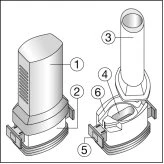
| The Aerolizer inhaler consists of the following parts:
The base consists of:
|
Instructions for proper use
|
|
|
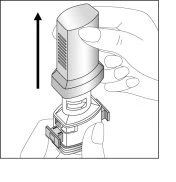
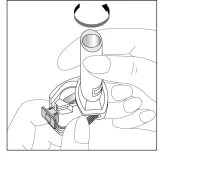
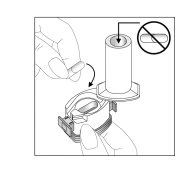
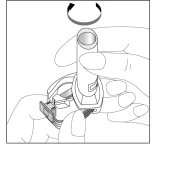
Firmly hold the base of the inhaler and rotate the mouthpiece in the direction of the arrow. |
|
IMPORTANT: DO NOT PLACE THE CAPSULE INTO THE MOUTHPIECE! |
|
|
|
Note: The capsule may break into small gelatin fragments that could enter your mouth or throat. Gelatin is edible and therefore not harmful to health. |
|
|
|
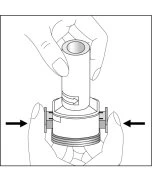
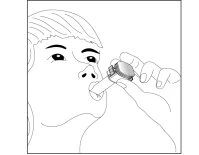
Note: You should hear a sound as the capsule spins in the chamber above the capsule compartment. If you do not hear this sound, open the capsule compartment and check whether the capsule is loose inside. Repeat step 7. DO NOT attempt to pierce the capsule by repeatedly pressing the buttons. |
| |
|
|
|
Questions / How to avoid problems
- How can I avoid breaking the capsule into small fragments?
The capsules may break when you press the blue buttons (step 5), and small fragments may enter your mouth or throat when you inhale. You can avoid this by:
- Pressing the blue buttons only once.
- Keeping the capsules in their original packaging (blister) until use.
- Storing the capsules at a temperature not exceeding 25°C.
- Protecting the capsules from moisture.
- Are capsule fragments harmful to health?
No. The capsule is made of edible gelatin, which is not harmful to health.
Any gelatin fragments entering your mouth or throat can be safely swallowed.
- How can I dislodge the capsule if it is stuck in the capsule compartment?
Open the Aerolizer, turn it upside down, and gently tap the bottom.
- What should I do if the blue buttons get stuck?
Gently pull the blue buttons back to their initial position using the protruding side parts.
- How can I tell whether I have actually taken the dose?
- You will hear a sound when you inhale through the Aerolizer.
- You may notice a sweet taste in your mouth, due to the lactose. You might feel some powder at the back of your throat, which is normal.
- The capsule will be empty.
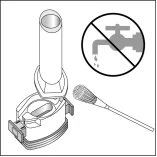
- How can I remove powder from inside the Aerolizer?
- Use a dry cloth or a soft brush.
- Remember never to wash the Aerolizer.
If you use more Foradil Aerolizer than you should
If you accidentally use more Foradil Aerolizer than prescribed by your doctor, you may experience nausea or vomiting, or you may have tremor, headache, dizziness (possible symptoms of high blood pressure), rapid heartbeat, or drowsiness. Inform your doctor immediately or go to the nearest emergency department. You may require medical treatment. Take the medicine package with you.
In case of overdose or accidental ingestion, contact the Toxicology Information Service. Telephone 91 562 04 20.
If you forget to use Foradil Aerolizer
Do not take a double dose to make up for a missed dose. If you forget a dose, take it as soon as you remember. If it is almost time for your next dose, skip the missed dose and continue with your regular dosing schedule.
If you have any other questions about the use of this medicine, ask your doctor or pharmacist.
4. Possible adverse effects
Like all medicines, this medicine can cause adverse effects, although not everyone will experience them.
In some cases, severe asthma attacks have been observed (severe worsening of breathlessness, cough, wheezing (whistling sounds), or chest tightness, which may lead to hospitalization).
Some effects may be serious: if you experience any of these adverse effects, stop taking this medicine and contact your doctor immediately:
Uncommon: may affect up to 1 in 100 people
- Bronchospasm (constriction of the airways causing difficulty breathing), with wheezing or coughing and breathing difficulties.
Very rare: may affect up to 1 in 10,000 people
- Allergic reactions, for example if you feel weak (low blood pressure), develop a skin rash, or experience itching or swelling of the face.
Frequency not known: cannot be estimated from the available data
- Muscle weakness, muscle spasms, and/or abnormal heart rhythm (these symptoms could indicate low potassium levels in the blood).
- Irregular heartbeat (including rapid heartbeat).
Chest pain with a constricting sensation (a symptom of angina pectoris).
Other adverse effects:
Common: may affect up to 1 in 10 people
- Headache
- Tremor
- Palpitations
Uncommon: may affect up to 1 in 100 people
- Restlessness
- Anxiety
- Nervousness
- Sleep disorders
- Rapid heartbeat
- Throat irritation
- Dry mouth
- Muscle cramps
- Muscle pain
- Dizziness
Very rare: may affect up to 1 in 10,000 people
-
Nausea
-
Taste disturbance
-
Swelling of the hands, ankles, or feet
-
QT interval prolongation
Frequency not known: cannot be estimated from the available data
- Excessive thirst, frequent urination, and prolonged tiredness (possible signs of high blood sugar levels).
- Cough
- Skin rash
- Headache and dizziness (symptoms of high blood pressure).
Some of these adverse effects may resolve spontaneously.
Reporting of adverse effects
If you experience any adverse effect, consult your doctor or pharmacist, even if it is a possible adverse effect not listed in this leaflet. You can also report them directly via the Spanish Pharmacovigilance System for Human Medicines: www.notificaRAM.es. By reporting adverse effects, you can help provide more information on the safety of this medicine.
5. Storage of Foradil Aerolizer
Keep this medicine out of the sight and reach of children.
Do not use this medicine after the expiry date stated on the packaging. The expiry date refers to the last day of the month indicated.
Do not store above 25°C.
Store in the original packaging (blister pack) together with the inhaler to protect it from moisture.
Always discard the old inhaler and use the new one provided in the pack.
Medicines must not be disposed of via wastewater or household waste. Dispose of packaging and unused medicines at the SIGRE collection point at your pharmacy (or any other medicine waste collection system). Ask your pharmacist how to dispose of packaging and medicines you no longer need. In this way, you will help protect the environment.
6. Contents of the pack and other information
To request further information about this medicine, please contact your doctor or pharmacist.
Composition of Foradil Aerolizer:
-
The active substance is formoterol fumarate dihydrate.
-
The other components are lactose monohydrate (which contains milk proteins) and gelatin.
Appearance of the product and contents of the pack
Foradil Aerolizer capsules are packed in blister packs.
Each pack contains 60 hard capsules and one inhaler.
Each hard capsule of Foradil Aerolizer contains 12 micrograms of formoterol fumarate dihydrate and must be used with the Aerolizer inhaler provided in the pack.
Marketing Authorization Holder and Manufacturer
Marketing Authorization Holder
BEXAL FARMACÉUTICA, S.A.
Centro Empresarial Parque Norte
Edificio Roble
C/ Serrano Galvache, 56
28033 Madrid
Manufacturer
Novartis Farmacéutica, S.A.
Gran Via de les Corts Catalanes, 764
08013 Barcelona
Spain
Novartis Pharma GmbH
Roonstrasse 25
90429 Nürnberg
Germany
Salutas Pharma GmbH
Otto-von-Guericke-Allee 1
39179 Barleben
Germany
Date of the most recent revision of this leaflet: October 2022
Detailed information on this medicine is available on the website of the Spanish Agency of Medicines and Medical Devices (AEMPS): http://www.aemps.gob.es/
Similar Medications
-
Formoterol Aldo-Union 12 micrograms inhalation powder (hard capsules)
Form: powder for inhalation, hard capsule
Active substance Dosage FORMOTEROL FUMARATE DIHYDRATE 0,0125 mg Manufacturer: Laboratorio Aldo Union S.L.
-
Formoterol Stada 12 micrograms inhalation powder (hard capsule)
Form: powder for inhalation, hard capsule
Active substance Dosage FORMOTEROL FUMARATE DIHYDRATE 0,0125 mg Manufacturer: Laboratorio Stada S.L.
This page has been machine-translated and may contain inaccuracies. The original data is available in the manufacturing country's language.
Last data check: May 18, 2026 · Data source: CIMA — AEMPS