Fluvastatin Cinfa 80 mg prolonged-release tablets EFG
Spain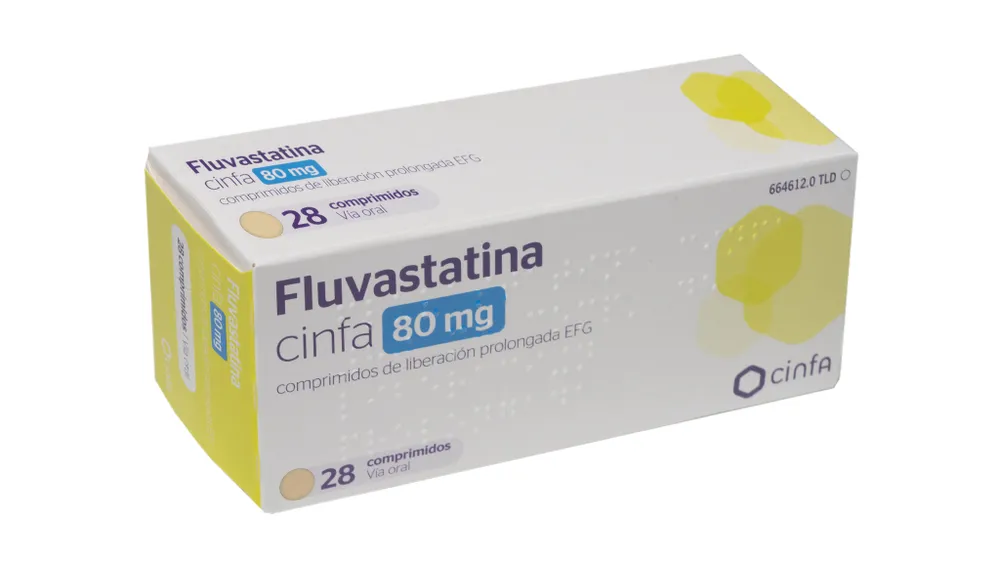
Table of Contents
- Package leaflet: Information for the user
- Introduction
- 1. What fluvastatin cinfa is and what it is used for
- 2. What you need to know before taking Fluvastatin cinfa
- 3. How to take Fluvastatine cinfa
- 4. Possible adverse effects
- 5. Storage of Fluvastatin cinfa
- 6. Contents of the pack and other information
Package leaflet: Information for the user
Introduction
Package leaflet: information for the user
Fluvastatin cinfa 80 mg prolonged-release tablets EFG
Read all of this leaflet carefully before you start taking this medicine because it contains important information for you.
- Keep this leaflet as you may need to read it again.
- If you have any questions, ask your doctor or pharmacist.
- This medicine has been prescribed for you only and must not be given to other people, even if they have the same symptoms as you, because it could harm them.
- If you experience any side effects, talk to your doctor or pharmacist, even if the side effects are not listed in this leaflet. See section 4.
Contents of this leaflet
- What Fluvastatin cinfa is and what it is used for
- What you need to know before taking Fluvastatin cinfa
- How to take Fluvastatin cinfa
- Possible side effects
- How to store Fluvastatin cinfa
- Contents of the pack and other information
1. What fluvastatin cinfa is and what it is used for
Fluvastatin cinfa contains the active substance fluvastatin sodium, which belongs to a group of medicines known as statins—lipid-lowering agents that reduce fat (lipids) in the blood. They are used in patients whose condition cannot be controlled by diet and exercise alone.
-
Fluvastatin cinfa is a medicine used to treat high levels of fats in the blood in adults, particularly total cholesterol and so-called "bad" cholesterol or LDL-cholesterol, which is associated with an increased risk of heart disease and stroke:
- in adult patients with high blood cholesterol levels.
- in adult patients with high levels of both cholesterol and triglycerides (another type of lipid) in the blood.
-
Your doctor may also prescribe fluvastatin to help prevent other serious heart problems (e.g., a heart attack) in patients who have already undergone heart catheterization or a procedure on the blood vessels of the heart.
If you have any questions about how fluvastatin works or why it has been prescribed for you, please consult your doctor.
2. What you need to know before taking Fluvastatin cinfa
Carefully follow all instructions given by your doctor, even if they differ from the general information included in this leaflet.
Before taking Fluvastatin cinfa, read the following information.
Do not take Fluvastatin cinfa
- if you are allergic to fluvastatin or to any of the other ingredients of this medicine (listed in section 6).
- if you have liver problems, or have an unexplained and persistent increase in the levels of certain liver enzymes (transaminases).
- if you are pregnant or breastfeeding (see “Pregnancy and breastfeeding”).
If you are in any of these situations, do not take fluvastatin and consult your doctor.
Warnings and precautions
Consult your doctor or pharmacist before starting to take Fluvastatin cinfa:
- if you are currently taking or have taken within the last 7 days an oral or injectable medicine containing fusidic acid (used to treat bacterial infection). The combination of fusidic acid and fluvastatin may cause serious muscle problems (rhabdomyolysis).
- if you have previously had liver disease. Usually, your liver function will be monitored before starting treatment with Fluvastatin cinfa, when the dose is increased, and at different time intervals during treatment to monitor for adverse effects.
- if you have kidney disease.
- if you have thyroid gland disease (hypothyroidism).
- if you or a family member has a history of muscle disorders.
- if you have experienced muscle problems with another lipid-lowering medicine.
- if you regularly drink large amounts of alcohol.
- if you have a severe infection.
- if you have very low blood pressure (symptoms may include dizziness, vertigo).
- if you perform excessive controlled or uncontrolled physical exercise.
- if you are about to undergo surgery.
- if you have severe metabolic, endocrine, or electrolyte disorders such as poorly controlled diabetes or low potassium levels in the blood.
- if you have or have had myasthenia (a disease characterized by generalized muscle weakness that, in some cases, affects the muscles used for breathing) or ocular myasthenia (a disease causing weakness of the eye muscles), since statins may sometimes worsen the condition or trigger the onset of myasthenia (see section 4).
While you are taking this medicine, your doctor will monitor whether you have diabetes or are at risk of developing diabetes. This risk increases if you have high levels of sugar and fats in the blood, are overweight, or have high blood pressure.
Check with your doctor or pharmacist before taking Fluvastatin cinfa:
- if you have severe respiratory insufficiency.
If you are in any of these situations, inform your doctor before taking fluvastatin. Your doctor will perform a blood test before prescribing fluvastatin to you.
Also inform your doctor or pharmacist if you experience persistent muscle weakness. Additional tests and treatments may be needed to diagnose and manage this problem.
If during treatment with fluvastatin you experience symptoms or signs such as nausea, vomiting, loss of appetite, yellowing of the eyes or skin, confusion, euphoria or depression, mental slowness, difficulty speaking, sleep disturbances, tremors, or easy bruising or bleeding, these may be signs of liver failure. In this case, contact your doctor immediately.
Fluvastatin cinfa and elderly patients over 70 years of age
If you are over 70 years old, your doctor may want to assess whether you have risk factors for muscle disorders. You may require specific blood tests.
Children and adolescents
Fluvastatin has not been studied and is not indicated in children under 9 years of age. For information on dosing in children over 9 years of age and adolescents, see section 3.
There is no experience with the use of fluvastatin in combination with nicotinic acid, cholestyramine, or fibrates in children and adolescents.
Taking Fluvastatin cinfa with other medicines
Inform your doctor or pharmacist if you are taking, have recently taken, or might need to take any other medicines.
Fluvastatin may be taken alone or in combination with other cholesterol-lowering medicines prescribed by your doctor.
After taking a resin, e.g., cholestyramine (used mainly to treat high cholesterol), wait at least 4 hours before taking fluvastatin.
If you need to take oral fusidic acid to treat a bacterial infection, you must stop using this medicine. Your doctor will advise you when you can restart treatment with fluvastatin. The use of fluvastatin with fusidic acid may cause muscle weakness, tenderness, or pain (rhabdomyolysis). For further information on rhabdomyolysis, see section 4.
Inform your doctor and pharmacist if you are taking any of the following medicines:
- Cyclosporine (a medicine used to suppress the immune system).
- Fibrates (e.g., gemfibrozil), nicotinic acid, or bile acid sequestrants (medicines used to lower levels of bad cholesterol).
- Fluconazole (a medicine used to treat fungal infections).
- Rifampicin (an antibiotic).
- Phenytoin (a medicine used to treat epilepsy).
- Oral anticoagulants such as warfarin (medicines used to reduce blood clots).
- Glibenclamide (a medicine used to treat diabetes).
- Colchicine (used to treat gout).
Taking Fluvastatin cinfa with food and drink
You may take Fluvastatin cinfa with or without food.
Pregnancy and breastfeeding
If you are pregnant or breastfeeding, think you may be pregnant, or plan to become pregnant, consult your doctor or pharmacist before using this medicine.
Do not take fluvastatin if you are pregnant or breastfeeding, as the active substance may cause harm to the fetus and it is unknown whether it is excreted in breast milk. You must take appropriate precautions to avoid becoming pregnant while receiving treatment with fluvastatin.
If you become pregnant while taking this medicine, you must stop taking fluvastatin and consult your doctor.
Your doctor will discuss with you the potential risks of taking fluvastatin during pregnancy.
Driving and using machines
There is no information available on the effects of fluvastatin on the ability to drive or use machines.
Fluvastatin cinfa contains sodium. This medicine contains less than 23 mg of sodium (1 mmol) per tablet; therefore, it is essentially “sodium-free”.
3. How to take Fluvastatine cinfa
Follow exactly the instructions for use of this medicine as given by your doctor or pharmacist. If in doubt, consult your doctor or pharmacist again. Do not take a higher dose than indicated.
Your doctor will recommend that you follow a low-cholesterol diet. Continue this diet while taking fluvastatin.
How much Fluvastatine cinfa should you take?
Recommended doses in adults
- The dosage range of fluvastatin for adults is 20 mg to 80 mg daily, depending on the required reduction in cholesterol levels. Your doctor may adjust your dose at intervals of 4 weeks or longer.
Use in children and adolescents
- In children (aged 9 years and older), the usual starting dose is 20 mg of fluvastatin per day. The maximum daily dose is 80 mg. Your doctor may adjust your dose at intervals of 6 weeks.
Your doctor will inform you exactly how much fluvastatin you should take.
Depending on how you respond to treatment, your doctor may prescribe a higher or lower dose.
When to take Fluvastatine cinfa
If you are taking fluvastatin, you may take your dose at any time of day.
Fluvastatin may be taken with or without food. Swallow the tablet whole with a glass of water.
If you take more Fluvastatine cinfa than you should
In case of overdose or accidental ingestion, contact your doctor or pharmacist immediately or call the Poison Information Service at telephone number 91 562 04 20, indicating the medicine and the amount ingested.
You may require medical attention.
If you forget to take Fluvastatine cinfa
Take the missed dose as soon as you remember. However, do not take it if less than 4 hours remain before the next dose. In this case, take the next dose at the usual time.
Do not take a double dose to make up for a missed dose.
If you stop taking Fluvastatine cinfa
To maintain the benefits of your treatment, do not stop taking fluvastatin unless your doctor tells you to. You should continue taking fluvastatin as prescribed to maintain low levels of your "bad" cholesterol. Fluvastatin will not cure your condition but will help you control it. It is necessary to check your cholesterol levels regularly to monitor your progress.
If you have any further questions about the use of this medicine, ask your doctor or pharmacist.
4. Possible adverse effects
Like all medicines, this medicine can cause adverse effects, although not everyone will experience them.
Some rare adverse effects (may affect up to 1 in 1,000 patients) or very rare adverse effects (may affect up to 1 in 10,000 patients) could be serious: seek immediate medical assistance if:
- you experience unexplained muscle pain, tenderness, or weakness. These may be early signs of potentially serious muscle breakdown. This can be prevented if your doctor stops your treatment with fluvastatin as soon as possible. These adverse effects have also been observed with similar medicines in this class (statins).
- you experience unusual tiredness or fever, yellowing of the skin or eyes, or dark-colored urine (signs of hepatitis).
- you develop signs of skin reactions such as rash, blisters, redness, itching, swelling of the face, eyelids, or lips.
- you have skin swelling, difficulty breathing, or dizziness (signs of a severe allergic reaction).
- you experience bleeding or bruising more easily than normal (signs of a reduced number of blood platelets).
- you develop red or purple skin lesions (signs of blood vessel inflammation).
- you develop a skin rash with red spots, mainly on the face, possibly accompanied by fatigue, fever, nausea, or loss of appetite (signs of a lupus-like reaction).
- you have severe pain in the upper abdomen (signs of pancreatitis).
If you experience any of these adverse effects, inform your doctor immediately.
Other adverse effects: inform your doctor if you are concerned.
Common (may affect up to 1 in 10 patients):
Sleep disturbances, headache, stomach discomfort, abdominal pain, nausea, abnormal blood test results related to muscle and liver parameters.
Very rare (may affect up to 1 in 10,000 patients):
Tingling or numbness in the hands or feet, altered or reduced sensation.
Frequency not known (cannot be estimated from available data):
Impotence, persistent muscle weakness, respiratory problems including persistent cough and/or difficulty breathing or fever, diarrhea.
Myasthenia gravis (a condition causing generalized muscle weakness which, in some cases, affects the muscles used for breathing).
Ocular myasthenia (a condition causing weakness of the eye muscles).
Consult your doctor if you experience worsening weakness in the arms or legs after periods of activity, double vision, drooping eyelids, difficulty swallowing, or difficulty breathing.
Other possible adverse effects:
- Sleep disturbances, including insomnia and nightmares
- Memory loss
- Sexual problems
- Depression
- Diabetes. This is more likely if you have high levels of sugar and fats in the blood, are overweight, or have high blood pressure. Your doctor will monitor you while you are taking this medicine.
- Inflammation, swelling, and irritation of a tendon.
Reporting of adverse effects
If you experience any type of adverse effect, consult your doctor or pharmacist, even if it is a possible adverse effect not listed in this leaflet. You may also report them directly via the Spanish Pharmacovigilance System for Human Medicines: https://www.notificaram.es. By reporting adverse effects, you can help provide more information on the safety of this medicine.
5. Storage of Fluvastatin cinfa
Keep this medicine out of sight and reach of children.
Do not store above 30°C.
Do not use this medicine after the expiry date stated on the packaging, after EXP. The expiry date refers to the last day of the month indicated.
Medicines should not be disposed of via wastewater drains or household waste. Dispose of unused medicines and their packaging at a pharmacy's SIGRE collection point. If you have any doubts, ask your pharmacist how to properly dispose of unused medicines and their packaging. This will help protect the environment.
6. Contents of the pack and other information
Composition of Fluvastatina cinfa
- The active substance is fluvastatin sodium.
Each prolonged-release tablet of Fluvastatina cinfa 80 mg contains 84.48 mg of fluvastatin sodium, equivalent to 80 mg of fluvastatin base.
The other components are: povidone, microcrystalline cellulose, hydroxyethyl cellulose, mannitol (E-421), magnesium stearate, hypromellose 50, macrogol 6000, yellow iron oxide (E-172) and titanium dioxide (E-171).
Appearance of the medicinal product and contents of the pack
Fluvastatina cinfa is presented as prolonged-release tablets, yellow, round and biconvex.
Fluvastatina cinfa 80 mg tablets are available in a pack (blister) containing 28 tablets.
Marketing Authorization Holder and Manufacturer
Marketing Authorization Holder
Laboratorios Cinfa, S.A.
Carretera Olaz-Chipi, 10. Polígono Industrial Areta
31620 Huarte (Navarra) - Spain
Manufacturer
Laboratorios Cinfa, S.A.
Carretera Olaz-Chipi, 10. Polígono Industrial Areta.
31620 Huarte (Navarra) - Spain
Actavis Ltd.
BLB015-016 Bulebel Industrial Estate
Zejtun ZTN 3000
Malta
Date of the most recent review of this summary: May 2023
Detailed information on this medicinal product is available on the website of the Spanish Agency of Medicines and Health Products (AEMPS) (http://www.aemps.gob.es/)
You can access detailed and up-to-date information about this medicinal product by scanning with your mobile phone (smartphone) the QR code included in the package leaflet and outer packaging. You can also access this information at the following internet address: https://cima.aemps.es/cima/dochtml/p/71845/P_71845.html
QR code to: https://cima.aemps.es/cima/dochtml/p/71845/P_71845.html