Fluoxetine CINFA 20 mg hard capsules EFG
Spain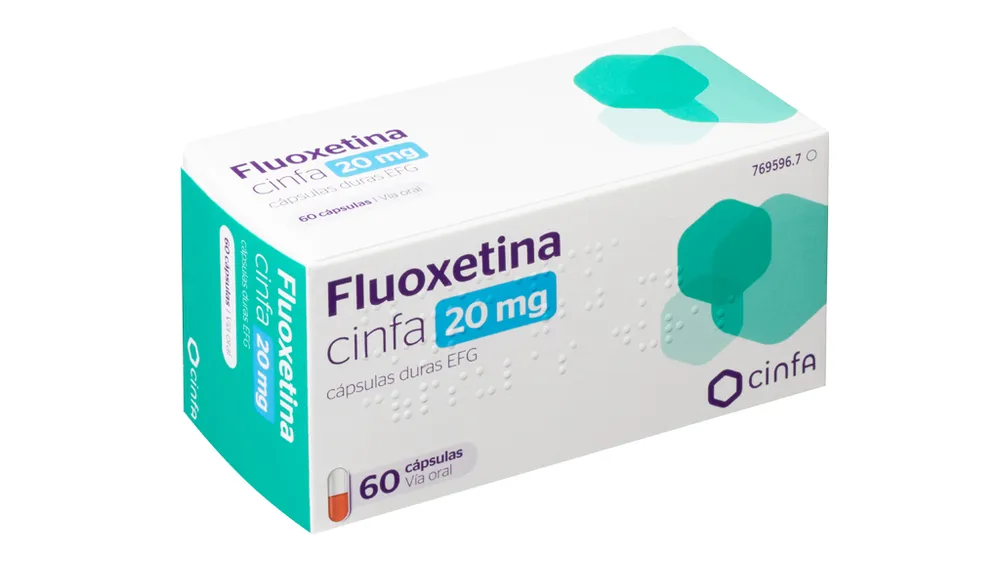
Table of Contents
Package leaflet: Information for the user
Introduction
Package leaflet: information for the user
fluoxetina cinfa 20 mg hard capsules EFG
Fluoxetine hydrochloride
Read all of this leaflet carefully before you start taking this medicine, because it contains important information for you.
- Keep this leaflet, as you may need to read it again.
- If you have any questions, ask your doctor or pharmacist.
- This medicine has been prescribed for you only, and you should not give it to others, even if they have the same symptoms as you, because it may harm them.
- If you experience any adverse effects, consult your doctor or pharmacist, even if they are effects not listed in this leaflet. See section 4.
Leaflet contents:
- What fluoxetina cinfa is and what it is used for
- What you need to know before taking fluoxetina cinfa
- How to take fluoxetina cinfa
- Possible adverse effects
- How to store fluoxetina cinfa
- Contents of the pack and other information
1. What fluoxetine cinfa is and what it is used for
Fluoxetine belongs to a group of medicines known as selective serotonin reuptake inhibitors (SSRIs).
This medicine is indicated for the treatment of:
Adults:
- Major depressive episodes.
- Obsessive-compulsive disorder.
- Bulimia nervosa: fluoxetine is indicated as an adjunct to psychotherapy for the reduction of binge eating and purging.
Children over 8 years and adolescents:
For moderate to severe depressive episodes, when there is no response to psychological therapy after 4 to 6 sessions. Fluoxetine should be offered to children or young people with moderate to severe depression only in combination with psychological therapy.
How fluoxetine cinfa works
Everyone has a substance in the brain called serotonin. People who are depressed or have obsessive-compulsive disorder or bulimia nervosa have lower levels of serotonin than others. The exact way fluoxetine and other SSRIs work is not fully understood, but they may help by increasing serotonin levels in the brain.
Treating these conditions is important to help achieve improvement. If left untreated, your condition may not resolve and could become more severe and more difficult to treat.
You may need to be treated for several weeks or months to ensure you are symptom-free.
2. What you need to know before taking fluoxetina cinfa
Do not take fluoxetina cinfa
- If you are allergic to fluoxetine or any of the other ingredients of this medicine (listed in section 6). If you develop a rash or any other allergic reaction (such as itching, swelling of the face or lips, or difficulty breathing), stop taking the capsules immediately and contact your doctor as soon as possible.
- If you are taking other medicines known as non-selective irreversible monoamine oxidase inhibitors (MAOIs), as a serious or even fatal adverse reaction may occur (e.g., iproniazid, used to treat depression).
Treatment with fluoxetine may only be started two weeks after stopping treatment with a non-selective irreversible MAOI.
Do not take any non-selective irreversible MAOI for at least five weeks after stopping fluoxetine treatment. If you have been prescribed fluoxetine for a long period of time and/or at a high dose, your doctor may consider the need for a longer interval before starting an MAOI.
- If you are taking metoprolol (to treat heart failure), as this increases the risk of excessive slowing of the heartbeat.
Warnings and precautions
Talk to your doctor or pharmacist before taking fluoxetina cinfa.
-
If you have heart disease.
-
If you begin to experience fever, muscle stiffness, or tremors, or changes in your mental state such as confusion, irritability, or extreme agitation, you may be experiencing a condition called “serotonin syndrome” or “neuroleptic malignant syndrome.” Although rare, this syndrome can be life-threatening; contact your doctor immediately, as you may need to stop treatment with fluoxetine.
-
If you suffer from mania or have previously experienced mania; if you have a manic episode, contact your doctor immediately, as you may need to stop treatment with fluoxetine.
-
If you have a history of bleeding disorders, or if you develop unusual bruising or bleeding, or if you are pregnant (see “Pregnancy”).
-
If you are taking medicines that affect blood clotting (see “Other medicines and fluoxetina cinfa”).
-
If you have epilepsy or seizures. If you have a seizure or experience an increase in seizure frequency, contact your doctor immediately; you may need to stop treatment with fluoxetine.
-
If you are receiving electroconvulsive therapy (ECT).
-
If you are being treated with tamoxifen (used to treat breast cancer) (see “Other medicines and fluoxetina cinfa”).
-
If you begin to feel restless and unable to sit still or remain at rest (akathisia). Increasing your dose of fluoxetine could worsen this.
-
If you have diabetes (your doctor may need to adjust your insulin or other antidiabetic treatment dose).
-
If you have liver problems (your doctor may need to adjust your dose).
-
If you have a slow resting heart rate and/or if you know you may have salt loss due to prolonged severe diarrhea and vomiting or use of diuretics (water tablets).
-
If you are taking diuretics (water tablets), especially if you are elderly.
-
Glaucoma (increased eye pressure).
Suicidal thoughts and worsening of depression or anxiety disorder
If you are depressed and/or have an anxiety disorder, you may occasionally have thoughts of self-harm or suicide. These may increase when starting antidepressants, as all these medicines take time to work—usually about two weeks, although in some cases it may take longer.
You are more likely to have these types of thoughts:
- If you have previously had suicidal or self-harming thoughts.
- If you are a young adult. Clinical trial data have shown an increased risk of suicidal behavior in patients under 25 years of age with psychiatric disorders treated with antidepressants.
If at any time you have thoughts of suicide or self-harm, contact your doctor or go directly to the hospital.
It may help to inform a close family member or friend that you are depressed or have an anxiety disorder and ask them to read this leaflet. You may ask them whether they notice your depression or anxiety worsening, or if they are concerned about changes in your behavior.
Children and adolescents
Patients under 18 years of age have an increased risk of adverse effects such as suicide attempts, suicidal thoughts, and hostility (mainly aggression, confrontational behavior, and irritability) when taking this type of medicine. Fluoxetine should only be used in children and adolescents aged 8 to 18 years for the treatment of moderate to severe depressive episodes (in combination with psychological therapy), and should not be used for other indications in this age group.
In addition, there is only limited information regarding the long-term safety of fluoxetine with respect to growth, puberty, and cognitive, emotional, and behavioral development in this age group. Nevertheless, if you are under 18 years of age, your doctor may prescribe fluoxetine for the treatment of moderate to severe depressive episodes in combination with psychological therapy if they decide it is the most appropriate treatment for you. If your doctor prescribes fluoxetine to a patient under 18 years of age and you wish to discuss this decision, please consult your doctor again. You should inform your doctor if any of the symptoms mentioned above appear or worsen while patients under 18 years of age are taking fluoxetine.
Fluoxetine should not be used to treat children under 8 years of age.
Sexual dysfunction
Some medicines in the same group as fluoxetine (called SSRIs) may cause symptoms of sexual dysfunction (see section 4). In some cases, these symptoms persist after stopping treatment.
Other medicines and fluoxetina cinfa
Inform your doctor or pharmacist if you are taking, have recently taken, or might need to take any other medicines.
Do not take fluoxetine with:
-
Non-selective irreversible monoamine oxidase inhibitors (MAOIs), some of which are used to treat depression. Non-selective irreversible MAOIs must not be used with fluoxetine, as serious or even fatal reactions (serotonin syndrome) may occur (see section “Do not take fluoxetina cinfa”). Treatment with fluoxetine should only be started at least 2 weeks after stopping treatment with an irreversible MAOI inhibitor (e.g., tranilcypramine). Do not take any non-selective irreversible MAOI for at least 5 weeks after stopping fluoxetine treatment. If you have been prescribed fluoxetine for a long period and/or at a high dose, your doctor may consider the need for a longer interval before starting an MAOI.
-
Metoprolol when used for heart failure; as this increases the risk of excessive slowing of the heartbeat.
Fluoxetine may affect the action of other medicines (interactions):
-
Tamoxifen (used to treat breast cancer); your doctor may consider an alternative antidepressant treatment because fluoxetine may alter blood levels of this medicine, and a reduced effect of tamoxifen cannot be ruled out.
-
Monoamine oxidase A inhibitors (MAO-A), including moclobemide, linezolid (an antibiotic), and methylene blue chloride (also called methylene blue, indicated for the treatment of conjunctivitis, mild eye itching, and irritation): due to the risk of serious or even fatal adverse reactions (called serotonin syndrome). Fluoxetine treatment may be started the day after stopping treatment with reversible MAO inhibitors, but your doctor may monitor you closely and use a lower dose of the MAO-A inhibitor.
-
Mequitazine (used to treat allergies); as taking this medicine with fluoxetine may increase the risk of changes in the heart's electrical activity.
-
Phenytoin (a medicine used for epilepsy): fluoxetine may increase blood levels of this medicine, so your doctor should monitor and adjust your phenytoin dose more carefully when used with fluoxetine and perform more frequent check-ups.
-
Lithium, selegiline, St. John's wort, tramadol (for pain treatment), triptans (for migraine treatment), andtryptophan: there is an increased risk of mild serotonin syndrome if these medicines are taken with fluoxetine. Your doctor will perform more frequent check-ups.
-
Medicines that may affect heart rhythm, for example, Class IA and III antiarrhythmics, antipsychotics (e.g., phenothiazine derivatives, pimozide, haloperidol), tricyclic antidepressants, some antimicrobial agents (e.g., sparfloxacin, moxifloxacin, intravenous erythromycin, pentamidine), antimalarial treatments, particularly halofantrine, or some antihistamines (astemizole, mizolastine), as taking one or more of these medicines with fluoxetine may increase the risk of changes in the heart's electrical activity.
-
Anticoagulants (such as warfarin), NSAIDs (such as ibuprofen, diclofenac), aspirin, and other medicines that affect blood clotting (including clozapine, used to treat certain mental disorders). Fluoxetine may alter the effect of these medicines on blood. Your doctor will need to perform certain blood tests, adjust your dose, and monitor you more frequently if you start or stop fluoxetine treatment while taking warfarin.
-
Cyproheptadine (used to treat allergies); as it may reduce the effect of fluoxetine.
-
Medicines that reduce sodium levels in the blood (including medicines that increase urine production, desmopressin, carbamazepine, and oxcarbazepine); as using fluoxetine with these medicines may increase the risk of excessive reduction in blood sodium levels.
-
Antidepressants such as tricyclic antidepressants, other selective serotonin reuptake inhibitors (SSRIs), or bupropion, mefloquine or chloroquine (used to treat malaria), tramadol (for strong pain), or antipsychotics such as phenothiazines or butyrophenones; as using fluoxetine with these medicines may increase the risk of seizures.
-
Flecainide, propafenone, nebivolol, or encainide (for heart problems), carbamazepine (for epilepsy), atomoxetine or tricyclic antidepressants (e.g., imipramine, desipramine, and amitriptyline), or risperidone (for schizophrenia); as fluoxetine may alter blood levels of these medicines, your doctor may need to reduce their dose when administered together with fluoxetine.
Taking fluoxetina cinfa with food, drinks, and alcohol
- Fluoxetine may be taken with or without food, as preferred.
- Alcohol consumption is not recommended while taking this medicine.
Pregnancy, breastfeeding, and fertility
If you are pregnant or breastfeeding, think you may be pregnant, or plan to become pregnant, consult your doctor or pharmacist before using this medicine.
Pregnancy
Studies have reported an increased risk of congenital heart defects in babies whose mothers took fluoxetine during the first months of pregnancy. In the general population, approximately 1 in every 100 babies is born with a heart defect. This risk increased to about 2 in every 100 babies whose mothers took fluoxetine.
Medicines such as fluoxetine, when taken during pregnancy, particularly during the last 3 months, may increase the risk of a serious condition in newborns called persistent pulmonary hypertension of the newborn (PPHN), which causes the baby to breathe faster and appear bluish. These symptoms usually begin within the first 24 hours after birth. If this happens to your baby, contact your midwife and/or doctor immediately.
If you take fluoxetine late in pregnancy, there may be an increased risk of heavy vaginal bleeding shortly after delivery, especially if you have a history of bleeding disorders. Your doctor or midwife should be aware that you are taking fluoxetine so they can advise you appropriately.
It is preferable not to use this treatment during pregnancy unless the potential benefit outweighs the potential risk. Therefore, you and your doctor may decide to gradually discontinue fluoxetine during pregnancy or before becoming pregnant. However, depending on your circumstances, your doctor may advise that it is better for you to continue taking fluoxetine.
Caution should be exercised when using fluoxetine during pregnancy, especially during the last stage of pregnancy or just before delivery, as the following effects have been reported in newborns: irritability, tremors, muscle weakness, persistent crying, and difficulty feeding or sleeping.
Breastfeeding
Fluoxetine is excreted in breast milk and may cause adverse effects in infants. Breastfeeding should only be continued if absolutely necessary. If breastfeeding is continued, your doctor may prescribe a lower dose of fluoxetine.
Fertility
Animal studies have shown that fluoxetine reduces sperm quality.
Theoretically, this could affect fertility, but no impact on human fertility has been observed so far.
Driving and using machines
During treatment with fluoxetine, you may feel drowsy or dizzy. Do not drive or operate tools or machinery until you know how fluoxetine affects you.
3. How to take fluoxetine cinfa
Follow exactly the instructions for administration of this medicine as given by your doctor or pharmacist. If in doubt, consult your doctor or pharmacist again.
Do not take more capsules than prescribed by your doctor.
Method of administration
Swallow the capsules with water. Do not chew the capsules.
Adults
The recommended dose is:
- Depression: the recommended dose is 1 capsule (20 mg) daily. Your doctor may review and adjust your dose if necessary within the first 3 to 4 weeks after starting treatment. If needed, the dose may be gradually increased up to a maximum of 3 capsules (60 mg) daily.
The dose should be carefully increased to ensure you receive the lowest effective dose. You may not feel better immediately when starting your antidepressant medication. This is common, as improvement in depressive symptoms usually does not occur until several weeks after starting treatment. Patients with depression should be treated for a period of at least 6 months.
- Bulimia nervosa: the recommended dose is 3 capsules (60 mg) daily.
- Obsessive-compulsive disorder: the recommended dose is 1 capsule (20 mg) daily. Your doctor may review and adjust the dose after two weeks of treatment. If necessary, the dose may be gradually increased up to a maximum of 3 capsules (60 mg) daily. If no improvement is observed within the following ten weeks, your doctor will reconsider your treatment.
Use in children and adolescents
Treatment in children and adolescents aged 8 to 18 years with depression should be initiated and supervised by a specialist. The initial dose is 10 mg daily. After one or two weeks, your doctor may increase the dose to 20 mg daily. The dose should be carefully increased to ensure the patient remains on the lowest effective dose. Children with low body weight may require lower doses. If there is a satisfactory response to treatment, your doctor should re-evaluate the need for continued treatment after 6 months. If no improvement is seen within 9 weeks, treatment should be reconsidered.
Use in elderly patients
Dose increases prescribed by your doctor should be carried out more cautiously, and the daily dose generally should not exceed 2 capsules (40 mg). The maximum dose is 3 capsules (60 mg) daily.
Hepatic impairment
If you have liver problems or are taking other medications that may interact with fluoxetine, your doctor will decide whether to prescribe a lower dose or instruct you to take fluoxetine on alternate days.
If you take more fluoxetine cinfa than you should
If you take too many capsules, go immediately to the nearest hospital emergency department or contact your doctor without delay. If possible, bring the fluoxetine packaging with you.
Symptoms of overdose include: nausea, vomiting, seizures, cardiac problems (such as irregular heartbeat or cardiac arrest), respiratory problems, and changes in mental status ranging from agitation to coma.
In case of overdose or accidental ingestion, contact your doctor or pharmacist immediately or call the Toxicology Information Service at telephone number 91 562 04 20, indicating the medicine and the amount ingested.
If you forget to take fluoxetine cinfa
Do not worry if you forget a dose. Take the next dose the following day at your usual time. Do not take a double dose to make up for missed doses.
Taking your medicine at the same time each day may help you remember to take it regularly.
If you stop taking fluoxetine cinfa
Do not stop taking fluoxetine unless your doctor tells you to, even if you start to feel better. It is important that you continue taking your medicine.
Make sure you do not run out of medication.
You may experience the following effects (withdrawal symptoms) when stopping treatment with fluoxetine: dizziness, tingling sensations like pins and needles, sleep disturbances (vivid dreams, nightmares, insomnia), feelings of restlessness or agitation, unusual tiredness or weakness, anxiety, nausea and/or vomiting (feeling sick or being sick), tremors (shakiness), and headache.
Most people find that symptoms occurring when stopping fluoxetine are mild and resolve within a few weeks. If you experience these symptoms when stopping treatment, consult your doctor.
When stopping treatment with fluoxetine, your doctor will help you gradually reduce the dose over one to two weeks. This will help reduce the likelihood of withdrawal effects.
If you have any further questions about the use of this medicine, ask your doctor or pharmacist.
4. Possible adverse effects
Like all medicines, this medicine can cause adverse effects, although not everyone will experience them.
- If at any time you have suicidal thoughts or thoughts of self-harm, contact your doctor or go directly to the hospital (see section 2).
- If you develop a skin rash or allergic reactions such as itching, swelling of the lips/tongue, or wheezing/shortness of breath, stop taking the capsules and inform your doctor immediately.
- If you feel restless and as though you cannot sit still or remain motionless, you may be experiencing a condition called akathisia; increasing your fluoxetine dose could make you feel worse. If you feel this way, consult your doctor.
- Contact your doctor immediately if your skin becomes red or develops any kind of reaction, blisters appear, or your skin begins to peel. This occurs very rarely.
The most common adverse effects (very common adverse effects that may affect more than 1 in 10 people) are insomnia, headache, diarrhoea, malaise (nausea), and fatigue.
Some patients have experienced:
- A combination of symptoms (known as serotonin syndrome) including fever of unknown cause with increased breathing or heart rate, sweating, muscle stiffness or tremor, confusion, extreme agitation, or drowsiness (only in rare cases).
- Weakness, drowsiness, or confusion, mainly in elderly patients and in people treated with diuretics.
- Prolonged and painful erection.
- Irritability and extreme agitation.
- Heart problems, such as rapid or irregular heartbeat, fainting, collapse, or dizziness upon standing, which may indicate abnormal heart rhythm.
If you experience any of the adverse effects described above, inform your doctor immediately.
The following adverse effects have also been reported in patients taking fluoxetine:
Common (may affect up to 1 in 10 people)
- Loss of appetite, weight loss.
- Nervousness, anxiety.
- Restlessness, difficulty concentrating.
- Feeling of nervous tension.
- Decreased sex drive or sexual problems (including difficulty maintaining an erection during sexual activity).
- Sleep disturbances, abnormal dreams, tiredness, drowsiness.
- Dizziness.
- Altered sense of taste.
- Uncontrollable trembling movements.
- Blurred vision.
- Sensation of rapid or irregular heartbeat.
- Flushing.
- Yawning.
- Indigestion, vomiting.
- Dry mouth.
- Skin rash, hives, itching.
- Excessive sweating.
- Joint pain.
- Increased frequency of urination.
- Unexplained vaginal bleeding.
- Feeling of weakness or chills.
Uncommon (may affect up to 1 in 100 people)
- Feeling detached or distant from oneself.
- Strange thoughts.
- Euphoria.
- Sexual problems, including orgasmic difficulties, occasionally persisting after treatment discontinuation.
- Suicidal thoughts or self-harm.
- Teeth grinding.
- Muscle spasms, involuntary movements, or problems with balance or coordination.
- Memory disturbances.
- Dilated pupils.
- Ringing in the ears.
- Low blood pressure.
- Difficulty breathing.
- Nosebleeds.
- Difficulty swallowing.
- Hair loss.
- Increased tendency to bruise.
- Bruising or bleeding without explanation.
- Cold sweats.
- Difficulty urinating.
- Sensation of cold or heat.
- Abnormalities in liver function tests.
Rare (may affect up to 1 in 1,000 people)
- Low sodium levels in the blood.
- Reduced platelet count in the blood, increasing the risk of bleeding or bruising.
- Reduced white blood cell count.
- Uncharacteristically reckless behaviour.
- Hallucinations.
- Agitation.
- Panic attacks.
- Confusion.
- Stuttering.
- Aggressiveness.
- Seizures.
- Vasculitis (inflammation of a blood vessel).
- Rapid swelling of tissues around the neck, face, mouth, and/or throat.
- Pain in the oesophagus (the tube connecting the mouth to the stomach).
- Hepatitis.
- Lung problems.
- Sensitivity to sunlight.
- Muscle pain.
- Problems urinating.
- Production of breast milk.
Frequency not known (cannot be estimated from available data)
- Heavy vaginal bleeding shortly after childbirth (postpartum haemorrhage); see “Pregnancy” in section 2 for more information.
Bone fractures: An increased risk of bone fractures has been observed in patients taking this type of medicine.
Most of these adverse effects tend to disappear with continued treatment.
Other adverse effects in children and adolescents (8 to 18 years of age)
In addition to the possible adverse effects mentioned above, fluoxetine may reduce growth or delay sexual maturation. Suicidal behaviour (suicide attempts and suicidal ideation), hostility, mania, and nosebleeds have also been frequently reported in children.
Reporting of adverse effects
If you experience any adverse effect, consult your doctor or pharmacist, even if it is a possible adverse effect not listed in this leaflet. You may also report them directly via the Spanish Pharmacovigilance System for Human Medicines: https://www.notificaram.es. By reporting adverse effects, you can help provide more information on the safety of this medicine.
5. Storage of fluoxetine cinfa
Keep this medicine out of the sight and reach of children.
This medicine does not require any special storage conditions.
Do not use this medicine after the expiry date stated on the packaging after EXP. The expiry date refers to the last day of the month indicated.
Medicines must not be disposed of via wastewater drains or household waste. Unused containers and medicines should be taken to the SIGRE Point at your pharmacy. If in doubt, ask your pharmacist how to dispose of unused containers and medicines. This will help protect the environment.
6. Contents of the pack and other information
Composition of fluoxetine Cinfa
- The active substance is fluoxetine. Each capsule contains 20 mg of fluoxetine (as fluoxetine hydrochloride).
- The other components are:
Capsule contents: pregelatinized corn starch.
Capsule components: gelatin, titanium dioxide (E-171), quinoline yellow (E-104), and erythrosine (E-127).
Appearance of the product and contents of the pack
Hard gelatin capsules with an orange cap and white body.
Available in PVC/ALU blisters. Each pack contains 14, 28, 56, or 60 hard capsules.
Marketing Authorization Holder and Manufacturer:
Laboratorios Cinfa, S.A.
Carretera Olaz-Chipi, 10. Polígono Industrial Areta
31620 Huarte (Navarra) - Spain
Date of the most recent revision of this leaflet: May 2021
Detailed information on this medicinal product is available on the website of the Spanish Agency of Medicines and Medical Devices (AEMPS) http://www.aemps.gob.es/
You can access detailed and up-to-date information about this medicine by scanning with your mobile phone (smartphone) the QR code included in the package leaflet and outer packaging. You can also access this information at the following internet address: https://cima.aemps.es/cima/dochtml/p/63499/P_63499.html
QR code: https://cima.aemps.es/cima/dochtml/p/63499/P_63499.html