Flumazenil Altan 0.1 mg/ml solution for injection EFG
Spain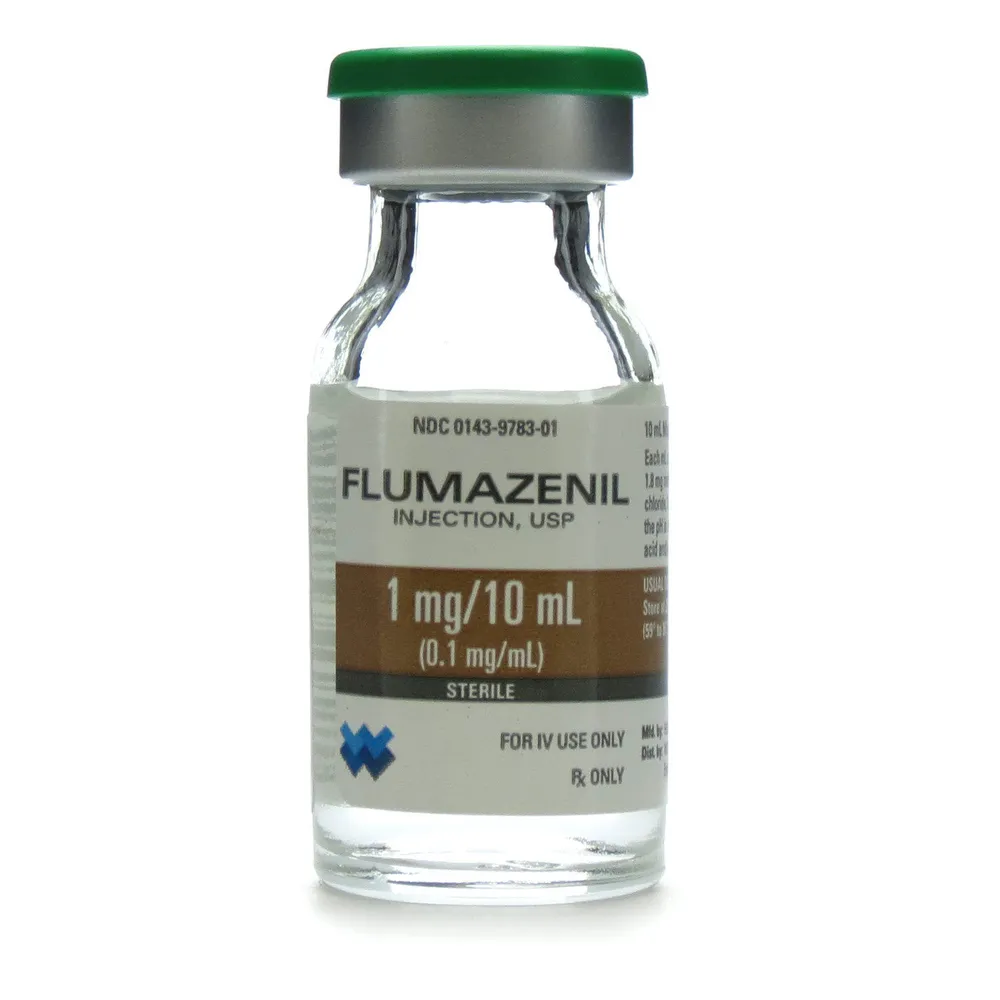
Table of Contents
- Package leaflet: Information for the user
- Introduction
- 1. What Flumazenil Altan is and what it is used for
- 2. What you need to know before starting to use Flumazenil Altan
- **Children and adolescents**
- 3. How to use Flumazenil Altan
- 4. Possible adverse effects
- 5. Conservation of Flumazenil Altan.
- 6. Package Contents and Additional Information
Package leaflet: Information for the user
Introduction
Package leaflet: information for the user
Flumazenil Altan 0.1 mg/ml solution for injection EFG
Flumazenil
Read the entire leaflet carefully before you start using this medicine
- Keep this leaflet, as you may need to read it again.
- If you have any questions, consult your doctor or pharmacist.
- This medicine has been prescribed for you only and must not be given to other people, even if they have the same symptoms as you, since it could harm them.
- If you experience any adverse effects, consult your doctor or nurse, even if they are effects not listed in this leaflet. See section 4.
Contents of the leaflet
- What Flumazenil Altan is and what it is used for
- What you need to know before using Flumazenil Altan
- How to use Flumazenil Altan
- Possible side effects
- How to store Flumazenil Altan
- Contents of the pack and other information
1. What Flumazenil Altan is and what it is used for
Flumazenil Altan contains an active substance called flumazenil, which is an antagonist of a group of drugs known as benzodiazepines.
Flumazenil acts in opposition to benzodiazepines and neutralizes their effects. It belongs to the group of antidotes. Its mechanism of action involves interrupting the nerve transmission caused by benzodiazepines by competing with them for binding sites at receptors in the nervous system.
This medicinal product is indicated for the complete or partial reversal of the central sedative effects of benzodiazepines. Therefore, it should be used in anesthesia and in intensive care settings for the following indications:
In anesthesia:
- To terminate anesthesia induced by benzodiazepines in hospitalized patients.
- To reverse the calming or sedative effects produced by benzodiazepines in patients who have undergone diagnostic procedures or short treatments in hospital or outpatient settings.
In intensive care:
-
To reverse the effects of benzodiazepines on the central nervous system and allow recovery of spontaneous respiration.
-
For the diagnosis or treatment of poisonings or overdoses caused solely or primarily by benzodiazepines.
Flumazenil Altan is also used in children over 1 year of age to reverse sedation induced by benzodiazepines.
2. What you need to know before starting to use Flumazenil Altan
Do not use Flumazenil Altan:
- if you are allergic to flumazenil or to any of the other ingredients of this medicine.
- in cases of poisoning involving two drugs such as benzodiazepines and tricyclic antidepressants (compounds used in the treatment of depression), because the toxicity of antidepressants may be masked by the protective effects of benzodiazepines.
- if you have received benzodiazepines as treatment for a potentially life-threatening condition (e.g. control of intracranial pressure or status epilepticus).
Warnings and precautions:
Consult your doctor or pharmacist before starting to use Flumazenil Altan. Inform your doctor if:
- Use in children is not recommended for indications other than reversing sedative or calming effects. This also applies to children under one year of age, in whom flumazenil should not be used unless the potential benefits outweigh the possible risks.
- The patient does not wake up, as this may be due to another cause. If used to reverse anesthesia after surgery, it should not be administered until the muscle-relaxing effect has worn off. Since the action of flumazenil is usually shorter than that of benzodiazepines and sedative effects may reappear, the patient must be closely monitored, preferably in an intensive care unit, until the effect of flumazenil has completely disappeared.
- In patients at risk, the benefits of sedation with benzodiazepines should be weighed against the potential disadvantages of a rapid awakening. In some patients, such as those with heart problems, a certain degree of sedation may be preferred over complete awakening.
- Rapid injection of high doses (more than 1 mg) of flumazenil should be avoided in patients receiving long-term benzodiazepine treatment, as this could trigger withdrawal symptoms.
- The dose of flumazenil should be carefully adjusted in patients with preoperative anxiety or with a history of acute or chronic anxiety.
- You experience pain after surgery.
- You have been on long-term treatment with high doses of benzodiazepines. In epileptic patients treated with benzodiazepines for prolonged periods, sudden reversal of their effect may provoke seizures.
- You have severe brain injuries, as this may increase intracranial pressure.
- You have benzodiazepine dependence or withdrawal syndrome; treatment with flumazenil is not recommended.
- You have a history of panic disorders.
- Due to the increased frequency of tolerance and dependence to benzodiazepines in patients with alcoholism or dependence on other drugs, flumazenil should be used with caution in this population.
- Patients treated with this medicine to reverse the effects of benzodiazepines must be monitored for as long as necessary, depending on the duration of action of the benzodiazepine used, to prevent the occurrence of breathing problems, recurrence of drowsiness, or any other benzodiazepine-related effects.
- You have severe liver problems.
- It should not be administered during anesthesia until it has been confirmed that peripheral muscle-relaxing effects have disappeared.
Children and adolescents
As a general rule, it is recommended not to use this medicine in children under one year of age (see section 3, How to use Flumazenil Altan).
Other medicines and Flumazenil Altan:
Inform your doctor or pharmacist if you are taking or have recently taken any other medicines, including those obtained without a prescription.
This medicine reverses the effects of benzodiazepines on the Central Nervous System; the action of non-benzodiazepine agonists, such as zopiclone (used in the treatment of sleep disorders), triazolopyridazines (non-benzodiazepine anxiolytics), and others, is likewise reversed by flumazenil.
After being treated with Flumazenil Altan, consult your doctor before taking any other medicine.
Pregnancy and breastfeeding:
If you are pregnant or breastfeeding, think you may be pregnant, or are planning to become pregnant, consult your doctor or pharmacist before using this medicine.
It is unknown whether Flumazenil Altan passes into breast milk. If you are breastfeeding, you should not be treated with Flumazenil Altan except in emergencies and by parenteral administration. Your doctor will decide what is most appropriate in your case.
Driving and using machines:
Although patients may be awake and conscious after intravenous administration of this medicine, they should refrain from engaging in hazardous activities requiring full mental concentration (such as operating dangerous machinery or driving vehicles) for 24 hours following administration, since effects of previously taken or administered benzodiazepines, such as sedation, may reappear.
Flumazenil Altan contains sodium:
This medicine contains 9 mg of sodium per ml, i.e., 45 mg per 5 ml ampoule and 90 mg per 10 ml ampoule of injectable solution; this should be taken into account in patients on a low-sodium diet.
3. How to use Flumazenil Altan
This medicine is supplied as an injectable solution in ampoules. Each package contains 5 ampoules.
Follow these instructions unless your doctor has given you different ones.
This medicine is recommended for intravenous use only and must be administered by an anaesthetist or experienced physician.
Your doctor will determine your daily dose and the duration of your treatment.
Since the duration of action of some benzodiazepines exceeds that of this medicine, repeated doses may be required if sedation recurs after awakening.
Adults
In anaesthesia
The recommended initial dose is 0.2 mg i.v., administered over 15 seconds. If the desired level of consciousness is not achieved within 60 seconds after the first intravenous administration, an additional dose of 0.1 mg may be injected, repeated if necessary at 60-second intervals, up to a total dose of 1 mg. The usual dose ranges between 0.3 and 0.6 mg, but individual requirements may vary considerably depending on the dose and duration of effect of the administered benzodiazepine and patient characteristics.
In intensive care units and in the diagnosis of unconsciousness of unknown origin
The recommended initial dose is 0.3 mg administered intravenously. If the desired level of consciousness is not achieved within 60 seconds, an additional dose of 0.1 mg may be administered and repeated every 60 seconds, up to a total dose of 2 mg or until the patient awakens.
If drowsiness recurs, an intravenous infusion of 0.1–0.4 mg/h may be useful. The infusion rate should be individually adjusted to achieve the desired level of consciousness.
If no evident effect on consciousness and respiration is observed after repeated dosing, consider that the intoxication is not caused by benzodiazepines.
The infusion should be interrupted every 6 hours to assess whether the patient becomes sedated again.
To prevent withdrawal symptoms in patients treated for a prolonged period with high doses of benzodiazepines in intensive care units, the flumazenil dose should be individually assessed and the injection administered slowly.
If unexpected signs of overstimulation occur, diazepam or midazolam should be carefully titrated intravenously according to the patient's response. In anaesthesia, it is recommended to inject 5 mg of the active substances mentioned intravenously.
Use in children and adolescents
Children over one year of age:
To reverse benzodiazepine-induced sedation in children over one year of age, the recommended initial dose is 0.01 mg/kg (up to 0.2 mg) administered intravenously over 15 seconds. If consciousness is not regained within 45 seconds, additional injections of 0.01 mg/kg (up to 0.2 mg) may be given as needed every 60 seconds (up to a maximum of 4 times), up to a maximum total dose of 0.05 mg/kg or 1 mg (whichever is lower). The dose should be individually calculated for each patient.
Children under one year of age:
Due to limited experience, Flumazenil Altan should be used with caution for reversal of conscious sedation in children under one year of age, for treatment of intoxication in children, neonatal resuscitation, and for reversing the sedative effects of benzodiazepines used for induction of general anaesthesia in children.
Until sufficient data are available, Flumazenil Altan should not be used in children under one year of age unless the risks to the patient (especially in cases of accidental overdose) have been weighed against the benefits of treatment.
Use in patients over 65 years of age:
Use in patients over 65 years of age is recommended with caution, as this population is generally more sensitive to the effects of medicines.
Patients with impaired liver or kidney function:
In patients with impaired liver function, elimination of flumazenil may be delayed; therefore, dose reduction is recommended when repeated doses are required (not for the initial dose).
Dose adjustments are not required in patients with kidney problems.
If you use more Flumazenil Altan than you should:
If you think you have been given too much flumazenil, you may not notice any effects, but it is recommended to consult your doctor or pharmacist as soon as possible.
If you have any further questions about the use of this product, ask your doctor or pharmacist. In case of overdose or accidental ingestion, contact the Toxicology Information Service. Telephone: (91) 562 04 20.
If you have any other questions about the use of this medicine, ask your doctor, pharmacist, or nurse.
4. Possible adverse effects
Like all medicines, Flumazenil Altan may cause adverse effects, although not everyone experiences them.
Flumazenil Altan is well tolerated in both children and adults. In adults, it is even well tolerated at doses higher than those recommended.
The frequency of these adverse effects is classified into the following categories:
- Very common: may affect more than 1 in 10 people
- Common: may affect up to 1 in 10 people
- Uncommon: may affect up to 1 in 100 people
- Rare: may affect up to 1 in 1,000 people
- Very rare: may affect up to 1 in 10,000 people
- Frequency not known: frequency cannot be estimated from available data.
Generally, these reactions disappear rapidly without requiring special treatment.
Immune system disorders
- Frequency not known: Hypersensitivity reactions (allergy), including anaphylaxis, may occur.
Psychiatric disorders
- Uncommon: Anxiety and fear after rapid administration of Flumazenil Altan, usually not requiring treatment.
- Frequency not known: Withdrawal syndrome, with symptoms such as agitation (excitement, restlessness), anxiety (distress, fear), emotional lability (episodes of crying or laughing), confusion, and sensory distortions (illusions, hallucinations).
These symptoms may occur after rapid administration of flumazenil in patients receiving high doses and/or long-term treatment with benzodiazepines.
Panic attacks (in patients with a history of panic reactions), abnormal crying, agitation, and aggressive reactions.
In general, adverse effects in children are similar to those in adults. When this medicine has been used to reverse sedation in children, abnormal crying, agitation, and aggressive reactions have been reported.
Nervous system disorders
- Frequency not known: Seizures in patients with epilepsy or severe liver impairment, especially after prolonged benzodiazepine treatment or in cases of mixed drug overdose.
Cardiac disorders
- Uncommon: Palpitations (strong and rapid heartbeat) after rapid administration of flumazenil.
Vascular disorders
- Frequency not known: Temporary increase in blood pressure (upon awakening).
Gastrointestinal disorders
- Common: Nausea and postoperative vomiting, especially if opioids (narcotics) have also been used.
Skin and subcutaneous tissue disorders
- Frequency not known: Flushing (redness).
General disorders and administration site conditions
- Frequency not known: Chills, after rapid administration of flumazenil.
In cases of mixed drug overdose, especially involving tricyclic antidepressants, toxic effects such as seizures or cardiac arrhythmias may occur; these effects may arise when flumazenil reverses the effects of benzodiazepines.
If you consider any of the adverse effects you experience to be severe, or if you notice any adverse effects not listed in this leaflet, inform your doctor or pharmacist.
Reporting of adverse effects
If you experience any type of adverse effect, consult your doctor or pharmacist, even if they are adverse effects not listed in this leaflet. You may also report them directly via the Spanish Pharmacovigilance System for Human Medicines: www.notificaRAM.es/. By reporting adverse effects, you can help provide more information on the safety of this medicine.
5. Conservation of Flumazenil Altan.
Keep this medicine out of the sight and reach of children.
No special storage conditions are required.
Do not use this medicine after the expiry date stated on the packaging after EXP. The expiry date is the last day of the month indicated.
Medicines should not be disposed of via wastewater or household waste. Ask your pharmacist how to dispose of medicines and packaging that you no longer need. This will help protect the environment.
6. Package Contents and Additional Information
Composition of Flumazenil Altan
The active substance is flumazenil.
Each ml contains 0.1 mg of flumazenil.
1 vial with 5 ml contains 0.5 mg of flumazenil.
1 vial with 10 ml contains 1 mg of flumazenil.
The other components (excipients) are: sodium edetate, glacial acetic acid, sodium chloride, sodium hydroxide, and water for injections.
Appearance of the medicinal product and contents of the container
Packaging of 5 glass vials containing 0.5 mg of active substance in 5 ml of aqueous solution or 1 mg of active substance in 10 ml of aqueous solution.
Marketing Authorization Holder:
Altan Pharmaceuticals, S.A.
C/ Cólquide no. 6, Portal 2, 1st floor,
Edificio Prisma
28230 - Las Rozas, MADRID
Spain
Manufacturer:
ALTAN PHARMACEUTICALS S.A.
Avda. de la Constitución 198-199
Polígono Industrial Monte Boyal
45950 Casarrubios del Monte (Toledo)
Spain
or
Laboratorio Reig Jofré, S.A.
c/ Gran Capitán, no. 10
08970 Sant Joan Despí (Barcelona)
Spain
Date of the most recent review of this package leaflet: April 2025
Detailed information on this medicinal product is available on the website of the Spanish Agency of Medicines and Medical Devices (AEMPS) http://www.aemps.es
This information is intended for healthcare professionals only:
Flumazenil Altan is recommended for intravenous use only and must be administered by an anaesthetist or experienced physician.
Any unused solution should be discarded.
The medicine should be inspected visually. It should only be used if the solution is clear and practically free from particles.
When Flumazenil Altan is to be used in infusion, it must be diluted prior to administration. Flumazenil should only be diluted with 9 mg/ml (0.9%) sodium chloride solution, 50 mg/ml (5%) dextrose solution, or Ringer's lactate solution. Compatibility between flumazenil and other injectable solutions has not been established.
Intravenous infusion solutions or pre-filled syringes containing flumazenil solution should be discarded after 24 hours.
From a microbiological standpoint, the product should be used immediately. If not used immediately, the storage time and conditions prior to use are the responsibility of the user and normally should not exceed 24 hours at 2–8°C, unless dilution has been carried out under conditions appropriate to prevent contamination.
Flumazenil Altan may also be used in conjunction with other resuscitation measures. Since the duration of action of some benzodiazepines exceeds that of Flumazenil Altan, repeated doses may be required if sedation recurs after awakening.
Rapid injection of Flumazenil Altan should be avoided. In patients who have received high doses and/or prolonged benzodiazepine treatment in the preceding weeks, rapid injection of doses equal to or greater than 1 mg may cause withdrawal symptoms, including palpitations, agitation, anxiety, emotional lability, as well as confusion and mild sensory distortions.
Flumazenil Altan is not recommended for the treatment of benzodiazepine dependence or for the control of benzodiazepine withdrawal symptoms.