Fludeoxyglucose (18F) Curium 185 MBq/ml solution for injection
Spain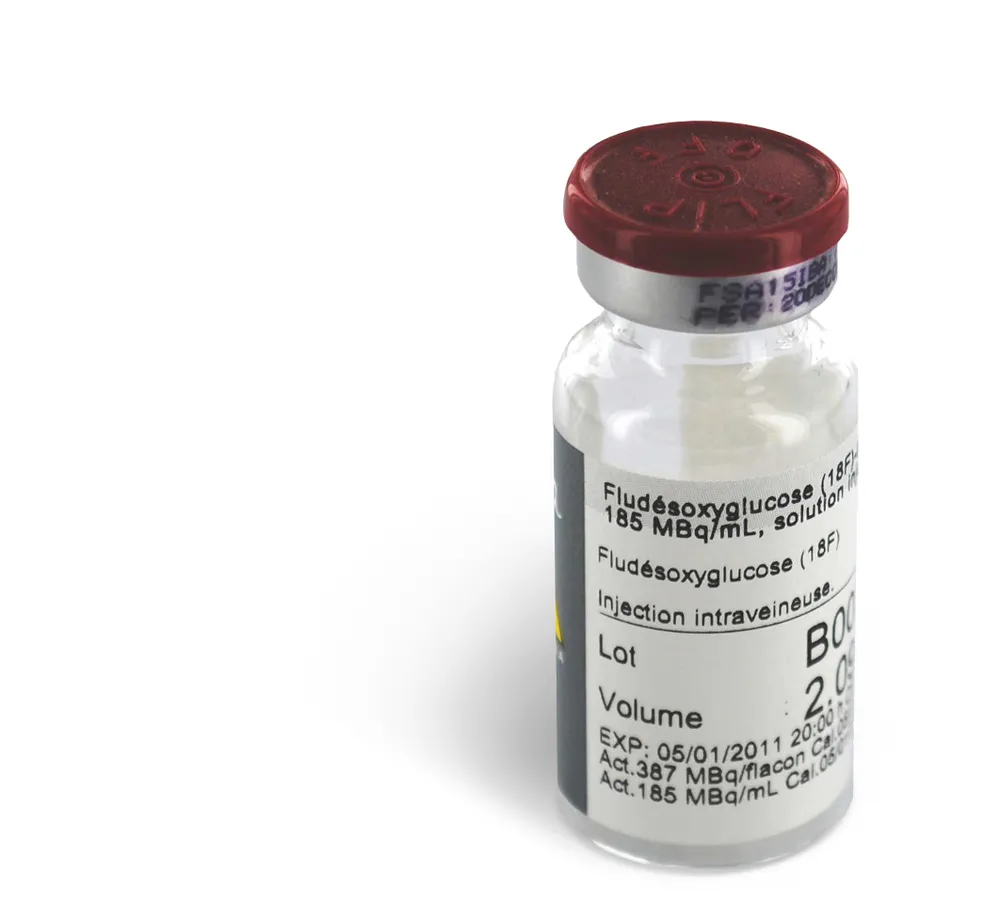
Table of Contents
- Package leaflet: Information for the user
- Introduction
- 1. What Fludesoxyglucose (18F)-Curium is and what it is used for
- 2. What you need to know before using Fludesoxiglucosa (18F)-Curium
- 3. How to use Fludeoxyglucose (18F)-Curium
- 4. Possible adverse effects
- 5. Storage of Fludeoxyglucose (18F)-Curium
- 6. Pack contents and other information
Package leaflet: Information for the user
Introduction
Package leaflet: information for the user
Fludesoxyglucose (18F)-Curium 185 MBq/ml, solution for injection
Fluorodeoxyglucose (18F)
Read all of this leaflet carefully before you start receiving this medicine, because it contains important information for you.
- Keep this leaflet. You may need to read it again.
- If you have any questions, ask the nuclear medicine specialist who will supervise the procedure.
- If you experience any adverse effects, consult the nuclear medicine specialist, even if they are effects not listed in this leaflet. See section 4.
Leaflet contents:
- What Fludesoxyglucose (18F)-Curium is and what it is used for.
- What you need to know before receiving Fludesoxyglucose (18F)-Curium.
- How to use Fludesoxyglucose (18F)-Curium.
- Possible side effects.
- How to store Fludesoxyglucose (18F)-Curium.
- Contents of the pack and other information.
1. What Fludesoxyglucose (18F)-Curium is and what it is used for
This medicine is a radiopharmaceutical for diagnostic use only.
The active substance contained in Fludesoxyglucose (18F)-Curium is designed for obtaining diagnostic images of certain parts of the body.
After a small amount of Fludesoxyglucose (18F)-Curium is injected, medical images obtained using a special camera will allow the physician to visualize and determine the location and extent of disease.
2. What you need to know before using Fludesoxiglucosa (18F)-Curium
Do not use Fludesoxiglucosa (18F)-Curium
- if you are allergic to fludesoxiglucosa (18F) or to any of the other components of this medicine (listed in section 6).
Warnings and precautions
Talk to the nuclear medicine specialist before receiving Fludesoxiglucosa (18F)-Curium:
- If you have diabetes and your diabetes is currently uncontrolled.
- If you have an infection or an inflammatory disease.
- If you have kidney problems.
Inform the nuclear medicine specialist in the following cases:
- If you are pregnant or think you may be pregnant
- If you are breastfeeding
Before receiving fludesoxiglucosa (18F), you must:
- Drink plenty of water before the scan begins, so that you can urinate as frequently as possible during the first few hours after the study.
- Avoid any significant physical activity before the test.
- Fast for at least four hours.
Children and adolescents
Consult the nuclear medicine specialist if you are under 18 years of age.
Use of Fludesoxiglucosa (18F)-Curium with other medicines
Inform the nuclear medicine specialist if you are taking, have recently taken, or might need to take any other medicines, as they may interfere with the physician's interpretation of the images:
- Any medicine that may alter blood sugar levels (glycaemia), such as medications to reduce inflammation (corticosteroids), antiepileptic drugs (valproate, carbamazepine, phenytoin, phenobarbital), medications affecting the nervous system (epinephrine, norepinephrine, dopamine…)
- Glucose
- Insulin
- Medications used to increase blood cell production
Use of Fludesoxiglucosa (18F)-Curium with food and drink
You must fast for at least four hours before receiving this medicine. You should drink plenty of water and avoid consuming liquids containing sugars. Your doctor must measure your blood glucose level before administering the medicine, as high blood glucose levels (hyperglycaemia) may interfere with the nuclear medicine specialist's interpretation of the images.
Pregnancy and breastfeeding
You must inform the nuclear medicine specialist before administration of Fludesoxiglucosa (18F)-Curium if there is any possibility you may be pregnant, if you have missed your period, or if you are breastfeeding.
If there is any doubt about possible pregnancy, it is important to consult the nuclear medicine specialist who will supervise the procedure.
If you are pregnant
The nuclear medicine specialist will administer this medicine during pregnancy only if the expected benefits outweigh the potential risks.
If you are breastfeeding
You must stop breastfeeding your child for 12 hours after the injection and discard any breast milk expressed during this period.
The decision to resume breastfeeding should be made in consultation with the nuclear medicine specialist supervising the procedure.
If you are pregnant or breastfeeding, think you may be pregnant, or plan to become pregnant, consult your nuclear medicine specialist before using this medicine.
Driving and use of machines
Fludesoxiglucosa (18F)-Curium is considered unlikely to affect your ability to drive or operate machinery.
Fludesoxiglucosa (18F)-Curium contains sodium and ethanol.
This medicine may contain more than 1 mmol of sodium (23 mg). This should be taken into account if you are on a low-sodium diet.
This medicine contains small amounts of ethanol (alcohol), less than 100 mg per dose.
3. How to use Fludeoxyglucose (18F)-Curium
There is strict legislation regarding the use, handling, and disposal of radiopharmaceuticals. Fludeoxyglucose (18F)-Curium must only be used in specially controlled areas. Only trained personnel with experience in the safe use of this medicine may handle and administer it. These individuals will take all necessary special precautions to ensure the safe use of this medicine and will keep you informed of their actions.
The nuclear medicine specialist supervising the procedure will determine the amount of Fludeoxyglucose (18F)-Curium to be used in your case, which will always be the minimum quantity necessary to obtain the required information.
The recommended amount normally administered to an adult ranges between 100 and 400 MBq (depending on the patient's body weight, the type of imaging camera used, and the image acquisition mode). The megabecquerel (MBq) is the unit used to express radioactivity.
Use in children and adolescents
If used in children and adolescents, the administered amount will be adjusted according to the child's body weight.
Administration of Fludeoxyglucose (18F)-Curium and performance of the procedure
Fludeoxyglucose (18F) is administered intravenously.
A single injection is sufficient to carry out the procedure required by your doctor.
After the injection, you must remain completely at rest, without reading or talking. In addition, you will be offered something to drink and asked to urinate immediately before the procedure.
While images are being acquired, you must remain completely still. You must not move or talk.
Duration of the procedure:
The nuclear medicine specialist will inform you about the usual duration of the procedure.
Fludeoxyglucose (18F)-Curium is administered as a single intravenous injection 45 to 60 minutes before image acquisition. The image acquisition itself lasts between 30 and 60 minutes.
After receiving Fludeoxyglucose (18F)-Curium, you should:
- Avoid close contact with young children and pregnant women for 12 hours after the injection.
- Urinate frequently to help eliminate the medicine from your body.
If you have received more Fludeoxyglucose (18F)-Curium than you should have
It is unlikely that you will receive an overdose, as you will only receive a precisely controlled dose of Fludeoxyglucose (18F)-Curium determined by the nuclear medicine specialist supervising the procedure. However, in the event of an overdose, appropriate treatment will be given. Specifically, the nuclear medicine specialist in charge of the procedure may advise you to drink plenty of fluids to facilitate the elimination of Fludeoxyglucose (18F)-Curium from your body (since the primary route of elimination for this medicine is renal, i.e., via urine).
If you have any further questions about the use of Fludeoxyglucose (18F)-Curium, please consult the nuclear medicine specialist supervising the procedure.
4. Possible adverse effects
Like all medicines, this medicinal product may produce adverse effects, although not everyone experiences them.
Adverse effects of unknown frequency (cannot be estimated from the available data):
Allergic reactions have been reported, including severe allergic reactions such as shock and cardiac arrest, which may be fatal, with symptoms such as:
- Difficulty breathing
- Shortness of breath
- Slow heartbeat
- Skin rash (including erythematous rash, pruritic rash, maculopapular rash)
- Hives, itching, dermatitis
- Redness of the skin (erythema)
- Swelling in various parts of the body, swelling of the face, lips, tongue and/or throat with difficulty swallowing or breathing (angioedema), localized accumulation of fluid (edema)
- Eye irritation, eye disorders
- Cough
- Nausea and vomiting
Symptoms may appear with a latency ranging from immediately up to 10 days, with a median latency of 3 hours. In most cases, the latency was 24 hours or less.
Hypersensitivity reactions vary from mild (such as rash, itching), requiring supportive treatment, to severe reactions that may require emergency intervention (hospitalization).
Before administration, your doctor should ask you about your history of allergies, medical history, and current medications. Re-exposure to the drug carries the risk of a recurrent reaction.
This radiopharmaceutical will emit a small amount of ionizing radiation associated with a minimal risk of cancer and hereditary defects.
Your doctor has determined that the clinical benefits you will obtain from the procedure using the radiopharmaceutical outweigh the risks due to radiation exposure.
Reporting of adverse effects
If you experience any type of adverse effect, consult the nuclear medicine specialist, even if they are possible adverse effects not listed in this leaflet. You may also report them directly through the Spanish Pharmacovigilance System for Human Medicinal Products: www.notificaRAM.es. By reporting adverse effects, you can help provide more information on the safety of this medicinal product.
5. Storage of Fludeoxyglucose (18F)-Curium
You do not need to store this medicine. This medicine will be stored under the responsibility of the specialist in suitable facilities. Radioactive medicinal products must be stored in accordance with national regulations concerning radioactive materials.
The following information is intended for specialists only.
Do not use this medicine after the expiry date stated on the label following {EXP}
6. Pack contents and other information
Composition of Fludesoxyglucose (18F)-Curium
- The active substance is fludeoxyglucose (18F). Each ml of injectable solution contains 185 MBq at the time of calibration.
- The other components are sodium chloride, ethanol and water for injections (see section 2 “Fludesoxyglucose (18F)-Curium contains sodium and ethanol”).
Appearance of the medicinal product and contents of the container
The activity per vial ranges between 90 MBq and 1850 MBq at the date and time of calibration.
Marketing Authorization Holder and Manufacturer
Marketing Authorization Holder:
Curium International
Boulevard Bischoffsheim 39, box 4
1000 Brussels, Belgium
Manufacturers:
BETA PLUS PHARMA s.A.
Avenue Hippocrate 10/1527
1200 Brussels - Belgium
CURIUM PET FRANCE
Parc scientifique et technique G.Besse
180, Allée von Neumann
30035 Nîmes Cedex 1 – France
CURIUM PET FRANCE
ASSISTANCE PUBLIQUE DES HÔPITAUX DE PARIS, SAINT-LOUIS
14 Rue de la Grange aux Belles
75010 Paris - France
CURIUM PET FRANCE
HÔPITAL XAVIER ARNOZAN
Avenue du Haut Lévêque
33600 Pessac - France
CURIUM PET FRANCE
CENTRE EUGÈNE MARQUIS
Avenue de la Bataille des Flandres Dunkerque
35042 Rennes Cedex – France
CURIUM PET FRANCE
10 Avenue Charles Peguy
95200 Sarcelles – France
CURIUM PET FRANCE
CHU DE BRABOIS
4 Rue du Morvan
54500 Vandœuvre-lès-Nancy – France
CYCLOTRON REUNION OCEAN INDIEN – CYROI
2 Rue Maxime Riviere
97490 Sainte Clotilde (Réunion) - France
CURIUM ITALY S.R.L
Via Pergolesi 33,
20900 Monza – Italy
CURIUM ITALY S.R.L
Viale Oxford 81,
00133 Rome – Italy
CURIUM ITALY S.R.L
Piazzale Santa Maria della Misericordia 15,
33100 Udine – Italy
CURIUM ITALY S.R.L.
Via G. Ripamonti 435,
20141 Milan – Italy
OFFICINA FARMACEUTICA
ISTITUTO DI FISIOLOGIA CLINICA DEL CNR
Via Moruzzi, 1
56124 Pisa - Italy
B.V. Cyclotron VU
De Boelelaan 1081
1081 HV Amsterdam - Netherlands
CURIUM PET LIEGE
Allée Du Six-Août, 8
4000 Liège - Belgium
Curium Pharma Spain, S.A. - Sevilla
Parque Tecnológico Cartuja’93
Avda. Thomas A. Edison, 7
41092 Sevilla – Spain
Curium Pharma Spain S.A – Madrid
Polígono Compisa; C/ Veguillas, 2, Nave 16
28864 Ajalvir (Madrid)
For further information about this medicinal product, please contact the local representative of the Marketing Authorization Holder:
Curium Pharma Spain, S.A.
Avda. Dr. Severo Ochoa, 29
28100 Alcobendas
Tel.: 91 4841989
This medicinal product is authorized in the European Economic Area member states under the following names:
Austria:
[18F] Fludeoxyglucose Curium
Portugal, Malta:
Fludeoxyglucose (18F) Curium
Belgium, France, Luxembourg:
Fludésoxyglucose (18F) Curium
Italy:
Fluodeossiglucosio (18F) Curium
Netherlands:
Fluorodesoxyglucose (18F) Curium-international
Spain:
Fludesoxiglucosa (18F) Curium
Slovenia:
[18F]Fludeoksiglukoza Curium
Date of the most recent review of this leaflet: October 2023
Detailed information on this medicinal product is available on the website of the Spanish Agency of Medicines and Health Products (AEMPS) (http://www.aemps.gob.es/).
This information is intended for healthcare professionals only.
The complete Summary of Product Characteristics (SmPC) for Fludesoxyglucose (18F)-Curium is provided in a separate document included in the package, to provide healthcare professionals with additional scientific and practical information on the administration and use of this radiopharmaceutical.
Please consult the SmPC.