Flolan 0.5 mg powder and solvent for solution for infusion
Spain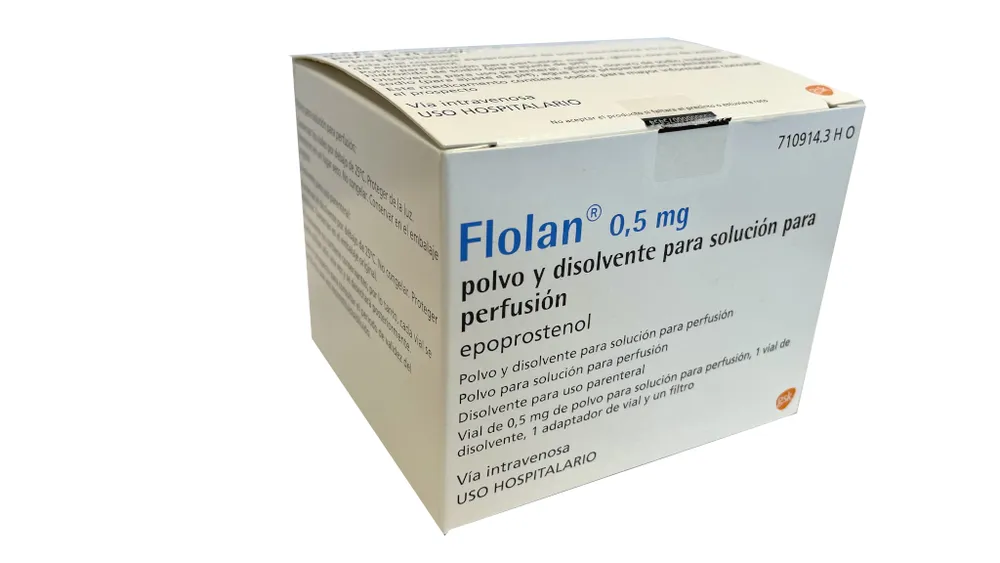
Table of Contents
Package leaflet: Information for the user
Introduction
Package leaflet: information for the user
Flolan 0.5 mg powder and solvent for solution for infusion
epoprostenol
Read all of this leaflet carefully before you start using this medicine, because it contains important information for you.
-
Keep this leaflet, as you may need to read it again.
-
If you have any questions, ask your doctor, pharmacist or nurse.
-
This medicine has been prescribed for you only, and you should not give it to other people, even if they have the same symptoms as you, because it may harm them.
-
If you experience any adverse effects, consult your doctor, pharmacist or nurse, even if they are effects not listed in this leaflet. See section 4.
Contents of this leaflet
- What Flolan is and what it is used for
- What you need to know before using Flolan
- How to use Flolan
- Possible side effects
- How to store Flolan
- Contents of the pack and other information
1. What Flolan is and what it is used for
What Flolan is
Flolan contains the active substance epoprostenol, which belongs to a group of medicines called prostaglandins that prevent blood clotting and widen blood vessels.
What Flolan is used for
-
Flolan is used to treat a lung disease known as "pulmonary arterial hypertension". This occurs when the pressure in the blood vessels of the lung is high. Flolan widens the blood vessels to reduce blood pressure in the lungs.
-
Flolan is used to prevent blood clotting during renal dialysis, in emergency situations when heparin cannot be used.
2. What you need to know before using Flolan
Do not use Flolan
- if you are allergic to epoprostenol or to any of the other ingredients of this medicine (listed in section 6)
- if you have heart failure.
- if you begin to develop fluid accumulation in your lungs causing difficulty breathing after starting treatment.
If you think any of these situations apply to you, do not use Flolan until you have consulted your doctor.
Warnings and precautions
Tell your doctor before using Flolan:
- if you have problems with bleeding
- if you are on a low-sodium diet.
Skin injury at the injection site
Flolan is injected into a vein. It is important that the medicine does not leak or seep out of the vein into the surrounding tissues. If it does, it will damage the skin. Symptoms include:
- tenderness
- burning
- itching
- swelling
- redness.
This may progress to blister formation and skin peeling. It is important that you monitor the injection site while being treated with Flolan.
Contact the hospital immediately if the injection site becomes painful, stings, swells, or if you notice any blistering or skin peeling.
Effect of Flolan on blood pressure and heart rate
Flolan may speed up or slow down your heartbeat. Your blood pressure may also become very low. While being treated with Flolan, your heart rate and blood pressure should be monitored. Symptoms of low blood pressure include dizziness and fainting.
Tell your doctor if you experience any of these symptoms. It may be necessary to reduce your dose or stop the infusion.
Use of Flolan with other medicines
Tell your doctor or pharmacist if you are taking, have recently taken, or might need to take any other medicines, including those obtained without a prescription.
Some medicines may affect how Flolan works, or may increase the likelihood of side effects. Flolan may also affect how other medicines work if taken at the same time. These include:
- medicines used to treat high blood pressure
- medicines used to prevent blood clots
- medicines used to dissolve blood clots
- medicines used to treat inflammation or pain (also known as NSAIDs)
- digoxin (used to treat heart disorders).
Tell your doctor or pharmacist if you are taking any of these medicines.
Pregnancy and breastfeeding
If you are pregnant or breastfeeding, think you may be pregnant, or are planning to become pregnant, consult your doctor or pharmacist before using this medicine, as symptoms may worsen during pregnancy.
It is unknown whether the components of Flolan pass into human milk. You must stop breastfeeding while being treated with Flolan.
Driving and using machines
This treatment may affect your ability to drive or use machines.
Do not drive or operate machinery unless you feel well.
Flolan contains sodium (main component of table/cooking salt)
Patients on low-sodium diets should be aware that the reconstituted medicine contains 73 mg of sodium per dose.
Reconstituted concentrate solution: this medicine contains 73 mg of sodium (main component of table/cooking salt) in each vial of concentrate solution. This corresponds to 4% of the maximum daily recommended sodium intake for an adult.
Powder for infusion solution: this medicine contains 3 mg of sodium (main component of table/cooking salt) in each vial of powder for solution. This corresponds to 0.2% of the maximum daily recommended sodium intake for an adult.
Solvent for parenteral use: this medicine contains 70 mg of sodium (main component of table/cooking salt) in each vial of solvent. This corresponds to 4% of the maximum daily recommended sodium intake for an adult.
3. How to use Flolan
Follow exactly the instructions for administration of this medicine given by your doctor or pharmacist. If in doubt, consult your doctor or pharmacist again.
Your doctor will determine how much Flolan is appropriate for you. The amount you are given is based on your body weight and the type of disease. Your dose may be increased or decreased depending on how well you respond to treatment.
Flolan is administered by slow infusion (drip) into a vein.
Pulmonary arterial hypertension
Initial treatment will be given to you in a hospital. This is because your doctor needs to monitor you and identify the best dose for you.
Treatment will begin with an infusion of Flolan. The dose will be gradually increased until your symptoms are relieved and side effects are controlled. Once the optimal dose has been identified, a permanent catheter (venous access) will be placed in one of your veins. You can then be treated using an infusion pump.
Renal dialysis
You will receive an infusion of Flolan throughout the duration of your dialysis.
Use of Flolan at home (only for the treatment of pulmonary arterial hypertension)
If you are being treated at home, your doctor or nurse will teach you how to prepare and use Flolan. They will also instruct you on how to stop the treatment if necessary. Discontinuation of Flolan must be done gradually. It is important that you carefully follow all instructions.
Flolan comes as a powder in a glass vial. Before use, the powder must be dissolved in the supplied liquid. The liquid does not contain preservatives. You must discard any unused liquid.
Catheter care
If a catheter has been placed in your vein, it is very important to keep this area clean, as otherwise it could become infected. Your doctor or nurse will teach you how to clean the catheter and the surrounding area. It is very important that you carefully follow all instructions.
If you use more Flolan than you should
Seek urgent medical attention if you think you have used or have been given too much Flolan. Symptoms of overdose may include headache, nausea, vomiting, fast heartbeat, warmth or tingling, or feeling like you might faint (dizziness/vertigo).
If you forget to use Flolan
Do not use a double dose to make up for forgotten doses.
If you stop treatment with Flolan
Stopping Flolan should be done gradually. If you stop treatment too quickly, you may experience serious adverse effects, including dizziness, feeling weak, and difficulty breathing. If you have problems with the infusion pump or catheter, such as it stopping or preventing treatment with Flolan, contact your doctor, nurse, or hospital immediately.
If you have any further questions about the use of this medicine, ask your doctor, pharmacist, or nurse.
4. Possible adverse effects
Like all medicines, this medicine can cause adverse effects, although not everyone experiences them.
Inform your doctor or nurse immediately, as these may be signs of a blood infection, low blood pressure, or serious bleeding:
- You feel your heart beating faster, or you have chest pain or difficulty breathing.
- You feel dizzy or faint, especially when standing.
- You have fever or chills.
- You bleed more frequently or for longer periods.
If you experience any adverse effects, consult your doctor, pharmacist, or nurse, even if they are adverse effects not listed in this leaflet.
Very common adverse effects
These may affect more than 1 in 10 people:
- headache
- jaw pain
- non-specific pain
- vomiting
- nausea
- diarrhoea
- facial flushing.
Common adverse effects
These may affect up to 1 in 10 people:
- blood infection (septicemia)
- rapid heartbeat
- slow heartbeat
- low blood pressure
- bleeding at various sites and increased tendency to bruise; for example, nosebleeds or bleeding gums
- stomach discomfort or pain
- chest pain
- joint pain
- feeling anxious, feeling nervous
- skin rash
- pain at the injection site.
Common adverse effects that may appear in your blood tests
- decrease in the number of platelets in the blood (cells that help blood clotting).
Uncommon adverse effects
These may affect up to 1 in 100 people:
- sweating
- dry mouth.
Rare adverse effects
These may affect up to 1 in 1,000 people:
- infection at the injection site.
Very rare adverse effects
These may affect up to 1 in 10,000 people:
- feeling of tightness around the chest
- tiredness, weakness
- restlessness
- paleness
- redness at the injection site
- overactive thyroid glands
- intravenous catheter blockage.
Other adverse effects
The number of affected people is not known (frequency cannot be estimated from the available data):
- enlarged or overactive spleen
- fluid accumulation in the lungs (pulmonary edema)
- increased blood sugar (glucose)
- swelling due to fluid accumulation around the stomach
- excessive pumping of blood from the heart leading to shortness of breath, fatigue, swelling of the legs and abdomen due to fluid retention, and persistent cough.
Reporting of adverse effects
If you experience any type of adverse effect, consult your doctor, pharmacist, or nurse, even if they are possible adverse effects not listed in this leaflet.
You can also report them directly via the Spanish Pharmacovigilance System for Human Medicinal Products, www.notificaRAM.es. By reporting adverse effects, you can help provide more information on the safety of this medicine.
5. Storage of Flolan
Keep this medicine out of the sight and reach of children.
Do not use this medicine after the expiry date stated on the label.
Do not store above 25 ºC.
Store Flolan in a dry place.
Keep in the original container to protect from light.
Do not freeze.
Pulmonary arterial hypertension
For solutions ≤ 150,000 ng/ml:
The freshly prepared solution of Flolan (either as a concentrated or further diluted solution) may be administered immediately or stored for up to 8 days in a refrigerator (between 2ºC and 8ºC) in the medication cassette and used within a maximum period of:
- 48 hours at temperatures up to 25 ºC, or
- 36 hours at temperatures up to 30 ºC, or
- 24 hours at temperatures up to 35 ºC, or
- 12 hours at temperatures up to 40 ºC.
For solutions > 150,000 ng/ml and ≤ 300,000 ng/ml:
Reconstituted solutions stored at 2–8 °C for up to 7 days may be administered for up to 24 hours at 25 °C.
Freshly prepared reconstituted solutions, or those stored at 2–8 °C for no more than 5 days, may be administered for up to:
- 48 hours at temperatures up to 25 ºC
- 24 hours at temperatures up to 35 ºC
Discard any unused solution after this time.
Renal dialysis
Once Flolan has been dissolved and diluted, any unused solution may be stored at 25 ºC and used within the following 12 hours.
Medicines must not be disposed of via wastewater or household waste. Return unused medicines and their containers to the SIGRE point  at your pharmacy. If in doubt, ask your pharmacist how to dispose of medicines and containers you no longer need. This will help protect the environment.
6. Contents of the pack and further information
Composition of Flolan
The active substance is sodium epoprostenol.
Each vial contains:
- 0.5 mg of sodium epoprostenol
- See section 2 for further important information about sodium.
The other components are mannitol, glycine, sodium chloride, sodium hydroxide, and water for injections.
Appearance of the product and contents of the pack
Injection:
Flolan is an injectable solution composed of powder and solvent. The powder is white to off-white in colour and the solution is clear and colourless.
There are three Flolan pack sizes available for use in pulmonary arterial hypertension; the contents of each pack include:
- One 0.5 mg vial of powder and one vial of solvent, one vial adapter, and one filter.
- One 0.5 mg vial of powder and two vials of solvent, two vial adapters, and one filter.
- One 0.5 mg vial of powder.
Only one Flolan pack size is available for use in renal dialysis; the contents of each pack include:
- One 0.5 mg vial of powder and one vial of solvent, one vial adapter, and one filter.
Only certain pack sizes may be marketed.
Marketing Authorisation Holder and Manufacturer
Marketing Authorisation Holder:
GlaxoSmithKline, S.A.
P.T.M. C/ Severo Ochoa, 2
28760 Tres Cantos (Madrid)
Tel: +34 900 202 700
[email protected]
Manufacturer:
GlaxoSmithKline Manufacturing, S.p.A.
Strada Provinciale Asolana, 90
43056 San Polo di Torrile, Parma, Italy.
This medicinal product is authorised in the Member States of the European Economic Area under the following names:
Austria Flolan
Belgium Flolan
Czech Republic Flolan
Denmark Epoprostenol
Estonia Flolan
France Flolan
Ireland Flolan
Italy Flolan
Luxembourg Flolan
Malta Flolan
Netherlands Flolan
Norway Flolan
Spain Flolan
United Kingdom Flolan
Date of the most recent review of this leaflet:
Detailed and up-to-date information on this medicinal product is available on the website of the Spanish Agency of Medicines and Health Products (AEMPS) http://www.aemps.gob.es/
This information is intended for healthcare professionals only:
- INFORMATION FOR HEALTHCARE PROFESSIONALS
Pulmonary arterial hypertension
Three pack sizes are available for use in pulmonary arterial hypertension:
- One 0.5 mg vial of powder, one vial of solvent, one vial adapter, and one filter.
- One 0.5 mg vial of powder, two vials of solvent, two vial adapters, and one filter.
- One 0.5 mg vial of powder.
Only certain pack sizes may be marketed.
Initially, a pack containing solvent for parenteral use should be used. More concentrated solutions may be required during chronic Flolan treatment. The final concentration of the solution can be increased by adding another 0.5 mg vial of lyophilised Flolan powder.
To increase the final concentration of the solution, only vials containing the same amount of lyophilised Flolan powder as those included in the initial pack should be used.
Flolan reconstituted with solvent (pH 11.7–12.3) must not be used with any preparation or administration material containing polyethylene terephthalate (PET) or glycol-modified polyethylene terephthalate (PETG). Based on available internal analytical data and published literature, compatible preparation and administration materials include:
- Modified acrylic
- Acrylonitrile butadiene styrene (ABS)
- Cyclic olefin polymer
- Polyamide
- Polyethersulfone
- Polyethylene
- Polyisoprene
- Polyolefin
- Polypropylene
- Polytetrafluoroethylene (PTFE)
- Polyurethane
- Polyvinyl chloride (PVC) (plasticised with bis(2-ethylhexyl) phthalate (DEHP))
- Polyvinylidene fluoride (PVDF)
- Silicone
Suitable ambulatory infusion pumps for use include:
- CADD-Legacy 1
- CADD-Legacy PLUS
- CADD-Solis VIP (variable rate profile)
Manufactured by Smiths Medical.
Compatible pump accessories include:
- CADD medication cassette “reservoir” 50 ml and 100 ml from Smiths Medical.
- CADD extension set with in-line 0.2-micron filter (CADD extension set with male luer; 0.2-micron air elimination filter, clamp, and integral anti-siphon valve with male luer) from Smiths Medical.
The extension set and in-line filter must be changed at least every 48 hours.
Reconstitution:
- Use only the solvent supplied for reconstitution.
- Withdraw approximately 10 ml of solvent using a sterile syringe through a vial adapter*.
- Remove the syringe from the vial adapter. Attach a needle to the syringe, inject the 10 ml of solvent into the vial containing Flolan powder, and gently agitate until the powder is dissolved.
- Withdraw the resulting Flolan solution into the syringe, remove the needle, reinsert it into the remaining volume of solvent through the vial adapter*, and mix well.
*Alternatively, a needle may be used instead of a vial adapter.
This solution is now referred to as the concentrated solution and contains 10,000 nanograms per ml of Flolan (for the 0.5 mg concentration). Only concentrated solutions are suitable for further dilution prior to use. Use a new vial adapter for each additional vial of sterile solvent required. When 0.5 mg of Flolan powder is reconstituted with 50 ml of solvent, the final injection will have a pH of approximately 12 and a sodium ion content of approximately 73 mg.
Dilution:
Flolan may be used as a concentrated or diluted solution for the treatment of pulmonary arterial hypertension. Only concentrated solutions are suitable for further dilution with sterile solvent prior to use. Only the supplied solvent may be used for further dilution of reconstituted Flolan, using a new vial adapter for each additional vial of sterile solvent required.
0.9% w/v sodium chloride solution must not be used if Flolan is to be administered for the treatment of pulmonary arterial hypertension, as the required pH is not maintained. Flolan solutions are less stable at low pH.
Epoprostenol must not be administered with other solutions or parenteral medications when used in pulmonary arterial hypertension.
The final solution to be administered to the patient must be filtered using a 0.22 or 0.20 micron filter. Use of an in-line filter as part of the infusion set during administration is preferred. Alternatively, when in-line filtration is not possible, the final solution (either as concentrated or further diluted) must be filtered through the provided 0.22-micron sterile filter before being placed into the medication cassette, applying firm but not excessive pressure. The typical filtration time for 50 ml of solution is 70 seconds.
If an in-line filter is used during administration, it must be discarded when changing the infusion set.
If a syringe filter is used during preparation, it must be used only for preparation and discarded afterwards. The concentrations commonly used in the treatment of pulmonary arterial hypertension are:
- 5,000 nanograms/ml – one vial containing 0.5 mg Flolan reconstituted and diluted to a total volume of 100 ml in solvent.
- 10,000 nanograms/ml – two vials containing 0.5 mg Flolan each, reconstituted and diluted to a total volume of 100 ml in solvent.
Infusion rate calculation:
The infusion rate can be calculated using the following formula:
dose (nanograms/kg/min) × body weight (kg)
Infusion rate (ml/min) = ———————————————————————
concentration of solution (nanograms/ml)
Infusion rate (ml/h) = infusion rate (ml/min) × 60
Higher infusion rates may be required during long-term administration of Flolan, and therefore more concentrated solutions may be needed.
Special storage precautions
Do not store above 25°C.
Keep the container in the outer carton to protect from light.
Store in a dry place.
Do not freeze.
For further details on stability after reconstitution, refer to section 5 (storage of Flolan).
The solvent does not contain preservatives; therefore, each vial must be used only once and discarded afterwards.
Renal dialysis
Only one pack size is available for use in renal dialysis:
- One 0.5 mg vial of powder and one vial of solvent, one vial adapter, and one filter.
Flolan reconstituted with sterile solvent (pH 12) must not be used with any preparation or administration material containing polyethylene terephthalate (PET) or glycol-modified polyethylene terephthalate (PETG). Based on available internal analytical data and published literature, materials likely to be compatible include:
- Modified acrylic
- Acrylonitrile butadiene styrene (ABS)
- Cyclic olefin polymer
- Polyamide
- Polyethersulfone
- Polyethylene
- Polyisoprene
- Polyolefin
- Polypropylene
- Polytetrafluoroethylene (PTFE)
- Polyurethane
- Polyvinyl chloride (PVC) (plasticised with bis(2-ethylhexyl) phthalate (DEHP))
- Polyvinylidene fluoride (PVDF)
- Silicone
Reconstitution:
- Use only the solvent supplied for reconstitution.
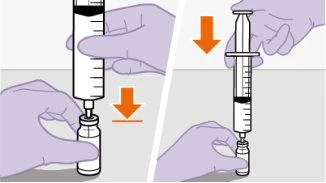
- Withdraw approximately 10 ml of solvent into a sterile syringe through a vial adapter*.
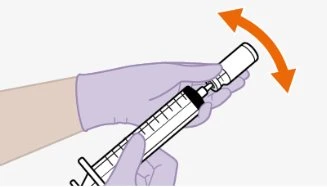
- Remove the syringe from the vial adapter. Attach a needle to the syringe, inject the 10 ml of solvent into the vial containing 0.5 mg of lyophilised Flolan powder, and gently agitate until the powder dissolves.
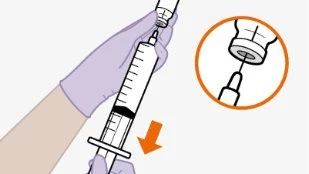
- Withdraw the resulting Flolan solution into the syringe, remove the needle, reinsert it into the remaining volume of solvent through the vial adapter*, and mix well.
*Alternatively, a needle may be used instead of a vial adapter.
This solution is now referred to as the concentrated solution and contains 10,000 nanograms per ml of Flolan. Only this concentrated solution is suitable for further dilution prior to use. When 0.5 mg of Flolan for intravenous infusion is reconstituted with 50 ml of solvent, the final injection will have a pH of approximately 12 and a sodium ion content of approximately 73 mg.
Dilution:
Typically, the concentrated solution is further diluted immediately before use. It may be diluted with 0.9% w/v sodium chloride solution (saline) at a ratio of 2.3 volumes of saline to 1 volume of concentrated solution; for example, 50 ml of concentrated solution diluted with 117 ml of saline.
Other common i.v. fluids are not suitable for dilution of the concentrated solution, as the required pH will not be maintained. Flolan solutions are less stable at low pH.
To dilute the concentrated solution, withdraw it using a larger syringe and administer the concentrated solution directly into the chosen infusion solution. Mix well.
The final solution for infusion (either as a concentrated or more diluted solution) must be transferred to a suitable container or administration system before administration. During transfer, a sterile 0.22-micron syringe filter must be used, applying firm but not excessive pressure. The typical filtration time for 50 ml of solution is 70 seconds.
The syringe filter must be used only during preparation and then discarded.
If reconstituted and diluted as described above, Flolan infusion solutions will retain 90% of their initial potency for approximately 12 hours at 25°C.
Infusion rate calculation:
The infusion rate can be calculated using the following formula:
dose (nanograms/kg/min) × body weight (kg)
Infusion rate (ml/min) = ———————————————————————
concentration of solution (nanograms/ml)
Infusion rate (ml/h) = infusion rate (ml/min) × 60
For administration via a pump capable of delivering constant small-volume infusions, appropriate aliquots of the concentrated solution may be diluted with 0.9% w/v sterile sodium chloride solution.
Detailed and up-to-date information on this medicinal product is available on the website of the Spanish Agency of Medicines and Health Products (AEMPS) http://www.aemps.gob.es/
INSTRUCTIONS FOR USE

Flolan Solution
Instructions for use with a vial adapter and ambulatory infusion pumps
Please read these instructions carefully before preparing your Flolan solution. If you have any questions or doubts, contact your doctor.
- Wash your hands thoroughly before handling any required materials.
- Put on your gloves before the “Preparation” of Flolan (Step 1).
- Keep your work area and all materials needed for Flolan preparation clean and dry to ensure hygienic preparation.
- Always follow your doctor’s instructions exactly. The information in these instructions is intended as a reminder of the process.
Storage information
- Keep out of the sight and reach of children.
- Store Flolan in a cool, dry place.
- Protect from light by keeping Flolan in its carton until use.
Do not use Flolan after the expiry date stated on the label.
Do not freeze.
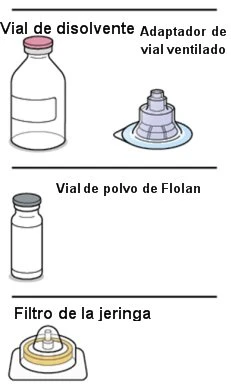
Your pack will contain the following: |
Or
Or
|
You will also need (not supplied): |
1 syringe of 60 ml
|
Preparation | |
| |
| Use only the solvent provided for reconstitution.
|
| |
|
Note: keep the adapter in place within the package for the next step. Do not use the vial adapter if the package is damaged. Contact your doctor or pharmacist for further information. Do not use the vial adapter if it comes out of the package. |
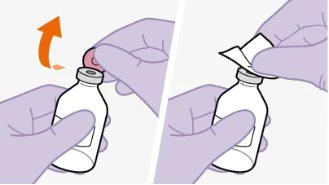
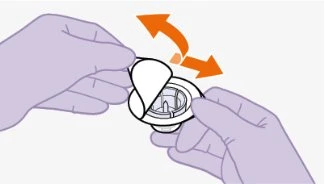
| |
|
alcohol swab. Do not touch the tip of the vial adapter or the syringe. |
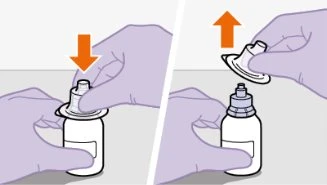
| |
|
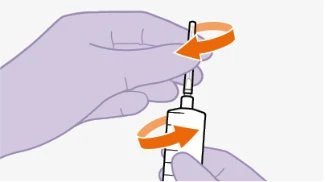
Do not insert the needle into the syringe. |
| |
|
|
| |
|
Note: if preparing a solution, go to step 7. If injecting the solvent directly, go to step 13. |

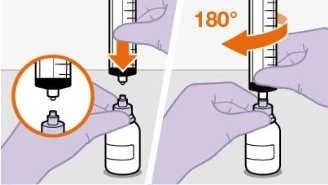
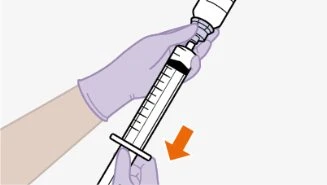
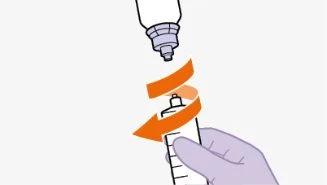
Preparing the Flolan solution | |
| |
|
Note: confirm that the needle is securely attached before removing the needle cap. Be careful not to touch the tip of the needle. |
| |
|
|
| |
|
Do not use if the solution is discolored or if the powder has not completely dissolved. |
| |
|
|
| |
|
Do not use the needle together with the vial adapter. |
| |
|
Note: this concentrated solution is the only one suitable for further dilution prior to use. |
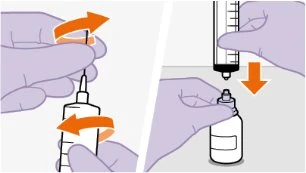
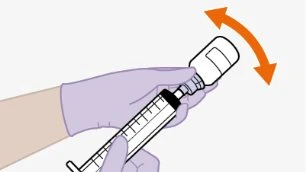
Cartridge Preparation | |
*Orange steps are optional: only when necessary | |
*Attach the syringe filter | |
| Note: An in-line filter must be provided as part of your extension set (see Step 15). If an in-line filter is not provided as part of your extension set, then you must use the supplied syringe filter to filter the solution during cartridge preparation.
|

| |
|
Note: ensure the slide clamp is open. |
*Diluent solution | |
| Note: if you need to dilute your dose, prepare an additional solvent solution for injection by repeating Steps 1 to 6 and 13. For the volume of solvent to withdraw, follow the instructions below instead of Step 5.
|
| |
|
Do not shake the cassette. |
| |
|
|
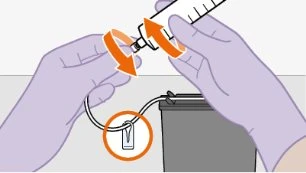
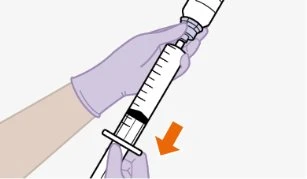
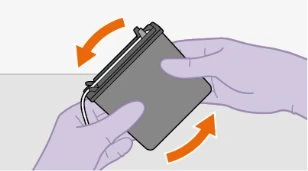
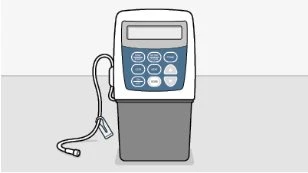
Disposal |
Dispose of used materials |
|
Storage (Solutions with a concentration less than or equal to 150,000 ng/ml) |
Storage of the prepared solution |
|