Flixonase 50 micrograms/spray, nasal spray suspension
Spain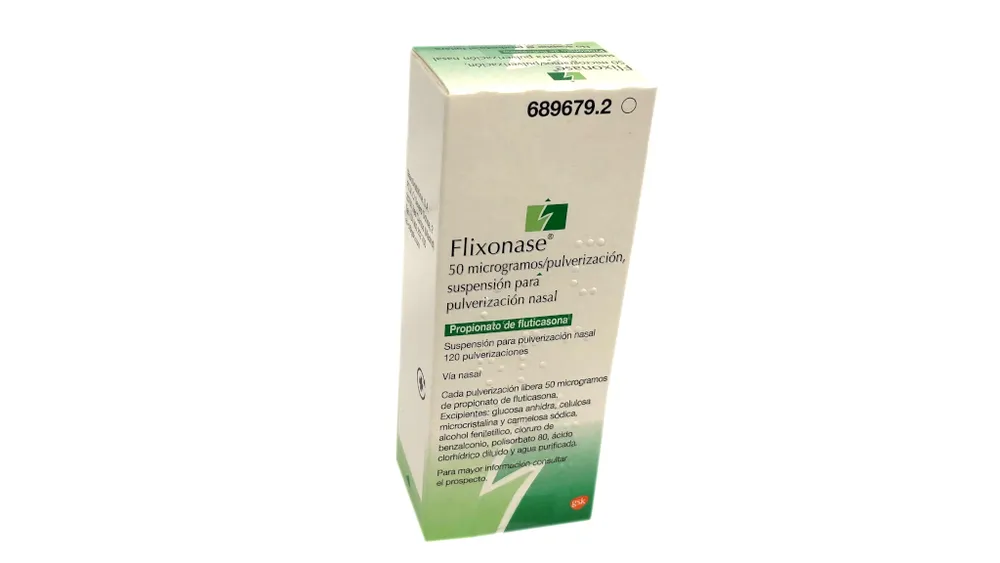
Table of Contents
Package leaflet: Information for the user
Introduction
Package leaflet: information for the user
Flixonase 50 micrograms/spray, suspension for nasal spray
Fluticasone propionate
Read the entire leaflet carefully before you start using this medicine, because it contains important information for you.
- Keep this leaflet as you may need to read it again.
- If you have any questions, ask your doctor or pharmacist.
- This medicine has been prescribed for you only, and you must not give it to other people, even if they have the same symptoms as you, because it may harm them.
- If you experience any adverse effects, consult your doctor or pharmacist, even if they are adverse effects not listed in this leaflet (see section 4).
Leaflet contents:
- What Flixonase is and what it is used for
- What you need to know before using Flixonase
- How to use Flixonase
- Possible side effects
- How to store Flixonase
- Contents of the pack and other information
1. What Flixonase is and what it is used for
Flixonase is a medicine belonging to the corticosteroid family and is indicated for the prevention and treatment of symptoms of seasonal allergic rhinitis and perennial rhinitis, including sneezing, nasal itching, runny nose, nasal blockage, congestion, poor nasal airflow, and pain and pressure around the nose and eyes (sinuses), in adults and children over 4 years of age.
Corticosteroids prevent inflammation and reduce the symptoms of the allergic reaction when administered directly into the nasal cavity.
Rhinitis is caused by small particles inhaled through the nose that the body does not recognize as its own; these are called allergens. The body attempts to eliminate these substances, resulting in symptoms such as sneezing, tearing, itchy eyes, and runny nose, which can block the nasal passages. This may occur at the beginning of summer due to inhalation of pollen from grass or trees, and is known as seasonal allergic rhinitis (hay fever). Some people experience these problems throughout the year, referred to as perennial rhinitis, often due to house dust mites or animal dander (e.g., from cats, dogs).
2. What you need to know before using Flixonase
Do not use Flixonase
If you are allergic to fluticasone propionate or to any of the other ingredients of this medicine (listed in section 6).
Warnings and precautions
Consult your doctor or pharmacist:
- if you currently have or have recently had a nasal infection.
- if you have any kidney problems.
- if you are taking a medicine called ritonavir.
- if you notice growth retardation in children or adolescents, consult your pediatrician, as delayed growth has been observed in children treated with nasal corticosteroids at approved doses.
Contact your doctor if you experience blurred vision or other visual disturbances, which may be caused by cataracts or glaucoma.
Using Flixonase with other medicines
Inform your doctor or pharmacist about any other medicines you are taking, have recently taken, or might need to take, including those obtained without a prescription.
Consult your doctor before using nasal fluticasone propionate if you are taking:
- medicines containing ritonavir or cobicistat (used to treat HIV or AIDS). Some medicines may increase the effects of Flixonase, so your doctor will monitor you closely if you are taking these medicines.
- oral medicines for fungal infections (ketoconazole).
Pregnancy, breast-feeding, and fertility
If you are pregnant, breast-feeding, think you may be pregnant, or are planning to become pregnant, consult your doctor or pharmacist before using this medicine.
Driving and using machines
No studies have reported any effect of Flixonase on driving or operating machinery. However, check whether Flixonase affects you before driving or operating heavy machinery.
Flixonase contains benzalkonium chloride
This medicine contains 0.02 mg of benzalkonium chloride per spray.
Benzalkonium chloride may cause irritation or inflammation inside the nose, especially when used for prolonged treatment periods.
Use in athletes
Athletes are advised that this medicine contains a component that may lead to a positive analytical finding in doping controls.
3. How to use Flixonase
Follow exactly the administration instructions for this medicine given by your doctor or pharmacist. Do not exceed the recommended dose. If in doubt, consult your doctor or pharmacist again.
Adults and children over 12 years old
The recommended dose is 2 sprays into each nostril once daily, preferably in the morning. Your doctor may advise you to increase the dose to a maximum of 2 sprays into each nostril twice daily (morning and evening).
Use in children aged 4 to 11 years
The usual dose is 1 spray into each nostril once daily, preferably in the morning. Your doctor may advise you to increase the dose to 1 spray into each nostril twice daily (morning and evening).
This medicine starts to work after several days. It is very important that you use it regularly. Do not stop treatment even if you feel better, unless your doctor tells you to do so.
Flixonase is for nasal use only.
How to use the nasal spray
Appearance of the nasal spray
The nasal spray has a cap that protects the nasal applicator from dust and keeps it clean. Remember to remove the cap before using the spray. A new spray (or one that has not been used for several days) may not work the first time, so you will need to follow the instructions in the section "Priming the nasal spray".
Priming the nasal spray
You must prime the nasal spray:
- Before using it for the first time
- If you have not used it for several days
- If you have just cleaned it according to the instructions in the section "Cleaning the nasal spray"
Priming the nasal spray helps ensure that you always receive the full dose of medicine. Follow these steps:
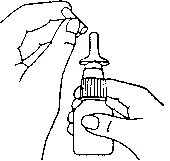
- Shake the nasal spray and remove the cap (see picture 1).
- Hold the spray upright and point the nasal applicator away from you.
- Place your index and middle fingers on each side of the nasal applicator and your thumb under the bottle (see picture 2).
PICTURE 1 PICTURE 2
|
|
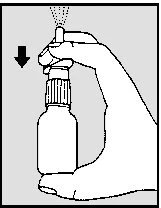
- Keep your thumb in place and press down firmly with your fingers to release a fine mist spray into the air (see Figure 2).
- The nasal spray is now ready for use.
- If you think the nasal applicator may be blocked, do not use a pin or any other sharp object to unblock it.
- Try cleaning the spray device following the instructions under "Cleaning the nasal spray".
Using the nasal spray
- Shake the nasal spray and remove the cap.
- Blow your nose to clear the nostrils.
- Close one nostril with your finger and carefully insert the nasal applicator into the other nostril.
Tilt your head slightly forward and hold the nasal spray in an upright position (see Figures 3a and 3b).
FIGURE 3a FIGURE 3b
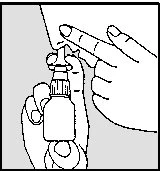
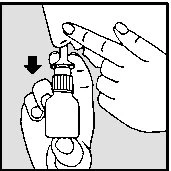
- Press down firmly with your fingers while inhaling through your nose (see Figures 3a and 3b).
- Remove the nasal applicator and exhale through your mouth.
- Repeat steps 3 to 4 in the other nostril.
- After using the spray, carefully clean the nasal applicator with a clean tissue.
- Replace the cap.
Cleaning the nasal spray
The nasal spray should be cleaned at least once a week to prevent blockage of the nasal applicator. Follow these steps:
- Remove the protective cap.
- Soak the nasal applicator and cap in warm water for a few minutes.
- Then rinse thoroughly under running water.
- Remove excess water by shaking and allow to dry in a warm place.
- Reattach the nasal applicator to the spray device.
- Prepare the nasal spray according to the instructions under "Preparing the nasal spray" so that it is ready for use.
If you use more Flixonase than you should
If you have used more Flixonase than recommended, contact your doctor or pharmacist immediately, or call the Toxicology Information Service at: 91 562 04 20.
It is important that you take your dose exactly as directed by your doctor. You should use only the amount recommended by your doctor; using more or less than prescribed may worsen your symptoms.
If you forget to use Flixonase
Do not take a double dose to make up for missed doses. If you miss a dose, wait and take the next dose at the usual scheduled time.
If you have any further questions about the use of this medicine, ask your doctor or pharmacist.
4. Possible adverse effects
Like all medicines, this medicine may cause adverse effects, although not everyone experiences them.
Some people may be allergic to this medicine, although this is rare.
Systemic effects of nasal corticosteroids may occur, especially when high doses are used over prolonged periods.
The following are adverse effects associated with Flixonase:
Very common adverse effects (may affect more than 1 in 10 people)
- Epistaxis (spontaneous nosebleed).
Common adverse effects (may affect up to 1 in 10 people)
- Headache, unpleasant taste or smell.
- Nasal dryness, nasal irritation, dry throat, and throat irritation.
Very rare adverse effects (may affect up to 1 in 10,000 people)
- Hypersensitivity reactions, anaphylaxis/anaphylactic reactions (generalized allergic reactions), bronchospasm (spasm in the bronchi preventing air from reaching the lungs), skin rash, swelling (edema) of the face or tongue.
- Glaucoma (increased intraocular pressure), cataracts.
- Nasal septum perforation.
Adverse effects with frequency not known (cannot be estimated from available data)
- Blurred vision
- Nasal ulcerations
Reporting of adverse effects
If you experience any adverse effect, consult your doctor or pharmacist, even if it is a possible adverse effect not listed in this leaflet. You may also report them directly via the Spanish Pharmacovigilance System for Human Medicinal Products: https://www.notificaRAM.es. By reporting adverse effects, you can help provide more information on the safety of this medicine.
5. Storage of Flixonase
Keep this medicine out of the sight and reach of children.
Do not store above 30°C.
Do not use this medicine after the expiry date stated on the container. The expiry date refers to the last day of the month indicated.
Medicines must not be disposed of via wastewater or household waste. Dispose of unused medicines and their containers at a SIGRE collection point at your pharmacy. If you are unsure, ask your pharmacist how to dispose of unused medicines and their containers. This will help protect the environment.
6. Contents of the pack and other information
Composition of Flixonase
The active substance is fluticasone propionate. Each spray delivers 50 micrograms of fluticasone propionate.
The other components are anhydrous glucose, microcrystalline cellulose and sodium carboxymethylcellulose, phenylethyl alcohol, benzalkonium chloride, polysorbate 80, diluted hydrochloric acid (for pH adjustment) and purified water.
Appearance of the medicine and contents of the container
The medicine is a nasal spray suspension contained in a polypropylene bottle.
Each Flixonase bottle contains approximately 120 sprays.
Marketing Authorisation Holder and Manufacturer
Marketing Authorisation Holder:
GlaxoSmithKline, S.A.
P.T.M. C/ Severo Ochoa, 2
28760 Tres Cantos (Madrid)
Tel: +34 900 202 700
Manufacturer:
Glaxo Wellcome, S.A.
Avenida de Extremadura, 3
09400 Aranda de Duero (Burgos)
Date of the most recent revision of this leaflet: February 2018.
Detailed and up-to-date information on this medicine is available on the website of the Spanish Agency for Medicines and Health Products (AEMPS) http://www.aemps.gob.es/