Flecainide Normon 100 mg tablets EFG
Spain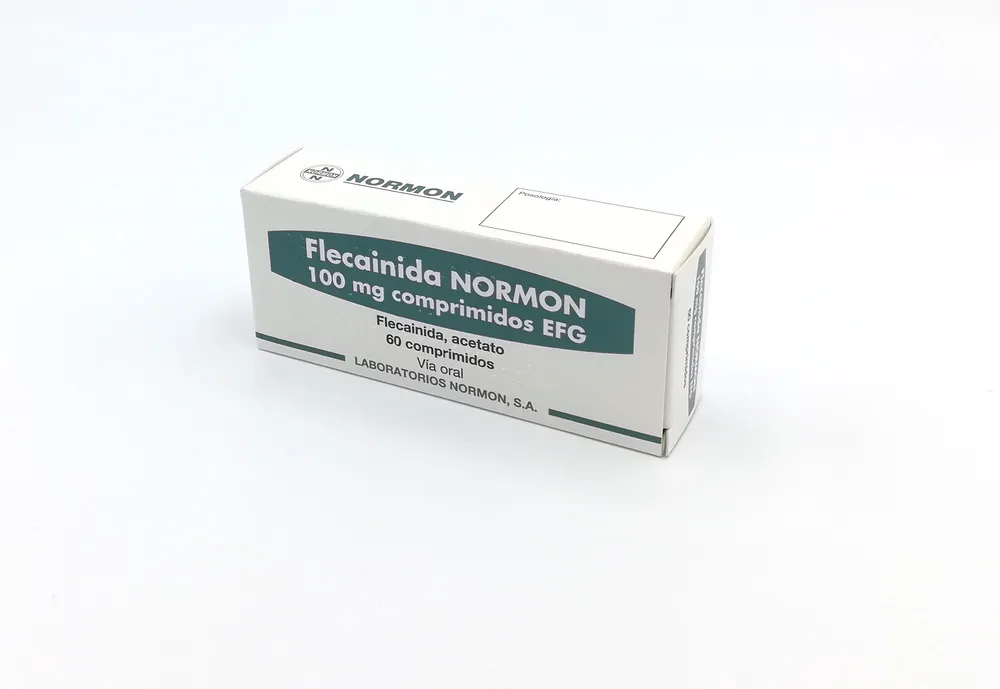
Table of Contents
- Package leaflet: Information for the user
- Introduction
- 1. What Flecainide Normon is and what it is used for
- 2. What you need to know before taking Flecainide Normon
- 3. How to take Flecainida Normon
- 4. Possible adverse effects
- 5. Flecainide Normon Storage
- 6. Contents of the container and other information
Package leaflet: Information for the user
Introduction
Package leaflet: information for the user
Flecainide Normon 100 mg tablets EFG
Flecainide acetate
Read all of this leaflet carefully before you start taking this medicine, because it contains important information for you.
- Keep this leaflet, as you may need to read it again.
- If you have any questions, ask your doctor or pharmacist.
- This medicine has been prescribed for you only, and you should not give it to other people, even if they have the same symptoms as you, because it may harm them.
- If you experience any adverse effects, talk to your doctor or pharmacist, even if they are effects not listed in this leaflet. See section 4.
Contents of the leaflet
- What Flecainide Normon is and what it is used for
- What you need to know before taking Flecainide Normon
- How to take Flecainide Normon
- Possible side effects
- How to store Flecainide Normon
- Contents of the pack and other information
1. What Flecainide Normon is and what it is used for
Flecainide belongs to a group of medicines called antiarrhythmics.
This medicine is indicated for the treatment of different types of arrhythmias (abnormalities in heart rhythm and rate).
2. What you need to know before taking Flecainide Normon
Do not take Flecainide Normon
- If you are allergic to flecainide or to any of the other ingredients of this medicine (listed in section 6).
- If you have heart failure, as it may worsen with flecainide.
- If you have recently had a myocardial infarction, because flecainide may cause new arrhythmias or worsen existing ones.
- If you have heart rhythm disorders (certain types of heart blocks or long-standing atrial fibrillation) or suffer from heart valve disease, because flecainide may cause new arrhythmias or worsen existing ones.
- If you have experienced cardiogenic shock or have known hypersensitivity.
- If you have known Brugada syndrome.
- If you have sinus node dysfunction, atrioventricular conduction disturbances, second- or higher-degree atrioventricular block, bundle branch block, or distal block.
Warnings and precautions
Consult your doctor or pharmacist before starting Flecainide Normon:
- As flecainide may cause new arrhythmias or worsen existing ones.
- If you have heart failure, as flecainide may worsen it.
- If you have a pacemaker, as flecainide may interfere with its proper functioning.
- If you have renal or hepatic impairment, as these may increase flecainide blood levels due to slower elimination.
- If you have coronary sinus disease, as flecainide may slow the heart rate or even cause cardiac arrest.
- If you have cardiac conduction disorders (certain types of blocks), flecainide may increase the severity of these blocks.
- If you have abnormal potassium levels, as this may increase flecainide toxicity.
- When flecainide is administered with antiarrhythmics, beta-blockers, tricyclic antidepressants, or neuroleptics, blood levels of both drugs may increase.
- If you have electrocardiogram abnormalities suggestive of Brugada syndrome.
Children and adolescents
The use of flecainide is not recommended in children under 12 years of age.
Elderly patients
In these patients, elimination rate may be reduced; therefore, this should be taken into account when adjusting the dose.
Taking Flecainide Normon with other medicines
Inform your doctor or pharmacist if you are taking, have recently taken, or might need to take any other medicines.
Use caution if you are taking the following medicines:
- Digoxin (a medicine used to treat heart failure and abnormal heart rhythms, arrhythmias), as flecainide may increase its blood levels.
- Quinidine and amiodarone (antiarrhythmic medicines), as they may increase flecainide blood levels.
- Propranolol and sotalol (antiarrhythmic medicines), as their combination with flecainide may reduce the heart's contractile force.
- The concomitant use of flecainide with verapamil and diltiazem (antiarrhythmic medicines) is not recommended.
- Some antidepressants, as they may increase flecainide blood levels. The use of antidepressants (fluoxetine, reboxetine, etc.) increases the risk of arrhythmias.
- Phenytoin, phenobarbital, and carbamazepine (medicines used to treat epilepsy), as they increase the elimination of flecainide.
- Clozapine (a medicine for schizophrenia), as it increases the risk of arrhythmias.
- Moxilastine and terfenadine (medicines used to treat allergies), as they increase the risk of heart rhythm disturbances.
- Quinine (a medicine for malaria), as it increases flecainide blood levels.
- Ritonavir, lopinavir, and indinavir (medicines for the treatment of AIDS), as they increase flecainide blood levels.
- Diuretics, as they may alter blood potassium levels and increase flecainide toxicity.
- Cimetidine (an antacid), as it increases flecainide blood levels.
- Bupropion (a medicine to help quit smoking), as it increases flecainide blood levels.
- Terbinafine (a medicine for fungal infections), which may increase flecainide blood levels.
- The use of flecainide is compatible with oral anticoagulants.
Interference with diagnostic tests
If you are scheduled for any diagnostic test, inform your doctor that you are taking this medicine, as it may alter test results.
Taking Flecainide Normon with food and drinks
The absorption of flecainide tablets is not affected by food.
Pregnancy and breastfeeding
If you are pregnant or breastfeeding, think you may be pregnant, or are planning to become pregnant, consult your doctor or pharmacist before using this medicine.
Pregnancy
Flecainide should only be used during pregnancy if the benefits outweigh the risks.
Breastfeeding
Flecainide is excreted in breast milk. Although the risk of adverse effects in the infant is very low, flecainide should only be used during breastfeeding if the benefits outweigh the risks.
Driving and use of machines
During treatment, adverse effects (such as dizziness and visual disturbances) may occur; therefore, if you experience these symptoms, you should not drive or operate dangerous machinery.
This medicine contains less than 23 mg of sodium (1 mmol) per tablet; hence, it is essentially "sodium-free".
3. How to take Flecainida Normon
Follow exactly the instructions for use of this medicine given by your doctor or pharmacist. If in doubt, consult your doctor or pharmacist again. Remember to take your medicine.
Your doctor will determine the duration of your treatment with this medicine.
This medicine is taken orally. It may be taken before, during, or after meals. Tablets should be swallowed whole with a sufficient amount of liquid – a glass of water.
The recommended dose is one tablet twice daily.
Your doctor may recommend a maximum total daily dose of up to 400 mg (4 tablets), depending on your individual characteristics.
The tablet may be divided into equal halves.
If you have severe hepatic and renal impairment, your doctor may monitor your flecainide blood levels.
Patients with renal disease
The maximum initial dose should not exceed 100 mg per day.
If you feel that the effect of flecainide is too strong or too weak, inform your doctor immediately.
Use in children
Currently, data in children are limited; therefore, the use of flecainide should be supervised by a cardiologist experienced in managing arrhythmias in the pediatric population.
If you take more Flecainida Normon than you should
In case of overdose or accidental ingestion, contact your doctor or pharmacist immediately or call the Toxicology Information Service at telephone number 91 562 04 20, indicating the medicine and the amount ingested.
If you forget to take Flecainida Normon
If you forget to take a dose, take the next dose at the scheduled time and continue taking the tablets as recommended by your doctor.
Do not take a double dose to make up for missed doses.
If you forget to take more than one dose, or if your irregular and rapid heartbeat appears to have worsened, contact your doctor immediately.
If you stop taking Flecainida Normon
Do not stop treatment prematurely, as otherwise arrhythmias may occur, sometimes very serious.
If you have any further questions about the use of this medicine, ask your doctor or pharmacist.
4. Possible adverse effects
Like all medicines, this medicine may cause adverse effects, although not everyone experiences them.
Very common adverse effects (affect more than 1 in 10 patients)
- Dizziness (usually transient).
- Visual disturbances such as blurred or double vision.
Common adverse effects (affect more than 1 in 100 patients)
- Heart rhythm disturbances.
- Difficulty breathing.
- Physical and mental weakness, fatigue, fever, edema (swelling), and malaise.
Uncommon adverse effects (affect less than 1 in 100 patients)
- Decrease in the number of red blood cells, white blood cells, and platelets.
- Increased heart rate.
- Nausea, vomiting, constipation, abdominal pain, loss of appetite, diarrhea, indigestion, flatulence.
- Allergic dermatitis, including skin rash and hair loss.
Rare adverse effects (affect less than 1 in 1,000 patients)
- Hallucinations, depression, confusion, anxiety, memory loss, and sleep disturbances.
- Tingling sensation, lack of coordination in body movements, decreased sensitivity, excessive sweating, syncope (sudden and brief loss of consciousness), tremor, flushing (reddening of the face), somnolence, headache, peripheral neuropathy (pain, loss of sensitivity, and inability to control muscles), seizures, abnormal and involuntary movements.
- Ringing in the ears, vertigo.
- Lung disease (inflammation of the lungs or pneumonitis).
- Increased liver enzymes, with and without jaundice (yellowing of the skin or eyes).
- Severe urticaria.
Very rare adverse effects (affect less than 1 in 10,000 patients)
- Increase in certain antibodies.
- Corneal deposits.
- Photosensitivity (sensitivity to the effects of sunlight after taking these tablets, which may result in skin redness within minutes of sun exposure).
Frequency not known (cannot be estimated from available data)
- Cardiovascular disorders (cardiac arrest, decreased heart rate, chest pain, low blood pressure, myocardial infarction, palpitations, tachycardia).
- Pulmonary disorders.
- Liver abnormalities.
- Anorexia.
Reporting of adverse effects
If you experience any type of adverse effect, consult your doctor or pharmacist, even if it is a possible adverse effect not listed in this leaflet. You may also report them directly through the Spanish Pharmacovigilance System for Human Medicines: https://www.notificaram.es. By reporting adverse effects, you can help provide more information on the safety of this medicine.
5. Flecainide Normon Storage
Keep this medicine out of sight and reach of children.
No special storage conditions are required.
Do not use this medicine after the expiry date stated on the packaging after “EXP”. The expiry date refers to the last day of the month indicated.
Do not use this medicine if you notice any visible signs of deterioration.
Medicines must not be disposed of via wastewater or household waste. Dispose of empty containers and unused medicines at a SIGRE point at your pharmacy. If in doubt, ask your pharmacist how to properly dispose of unused containers and medicines. This helps protect the environment.
6. Contents of the container and other information
Composition of Flecainida Normon
- The active substance is flecainide acetate. Each tablet contains 100 mg of flecainide acetate.
- The other components are: pregelatinized corn starch, sodium croscarmellose, microcrystalline cellulose, hydrogenated vegetable oil, and magnesium stearate.
Appearance of the medicinal product and contents of the container
White or almost white, round, biconvex tablets, with a break line and marked with "F" and "100" on one side. Each package contains 30 or 60 tablets.
Marketing Authorization Holder and Manufacturer
LABORATORIOS NORMON, S.A.
Ronda de Valdecarrizo, 6 – 28760 Tres Cantos – Madrid (SPAIN)
Date of the most recent revision of this leaflet: December 2014.
Detailed information on this medicinal product is available on the website of the Spanish Agency for Medicines and Health Products http://www.aemps.gob.es