Fixapro 50 micrograms/ml + 5 mg/ml ophthalmic solution in single-dose containers
Spain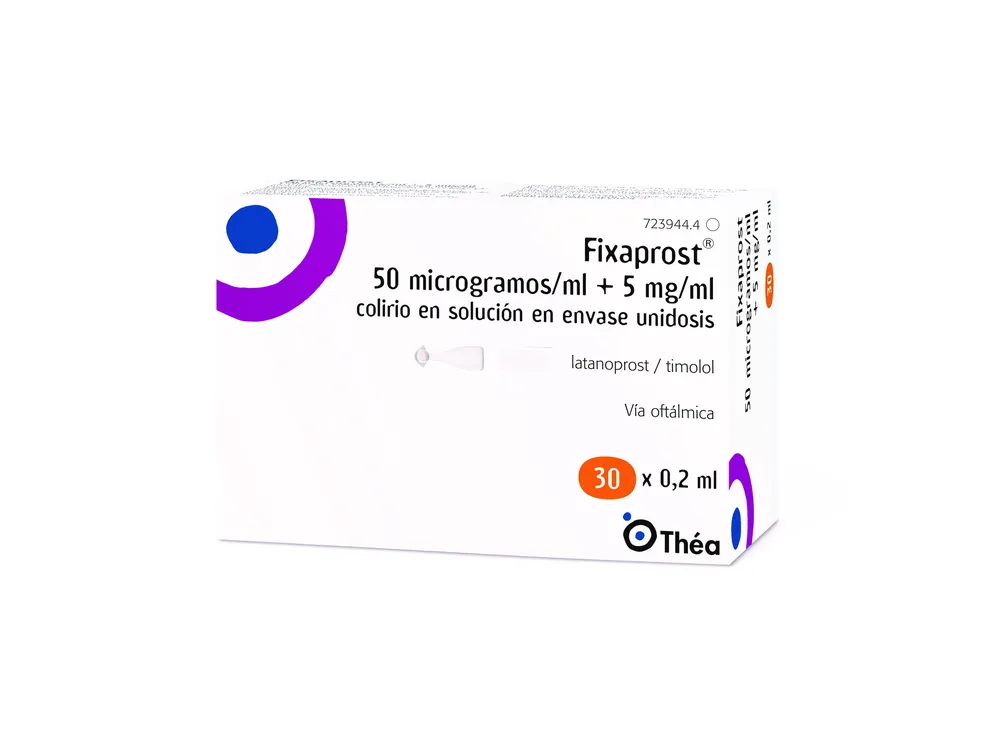
Instructions for Use
Patient Information Leaflet
Introduction
Package leaflet: Information for the patient
Fixaprost 50 micrograms/ml + 5 mg/ml eye drops solution in single-dose container
latanoprost / timolol
Read all of this leaflet carefully before you start using this medicine, because it contains important information for you.
- Keep this leaflet, as you may need to read it again.
- If you have any questions, ask your doctor, pharmacist or nurse.
- This medicine has been prescribed for you only and must not be given to other people, even if they have the same symptoms as you. It may harm them.
- If you experience any side effects, talk to your doctor, pharmacist or nurse, even if they are side effects not listed in this leaflet. See section 4.
Leaflet contents
-
What Fixaprost is and what it is used for
-
What you need to know before using Fixaprost
-
How to use Fixaprost
-
Possible side effects
-
Storage of Fixaprost
-
Contents of the pack and other information
1. What Fixaprost is and what it is used for
Fixaprost contains two active substances: latanoprost and timolol. Latanoprost belongs to a group of medicines known as prostaglandin analogues. Timolol belongs to a group of medicines called beta-blockers. Latanoprost works by increasing the natural outflow of fluid from inside the eye into the bloodstream. Timolol works by reducing the production of fluid in the eye.
Fixaprost is used to reduce intraocular pressure in patients with open-angle glaucoma or ocular hypertension. Both of these conditions are associated with increased pressure inside the eye, which may eventually damage vision. Your doctor will usually prescribe Fixaprost when other medicines have not worked adequately.
2. What you need to know before using Fixaprost
Fixaprost can be used in adults (including elderly patients), but its use is not recommended in individuals under 18 years of age.
Do not use Fixaprost:
- If you are allergic (hypersensitive) to latanoprost, timolol, beta-blockers, or to any of the other components of this medicine (listed in section 6).
- If you have or have previously had respiratory problems such as asthma, severe chronic obstructive bronchitis (a serious lung disease that may cause wheezing, difficulty breathing, and/or long-lasting cough).
- If you have severe heart problems or disorders of heart rhythm.
Warnings and precautions
Consult your doctor or pharmacist before starting to use Fixaprost if you have or have previously had:
- Coronary heart disease (symptoms may include chest pain or tightness, shortness of breath, or suffocation), heart failure, low blood pressure.
- Changes in heart rhythm, such as slow heartbeat.
- Breathing problems, asthma, or chronic obstructive pulmonary disease.
- Conditions characterized by poor blood circulation (such as Raynaud's disease or Raynaud's syndrome).
- Diabetes, as timolol may mask the signs and symptoms of low blood sugar levels.
- Overactivity of the thyroid gland, as timolol may mask signs and symptoms.
- If you are scheduled to undergo eye surgery (including cataract surgery) or have previously undergone any type of eye surgery.
- If you have eye problems (such as eye pain, irritation, inflammation, or blurred vision).
- If you have dry eye.
- If you wear contact lenses. You may continue using Fixaprost, but you must follow the instructions provided in section 3 for contact lens wearers.
- If you suffer from angina (particularly a type known as Prinzmetal's angina).
- If you experience severe allergic reactions that usually require hospital treatment.
- If you have had or currently have a viral eye infection caused by the herpes simplex virus (HSV).
Inform your doctor that you are using Fixaprost before undergoing surgery, as timolol may alter the effects of certain medications used during anesthesia.
Use of Fixaprost with other medicines
Inform your doctor or pharmacist if you are taking, have recently taken, or might need to take any other medicines, including eye drops and medicines obtained without a prescription.
Fixaprost may affect or be affected by other medicines you are taking, including other eye drops for glaucoma treatment. Inform your doctor if you are taking or intend to take medicines to lower blood pressure, heart medications, or medicines for diabetes.
In particular, talk to your doctor or pharmacist if you are taking any of the following types of medicines:
- Prostaglandins, prostaglandin analogs, or prostaglandin derivatives.
- Beta-blockers.
- Epinephrine.
- Medicines used to treat high blood pressure, such as oral calcium channel blockers, guanethidine, antiarrhythmics, digitalis glycosides, or parasympathomimetics.
- Quinidine (used to treat heart conditions and certain types of malaria).
- Antidepressants such as fluoxetine and paroxetine.
Use of Fixaprost with food and drink
Regular meals, food, and beverages do not affect when or how you should use Fixaprost.
Pregnancy, breastfeeding, and fertility
Do not use Fixaprost if you are pregnant or breastfeeding.
Fixaprost may pass into breast milk.
Animal studies have not shown that latanoprost or timolol have any effect on male or female fertility.
If you are pregnant or breastfeeding, think you may be pregnant, or plan to become pregnant, consult your doctor before using this medicine.
Driving and use of machines
Blurred vision may occur for a short period after using Fixaprost. If this happens, do not drive or operate tools or machinery until your vision clears again.
Fixaprost contains macrogol glycerol hydroxystearate (a derivative of castor oil) which may cause skin reactions.
Use in athletes
This medicine contains timolol, which may result in a positive doping test.
3. How to use Fixaprost
Follow exactly the instructions for administering this medicine as given by your doctor or pharmacist. If in doubt, consult your doctor or pharmacist again.
The recommended dose for adults (including elderly patients) is one drop in the affected eye or eyes once daily.
Do not use Fixaprost more than once a day, as treatment efficacy may decrease if administered more frequently.
Use Fixaprost exactly as directed by your doctor until he or she tells you to stop.
Your doctor may want to carry out additional heart and circulatory tests if you are using Fixaprost.
Contact lens wearers
If you wear contact lenses, you must remove them before using Fixaprost. After applying Fixaprost, wait 15 minutes before reinserting your contact lenses.
Instructions for use
This medicine must be administered into the eye.
Follow these instructions to use the eye drops:
- Wash your hands and sit or stand comfortably.
- Open the pouch containing 5 single-dose units. Write down the date of first opening on the pouch.
- Separate one single-dose unit from the strip.
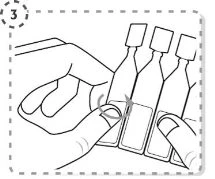
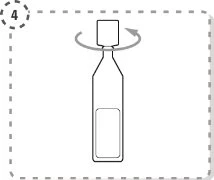
- Twist the tip of the single-dose unit as shown. Do not touch the tip after opening the container.
- Use your finger to gently pull down the lower eyelid of the affected eye.
- Place the tip of the single-dose unit close to the eye, but without touching it.
- Gently squeeze the single-dose unit so that one drop falls into the eye, then release the lower eyelid.
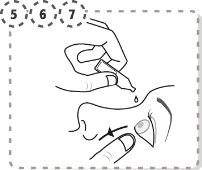
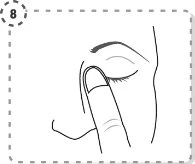
- Press with your finger on the corner of the affected eye near the nose. Apply pressure for 2 minutes, keeping your eye closed.
-
Repeat the procedure in the other eye if instructed by your doctor. Each single-dose unit contains enough solution for both eyes.
-
Discard the single-dose unit after use. Do not save it for later use. Since sterility of the single-dose unit cannot be guaranteed after opening, a new unit must be opened before each use.
-
Place unused single-dose units back into the pouch. Place the opened pouch inside the carton. Unopened single-dose units may be used within 1 month after opening the pouch.
If you use Fixaprost with other eye drops
Wait at least 5 minutes between applying Fixaprost and administering other eye drops.
If you use more Fixaprost than you should
If you have applied more drops than intended, you may experience mild eye irritation, redness, and tearing. This should resolve on its own, but if you are concerned, contact your doctor.
If you swallow Fixaprost
In case of accidental ingestion of Fixaprost, contact your doctor. If you ingest a large amount of Fixaprost, you may feel unwell, have stomach pain, feel tired, hot, dizzy, and begin to sweat.
In case of overdose or accidental ingestion, contact your doctor or pharmacist immediately or call the Toxicology Information Service at telephone number: 91 562 04 20, indicating the medicine and the amount ingested.
If you forget to use Fixaprost
Continue with your next dose as usual. Do not use a double dose to make up for the missed dose. If you have any doubts, consult your doctor or pharmacist.
4. Possible adverse effects
Like all medicines, this medicine can cause adverse effects, although not everyone will experience them.
You may continue using the eye drops as usual unless the side effects are severe. If you are concerned, consult your doctor or pharmacist. Do not stop using Fixaprost without first talking to your doctor.
The known adverse effects associated with the use of Fixaprost are listed below. The most important adverse effect is the possibility of a gradual and permanent change in eye color. Fixaprost may also cause serious changes in heart function. If you notice any changes in your heart rhythm or cardiac function, you must consult a doctor and inform them that you have been using Fixaprost.
The following adverse effects may occur with Fixaprost:
Very common (may affect more than 1 in 10 people):
- Gradual change in eye color due to increased amount of brown pigment in the colored part of the eye known as the iris. If you have mixed-color eyes (blue-brown, gray-brown, yellow-brown or green-brown), you are more likely to experience this change than if your eyes are of a single color (blue, gray, green or brown). The change in eye color may take years to develop. The color change may be permanent and may be more noticeable if you use Fixaprost in only one eye. The change in eye color does not appear to be associated with any eye problems. The change in eye color does not progress once treatment with Fixaprost is stopped.
Common (may affect up to 1 in 10 people):
- Eye irritation (burning sensation, gritty feeling in the eye, itching, stinging, foreign body sensation) and eye pain.
Uncommon (may affect up to 1 in 100 people):
- Headache.
- Redness of the eyes, eye infection (conjunctivitis), blurred vision, watery eyes, eyelid swelling, eye surface irritation or erosion.
- Skin rash or itching (pruritus).
- Nausea, vomiting.
Other adverse effects
Like other eye medications, Fixaprost (latanoprost and timolol) is absorbed into the bloodstream. The incidence of adverse effects after using eye drops is lower than when medicines are taken orally or injected.
Although not observed with Fixaprost, the following adverse effects have been reported with one of the components of Fixaprost (latanoprost and timolol) and therefore could occur with the use of Fixaprost. The adverse effects listed include reactions observed within the group of beta-blockers (e.g., timolol) when used to treat eye conditions:
-
Development of a viral eye infection caused by the herpes simplex virus (HSV).
-
Generalized allergic reactions including swelling under the skin that may occur in areas such as the face and limbs and may block the airway causing difficulty swallowing or breathing, hives or itchy rash, localized or generalized rash, itching, sudden severe and potentially life-threatening allergic reaction.
-
Low blood sugar levels.
-
Dizziness.
-
Difficulty sleeping (insomnia), depression, nightmares, memory loss, hallucinations.
-
Fainting, stroke, insufficient blood supply to the brain, worsening of signs and symptoms of myasthenia gravis (a muscle disorder), unusual muscle aches and headache.
-
Swelling at the back of the eye (macular edema), fluid-filled cyst in the colored part of the eye (iris cyst), light sensitivity (photophobia), sunken appearance of the eyes (increased depth of the eyelid crease).
-
Signs and symptoms of ocular irritation (e.g., burning, stinging, itching, tearing, redness), eyelid inflammation, corneal inflammation, blurred vision, and detachment of the layer beneath the retina containing blood vessels after filtration surgery, which may cause visual disturbances, decreased corneal sensitivity, dry eyes, corneal erosion (damage to the front layer of the eyeball), drooping of the upper eyelid (causing the eye to be partially closed), double vision.
-
Darkening of the skin around the eyes, changes in eyelashes and fine hair around the eye (increased number, length, thickness, and darkening), changes in the direction of eyelash growth, swelling around the eye, swelling of the colored part of the eye (iritis/uveitis), scarring on the eye surface.
-
Ringing or buzzing in the ears (tinnitus).
-
Angina, worsening of angina in patients who already have heart disease.
-
Slow heart rate, chest pain, palpitations (awareness of heartbeat), edema (fluid accumulation), changes in heart rate or rhythm, congestive heart failure (heart disease causing breathing difficulties and swelling of feet and legs due to fluid accumulation), a type of heart rhythm disorder, heart attack, heart failure.
-
Low blood pressure, poor blood circulation causing numbness and paleness in fingers and toes, cold hands and feet.
-
Breathing difficulties, narrowing of the airways in the lungs (predominantly in patients with pre-existing lung disease), difficulty breathing, cough, asthma, worsening of asthma.
-
Altered taste, nausea, indigestion, diarrhea, dry mouth, abdominal pain, vomiting.
-
Hair loss, skin rash with a silvery appearance (psoriasiform rash) or worsening of psoriasis, skin rash.
-
Joint pain, muscle pain not caused by exercise, muscle weakness, fatigue.
-
Sexual dysfunction, decreased libido.
Reporting of adverse effects
If you experience any adverse effect, talk to your doctor or pharmacist, even if it is a possible adverse effect not listed in this leaflet. You may also report them directly through the Spanish System for Pharmacovigilance of Human Medicines: https://www.notificaram.es. By reporting adverse effects, you can help provide more information on the safety of this medicine.
5. Storage of Fixaprost
Keep this medicine out of the sight and reach of children.
Do not use this medicine after the expiry date stated on the carton, sachet, and single-dose containers. The expiry date refers to the last day of the month indicated.
This medicine does not require any special storage temperature conditions.
After first opening the sachet: use the single-dose containers within 1 month.
Write down the date of first opening of the sachet.
After first opening the single-dose container: use immediately and discard the single-dose container after use.
Store unused single-dose containers inside the opened sachet to protect them from light.
Medicines should not be disposed of via wastewater or household waste. Return unused containers and medicines to the SIGRE collection point at your pharmacy. If you are unsure, ask your pharmacist how to dispose of unused containers and medicines. This helps protect the environment.
6. Contents of the pack and other information
Composition of Fixaprost
The active substances are latanoprost 50 micrograms/ml and timolol (as timolol maleate) 5 mg/ml.
The other components are: macrogol glyceryl hydroxystearate, sorbitol, macrogol, carbomer, disodium edetate, sodium hydroxide (to adjust pH), water for injections.
Appearance of the medicine and contents of the pack
This medicine is presented as an eye drop solution in single-dose units.
The solution is slightly yellowish, opalescent, preservative-free, and practically free from particles. It is contained in a pouch of 5 units; each single-dose unit contains 0.2 ml of eye drop solution.
Cartons contain 30 (6 x 5) or 90 (18 x 5) single-dose units.
Only certain pack sizes may be marketed.
Marketing Authorization Holder and Manufacturer
Marketing Authorization Holder
Laboratoires THEA
12, rue Louis Blériot
63017 CLERMONT-FERRAND Cedex 2
FRANCE
Manufacturer
EXCELVISION
27, rue de la Lombardière
07100 Annonay
FRANCE
or
Laboratoires THEA
12, rue Louis Blériot
63017 CLERMONT-FERRAND Cedex 2
FRANCE
For further information about this medicine, please contact the local representative of the Marketing Authorization Holder:
LABORATORIOS THEA, S.A.
C/ Enric Granados nº 86-88, 2nd floor
08008 Barcelona
Spain
This medicine is authorized in the European Economic Area member states under the following names:
Austria, Slovakia, France, Italy, Ireland, Poland, United Kingdom, Czech Republic Fixapost
Germany, Belgium, Bulgaria, Cyprus, Spain, Greece, Netherlands, Luxembourg, Portugal Fixaprost
Denmark, Estonia, Finland, Iceland, Latvia, Lithuania, Norway, Sweden Fixopost
Croatia, Slovenia Fixalpost
Romania Fixanpost
Portugal Monoprost Duo
Date of the most recent revision of this product information: March 2023
Detailed information on this medicine is available on the website of the Spanish Agency of Medicines and Health Products (AEMPS): http://www.aemps.gob.es/.
Similar Medications
-
Ganfort 0.3 mg/ml + 5 mg/ml eye drops solution in single-dose container
Form: solution, ophthalmic in single-dose container
Active substance Dosage BIMATOPROST 0,3 mg TIMOLOL MALEATE 6,8 mg Manufacturer: Abbvie Deutschland Gmbh & Co. Kg
-
Taptiqom 15 micrograms/ml + 5 mg/ml eye drops solution in single-dose container
Form: solution, ophthalmic in single-dose container
Active substance Dosage TAFLUPROST 0,015 mg/ml TIMOLOL 5,0 mg/ml Manufacturer: Santen Oy
-
Visucopt 20 mg/ml + 5 mg/ml eye drops in single-dose container
Form: solution, ophthalmic in single-dose container
Active substance Dosage DORZOLAMIDE HYDROCHLORIDE 22,26 mg/ml TIMOLOL MALEATE 6,83 mg/ml Manufacturer: Visufarma S.P.A.
This page has been machine-translated and may contain inaccuracies. The original data is available in the manufacturing country's language.
Last data check: May 18, 2026 · Data source: CIMA — AEMPS