Firmagon 120 mg powder and solvent for solution for injection
Spain
Table of Contents
Package leaflet: Information for the user
Introduction
Package leaflet: information for the user
FIRMAGON 120 mg powder and solvent for solution for injection
degarelix
Read the entire leaflet carefully before you start using this medicine, because it contains important information for you.
-
Keep this leaflet, as you may need to read it again.
-
If you have any questions, ask your doctor or pharmacist.
-
If you experience any adverse reactions, consult your doctor or pharmacist, even if they are not listed in this leaflet. See section 4.
Contents of the leaflet:
- What FIRMAGON is and what it is used for
- What you need to know before using FIRMAGON
- How to use FIRMAGON
- Possible adverse effects
- How to store FIRMAGON
- Contents of the pack and other information
1. What FIRMAGON is and what it is used for
FIRMAGON contains degarelix.
Degarelix is a synthetic hormonal blocker used for the treatment of cancer and for the treatment of high-risk prostate cancer prior to radiotherapy and in combination with radiotherapy in adult male patients. Degarelix mimics the effects of a natural hormone (gonadotropin-releasing hormone, GnRH) by directly blocking its effects. As a result, degarelix rapidly reduces levels of the male hormone called testosterone, which is responsible for stimulating prostate cancer.
2. What you need to know before starting to use FIRMAGON
Do not use FIRMAGON
- If you are allergic to the active substance or to any of the other components of this medicine (listed in section 6).
Warnings and precautions
Consult your doctor if you have:
- Any vascular condition or heart rhythm problems (arrhythmias), or if you are being treated with medications to correct these conditions. The risk of heart rhythm problems may be increased with the use of FIRMAGON.
- Diabetes mellitus. Diabetes may worsen or may develop during treatment. If you have diabetes, you may need to monitor your blood glucose levels more frequently.
- Liver disease. You may require monitoring of liver function.
- Kidney disease. The use of FIRMAGON has not been studied in patients with severe renal impairment.
- Osteoporosis or any condition affecting bone density. Reduced testosterone levels may cause a reduction in bone calcium (bone thinning).
- Severe hypersensitivity. The use of FIRMAGON has not been studied in patients with severe hypersensitivity reactions.
Children and adolescents
Do not administer this medicine to children or adolescents.
Use of FIRMAGON with other medicines
FIRMAGON may interfere with certain medicines used to treat heart rhythm disorders (e.g., quinidine, procainamide, amiodarone, and sotalol) or with medicines that have an effect on heart rhythm (e.g., methadone (used for pain relief and as part of drug addiction detoxification), moxifloxacin (an antibiotic), antipsychotics).
Inform your doctor or pharmacist if you are taking, have recently taken, or might need to take any other medicines.
Driving and using machines
Fatigue and dizziness are common adverse effects that may affect the ability to drive and use machines. These adverse effects may be due to the treatment or may be related to the underlying disease.
3. How to USE FIRMAGON
In general, this medicine will be administered by injection by a nurse or doctor.
The recommended starting dose is two consecutive injections of 120 mg. Afterwards, you will receive a monthly dose of 80 mg. The injected liquid forms a gel from which degarelix is released over one month.
FIRMAGON MUST ONLY be injected under the skin (subcutaneous injection). FIRMAGON MUST NOT be administered into the bloodstream (intravenous injection). Particular care must be taken to avoid accidental injection into a blood vessel. It is common practice to vary the injection site at different points on the abdominal wall.
If you forget to use FIRMAGON
If you think your monthly dose of FIRMAGON has been missed, consult your doctor.
If you have any further questions about the use of this medicine, ask your doctor or pharmacist.
4. Possible adverse effects
Like all medicines, FIRMAGON may cause adverse effects, although not everyone experiences them.
A very serious allergic reaction to this medicine is rare. Contact your doctor immediately if you develop a severe rash, itching, or shortness of breath or difficulty breathing. These could be symptoms of a serious allergic reaction.
Very common (may affect more than 1 in 10 patients):
Hot flashes, injection site reactions, and flushing. Adverse reactions at the injection site occur more frequently with the initial dose and become less common when the maintenance dose is administered.
Common (may affect up to 1 in 10 patients):
- Swelling, nodule, and hardness at the injection site
- Chills, fever, or flu-like symptoms after injection
- Difficulty sleeping, fatigue, dizziness, headache
- Weight gain, nausea, diarrhea, increased liver enzymes
- Excessive sweating (including night sweats), skin rash
- Anemia
- Musculoskeletal pain and discomfort
- Decrease in testicle size, breast swelling, impotence
Uncommon (may affect up to 1 in 100 patients):
- Loss of sexual desire, testicular pain, pelvic pain, ejaculation disorders, genital irritation, chest pain
- Depression, mental deterioration
- Skin discoloration, hair loss, skin nodules, numbness
- Allergic reactions, urticaria, itching
- Decreased appetite, constipation, vomiting, dry mouth, abdominal pain and discomfort, increased blood sugar/diabetes mellitus, increased cholesterol, changes in blood calcium levels, weight loss
- High blood pressure, changes in heart rate, changes in electrocardiogram (QT prolongation), palpitations, dyspnea, peripheral edema
- Muscle weakness, muscle spasms, joint swelling/numbness, osteoporosis/osteopenia, joint pain
- Frequent urge to urinate, urinary urgency, difficulty or pain when urinating, need to urinate at night, changes in kidney function, incontinence
- Blurred vision
- Injection site discomfort including decreased blood pressure and heart rate (vasovagal reaction)
- Malaise
Rare (may affect up to 1 in 1,000 patients):
- Febrile neutropenia (very low white blood cell count combined with fever), heart attack, heart failure
- Unexplained muscle pain or cramps, tenderness, or weakness. Muscle problems may be severe, including muscle breakdown that can damage the kidney
Very rare (may affect up to 1 in 10,000 patients):
- Infection at injection site, abscess, necrosis
Reporting of adverse effects
If you experience any adverse effects, consult your doctor or pharmacist, even if they are possible adverse effects not listed in this leaflet. You can also report them directly through the national reporting system listed in Annex V. By reporting adverse effects, you can help provide more information on the safety of this medicine.
5. Storage of FIRMAGON
Keep out of the sight and reach of children.
Do not use this medicine after the expiry date stated on the vials, syringes, and packaging. The expiry date refers to the last day of the month indicated.
This medicine does not require any special storage conditions.
After reconstitution
This medicine is stable for 2 hours at 25°C.
Due to the risk of microbial contamination, the medicine should be used immediately. If immediate use is not possible, the responsibility for using this medicine lies with the user.
Medicines should not be disposed of via wastewater or household waste. Ask your pharmacist how to dispose of medicines and packaging you no longer need. This will help protect the environment.
6. Contents of the container and additional information
Composition of FIRMAGON
- The active substance is degarelix. Each vial contains 120 mg of degarelix (as acetate). After reconstitution, 1 ml of reconstituted solution contains 40 mg of degarelix.
- The other component of the powder is mannitol (E 421).
- The solvent is water for injections.
Appearance of FIRMAGON and contents of the container
FIRMAGON is a powder and solvent for injectable solution. The powder is white to off-white. The solvent is a clear, colourless solution.
Pack size of 2 trays containing:
2 vials of powder containing 120 mg of degarelix and 2 pre-filled syringes containing 3 ml of solvent.
2 syringe plungers, 2 vial adapters, and 2 injection needles.
Marketing Authorisation Holder and Manufacturer
Marketing Authorisation Holder:
Ferring Pharmaceuticals A/S
Amager Strandvej 405
2770 Kastrup, Denmark
Tel. +45 8833 8834
Manufacturer:
Ferring GmbH
Wittland 11
D-24109 Kiel, Germany
For further information about this medicinal product, please contact the local representative of the Marketing Authorisation Holder:
Belgium/Belgium/Belgium Ferring N.V. Tel/Tél: +32 53 72 92 00 | Lithuania CentralPharma Communication UAB Tel: +370 5 243 0444 |
Bulgaria Farmont Ltd. Tel: +359 2 807 5022 | Luxembourg/Luxembourg Ferring N.V. Belgium/Belgium Tel/Tél: +32 53 72 92 00 |
Czech Republic Ferring Pharmaceuticals CZ s.r.o. Tel: +420 234 701 333 | Hungary Ferring Magyarország Gyógyszerkereskedelmi Kft. Tel: +36 1 236 3800 |
Denmark Ferring Lægemidler A/S Tlf: +45 88 16 88 17 | Malta E.J. Busuttil Ltd. Tel: +356 21447184 |
Germany Ferring Arzneimittel GmbH Tel: +49 431 5852 0 | Netherlands Ferring B.V. Tel: +31 235680300 |
Estonia CentralPharma Communication OÜ Tel: +372 601 5540 | Norway Ferring Legemidler AS Tlf: +47 22 02 08 80 |
Greece Ferring Ελλάς MEΠΕ Tel: +30 210 68 43 449 | Austria Ferring Arzneimittel Ges.m.b.H. Tel: +43 1 60 8080 |
Spain Ferring, S.A.U. Tel: +34 91 387 70 00 | Poland Ferring Pharmaceuticals Poland Sp. z o.o. Tel: +48 22 246 06 80 |
France Ferring S.A.S. Tél: +33 1 49 08 67 60 | Portugal Ferring Portuguesa – Produtos Farmacêuticos, Sociedade Unipessoal, Lda. Tel: +351 21 940 5190 |
Croatia Clinres farmacija d.o.o. Tel: +385 1 2396 900 | Romania Ferring Pharmaceuticals Romania SRL Tel: +40 356 113 270 |
Ireland Ferring Ireland Ltd. Tel: + 353 1 4637355 | Slovenia SALUS, Veletrgovina, d.o.o. Tel: +386 1 5899 179 |
Iceland Vistor hf. Tel: +354 535 70 00 | Slovakia Ferring Slovakia s.r.o. Tel: +421 2 54 416 010 |
Italy Ferring S.p.A. Tel: +39 02 640 00 11 | Finland Ferring Lääkkeet Oy Tel: +358 207 401 440 |
Cyprus
Tel: +357 22583333 | Sweden Ferring Läkemedel AB Tel: +46 40 691 69 00 |
Date of the most recent review of this summary:
Detailed information on this medicine is available on the website of the European Medicines Agency: http://www.ema.europa.eu/.
This information is intended for healthcare professionals only:
Instructions for correct use
NOTE:
•DO NOT SHAKE THE VIALS
The pack contains two vials of powder and two pre-filled syringes with solvent, which must be prepared for subcutaneous injection. Therefore, the procedure described below must be repeated a second time.
|
|
| |
|
|
|
The formation of small circular air bubbles may be acceptable. Reconstitution typically takes a few minutes, but may take up to 15 minutes in some cases. |
|
Always ensure the exact volume is withdrawn and adjust if air bubbles are present. |
| |
|
Inject 3 mL of FIRMAGON 120 mg slowly, immediately after reconstitution* |
Do not inject directly into any vein. Gently pull back on the plunger to check for blood aspiration. If blood enters the syringe, the product must not be used. In this case, remove and discard the syringe and needle (reconstitute a new dose for the patient). | |
|
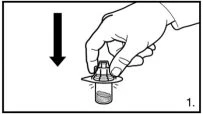
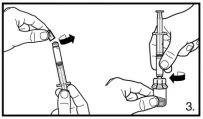
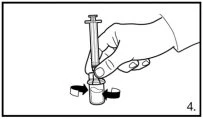
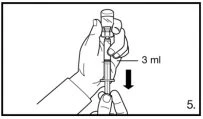
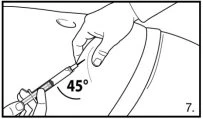
- The chemical and physical stability of the preparation has been demonstrated for 2 hours at 25 °C. From a microbiological standpoint, unless the reconstitution method entails a risk of contamination, the product should be used immediately. If not used immediately, the conditions and duration of use shall be the responsibility of the user.