Fingolimod Dr. Reddy's 0.5 mg hard capsules EFG
Spain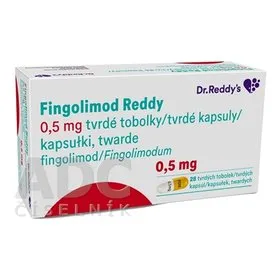
Table of Contents
- Package leaflet: Information for the user
- Introduction
- 1. What Fingolimod Dr. Reddys is and what it is used for
- 2. What you need to know before taking Fingolimod Dr. Reddys
- 3. How to take Fingolimod Dr. Reddys
- 4. Possible adverse effects
- 5. Fingolimod Dr. Reddys Storage Instructions
- 6. Contents of the pack and other information
Package leaflet: Information for the user
Introduction
Package leaflet: information for the user
Fingolimod Dr. Reddys 0.5 mg hard capsules EFG
fingolimod
Read the entire leaflet carefully before you start taking this medicine, because it contains important information for you.
-
Keep this leaflet, as you may need to read it again.
-
If you have any questions, ask your doctor or pharmacist.
-
This medicine has been prescribed for you only, and you should not give it to other people, even if they have the same symptoms as you, because it may harm them.
- If you experience any adverse effects, consult your doctor or pharmacist, even if they are adverse effects not listed in this leaflet. See section 4.
Contents of the leaflet
- What Fingolimod Dr. Reddys is and what it is used for
- What you need to know before taking Fingolimod Dr. Reddys
- How to take Fingolimod Dr. Reddys
- Possible side effects
- How to store Fingolimod Dr. Reddys
- Contents of the pack and other information
1. What Fingolimod Dr. Reddys is and what it is used for
What Fingolimod Dr. Reddys is
Fingolimod Dr. Reddys contains the active substance fingolimod.
What Fingolimod Dr. Reddys is used for
Fingolimod Dr. Reddys is used in adults and in children and adolescents (aged 10 years and above) to treat relapsing-remitting multiple sclerosis (MS) (characterized by relapses), particularly in:
- patients who do not respond to treatment despite receiving therapy for MS, or
- patients who rapidly develop severe MS.
Fingolimod Dr. Reddys does not cure MS, but it helps reduce the number of relapses and slows down the progression of physical disability caused by MS.
What is multiple sclerosis
MS is a chronic disease that affects the central nervous system (CNS), which consists of the brain and spinal cord. In MS, inflammation destroys the protective sheath (called myelin) that surrounds the nerves in the CNS, impairing proper nerve function. This process is known as demyelination.
Relapsing-remitting MS is characterized by repeated attacks (relapses) of neurological symptoms reflecting inflammation occurring in the CNS. Symptoms vary from patient to patient but typically include difficulty walking, loss of sensation in parts of the body (numbness), vision problems, or balance disorders. Symptoms of a relapse may completely disappear when the relapse ends, although some residual problems may remain.
How Fingolimod Dr. Reddys works
Fingolimod helps combat immune system attacks on the CNS by reducing the ability of certain white blood cells (lymphocytes) to move freely throughout the body and by preventing them from reaching the brain and spinal cord. This limits nerve damage caused by multiple sclerosis. Fingolimod also reduces some of the immune responses in your body.
2. What you need to know before taking Fingolimod Dr. Reddys
Do not take Fingolimod Dr. Reddys
- if you have a reduced immune response (due to an immunodeficiency syndrome, a disease, or medications that suppress the immune system).
- if your doctor suspects you may have a rare brain infection called progressive multifocal leukoencephalopathy (PML), or if PML has been confirmed.
- if you have an active serious infection or an active chronic infection such as hepatitis or tuberculosis.
- if you have active cancer.
- if you have severe liver problems.
- if you have had a heart attack, angina, stroke, transient ischemic attack (TIA), or any type of heart failure within the past 6 months.
- if you have any type of irregular or abnormal heartbeat (arrhythmia), including patients in whom the electrocardiogram (ECG) shows QT interval prolongation before starting fingolimod treatment.
- if you are taking or have recently taken medications for irregular heartbeat (of the heart), such as quinidine, disopyramide, amiodarone, or sotalol.
- if you are pregnant or if you are a woman of childbearing potential and are not using an effective contraceptive method.
- if you are allergic to fingolimod or to any of the other components of this medicine (listed in section 6).
If any of these apply to you or you are unsure, speak with your doctor before taking Fingolimod Dr. Reddys.
Warnings and precautions
Talk to your doctor before starting Fingolimod Dr. Reddys:
- if you have severe breathing problems when sleeping (severe sleep apnea).
- if you have been told you have an abnormal electrocardiogram.
- if you have symptoms of a slow heartbeat (e.g., dizziness, nausea, or palpitations).
- if you are taking or have recently taken medications that slow your heart rate (such as beta-blockers, verapamil, diltiazem, ivabradine, digoxin, anticholinesterase agents, or pilocarpine).
- if you have a history of sudden loss of consciousness or fainting (syncope).
- if you are planning to get vaccinated.
- if you have never had chickenpox.
- if you have or have had disorders or other signs of inflammation in the central area of vision (the macula) at the back of the eye (an eye disorder known as macular edema, see below), inflammation or infection of the eye (uveitis), or if you have diabetes (which may cause eye problems).
- if you have liver problems.
- if you have high blood pressure that cannot be controlled with medication.
- if you have severe lung problems or "smoker's cough."
If any of these apply to you or you are unsure, speak with your doctor before taking Fingolimod Dr. Reddys.
Slow heart rate (bradycardia) and irregular heartbeats
At the start of treatment or after taking the first 0.5 mg dose, in cases where your previous dose of 0.25 mg once daily has been changed, fingolimod causes a decrease in heart rate. As a result, you may feel dizzy or tired, become aware of your heartbeat, or your blood pressure may drop. If these effects are severe, inform your doctor immediately as you may require immediate treatment. Fingolimod may also cause irregular heartbeats, especially after the first dose. Irregular heartbeats usually return to normal within less than a day. Slow heart rate typically normalizes within one month. During this period, clinically significant effects on heart rate are generally not expected.
Your doctor will ask you to remain at the clinic or hospital for at least 6 hours, with hourly pulse and blood pressure checks, after taking your first dose of fingolimod or after taking the first 0.5 mg dose if your previous dose was changed from 0.25 mg once daily, so that appropriate measures can be taken if adverse effects occur at the start of treatment. You will have an electrocardiogram (ECG) before your first dose of fingolimod and again after the 6-hour monitoring period. Your doctor may continuously monitor your ECG during this time. If after the 6-hour period you have a very slow or decreasing heart rate, or if your ECG shows abnormalities, you will need to be monitored for a longer period (at least 2 additional hours and possibly overnight) until the issue resolves. The same may apply if you are restarting fingolimod after a treatment interruption, depending on both the duration of the interruption and how long you had previously been taking fingolimod.
If you have or are at risk of having irregular or abnormal heartbeats, if your ECG is abnormal, or if you have heart disease or heart failure, fingolimod may still be suitable for you.
If you have previously experienced sudden fainting or a slow heart rate, fingolimod may not be appropriate for you. You will be evaluated by a cardiologist (heart specialist) who will advise on how to start fingolimod treatment, including overnight monitoring.
If you are taking other medications that can slow your heart rate, fingolimod may not be suitable for you. A cardiologist must evaluate you and consider whether you can switch to alternative medications that do not slow the heart rate to allow fingolimod treatment. If such a switch is not possible, the cardiologist will advise on how to start fingolimod treatment, including overnight monitoring.
If you have never had chickenpox
If you have never had chickenpox, your doctor will check your immunity to the virus that causes it (varicella-zoster virus). If you are not protected against the virus, you may need to be vaccinated before starting fingolimod treatment. If so, your doctor will delay the start of fingolimod treatment by one month after completing the vaccination series.
Infections
Fingolimod reduces white blood cell count (especially lymphocyte count). White blood cells fight infections. During treatment with fingolimod (and for up to two months after stopping treatment), you may be more susceptible to infections. An existing infection may also worsen. If you suspect you have an infection, have a fever, feel flu-like, have shingles, or have a headache accompanied by neck stiffness, light sensitivity, nausea, skin rash, and/or confusion or seizures (which may be symptoms of meningitis and/or encephalitis caused by fungal or herpes virus infection), contact your doctor immediately, as this could be serious and potentially life-threatening.
Human papillomavirus (HPV) infection, including papilloma, dysplasia, warts, and HPV-related cancer, has been reported in patients treated with fingolimod. Your doctor will assess whether you need HPV vaccination before starting treatment. If you are a woman, your doctor will also recommend regular HPV screening.
PML
PML is a rare brain disorder caused by an infection that can lead to severe disability or death. Your doctor will request magnetic resonance imaging (MRI) scans before and during treatment to monitor your risk of PML.
If you think your MS is worsening or if you notice any new symptoms, such as changes in mood or behavior, new or worsening weakness on one side of the body, vision changes, confusion, memory lapses, or difficulty speaking and communicating, consult your doctor as soon as possible.
These may be symptoms of PML. Also speak with your partner or caregivers and inform them about your treatment. They may notice symptoms you are not aware of.
If you develop PML, it may be treated and fingolimod treatment will be stopped. Some people experience an inflammatory reaction as fingolimod is cleared from the body. This reaction (known as immune reconstitution inflammatory syndrome or IRIS) may worsen your condition, including worsening brain function.
Macular edema
Before starting fingolimod treatment, your doctor may request an eye examination if you have or have had visual disorders or other signs of inflammation in the central area of vision (the macula) at the back of the eye, eye inflammation or infection (uveitis), or diabetes.
After starting fingolimod treatment, your doctor may request an eye examination after 3 to 4 months of treatment.
The macula is a small area of the retina located at the back of the eye that allows you to see shapes, colors, and details clearly and sharply. Fingolimod can cause inflammation of the macula, a condition known as macular edema. Inflammation usually occurs within the first four months of fingolimod treatment.
If you have diabetes or have previously had eye inflammation known as uveitis, you are more likely to develop macular edema. In these cases, your doctor will want you to have regular eye examinations to detect macular edema.
If you have previously had macular edema, discuss this with your doctor before continuing fingolimod treatment.
Macular edema can cause visual symptoms similar to those of an MS attack (optic neuritis). You may not have symptoms initially. You must inform your doctor of any changes in your vision. Your doctor may want to perform an eye examination, especially if:
- the center of your visual field becomes blurry or contains shadows;
- a blind spot appears in the center of your visual field;
- you have difficulty seeing colors or small details.
Liver function tests
If you have severe liver problems, you must not take fingolimod. Fingolimod can affect your liver function. You may not notice any symptoms, but if you notice yellowing of the skin or whites of the eyes, abnormally dark urine (brown-colored), pain on the right side of the stomach area (abdomen), fatigue, reduced appetite, or unexplained nausea and vomiting, inform your doctor immediately.
If you experience any of these symptoms after starting fingolimod treatment, inform your doctor immediately.
Before, during, and after treatment, your doctor will request blood tests to monitor your liver function. You may need to stop fingolimod treatment if test results indicate a liver problem.
High blood pressure
Since fingolimod causes a slight increase in blood pressure, your doctor will want you to have your blood pressure monitored regularly.
Lung problems
Fingolimod has a mild effect on lung function. Patients with severe lung problems or "smoker's cough" are more likely to develop adverse effects.
Blood counts
The expected effect of fingolimod treatment is to reduce the number of white blood cells in your blood. This effect usually normalizes within 2 months after stopping treatment. If you have blood tests, inform your doctor that you are taking fingolimod, as otherwise your doctor may not understand the test results. For certain blood tests, your doctor may need more blood than usual.
Before starting fingolimod treatment, your doctor will confirm you have sufficient white blood cells in your blood and may want to repeat checks regularly. If your white blood cell count is too low, you may need to stop treatment with Gilenia.
Posterior reversible encephalopathy syndrome (PRES)
Rarely, a condition called posterior reversible encephalopathy syndrome (PRES) has been reported in multiple sclerosis patients treated with fingolimod. Symptoms may include sudden, severe headache, confusion, seizures, and vision changes. Inform your doctor immediately if you experience any of these symptoms during fingolimod treatment, as it could be serious.
Cancer
Cases of skin cancer have been reported in MS patients treated with fingolimod. Inform your doctor immediately if you notice any skin nodules (e.g., shiny, pearl-like nodules), spots, or open wounds that do not heal for weeks. Symptoms of skin cancer may include abnormal growth or changes in skin tissue (e.g., unusual moles) that change in color, shape, or size over time. Before starting fingolimod treatment, a skin examination is required to check for any skin nodules. Your doctor will also perform periodic skin checks during fingolimod treatment. If any skin problems arise, your doctor may refer you to a dermatologist, who may decide whether regular visits are necessary.
A type of cancer of the lymphatic system (lymphoma) has been reported in MS patients treated with fingolimod.
Sun exposure and sun protection
Fingolimod weakens your immune system, increasing your risk of developing cancer, especially skin cancer. You should limit your exposure to sunlight and UV rays by:
- wearing appropriate protective clothing.
- regularly applying sunscreen with a high UV protection factor.
Unusual brain lesions associated with MS relapses
Rare cases of large, unusual brain lesions associated with MS relapses have been reported in patients treated with fingolimod. In the case of severe relapses, your doctor will assess the need for a magnetic resonance imaging (MRI) scan to evaluate your condition and decide whether you need to stop taking fingolimod.
Switching from other treatments to fingolimod
Your doctor may switch you directly from interferon beta, glatiramer acetate, or dimethyl fumarate to fingolimod if there are no signs of abnormalities caused by the previous treatment. Your doctor may need to perform a blood test to rule out such abnormalities. After stopping natalizumab, you may need to wait 2–3 months before starting fingolimod treatment.
To switch from teriflunomide, your doctor may advise waiting a period of time or undergoing an accelerated elimination procedure. If you have been treated with alemtuzumab, a thorough evaluation and discussion with your doctor is necessary to determine whether fingolimod is suitable for you.
Women of childbearing potential
If fingolimod is used during pregnancy, it may harm the fetus. Before starting fingolimod treatment, your doctor will explain the risks and request a pregnancy test to confirm you are not pregnant. Your doctor will give you a card explaining why you must not become pregnant while taking fingolimod and what you should do to avoid pregnancy. During treatment and for 2 months after stopping treatment, you must use an effective contraceptive method (see section “Pregnancy and breastfeeding”).
If you become pregnant while taking fingolimod, inform your doctor immediately. Your doctor will decide to stop treatment (see section 3 “If you stop taking Fingolimod Dr. Reddys” and section 4 “Possible side effects”). You will receive specific prenatal follow-up.
Breastfeeding
You must not breastfeed during treatment with fingolimod.
Fingolimod passes into breast milk and there is a risk that the baby may experience serious adverse effects.
Driving and using machines
Your doctor will advise you whether your condition allows you to drive vehicles, including bicycles, and use machines safely. Fingolimod is not expected to affect your ability to drive or use machines.
However, at the start of treatment, you will need to remain at the medical clinic or hospital for 6 hours after taking the first dose of fingolimod. During this time and possibly afterward, your ability to drive and use machines may be impaired.
Fingolimod Dr. Reddys contains sodium.
This medicine contains less than 1 mmol of sodium (23 mg) per capsule, i.e., essentially "sodium-free."
3. How to take Fingolimod Dr. Reddys
Treatment with fingolimod will be supervised by a physician experienced in the management of multiple sclerosis.
Always follow exactly the instructions given by your doctor for taking this medicine. In case of doubt, consult your doctor again.
The recommended dose is:
Adults:
The dose is one 0.5 mg capsule per day.
Use in children and adolescents (from age 10 onwards):
The dose depends on body weight:
- Children and adolescents with body weight ≤ 40 kg: one 0.25 mg capsule per day.
Fingolimod Dr. Reddys 0.5 mg hard capsules are not suitable for pediatric patients with body weight ≤ 40 kg. Other fingolimod-containing medicines are available at a lower concentration (such as 0.25 mg capsules).
- Children and adolescents with body weight > 40 kg: one 0.5 mg capsule per day.
Children and adolescents who initially take one 0.25 mg capsule per day and later reach a stable body weight above 40 kg should switch to one 0.5 mg capsule per day, as directed by their physician. In such cases, repeating the first-dose observation period is recommended.
Do not exceed the recommended dose.
Fingolimod Dr. Reddys is for oral use.
Take Fingolimod Dr. Reddys once daily with a glass of water. Fingolimod Dr. Reddys capsules must always be swallowed whole, without opening them. You may take Fingolimod Dr. Reddys with or without food.
Taking Fingolimod Dr. Reddys at the same time each day will help you remember when to take your medicine. If you have any doubts about how long your treatment with Fingolimod Dr. Reddys should continue, consult your doctor or pharmacist.
If you take more Fingolimod Dr. Reddys than you should
If you have taken more Fingolimod Dr. Reddys than you should, inform your doctor immediately.
If you forget to take Fingolimod Dr. Reddys
If you have been taking fingolimod for less than 1 month and miss one dose for a full day, speak with your doctor before taking the next dose. Your doctor may decide to observe you when you take the next dose.
If you have been taking fingolimod for at least 1 month and have missed your treatment for more than 2 weeks, speak with your doctor before taking the next dose. Your doctor may decide to observe you when you take the next dose. However, if you have missed your treatment for up to 2 weeks, you may take the next dose as originally scheduled.
Never take a double dose to make up for a missed dose.
In case of overdose or accidental ingestion, contact your doctor or pharmacist immediately or call the Toxicology Information Service at telephone number: 91 562 04 20, indicating the medicine and the amount ingested.
If you stop taking Fingolimod Dr. Reddys
Do not stop taking Fingolimod Dr. Reddys or change your dose without first discussing it with your doctor.
Fingolimod will remain in your body for up to two months after stopping treatment. The number of white blood cells (lymphocyte count) may remain low during this period, and adverse effects described in this leaflet may still occur. After stopping fingolimod treatment, you may need to wait 6–8 weeks before starting a new treatment for MS.
If you need to restart fingolimod treatment after a break of more than two weeks, the effect on heart rate that may occur at the beginning of treatment could reappear, and you will need to be monitored by your doctor when restarting treatment. Do not restart fingolimod treatment after having stopped it for more than two weeks without first consulting your doctor.
Your doctor will decide whether follow-up after stopping fingolimod treatment is necessary and how it should be conducted. Inform your doctor immediately if you think your MS is worsening after stopping fingolimod treatment, as this could be serious.
If you have any further questions about using this medicine, ask your doctor or pharmacist.
4. Possible adverse effects
Like all medicines, this medicine can cause adverse effects, although not everyone will experience them.
Some adverse effects may be serious or potentially serious
Frequent (may affect up to 1 in 10 patients)
- cough with sputum (phlegm), chest discomfort, fever (signs of pulmonary disorders)
- herpes virus infection (shingles or herpes zoster) with symptoms such as blisters, stinging, itching, or skin pain, especially on the upper body or face. Other symptoms may include fever and weakness in the early phase of infection, followed by numbness, itching, or red spots with intense pain
- slow heartbeat (bradycardia), irregular heart rhythm
- a type of skin cancer known as basal cell carcinoma (BCC), which often appears as a pearly nodule, although it may also have other forms
- depression and anxiety are known to occur more frequently in patients with multiple sclerosis, and have also been reported in pediatric patients treated with fingolimod
- weight loss
Uncommon (may affect up to 1 in 100 patients)
- pneumonia, with symptoms such as fever, cough, difficulty breathing
- macular edema (swelling in the central area of the retina at the back of the eye) with symptoms such as shadows or a blind spot or loss of vision in the center of the visual field, blurred vision, problems seeing colors or details
- decrease in the number of blood platelets, increasing the risk of bleeding or bruising
- malignant melanoma (a type of skin cancer that usually develops from an unusual mole). Possible signs of melanoma include moles that may change in size, shape, thickness, or color over time, or the formation of new moles. Moles may itch, bleed, or ulcerate
- seizures, fits (more frequent in children and adolescents than in adults)
Rare (may affect up to 1 in 1,000 patients)
- a condition called reversible posterior encephalopathy syndrome (RPES). Symptoms may include sudden, severe headache, confusion, seizures and/or visual disturbances
- lymphoma (a type of cancer affecting the lymphatic system)
- squamous cell carcinoma: a type of skin cancer that may appear as a firm red nodule, a crusted sore, or a new sore developing on an existing scar
Very rare (may affect up to 1 in 10,000 patients)
- abnormal electrocardiogram (ECG) finding (T-wave inversion)
- tumor associated with human herpesvirus 8 infection (Kaposi's sarcoma)
Frequency not known (cannot be estimated from available data)
- allergic reactions, including rash or hives with itching, swelling of the lips, tongue or face, which are more likely to occur on the day treatment with fingolimod is started
- signs of liver disease (including liver failure), such as yellowing of the skin or whites of the eyes (jaundice), nausea or vomiting, pain in the right side of the stomach area (abdomen), dark (brown-colored) urine, loss of appetite, fatigue, and abnormal liver function tests. In a very small number of cases, liver failure could lead to the need for a liver transplant
- risk of a rare brain infection called progressive multifocal leukoencephalopathy (PML). Symptoms of PML may be similar to those of an MS relapse. Other symptoms may go unnoticed by the patient, such as changes in mood or behavior, memory loss, or difficulties with speech and communication, which your doctor may need to investigate further to rule out PML. Therefore, if you think your MS is worsening, or if you or people close to you notice any new or unusual symptoms, it is very important to inform your doctor as soon as possible
- inflammatory disorder after stopping treatment with fingolimod (known as immune reconstitution inflammatory syndrome or IRIS)
- cryptococcal infections (a type of fungal infection), including cryptococcal meningitis with symptoms such as headache accompanied by neck stiffness, sensitivity to light, nausea and/or confusion
- Merkel cell carcinoma (a type of skin cancer). Possible signs of Merkel cell carcinoma include the formation of a painless flesh-colored or reddish-blue nodule, usually on the face, head, or neck. Merkel cell carcinoma may also appear as a firm, painless nodule or mass. Long-term sun exposure and a weakened immune system may influence the risk of developing Merkel cell carcinoma
- after stopping treatment with fingolimod, MS symptoms may return and may be worse than before or during treatment
- autoimmune form of anemia (decrease in red blood cells) in which red blood cells are destroyed (autoimmune hemolytic anemia)
If you experience any of these symptoms, contact your doctor immediately.
Other adverse effects
Very common (may affect more than 1 in 10 patients)
- influenza virus infection with symptoms such as fatigue, chills, sore throat, joint or muscle pain, fever
- sensation of pressure or pain in the cheeks and forehead (sinusitis)
- headache
- diarrhea
- back pain
- blood tests showing abnormal levels of liver enzymes
- cough
Frequent (may affect up to 1 in 10 patients)
- pityriasis versicolor (fungal infection of the skin)
- dizziness
- severe headache, usually accompanied by nausea, vomiting, and sensitivity to light (migraine)
- low levels of white blood cells (lymphocytes, leukocytes)
- weakness
- itchy rash, redness and burning of the skin (eczema)
- itching
- increased blood levels of certain lipids (triglycerides)
- hair loss
- difficulty breathing
- depression
- blurred vision (see also the section on macular edema under the heading "Some adverse effects may be serious or potentially serious")
- hypertension (fingolimod may cause a slight increase in blood pressure)
- muscle pain
- joint pain
Uncommon (may affect up to 1 in 100 patients)
- low levels of certain white blood cells (neutrophils)
- depressed mood
- nausea
Rare (may affect up to 1 in 1,000 patients)
- cancer of the lymphatic system (lymphoma)
Frequency not known (cannot be estimated from available data)
- peripheral inflammation
If you consider any of the adverse effects you experience to be severe, inform your doctor.
Reporting of adverse effects
If you experience any adverse effect, talk to your doctor, hospital pharmacist, or nurse, even if it is a possible adverse effect not listed in this leaflet. You may also report them directly via the Spanish Pharmacovigilance System for Human Medicines: https://www.notificaram.es. By reporting adverse effects, you can help provide more information on the safety of this medicine.
5. Fingolimod Dr. Reddys Storage Instructions
Keep this medicine out of the sight and reach of children.
Do not use this medicine after the expiry date stated on the packaging and on the aluminium blister after “EXP”. The expiry date refers to the last day of the month indicated.
This medicine does not require any special storage conditions.
Do not use this medicine if you notice that the packaging is damaged or shows signs of tampering.
Medicines must not be disposed of via wastewater or household waste. Instead, dispose of unused medicines and their packaging at the SIGRE point located at your pharmacy. If in doubt, please ask your pharmacist how to properly dispose of unused medicines and packaging. This will help protect the environment.
6. Contents of the pack and other information
Composition of Fingolimod Dr. Reddys
The active substance is fingolimod.
Each capsule contains 0.5 mg of fingolimod (as hydrochloride).
The other components are:
Capsule contents: beta-cyclodextrin, magnesium stearate.
Capsule shell: yellow iron oxide (E172), titanium dioxide (E171), gelatin, sodium lauryl sulfate.
Printing ink: shellac, black iron oxide (E172), potassium hydroxide.
Appearance of the product and pack contents
Fingolimod Dr. Reddys 0.5 mg hard capsules are white to off-white, size 3, hard gelatin capsules with an opaque dark yellow cap printed with "FGM" in black ink and an opaque white body printed with "0.5 mg" in black ink.
Fingolimod Dr. Reddys 0.5 mg hard capsules are available in packs containing 7 x 1, 7, 28, 42, 56 or 98 capsules, or in multiple packs containing 56 (2 x 28) or 84 capsules (3 packs of 28 capsules).
Not all pack sizes may be marketed in your country.
Marketing Authorisation Holder and Manufacturer
Marketing Authorisation Holder:
Reddy Pharma Iberia, S.A.
Avda Josep Tarradellas, nº 38
08029 Barcelona (Spain)
Telephone: 93 355 49 16
Fax: 93 355 49 61
Manufacturer:
betapharm Arzneimittel GmbH
Kobelweg 95,
86156 Augsburg (Germany)
Fax No. 004982174881-420
Tel. No. 004982174881-0
This medicinal product is authorised in the European Economic Area member states under the following names:
DE: | Fingolimod beta 0.5 mg hard capsules |
AT | Fingolimod Reddy 0.5 mg hard capsules |
ES: | Fingolimod Dr. Reddy's 0.5 mg hard capsules EFG |
FR: | FINGOLIMOD REDDY PHARMA 0.5 mg, capsule |
IT: | Fingolimod Dr. Reddy’s |
Date of the most recent review of this leaflet: June 2025.
Detailed information about this medicinal product is available on the website of the Spanish Agency for Medicines and Health Products (AEMPS) http://www.aemps.gob.es/.