Finasteride Sandoz 1 mg film-coated tablets EFG
Spain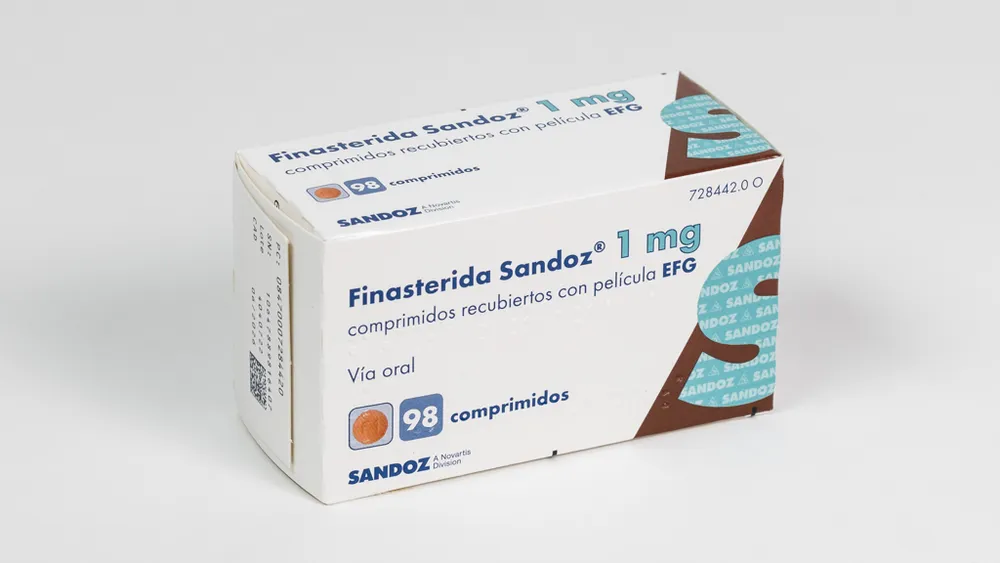
Table of Contents
- Package leaflet: Information for the user
- Introduction
- 1. What is Finasteride Sandoz and what is it used for
- 2. What you need to know before taking Finasteride Sandoz
- 3. How to take Finasterida Sandoz
- 4. Possible adverse effects
- 5. Finasteride Sandoz Storage
- 6. Contents of the container and additional information
- **Composition of Finasteride Sandoz**
Package leaflet: Information for the user
Introduction
Package leaflet: information for the patient
Finasteride Sandoz 1 mg film-coated tablets EFG
Read the entire leaflet carefully before you start taking this medicine, because it contains important information for you.
- Keep this leaflet, as you may need to read it again.
- If you have any questions, ask your doctor or pharmacist.
- This medicine has been prescribed for you only, and you should not give it to other people, even if they have the same symptoms as you, because it may harm them.
- If you experience any adverse effects, consult your doctor or pharmacist, even if these are effects not listed in this leaflet. See section 4.
Contents of the leaflet
- What Finasteride Sandoz is and what it is used for
- What you need to know before taking Finasteride Sandoz
- How to take Finasteride Sandoz
- Possible side effects
- How to store Finasteride Sandoz
- Contents of the pack and other information
1. What is Finasteride Sandoz and what is it used for
Finasteride Sandoz is for use in men only and is not indicated for use in women or children (<18 years).
Finasteride Sandoz contains a medicine called finasteride. This medicine is used to treat the early stages of male pattern hair loss (also known as androgenetic alopecia) in men aged 18 to 41 years. If, after reading this leaflet, you have any questions regarding male pattern hair loss, please consult your doctor.
Male pattern hair loss is a common condition believed to be caused by a combination of genetic factors and a particular hormone called dihydrotestosterone (DHT). The hormone DHT contributes to shortening the hair growth phase and causes the hair to become thinner.
In the scalp, finasteride specifically reduces levels of the hormone DHT by blocking the enzyme (type II 5-alpha reductase) that converts testosterone into DHT. Only men with mild to moderate hair loss, who have not completely lost their hair or have hair loss affecting both temples, can expect to benefit from using finasteride. In most men who have been treated with finasteride for 5 years, hair loss has slowed down, and in at least half of these men, hair growth has also improved to some extent.
2. What you need to know before taking Finasteride Sandoz
Do not take Finasteride Sandoz
- if you are a woman (see also section “Pregnancy, breastfeeding and fertility”). Clinical trials have shown that finasteride is ineffective in the treatment of hair loss (androgenetic alopecia) in women,
- if you are allergic (hypersensitive) to finasteride or to any of the other ingredients of this medicine (listed in section 6),
- men who are being treated with any other medicine containing finasteride or any other 5-alpha reductase inhibitor for benign prostatic hyperplasia or for any other condition must not take finasteride.
Warnings and precautions
Talk to your doctor or pharmacist before starting finasteride.
Mood changes and depression
Mood changes such as depressed mood, depression, and, less frequently, suicidal thoughts have been reported in patients treated with finasteride. If you experience any of these symptoms, stop taking this medicine and consult your doctor as soon as possible for medical advice.
In some patients, sexual dysfunction has been reported, which may contribute to mood changes, including suicidal thoughts. If you experience symptoms of sexual dysfunction, contact your doctor for additional medical advice. Your doctor may consider discontinuing treatment (see section 4 for more information on these adverse effects).
A patient information card is provided with the Finasteride Sandoz packaging, which reminds patients of the above information.
Effect on Prostate-Specific Antigen (PSA)
Finasteride may affect a blood test called PSA (Prostate-Specific Antigen) used to detect prostate cancer. If you have had a PSA test, you must inform your doctor that you are taking finasteride, as it reduces PSA levels.
Serum prostate-specific antigen levels should be measured before starting treatment with finasteride and during treatment.
Breast cancer
Cases of breast cancer have been reported in the post-marketing period in men taking finasteride 1 mg. Physicians should inform their patients to report any changes in breast tissue immediately, such as lumps, pain, breast enlargement (gynecomastia), or nipple discharge (see section 4).
Children and adolescents
Finasteride must not be used in children. There are no data demonstrating the efficacy and safety of finasteride in children under 18 years of age.
Other medicines and Finasteride Sandoz
Finasteride Sandoz is not expected to interfere with treatment using other medicines.
Inform your doctor or pharmacist if you are taking, have recently taken, or might need to take any other medicines.
Taking Finasteride Sandoz with food and drinks
Finasteride Sandoz may be taken with or without food.
Pregnancy, breastfeeding and fertility
Finasteride is intended for the treatment of male-pattern hair loss exclusively in men. For effects on fertility in men, see section 2.
- Women must not use finasteride due to the risk during pregnancy.
- Women who are or may be pregnant must not handle crushed or broken Finasteride Sandoz tablets.
- If a pregnant woman absorbs the active ingredient of Finasteride Sandoz orally or through the skin, a male fetus may be born with abnormalities of the genital organs.
- If a pregnant woman comes into contact with the active ingredient of Finasteride Sandoz, she must consult a doctor.
- Finasteride Sandoz tablets are film-coated to prevent contact with the active ingredient during normal handling.
It is not known whether finasteride is excreted in human breast milk.
Effects on fertility
Infertility has been reported in men who took finasteride for a prolonged period and who had other risk factors affecting fertility. Normalization and improvement in semen quality have been reported after discontinuation of finasteride. Long-term studies on the effect of finasteride on male fertility have been conducted.
If in doubt, ask your doctor.
Driving and using machines
There are no data indicating that finasteride affects the ability to drive or operate machinery.
Finasteride Sandoz contains lactose and sodium
If your doctor has told you that you have an intolerance to certain sugars, consult with him before taking this medicine.
This medicine contains less than 1 mmol of sodium (23 mg) per tablet; i.e., essentially “sodium-free”.
3. How to take Finasterida Sandoz
Follow exactly the instructions for use provided by your doctor or pharmacist. If in doubt, consult your doctor or pharmacist again.
Unless otherwise directed by your doctor, the usual dose is 1 tablet per day.
Do not change the dose or stop taking this medicine without first consulting your doctor.
To achieve increased hair thickness or reduce hair loss, you must take this medicine every day for 3 to 6 months or longer. You and your doctor should then assess whether finasteride treatment is beneficial for you. You do not need to make any changes to your usual hair care routine during finasteride treatment.
If you feel that the effect of this medicine is too weak or too strong, please consult your doctor or pharmacist.
The tablets should be swallowed whole with a little water. They must not be broken or crushed. You may take the tablets with food or on an empty stomach.
If you take more Finasterida Sandoz than you should
If you accidentally take too many tablets, please contact your doctor or go to the hospital immediately for advice. This medicine will not work faster or better if you take more than one tablet per day.
In case of overdose or accidental ingestion, contact your doctor or pharmacist immediately or call the Toxicology Information Service at: 91 562 04 20, indicating the medicine and the amount ingested.
If you forget to take Finasterida Sandoz
Do not take a double dose to make up for missed doses. Simply take the next tablet at your usual time and continue your treatment as normal.
If you stop taking Finasterida Sandoz
To maintain the benefit of treatment, continued use of this medicine is recommended. If you stop treatment with finasteride, you will likely lose any increased hair thickness you may have experienced within the following 9 to 12 months.
If you have any further questions about the use of this medicine, ask your doctor or pharmacist.
4. Possible adverse effects
Like all medicines, this medicine can cause adverse effects, although not everyone will experience them.
The nature of finasteride adverse effects is usually mild and temporary.
Stop taking finasteride and inform your doctor immediately if you experience any of the following symptoms (angioedema): swelling of the lips, face, tongue or throat; difficulty swallowing; hives; breathing difficulties; suicidal thoughts. Frequency is unknown (cannot be estimated from available data).
You must inform your doctor immediately if you notice any changes in breast tissue such as lumps, pain, breast enlargement, or nipple discharge, as these may be signs of a serious illness, such as breast cancer. Frequency is unknown (cannot be estimated from available data).
Adverse effects have normally been temporary during continued treatment or disappeared once treatment was stopped.
Uncommon (may affect up to 1 in 100 people):
- decreased sexual desire,
- depression,
- difficulty in achieving an erection,
- problems with ejaculation, such as reduced amount of semen.
Frequency not known (cannot be estimated from available data):
- allergic reactions including rash and itching,
- swelling or tenderness in the breasts,
- testicular pain,
- blood in the semen,
- rapid heartbeat,
- persistent difficulty in maintaining an erection after stopping treatment,
- persistent decrease in sexual desire after stopping treatment,
- persistent ejaculation problems after stopping treatment,
- male infertility and/or poor semen quality,
- elevated liver enzymes,
- anxiety,
- suicidal thoughts.
Reporting of adverse effects
If you experience any type of adverse effect, consult your doctor or pharmacist, even if it is a possible adverse effect not listed in this leaflet. You may also report them directly via the Spanish System for Pharmacovigilance of Human Medicines: https://www.notificaram.es.
By reporting adverse effects, you can help provide more information on the safety of this medicine.
5. Finasteride Sandoz Storage
Keep this medicine out of the sight and reach of children.
Do not use this medicine after the expiry date stated on the packaging and on the blister or bottle after "CAD/EXP". The expiry date refers to the last day of the month indicated.
This medicine does not require any special storage conditions.
HDPE bottles with LDPE screw cap: use within 4 months after first opening of the container.
Medicines should not be disposed of via wastewater or household waste. Return unused medicines and their containers to the SIGRE point at your pharmacy. If you have any doubts, ask your pharmacist how to properly dispose of unused medicines and their packaging. This will help protect the environment.
6. Contents of the container and additional information
Composition of Finasteride Sandoz
- The active substance is finasteride. Each coated tablet contains 1 mg of finasteride.
- The other components are:
- Tablet core: monohydrate lactose, microcrystalline cellulose, pregelatinized maize starch, lauryl macrogolglycerides, sodium carboxymethyl starch (Type A) from potato, and magnesium stearate (E572).
- Tablet coating: hypromellose, titanium dioxide (E171), yellow iron oxide (E172), red iron oxide (E172), and macrogol 6000.
Appearance of the product and contents of the pack
Round biconvex tablets, reddish-brown in colour, with the imprint “F1” on one side.
Finasteride Sandoz 1 mg film-coated tablets are available in the following pack sizes:
Blister (aluminum/PVC, aluminum/aluminum): 7, 14, 28, 30, 56, 84, and 98 film-coated tablets.
HDPE containers with LDPE screw cap: 7, 14, 28, 30, 56, 84, and 98 film-coated tablets.
Only certain pack sizes may be marketed.
Marketing Authorization Holder and Manufacturer
Holder
Sandoz Farmacéutica, S.A.
Parque Norte Business Centre
Roble Building
C/ Serrano Galvache, 56
28033 Madrid, Spain
Manufacturer
Lek Pharmaceuticals d.d.
Verovskova 57
1526 Ljubljana, Slovenia
or
Salutas Pharma GmbH
Otto-von-Guericke Allee 1
39179 Barleben, Germany
or
Lek S.A.
ul. Podlipie
95-010 Strykow, Poland
or
Actavis Group PTC ehf
Reykhavikurvegur 76 - 78
220 Hafnarfjordur, Iceland
or
Zentiva k.s.
U Kabelovny 130
102 37 Praha 10, Czech Republic
This medicinal product is authorized in the European Economic Area member states under the following names:
Germany: Finasterid -1A PharmA 1 mg Filmtabletten
France: Finasteride Sandoz 1mg, comprimé pelliculé
Italy: FINACAPIL
This leaflet was last approved in: October 2025
Detailed information on this medicinal product is available on the website of the Spanish Agency of Medicines and Health Products (AEMPS) http://www.aemps.gob.es/