Finasteride Almus 5 mg film-coated tablets EFG
Spain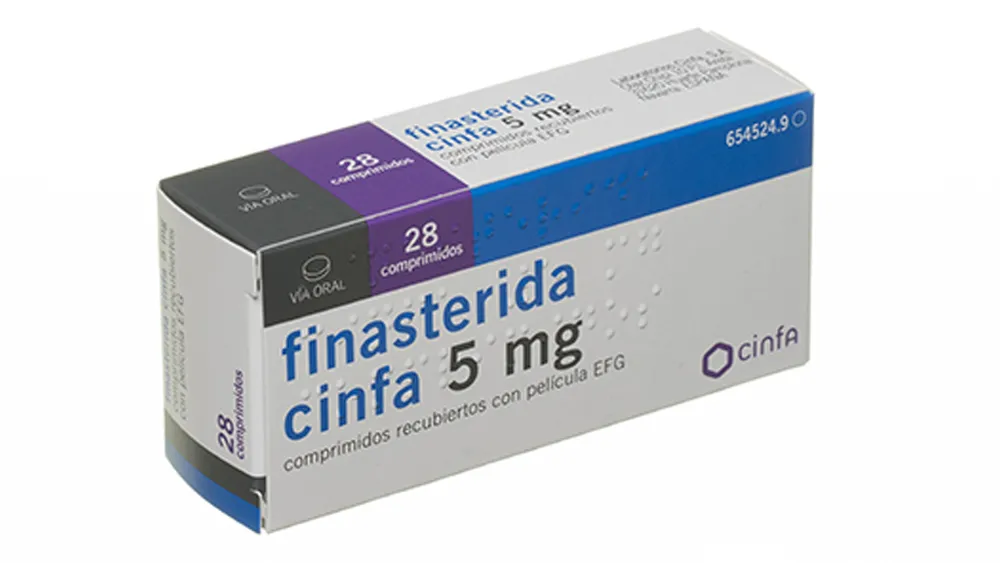
Table of Contents
- Package leaflet: Information for the user
- Introduction
- 1. What Finasteride Almus 5 mg Tablets are and what they are used for
- 2. What you need to know before taking Finasteride Almus 5 mg tablets
- 3. How to take Finasterida Almus 5 mg tablets
- 4. Possible adverse effects
- 5. Storage of Finasteride Almus 5 mg Tablets
- 6. Contents of the pack and other information
Package leaflet: Information for the user
Introduction
PACKAGE LEAFLET
FINASTERIDE ALMUS 5 mg film-coated tablets EFG
Read the entire leaflet carefully before you start taking this medicine, because
it contains important information for you.
- Keep this leaflet, as you may need to read it again.
- If you have any questions, ask your doctor or pharmacist.
- This medicine has been prescribed for you only and must not be given to other people, even if they have the same symptoms as you, because it could harm them.
- If you experience any adverse reactions, consult your doctor, pharmacist, or nurse, even if they are adverse reactions not listed in this leaflet.
Contents of the leaflet:
- What Finasteride Almus 5 mg tablets are and what they are used for.
- What you need to know before taking Finasteride Almus 5 mg tablets.
- How to take Finasteride Almus 5 mg tablets.
- Possible side effects.
- How to store Finasteride Almus 5 mg tablets.
- Contents of the pack and other information.
1. What Finasteride Almus 5 mg Tablets are and what they are used for
Finasteride Almus are film-coated tablets containing 5 mg of finasteride as the active substance.
Your doctor has prescribed Finasteride Almus because you have a condition known as benign prostatic hyperplasia (BPH). BPH is a benign enlargement of the prostate gland that commonly occurs in men after the age of 50.
Your prostate (located near your bladder) has enlarged and is obstructing the flow of urine. You may experience symptoms such as frequent need to urinate, especially at night, a sudden urge to urinate, difficulty starting urination, a weak or interrupted urine stream, or a sensation that your bladder has not emptied completely.
In some men, BPH can lead to serious complications such as urinary tract infections, acute urinary retention, or the need for surgical treatment. For this reason, men experiencing these symptoms should consult a doctor.
Finasteride Almus belongs to a group of medicines known as 5α-reductase type II enzyme inhibitors. Finasteride causes regression of prostate growth. It may also reduce complications such as urinary retention or the need for surgery.
BPH develops over a long period of time. While some patients experience a rapid improvement in symptoms, you may need to take Finasteride Almus for at least 6 months before noticing any improvement in your symptoms.
2. What you need to know before taking Finasteride Almus 5 mg tablets
Do not take Finasteride Almus 5 mg tablets:
- If you are allergic to finasteride or to any of the other ingredients of this medicine (listed in section 6).
- If you are a woman and are or could be pregnant (see pregnancy and breastfeeding).
Finasteride Almus is prescribed for men only. It must not be used by women or children.
Warnings and precautions
Talk to your doctor or pharmacist before you start taking Finasteride Almus.
Inform your doctor about any current or past medical conditions and any allergies you may have.
Finasteride Almus is intended only for the treatment of benign prostatic hyperplasia (BPH) in men.
Women must not use Finasteride Almus if they are or could be pregnant, and should also avoid exposure to Finasteride Almus 5 mg tablets by handling crushed or split tablets (see pregnancy and breastfeeding).
If the active ingredient in Finasteride Almus is absorbed orally or through the skin by a woman who is pregnant with a male fetus, the fetus may be born with abnormalities of the genital organs. If a pregnant woman has been exposed to the active ingredient in Finasteride Almus, she should consult her doctor. Finasteride Almus tablets are film-coated, which prevents contact with the active ingredient during normal handling, provided the tablets are not crushed or broken. If you have any doubts, ask your doctor.
If your sexual partner is or could be pregnant, you should avoid exposing her to your semen, as it may contain trace amounts of the drug.
BPH develops over a long period of time. Symptoms may improve quickly in some cases, but you may need to take Finasteride Almus for at least six months before noticing improvement in your symptoms. Even if you do not feel any improvement or change in symptoms, treatment with Finasteride Almus may reduce the risk of being unable to pass urine and thus the need for surgery.
You should visit your doctor regularly for periodic check-ups and assessment of your condition.
Although BPH is not cancer and does not lead to cancer, both conditions can occur simultaneously.
Only a doctor can evaluate symptoms and their possible causes.
Finasteride Almus may reduce levels of prostate-specific antigen (PSA—a substance in the body that increases when the prostate enlarges and may cause obstruction). If you have had a PSA test, tell your doctor that you are taking Finasteride Almus.
Mood changes and depression
Mood changes such as depressed mood, depression, and, less frequently, suicidal thoughts have been reported in patients treated with Finasteride Almus. If you experience any of these symptoms, consult your doctor as soon as possible.
Children and adolescents
Finasteride Almus is not indicated for use in children.
Taking Finasteride Almus with other medicines
No clinically significant adverse interactions have been observed between Finasteride Almus and other medicines. However, inform your doctor or pharmacist if you are taking, have recently taken, or might need to take any other medicines.
Taking Finasteride Almus 5 mg tablets with food, drinks and alcohol
The tablets can be taken with or without food.
Pregnancy, breastfeeding and fertility
Finasteride Almus is for use in men only.
Finasteride Almus is not indicated for use in women.
If you are pregnant or breastfeeding, think you might be pregnant, or are planning to become pregnant, consult your doctor or pharmacist before using this medicine.
Driving and using machines
There are no data suggesting that Finasteride Almus affects the ability to drive or operate machinery.
Finasteride Almus 5 mg contains lactose
If your doctor has informed you that you have an intolerance to certain sugars, consult him before taking this medicine.
This medicine contains less than 23 mg of sodium (1 mmol) per tablet; essentially "sodium-free".
3. How to take Finasterida Almus 5 mg tablets
Follow exactly the instructions for use given by your doctor. If in doubt, ask your doctor.
Take one Finasterida Almus tablet every day, with or without food.
If you take more Finasterida Almus than you should
If you have taken more Finasterida Almus than you should, contact your doctor, pharmacist, or the nearest hospital.
In case of overdose or accidental ingestion, contact the Toxicology Information Service. Telephone: 91 562 0420. In addition, you must inform your doctor immediately.
If you forget to take Finasterida Almus:
Do not take a double dose to make up for missed doses; wait until the next scheduled dose.
If you have any other questions about the use of this product, ask your doctor or pharmacist.
4. Possible adverse effects
Like all medicines, this medicine can cause adverse effects, although not everyone experiences them.
Adverse effects are classified as follows:
Very common: may affect more than 1 in 10 people
Common: may affect up to 1 in 10 people
Uncommon: may affect up to 1 in 100 people
Rare: may affect up to 1 in 1,000 people
Very rare: may affect up to 1 in 10,000 people
Frequency not known (cannot be estimated from available data)
Immune system disorders
Frequency not known (cannot be estimated from available data): allergic-type reactions including swelling of the lips and face.
Psychiatric disorders
Common (may affect up to 1 in 10 patients): reduced sex drive.
Frequency not known (cannot be estimated from available data): depression, decreased libido that continued after stopping the medication, anxiety, suicidal thoughts.
Cardiac disorders
Frequency not known (cannot be estimated from available data): irregular heart rate.
Hepatobiliary disorders
Frequency not known (cannot be estimated from available data): elevated liver enzymes.
Skin and subcutaneous tissue disorders
Uncommon (may affect up to 1 in 100 patients): skin rash.
Frequency not known (cannot be estimated from available data): itching, urticaria.
Reproductive system and breast disorders
Common (may affect up to 1 in 10 patients): impotence (inability to achieve an erection).
Uncommon (may affect up to 1 in 100 patients): swelling and tenderness in the breast, and ejaculation problems.
Frequency not known (cannot be estimated from available data): testicular pain, inability to achieve an erection that continued after stopping the medication; ejaculation problems that continued after stopping the medication; male infertility or poor semen quality. Improvement in semen quality has been reported after discontinuation of the medication.
Investigations
Common (may affect up to 1 in 10 patients): decreased amount of semen ejaculated during sexual activity. This reduction in semen volume does not appear to affect normal sexual function.
You should immediately inform your doctor of any changes in breast tissue, such as lumps, pain, enlargement, or nipple discharge, as these may be signs of a serious condition, such as breast cancer.
In some cases, these side effects disappeared even while the patient continued taking Finasterida Almus. When symptoms persisted, they usually resolved after stopping Finasterida Almus.
Reporting of adverse effects
If you experience any adverse effect, consult your doctor or pharmacist, even if it is a possible adverse effect not listed in this leaflet. You can also report them directly via the Spanish Pharmacovigilance System for Human Medicines: http://www.notificaram.es. By reporting adverse effects, you can help provide more information on the safety of this medicine.
5. Storage of Finasteride Almus 5 mg Tablets
Keep this medicine out of the sight and reach of children.
No special storage conditions are required. Store in the original packaging.
Expiry:
Do not use this medicine after the expiry date stated on the packaging. The expiry date refers to the last day of the month indicated.
Medicines should not be disposed of via wastewater or household waste. Dispose of unused medicines and their containers at the SIGRE collection point in your pharmacy. If you are unsure, ask your pharmacist how to properly dispose of medicines and containers you no longer need. This will help protect the environment.
6. Contents of the pack and other information
Composition of Finasteride Almus 5 mg tablets
The active substance is finasteride. Each tablet contains 5 mg of finasteride.
The other components (excipients) are:
Core: lactose monohydrate (106.4 mg), microcrystalline cellulose, sodium starch glycolate, pregelatinized corn starch (gluten-free), sodium docusate, yellow iron oxide (E-172), magnesium stearate.
Coating: Opadry Y-117000 (methylhydroxypropylcellulose, titanium dioxide, polyethylene glycol), indigo carmine (E-132).
Appearance of the medicinal product and contents of the pack
Finasteride Almus is presented as blue, round, film-coated tablets. It is available in packs of 28 tablets in unit-dose aluminum-PVC blisters.
Marketing Authorisation Holder and Manufacturer
Marketing Authorisation Holder
Almus Farmacéutica, S.A.U.
Marie Curie, 54
08840 Viladecans (Barcelona), Spain
Telephone: 93 739 71 80
Email: [email protected]
Manufacturer
Tecnimede - Sociedade Técnico Medicinal, S.A.
Quinta da Cerca, Caixaria, 2565-187 Dois Portos, Portugal
Date of the most recent review of this leaflet: October 2025
Detailed and up-to-date information on this medicinal product is available on the website of the Spanish Agency of Medicines and Medical Devices (AEMPS) http://www.aemps.es