Farmiblastina 2 mg/ml concentrate for infusion solution
Spain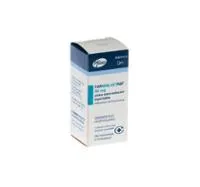
Table of Contents
Package leaflet: Information for the user
Introduction
Package leaflet: information for the patient
Farmiblastina 2 mg/ml concentrate for solution for infusion
Doxorubicin hydrochloride
Read the entire leaflet carefully before you start using this medicine, because it contains important information for you.
- Keep this leaflet, as you may need to read it again.
- If you have any questions, ask your doctor, pharmacist, or nurse.
- This medicine has been prescribed for you only, and you should not give it to others, even if they have the same symptoms as you, because it could harm them.
- If you experience any adverse effects, consult your doctor, pharmacist, or nurse, even if these effects are not listed in this leaflet. See section 4.
Contents of the leaflet
- What Farmiblastina is and what it is used for
- What you need to know before using Farmiblastina
- How to use Farmiblastina
- Possible adverse effects
- How to store Farmiblastina
- Contents of the pack and other information
1. What Farmiblastina is and what it is used for
Farmiblastina is an anticancer antibiotic belonging to the anthracycline group and is used in the treatment of various types of cancer, administered either intravenously or, in some cases, intravesically (direct injection into the organ). Farmiblastina works by inhibiting the cell cycle, thereby preventing the proliferation of cancer cells.
Farmiblastina may be used alone or in combination with other medicines in the treatment of children and adults with the following types of cancer:
- Breast cancer
- Bone sarcomas: malignant tumors in the bones.
- Soft tissue sarcomas: malignant tumors that may affect cartilage, muscles, fat, blood vessels, or other tissues.
- Lung cancer
- Stomach cancer
- Lymphomas such as Non-Hodgkin's Lymphoma (diseases affecting white blood cells or lymphocytes) and Hodgkin's Lymphoma (diseases of the lymphatic system)
- Thyroid gland cancer
- Gynecological and genitourinary tumors: tumors in the ovaries, endometrium, testes, prostate, or bladder.
- Pediatric solid tumors such as rhabdomyosarcoma (cancer arising in soft muscle tissue), neuroblastoma (cancer of immature cells, primarily affecting infants and children), Wilms' tumor (a disease in which malignant cells are found in the kidney), and liver tumors
- Leukemias (cancers of the bone marrow) such as acute lymphoid leukemia, acute myeloid leukemia, and chronic leukemias
- Induction of multiple myeloma: a cancer that originates in white blood cells producing antibodies, which are responsible for the body's defense.
Farmiblastina will only be prescribed by a physician experienced in cancer treatments.
If you have any questions about how Farmiblastina works or why this medicine has been prescribed for you, please consult your doctor.
2. What you need to know before using Farmiblastina
Do not use Farmiblastina
If you are allergic to doxorubicin hydrochloride, or to other anticancer agents of the same group, or to any of the other ingredients of this medicine (listed in section 6).
Do not use Farmiblastina if administered intravenously:
- If you have a persistent disorder of your immune system (impaired ability to fight infections or diseases)
- If you have or have had severe liver problems
- If you have severe heart problems (arrhythmias, heart attacks, or heart failure)
Do not use Farmiblastina if administered intravesically:
- If you have urinary tract infections, bladder inflammation, or blood in the urine.
Warnings and precautions
Talk to your doctor, pharmacist, or nurse before starting to use Farmiblastina.
- If you have or have had heart problems, or if you are receiving or have received radiotherapy to areas near the heart.
- If you have previously received treatment with other anthracyclines.
- If you are being treated with other medicines that can suppress heart contraction.
- If you are being treated with other medicines for cancer.
- If your immune system is impaired, meaning you have lost the ability to fight infections or diseases.
- If you have or have had liver problems.
- If you have or have had gout, as doxorubicin may increase uric acid levels.
- If you are pregnant or think you might be pregnant (see details below).
- If you are breastfeeding (see details below).
- If you are a man, you must use effective contraceptive methods during treatment with doxorubicin due to the potential toxicity of the medicine. If you wish to have children after treatment with Farmiblastina, you should consult your doctor about genetic counseling and fertility preservation options before starting treatment.
- If you need to be vaccinated while undergoing treatment with this medicine, as live or attenuated virus vaccines must not be administered, and the response to inactivated or killed vaccines may be reduced.
- If you are taking or have recently taken trastuzumab (a medicine used to treat certain types of cancer). Trastuzumab can remain in the body for up to 7 months. Since trastuzumab can affect the heart, you must not use Farmiblastina until 7 months after stopping trastuzumab. If Farmiblastina is used before this time, your heart function must be carefully monitored.
If you are in any of the situations listed above, consult your doctor before using Farmiblastina.
Your doctor will regularly monitor your condition to check whether Farmiblastina is having the intended effect.
While you are being treated with Farmiblastina, you will have regular blood tests and periodic heart function assessments.
Other medicines and Farmiblastina
Inform your doctor or pharmacist if you are taking, have recently taken, or might need to take any other medicines.
The adverse effects may be increased or the action of other medicines may be altered, such as those used for heart conditions, cancer treatment, antibiotics, female hormones, medicines that affect the immune system, and medicines used to treat epilepsy, as well as herbal medicines containing St. John’s wort (Hypericum perforatum). Your doctor should also be informed about any vaccinations.
Pregnancy, breastfeeding, and fertility
If you are pregnant or breastfeeding, think you may be pregnant, or are planning to become pregnant, consult your doctor or pharmacist before using this medicine.
You must not use Farmiblastina during pregnancy unless strictly necessary. Your doctor will inform you about the potential risks of taking Farmiblastina during pregnancy.
Contraception in women of childbearing age
You must always use an effective contraceptive method while receiving Farmiblastina and for at least 6.5 months after the last dose. Consult your doctor about contraceptive methods suitable for you and your partner.
Contraception in men
Men must always use effective contraceptive methods while receiving Farmiblastina and for at least 3.5 months after the last dose.
If you are breastfeeding, inform your doctor. Do not breastfeed during treatment with Farmiblastina or for at least 10 days after the last dose, as it is excreted in breast milk.
Farmiblastina may cause loss of menstruation and infertility during treatment.
Both men and women should seek advice on fertility preservation before treatment.
Driving and use of machines
It is unknown whether Farmiblastina has any effect on the ability to drive or operate machinery. However, if you experience any effects that impair your ability to drive (such as weakness, nausea, or vomiting), you must not drive or operate machinery.
Farmiblastina contains sodium
This medicine contains 88.5 mg of sodium (a main component of cooking/table salt) per 25 ml vial. This is equivalent to 4.4% of the maximum recommended daily intake of sodium for an adult.
3. How to use Farmiblastina
Your doctor will determine the dose, duration of treatment, and the most appropriate route of administration for you, based on your condition and response to treatment.
Your doctor will indicate the number of treatment cycles you need.
If you use more Farmiblastina than you should
Although unlikely, if you were to receive more Farmiblastina than you should, some of the known adverse effects of the medicine may occur. Contact your doctor immediately, as hospitalization may be required.
4. Possible adverse effects
Like all medicines, this medicine can cause adverse effects, although not everyone experiences them.
Very common adverse effects (may affect more than 1 in 10 patients) include:
- Changes in the electrocardiogram.
- Reduction in the number of white blood cells, especially neutrophils, red blood cells, and/or platelets in the blood.
- Inflammation of the mucosa of the mouth and/or gums, diarrhea, nausea, and vomiting.
- Redness, sensitivity, and/or peeling of the palms of the hands and soles of the feet (palmar-plantar erythrodysesthesia), hair loss (alopecia).
- Infection.
- Fever, weakness, chills.
- Asymptomatic decrease in the amount of blood pumped by the left ventricle of the heart, changes in liver enzyme levels (transaminases), weight gain.
- Loss of appetite.
Common adverse effects (may affect up to 1 in 10 patients) include:
- Loss of the heart's ability to pump blood (congestive heart failure), increased heart rate originating in the heart's sinus node.
- Inflammation of the esophagus (esophagitis), abdominal pain.
- Skin rash, skin and nail discoloration (hyperpigmentation), urticaria.
- Conjunctivitis (inflammation of the eye's conjunctiva).
- Systemic infection.
- Reaction at the injection site.
Uncommon adverse effects (may affect up to 1 in 100 patients) include:
- Blockage of a blood vessel by material carried through the bloodstream.
- Irregular heart rhythm, rapid or irregular heartbeat (palpitations), heart failure—which may cause difficulty breathing and swelling of the legs—cardiac arrest.
Rare adverse effects (may affect up to 1 in 1,000 patients):
- Bluish discoloration of the skin and mucous membranes due to low oxygen in the blood;
- Areas of thickened skin.
Adverse effects with unknown frequency (cannot be estimated from available data) include:
- Changes in heart rate (tachyarrhythmias), worsening of cardiac impulse conduction from the atria to the ventricles (atrioventricular and bundle branch block).
- Keratitis (inflammation of the cornea), excessive tear production (lacrimation).
- Mouth mucosa spots, gastric erosions, gastrointestinal bleeding, inflammation of the colon (colitis).
- Reddish discoloration of urine for 1 or 2 days after administration.
- Itching, skin changes, skin sensitivity to light (photosensitivity), increased sensitivity of irradiated skin areas. Dehydration, increased uric acid levels in blood (hyperuricemia).
- Acute lymphocytic leukemia, acute myeloid leukemia.
- Bleeding, blockage, and inflammation of a blood vessel (thrombophlebitis), inflammation of blood vessels (phlebitis), hot flashes, shock.
- General malaise.
- Severe systemic allergic reaction (anaphylaxis).
- Absence of menstruation (amenorrhea), reduced sperm count (oligospermia), absence of sperm (azoospermia).
Reporting of adverse effects
If you experience any adverse effect, talk to your doctor, pharmacist, or nurse, even if it is a possible adverse effect not listed in this leaflet. You can also report them directly via the Spanish Pharmacovigilance System for Human Medicinal Products: https://www.notificaram.es.
By reporting adverse effects, you can help provide more information on the safety of this medicine.
5. Storage of Farmiblastina
Keep this medicine out of the sight and reach of children.
Store in a refrigerator (between 2°C and 8°C). Keep the vials in the outer packaging to protect them from light.
Do not use this medicine after the expiry date stated on the outer packaging and label after EXP. The expiry date refers to the last day of the month indicated.
Do not use this medicine if you notice that the packaging is damaged or opened.
Medicines must not be disposed of via wastewater or household waste. Dispose of unused containers and medicines at a SIGRE Point at your pharmacy. If you have any doubts, ask your pharmacist how to dispose of unused containers and medicines. This will help protect the environment.
6. Contents of the pack and other information
Composition of Farmiblastina
- The active substance is doxorubicin hydrochloride.
- The other components are water for injections, sodium chloride, and hydrochloric acid (for pH adjustment).
Each ml contains 2 mg of doxorubicin hydrochloride.
Each 25 ml vial contains 50 mg of doxorubicin hydrochloride.
Appearance of the product and contents of the pack
Red, clear solution, practically free from visible particles. The solution is supplied in vials made of polypropylene, containing 25 ml of concentrate for infusion solution.
Marketing Authorization Holder and Manufacturer
Marketing Authorization Holder
Pfizer, S.L.
Avda. de Europa, 20 B.
Parque Empresarial La Moraleja.
28108 Alcobendas (Madrid).
Manufacturer
Pfizer Service Company BV
Hoge Wei, 10
B-1930 Zaventem
Belgium
Date of the most recent review of this leaflet: May 2022
Detailed and up-to-date information on this medicinal product is available on the website of the Spanish Agency of Medicines and Health Products (AEMPS) http://www.aemps.gob.es/