Fabhalta 200 mg hard capsules
Spain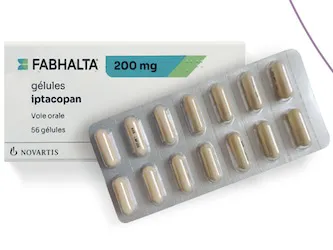
Table of Contents
Patient Information Leaflet
Introduction
Package leaflet: Information for the patient
FABHALTA 200mg hard capsules
iptacopan
This medicinal product is subject to additional monitoring, which will allow rapid identification of new safety information. You can help by reporting any side effects you may experience. Information on how to report side effects is provided at the end of section 4.
Read all of this leaflet carefully before you start taking this medicine, as it contains important information for you.
- Keep this leaflet, as you may need to read it again.
- If you have any questions, ask your doctor or pharmacist.
- This medicine has been prescribed for you only, and you should not give it to other people, even if they have the same symptoms as you, because it may harm them.
- If you experience any side effects, talk to your doctor or pharmacist, even if they are side effects not listed in this leaflet. See section 4.
Leaflet Contents
- What FABHALTA is and what it is used for
- What you need to know before taking FABHALTA
- How to take FABHALTA
- Possible side effects
- How to store FABHALTA
- Contents of the pack and other information
1. What FABHALTA is and what it is used for
FABHALTA contains the active substance iptacopan, which belongs to a group of medicines called complement inhibitors.
FABHALTA is used:
-
on its own in adults to treat paroxysmal nocturnal hemoglobinuria (PNH), a disease in which the immune system (the body's natural defense system) attacks and damages red blood cells. FABHALTA is used in adults with anemia (low levels of red blood cells) due to the breakdown of red blood cells.
-
in adults to treat patients with a disease called complement 3 glomerulopathy (C3G)
-
in combination with a renin-angiotensin system inhibitor (RAS inhibitor), or
-
alone, if a RAS inhibitor is not effective or cannot be used.
The active substance in FABHALTA, iptacopan, targets a protein called Factor B, which is involved in a part of the body's immune system known as the "complement system".
In patients with PNH, the complement system is overactive, causing the breakdown and destruction of red blood cells, which can lead to anemia, fatigue, difficulty performing everyday tasks, pain, abdominal pain, dark urine, shortness of breath, difficulty swallowing, erectile dysfunction, and blood clots. By binding to and blocking the Factor B protein, iptacopan can prevent the complement system from attacking red blood cells. This medicine has been shown to increase the number of red blood cells and, therefore, may improve the symptoms of anemia.
In patients with C3G, the complement system is overactive, leading to deposition of C3 in the glomerulus (a part of the kidneys), causing inflammation and fibrosis (scarring and thickening of tissue). As a result, patients with C3G typically have high levels of protein in the urine (proteinuria) and progressive worsening of kidney function over time. By binding to the Factor B protein, iptacopan can reduce C3 deposition in the kidneys. This medicine has been shown to reduce protein levels in the urine and slow the progression of kidney function decline.
2. What you need to know before starting FABHALTA
Do not take FABHALTA
- if you are allergic to iptacopan or to any of the other ingredients of this medicine (listed in section 6).
- if you have not been vaccinated against Neisseria meningitidis and Streptococcus pneumoniae, unless your doctor decides that urgent treatment with FABHALTA is necessary.
- if you have an infection caused by a type of bacteria called encapsulated bacteria, such as Neisseria meningitidis, Streptococcus pneumoniae, or Haemophilus influenzae type B, before starting treatment with FABHALTA.
Warnings and precautions
Serious infection caused by encapsulated bacteria
FABHALTA may increase the risk of infection caused by encapsulated bacteria, including Neisseria meningitidis (bacteria that cause meningococcal disease, including severe infection of the brain lining and bloodstream) and Streptococcus pneumoniae (bacteria causing pneumococcal disease, which includes infection of the lungs, ears, and bloodstream).
Talk to your doctor before starting FABHALTA to ensure you receive the vaccine against Neisseria meningitidis and Streptococcus pneumoniae. You may also receive the vaccine against Haemophilus influenzae type B if it is available in your country. Even if you have previously received these vaccines, you may need to be revaccinated before starting FABHALTA.
These vaccines should be administered at least 2 weeks before starting FABHALTA. If this is not possible, you will be vaccinated as soon as possible after starting FABHALTA, and your doctor will prescribe antibiotics for you to take for up to 2 weeks after vaccination to reduce the risk of infection.
Keep in mind that vaccination reduces the risk of serious infections, but may not prevent all serious infections. Your doctor should closely monitor you for signs of infection.
Immediately inform your doctor if you experience any of the following symptoms of serious infection during treatment with FABHALTA:
- fever with or without shaking or chills
- headache and fever
- fever and rash
- fever with chest pain and cough
- fever with difficulty breathing/rapid breathing
- fever with high heart rate
- headache with feeling unwell (nausea) or vomiting
- headache with neck or back stiffness
- confusion
- body aches with flu-like symptoms
- sweaty skin
- eyes sensitive to light
Children and adolescents
Do not administer FABHALTA to children or adolescents under 18 years of age. There is no data available on the safety and efficacy of FABHALTA in this age group.
Other medicines and FABHALTA
Inform your doctor or pharmacist if you are taking, have recently taken, or might need to take any other medicines, including those obtained without a prescription. In particular:
Inform your doctor or pharmacist if you are taking certain medicines that may prevent FABHALTA from working properly:
- certain medicines used to treat bacterial infections, such as rifampicin
Inform your doctor or pharmacist if you are taking any of the following medicines, as FABHALTA may prevent these medicines from working properly:
- certain medicines used to treat epilepsy, such as carbamazepine
- certain medicines used to prevent organ rejection after organ transplant, such as cyclosporine, sirolimus, tacrolimus
- certain medicines used to treat migraines, such as ergotamine
- certain medicines used to treat chronic pain, such as fentanyl
- certain medicines used to control involuntary movements or sounds, such as pimozide
- certain medicines used to treat abnormal heart rhythm, such as quinidine
- certain medicines used to treat type 2 diabetes, such as repaglinide
- certain medicines used to treat hepatitis C infection, such as dasabuvir
- certain medicines used to treat cancer, such as paclitaxel
Pregnancy and breastfeeding
If you are pregnant or breastfeeding, think you may be pregnant, or are planning to become pregnant, consult your doctor or pharmacist before using this medicine. You should also inform your doctor if you become pregnant during treatment with FABHALTA. Your doctor will discuss with you the potential risks of taking FABHALTA during pregnancy or breastfeeding.
Your doctor will decide whether you should take FABHALTA during pregnancy only after a careful assessment of risks and benefits.
It is unknown whether iptacopan, the active substance in FABHALTA, passes into breast milk and may affect the newborn or breastfed infant.
Your doctor will decide whether you should discontinue breastfeeding or discontinue treatment with FABHALTA, taking into account the benefit of breastfeeding for your baby and the benefit of treatment for you.
Driving and using machines
This medicine has no or negligible influence on the ability to drive and use machines.
3. How to take FABHALTA
Follow exactly the instructions for using this medicine given by your doctor or pharmacist. If in doubt, consult your doctor or pharmacist again.
Do not exceed the prescribed dose.
The recommended dose is 200 mg (one capsule) taken orally twice daily (once in the morning and once in the evening). Swallow the FABHALTA capsule with a glass of water.
Taking FABHALTA at the same time every day will help you remember when to take your medicine.
It is important that you take FABHALTA according to your doctor's instructions. For patients with PNH, this is important to reduce the risk of destruction of red blood cells due to PNH.
Use of FABHALTA with food
FABHALTA may be taken with or without food.
Switching from other PNH medications to FABHALTA
If you are switching from any other medication for PNH, ask your doctor when you should start taking FABHALTA.
How long to take FABHALTA
PNH is a lifelong condition and you are expected to need to take FABHALTA for a long time. Your doctor will regularly monitor your condition to ensure the treatment is having the desired effect.
If you have questions about how long you will need to take FABHALTA, speak with your doctor.
If you take more FABHALTA than you should
If you have accidentally taken too many capsules or if someone else accidentally takes your medicine, speak to your doctor immediately.
If you forget to take FABHALTA
If you miss one or more doses, take a dose of FABHALTA as soon as you remember (even if it is shortly before your next scheduled dose), then take your next dose at the usual time. If you have PNH and miss several consecutive doses, contact your doctor, who may decide to monitor you for any signs of red blood cell breakdown (see section "If you stop taking FABHALTA" below).
If you stop taking FABHALTA
Stopping your treatment with FABHALTA may worsen your condition. Do not stop taking FABHALTA without first consulting your doctor.
If you have PNH and your doctor decides to stop your treatment with this medicine, you will be closely monitored for at least 2 weeks after stopping treatment for any signs of red blood cell destruction. Your doctor may prescribe a different medication for PNH or restart your treatment with FABHALTA.
Symptoms or problems that may occur due to destruction of red blood cells include:
- low levels of hemoglobin in the blood, as shown by blood tests
- fatigue
- blood in the urine
- stomach (abdominal) pain
- difficulty breathing
- difficulty swallowing
- erectile dysfunction (impotence)
- blood clots (thrombosis)
If you experience any of these symptoms after stopping treatment, contact your doctor.
If you have any other questions about the use of this medicine, ask your doctor or pharmacist.
4. Possible side effects
Like all medicines, this medicine can cause side effects, although not everyone gets them.
Serious side effects
The most serious side effect is serious infection. If you experience any of the symptoms of serious infection listed in section 2 of this leaflet, "Serious infection caused by encapsulated bacteria", you must inform your doctor immediately.
Side effects for HPN
Very common (may affect more than 1 in 10 people)
- infections of the nose and throat (upper respiratory tract infection)
- headache
- diarrhoea
Common (may affect up to 1 in 10 people)
- persistent cough or irritation of the airways (bronchitis)
- low levels of platelets (which help blood to clot) in the blood (thrombocytopenia), which may cause you to bleed or bruise more easily
- dizziness
- stomach pain (abdominal pain)
- feeling unwell (nausea)
- joint pain (arthralgia)
- urinary tract infection
Uncommon (may affect up to 1 in 100 people)
- lung infection, which may cause chest pain, cough and fever
- itchy rash (urticaria)
Side effects for GC3
Very common (may affect more than 1 in 10 people)
- infections of the nose and throat (upper respiratory tract infections)
Common (may affect up to 1 in 10 people)
- pneumococcal infection, including lung infection (pneumonia) and blood infection (sepsis)
Reporting of side effects
If you experience any side effect, talk to your doctor or pharmacist, even if it is a possible side effect not listed in this leaflet. You can also report them directly through the national reporting system included in Appendix V. By reporting side effects, you can help provide more information on the safety of this medicine.
5. Storage of FABHALTA
Keep this medicine out of the sight and reach of children.
Do not use this medicine after the expiry date stated on the carton after "CAD" and on the blister after "EXP". The expiry date refers to the last day of the month indicated.
This medicine does not require any special storage conditions.
Medicines should not be disposed of via wastewater or household waste. Ask your pharmacist how to dispose of medicines and packaging that you no longer need. This will help protect the environment.
6. Contents of the pack and other information
Composition of FABHALTA
- The active substance is iptacopan.
- The other excipients are:
- Capsule shell: gelatin, iron oxide red (E172), titanium dioxide (E171), iron oxide yellow (E172)
- Printing ink: iron oxide black (E172), concentrated ammonia solution (E527), potassium hydroxide (E525), propylene glycol (E1520), shellac (E904)
Appearance of the product and contents of the container
Opaque hard capsules, pale yellow in colour, printed with "LNP200" on the body and "NVR" on the cap, containing white or almost white to pale purplish-pink powder. The capsule size is approximately 21 to 22 mm.
FABHALTA is supplied in PVC/PE/PVDC blisters with an aluminum foil backing.
FABHALTA is available in:
- packs containing 28 or 56 hard capsules, and in
- multiple packs consisting of 3 boxes of 56 hard capsules each.
Only some pack sizes may be marketed.
Marketing Authorization Holder
Novartis Europharm Limited
Vista Building
Elm Park, Merrion Road
Dublin 4
Ireland
Manufacturer
Novartis Pharmaceutical Manufacturing LLC
Verovškova Ulica 57
1000 Ljubljana
Slovenia
Novartis Farmacéutica S.A.
Gran Via de les Corts Catalanes 764
08013 Barcelona
Spain
Novartis Pharma GmbH
Sophie-Germain-Strasse 10
90443 Nuremberg
Germany
For further information regarding this medicinal product, please contact the local representative of the Marketing Authorization Holder:
Belgium/Belgium/Belgium Novartis Pharma N.V. Tel/Tel: +32 2 246 16 11 | Lithuania SIA Novartis Baltics Lithuania branch Tel: +370 5 269 16 50 |
Novartis Bulgaria EOOD Tel.: +359 2 489 98 28 | Luxembourg/Luxembourg Novartis Pharma N.V. Tel/Tel: +32 2 246 16 11 |
Czech Republic Novartis s.r.o. Tel: +420 225 775 111 | Hungary Novartis Hungária Kft. Tel.: +36 1 457 65 00 |
Denmark Novartis Healthcare A/S Tlf.: +45 39 16 84 00 | Malta Novartis Pharma Services Inc. Tel: +356 2122 2872 |
Germany Novartis Pharma GmbH Tel: +49 911 273 0 | Netherlands Novartis Pharma B.V. Tel: +31 88 04 52 111 |
Estonia SIA Novartis Baltics Estonia branch Tel: +372 66 30 810 | Norway Novartis Norge AS Tlf: +47 23 05 20 00 |
Greece Novartis (Hellas) S.A.E. Tel: +30 210 281 17 12 | Austria Novartis Pharma GmbH Tel: +43 1 86 6570 |
Spain Novartis Farmacéutica, S.A. Tel: +34 93 306 42 00 | Poland Novartis Poland Sp. z o.o. Tel.: +48 22 375 4888 |
France Novartis Pharma S.A.S. Tél: +33 1 55 47 66 00 | Portugal Novartis Farma - Pharmaceutical Products, S.A. Tel: +351 21 000 8600 |
Croatia Novartis Hrvatska d.o.o. Tel: +385 1 6274 220 | Romania Novartis Pharma Services Romania SRL Tel: +40 21 31299 01 |
Ireland Novartis Ireland Limited Tel: +353 1 260 12 55 | Slovenia Novartis Pharma Services Inc. Tel: +386 1 300 75 50 |
Iceland Vistor hf. Tel: +354 535 7000 | Slovak Republic Novartis Slovakia s.r.o. Tel: +421 2 5542 5439 |
Italy Novartis Farma S.p.A. Tel: +39 02 96 54 1 | Finland/Finland Novartis Finland Oy Puh/Tel: +358 (0)10 6133 200 |
Cyprus Novartis Pharma Services Inc. Tel: +357 22 690 690 | Sweden Novartis Sverige AB Tel: +46 8 732 32 00 |
Latvia SIA Novartis Baltics Tel: +371 67 887 070 |
Date of the most recent review of this leaflet:
Other sources of information Detailed information on this medicinal product is available on the European Medicines Agency website: https://www.ema.europa.eu