Ezetimibe CINFA 10 mg tablets EFG
Spain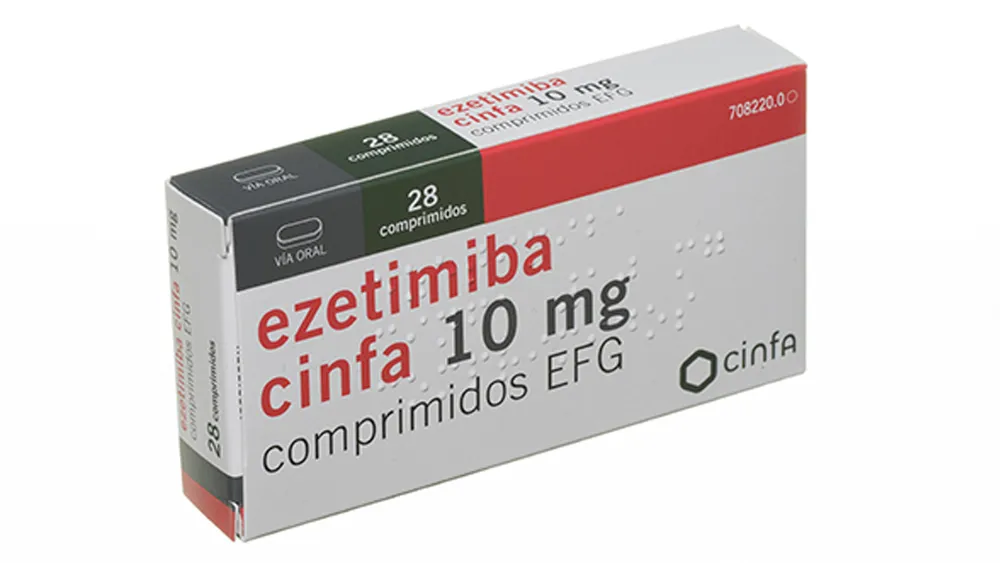
Table of Contents
- Package leaflet: Information for the user
- Introduction
- 1. What ezetimibe cinfa is and what it is used for
- 2. What you need to know before starting to take ezetimibe cinfa
- 3. How to take ezetimibe cinfa
- 4. Possible adverse effects
- 5. Storage of ezetimiba cinfa
- 6. Contents of the pack and other information on ezetimibe Cinfa
Package leaflet: Information for the user
Introduction
Package leaflet: information for the patient
ezetimiba cinfa 10 mg tablets EFG
Read the entire leaflet carefully before you start taking this medicine, because it contains important information for you.
- Keep this leaflet, as you may need to read it again.
- If you have any questions, ask your doctor or pharmacist.
- This medicine has been prescribed for you only, and you should not give it to others, even if they have the same symptoms as you, because it could harm them.
- If you experience any adverse effects, consult your doctor or pharmacist, even if such effects are not listed in this leaflet. See section 4.
Contents of the leaflet
- What ezetimiba cinfa is and what it is used for
- What you need to know before taking ezetimiba cinfa
- How to take ezetimiba cinfa
- Possible side effects
- How to store ezetimiba cinfa
- Contents of the pack and other information
1. What ezetimibe cinfa is and what it is used for
Ezetimibe cinfa is a medicine used to reduce elevated cholesterol levels.
Ezetimibe reduces blood levels of total cholesterol, "bad" cholesterol (LDL cholesterol), and certain fatty substances called triglycerides. In addition, ezetimibe cinfa increases levels of "good" cholesterol (HDL cholesterol).
Ezetimibe works by reducing the amount of cholesterol absorbed in the digestive tract. Ezetimibe adds to the cholesterol-lowering effect of statins, a group of medicines that reduce cholesterol produced by the body itself.
Cholesterol is one of the fatty substances found in the bloodstream. Your total cholesterol is mainly composed of LDL cholesterol and HDL cholesterol.
LDL cholesterol is often called "bad" cholesterol because it can build up in the walls of your arteries, forming plaques. Over time, this plaque buildup can lead to narrowing of the arteries. This narrowing can slow down or block blood flow to vital organs such as the heart and brain. Such disruption in blood flow may lead to a heart attack or stroke.
HDL cholesterol is often called "good" cholesterol because it helps prevent bad cholesterol from building up in the arteries and helps protect against heart disease.
Triglycerides are another type of fat in your blood that may increase the risk of heart disease.
This medicine is used in patients who cannot control their cholesterol levels with a cholesterol-lowering diet alone. While taking this medicine, you must continue to follow a cholesterol-lowering diet.
Ezetimibe is used together with a cholesterol-lowering diet if you have:
- high blood cholesterol levels (primary hypercholesterolemia [heterozygous familial and non-familial])
- together with a statin, when your cholesterol level is not well controlled by a statin alone
- alone, when treatment with a statin is inappropriate or not tolerated
- an inherited disease (homozygous familial hypercholesterolemia), which increases cholesterol levels in the blood. You will also be prescribed a statin, and you may be prescribed other treatments as well.
- an inherited disease (familial sitosterolemia, also known as phytosterolemia), which increases levels of plant sterols in the blood.
If you have heart disease, ezetimibe taken in combination with cholesterol-lowering medicines called statins reduces the risk of heart attack, stroke, surgery to improve blood flow to the heart, or hospitalization due to chest pain.
Ezetimibe cinfa does not help you to lose weight.
2. What you need to know before starting to take ezetimibe cinfa
If you are taking ezetimibe together with a statin, please read the package leaflet of that medicine.
Do not take ezetimibe cinfa
- If you are allergic to ezetimibe or to any of the other ingredients of this medicine (listed in section 6).
Do not take ezetimibe cinfa together with a statin
- If you currently have liver problems.
- If you are pregnant or breastfeeding.
Warnings and precautions
Talk to your doctor or pharmacist before starting to take ezetimibe cinfa.
- Inform your doctor about all your medical conditions, including allergies.
- Your doctor will perform a blood test before you start taking ezetimibe with a statin. This is to check that your liver is functioning properly.
- Your doctor may also want to carry out further blood tests to monitor your liver function after you start taking ezetimibe with a statin.
Ezetimibe is not recommended if you have moderate or severe liver problems.
The safety and efficacy of combining ezetimibe with certain cholesterol-lowering medicines, fibrates, have not been studied.
Children and adolescents
Do not give this medicine to children and adolescents (6 to 17 years of age) unless prescribed by a specialist, as data on safety and efficacy are limited.
Do not give this medicine to children under 6 years of age, as there is no information available for this age group.
Other medicines and ezetimibe cinfa
Tell your doctor or pharmacist if you are taking, have recently taken, or might need to take any other medicines.
In particular, inform your doctor if you are taking medicines containing any of the following active substances:
- cyclosporine (often used in organ transplant patients)
- medicines containing active substances used to prevent blood clots, such as warfarin, fenprocoumon, acenocoumarol, or fluindione (anticoagulants)
- colestyramine (also used to lower cholesterol), as it affects how ezetimibe works
- fibrates (also used to lower cholesterol).
Pregnancy and breastfeeding
Do not take ezetimibe with a statin if you are pregnant, trying to become pregnant, or think you might be pregnant. If you become pregnant while taking ezetimibe with a statin, stop taking both medicines immediately and inform your doctor. There is no experience with the use of ezetimibe with a statin during pregnancy. Consult your doctor before using ezetimibe if you are pregnant.
Do not take ezetimibe with a statin if you are breastfeeding, as it is unknown whether the medicines pass into breast milk. If you are breastfeeding, you should not take ezetimibe, even without taking a statin. Consult your doctor.
Consult your doctor or pharmacist before using any medicine.
Driving and using machines
Ezetimibe is not expected to affect your ability to drive or use machines. However, it should be noted that some people may experience dizziness after taking ezetimibe.
ezetimibe cinfa contains lactose.
This medicine contains lactose. If your doctor has diagnosed you with an intolerance to certain sugars, consult him or her before taking this medicine.
ezetimibe cinfa contains sodium.
This medicine contains less than 1 mmol of sodium (23 mg) per tablet; this is essentially “sodium-free”.
3. How to take ezetimibe cinfa
Follow exactly the administration instructions for this medicine given by your doctor or pharmacist.
Continue taking your other cholesterol-lowering medicines unless your doctor tells you to stop. If in doubt, consult your doctor or pharmacist again.
- Before starting ezetimibe, you should already be following a cholesterol-lowering diet.
- You must continue this cholesterol-lowering diet while taking ezetimibe.
The recommended dose is one 10 mg ezetimibe cinfa tablet taken once daily by mouth. You may take ezetimibe at any time of day, with or without food.
If your doctor has prescribed ezetimibe together with a statin, both medicines may be taken at the same time. In this case, please read the dosing instructions in the leaflet of the statin medicine.
If your doctor has prescribed ezetimibe together with another cholesterol-lowering medicine containing the active substance colestyramine or any other medicine containing a bile acid sequestrant, you must take ezetimibe at least 2 hours before or 4 hours after taking the bile acid sequestrant.
If you take more ezetimibe cinfa than you should
In case of overdose or accidental ingestion, contact your doctor or pharmacist immediately or call the Toxicology Information Service at telephone number 91 562 04 20, indicating the medicine and the amount ingested.
It is recommended to bring the medicine container and package leaflet to the healthcare professional.
If you forget to take ezetimibe cinfa
Do not take a double dose to make up for missed doses. Simply take your usual dose of ezetimibe at the regular time the next day.
If you stop taking ezetimibe cinfa
Talk to your doctor or pharmacist, as your cholesterol levels may rise again.
If you have any further questions about the use of this medicine, ask your doctor or pharmacist.
4. Possible adverse effects
Like all medicines, this medicine can cause adverse effects, although not everyone will experience them.
The following terms are used to describe how often the adverse effects have been reported:
- Very common (may affect more than 1 in 10 people).
- Common (may affect up to 1 in 10 people).
- Uncommon (may affect up to 1 in 100 people).
- Rare (may affect up to 1 in 1,000 people).
- Very rare (may affect up to 1 in 10,000 people).
Contact your doctor immediately if you experience unexplained muscle pain, tenderness or weakness. This is because, in rare cases, muscle problems, including muscle breakdown leading to kidney damage, can be serious and potentially life-threatening.
In general use, allergic reactions have been reported, including swelling of the face, lips, tongue and/or throat, which may cause difficulty breathing or swallowing (requiring immediate treatment).
When used alone, the following adverse effects have been reported:
Common: Abdominal pain; diarrhoea; flatulence; and feeling tired.
Uncommon: Increased results in certain liver function tests (transaminases) or muscle function tests (CK); cough; indigestion; heartburn; nausea; joint pain; muscle spasm; neck pain; decreased appetite; pain; chest pain; hot flush; high blood pressure.
Additionally, when used together with a statin, the following adverse effects have been reported:
Common: Increased results in certain liver function tests (transaminases); headache; muscle pain; tenderness or weakness.
Uncommon: Tingling sensation; dry mouth; itching; rash; hives; back pain; muscle weakness; pain in arms and legs; unusual tiredness or weakness; swelling, especially in hands and feet.
When used together with fenofibrate, the following common adverse effect has been reported: abdominal pain.
Additionally, in general use, the following adverse effects have been reported: dizziness; muscle pain; liver problems; allergic reactions including rash and hives; raised and red skin rashes, sometimes with target-like lesions (erythema multiforme); muscle pain, tenderness or muscle weakness; muscle breakdown; gallstones or inflammation of the gallbladder (which may cause abdominal pain, nausea, vomiting); inflammation of the pancreas, often with severe abdominal pain; constipation; reduction in blood cell count, which may lead to bruising/bleeding (thrombocytopenia); tingling sensation; depression; unusual tiredness or weakness; shortness of breath.
Reporting of adverse effects
If you experience any adverse effect, talk to your doctor or pharmacist, even if it is a possible adverse effect not listed in this leaflet. You can also report them directly via the Spanish Pharmacovigilance System for Human Medicinal Products: https://www.notificaram.es. By reporting adverse effects, you can help provide more information on the safety of this medicine.
5. Storage of ezetimiba cinfa
Keep this medicine out of sight and reach of children.
This medicine does not require any special storage conditions.
Do not use this medicine after the expiry date stated on the packaging after EXP. The expiry date is the last day of the month indicated.
Medicines must not be disposed of via wastewater or household waste. Dispose of unused medicines and their containers at the SIGRE collection point at your pharmacy. If in doubt, ask your pharmacist how to properly dispose of unused medicines and their packaging. This way, you will help protect the environment.
6. Contents of the pack and other information on ezetimibe Cinfa
Composition of ezetimibe Cinfa
- The active substance is ezetimibe. Each tablet contains 10 mg of ezetimibe.
- The other components are: microcrystalline cellulose, lactose monohydrate, sodium lauryl sulfate, povidone, sodium croscarmellose, and sodium stearyl fumarate.
Appearance of the medicinal product and contents of the pack
White, flat, bevelled, oblong tablets marked with the code "EZ1" and measuring 8.2 x 4.1 +/- 0.5 mm.
Presented in aluminum/aluminum blisters. Each pack contains 28 tablets.
Marketing Authorization Holder and Manufacturer
Marketing Authorization Holder
Laboratorios Cinfa, S.A.
Carretera Olaz-Chipi, 10. Polígono Industrial Areta
31620 Huarte (Navarra) - Spain
Manufacturer
Laboratorios Cinfa, S.A.
Carretera Olaz-Chipi, 10. Polígono Industrial Areta
31620 Huarte (Navarra) - Spain
or
Laboratorios Cinfa, S.A.
Avda. de Roncesvalles, s/n
31699 Olloki (Navarra), Spain
Date of the most recent revision of this summary: November 2021
Detailed information about this medicinal product is available on the website of the Spanish Agency of Medicines and Health Products (Agencia Española de Medicamentos y Productos Sanitarios - AEMPS) at http://www.aemps.gob.es/.
You can access detailed and up-to-date information about this medicine by scanning the QR code included in the package leaflet and outer packaging with your mobile phone (smartphone). You can also access this information at the following internet address: https://cima.aemps.es/cima/dochtml/p/80305/P_80305.html
QR code to: https://cima.aemps.es/cima/dochtml/p/80305/P_80305.html