Etumina 40 mg tablets
Spain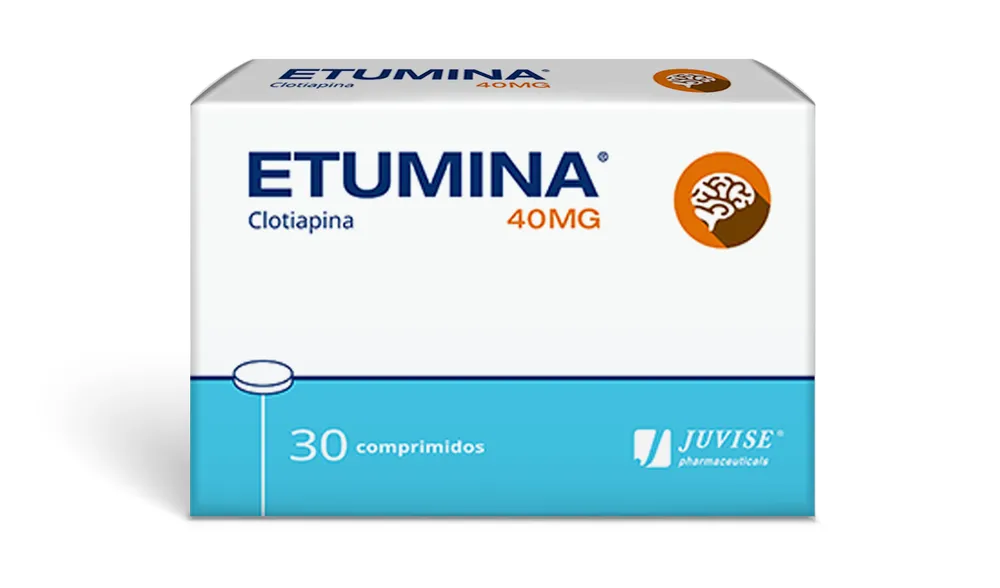
Table of Contents
Package leaflet: Information for the user
Introduction
Package leaflet: information for the user
Etumina 40 mg tablets
Clotiapine
Read all of this leaflet carefully before you start taking this medicine because it contains important information for you.
- Keep this leaflet, as you may need to read it again.
- If you have any questions, ask your doctor or pharmacist.
- This medicine has been prescribed for you only, and you should not give it to other people even if they have the same symptoms as you, because it may harm them.
- If you experience any adverse effects, talk to your doctor or pharmacist, even if they are adverse effects not listed in this leaflet. See section 4.
Contents of the leaflet
-
What Etumina is and what it is used for
-
What you need to know before taking Etumina
-
How to take Etumina
-
Possible side effects
-
How to store Etumina
-
Contents of the pack and other information
1. What Etumina is and what it is used for
Etumina belongs to a group of medicines called antipsychotics.
Etumina is used for the acute or chronic treatment of schizophrenia, a condition in which you may hear or feel things that are not there, believe things that are not true, or feel abnormally suspicious, anxious, confused, guilty, tense, or depressed.
Etumina may also be used to treat other psychotic disorders.
2. What you need to know before taking Etumina
Do not take Etumina
- if you are allergic to clozapine or to any of the other ingredients of this medicine listed in section 6.
- if you are in a coma or have severe central nervous system depression (a state of sedation or reduced consciousness).
Warnings and precautions
Talk to your doctor or pharmacist before starting to take Etumina.
Your doctor will closely monitor your treatment with Etumina:
- if you have prostate disease with difficulty urinating (prostatic hypertrophy),
- if you have a condition called narrow-angle glaucoma (increased pressure in the eye),
- if you have intestinal obstruction,
- if you have been diagnosed with epilepsy or any brain injury,
- in case of dementia, you or your caregiver must inform the doctor if you have had a stroke or have a history of cerebral blood flow problems, especially if you are elderly,
- if you have orthostatic hypotension (a drop in blood pressure upon standing),
- if you have a heart condition known as QT interval prolongation,
- if you or a family member has or has had blood clotting problems (thromboembolism),
- if you have had or currently have abnormal white blood cell counts (neutropenia),
- if you have high blood sugar (hyperglycemia) or diabetes,
- if you have elevated prolactin levels in the blood (hyperprolactinemia), including absence of menstruation (amenorrhea) and breast milk secretion not related to lactation (galactorrhea),
- if you have Parkinson's disease,
- as with other antipsychotic medicines, neuroleptic malignant syndrome (a potentially fatal condition) may occur, characterized by high fever, muscle rigidity, nervous system disturbances (autonomic instability), and increased levels of an enzyme called creatine phosphokinase. In the event of high fever, all antipsychotic medications should be discontinued.
Use in elderly patients
In elderly patients, close monitoring of blood pressure is advisable.
Caution should be exercised when administering Etumina to elderly individuals with heart, lung, or dementia-related conditions, as they are at higher risk of adverse effects.
Other medicines and Etumina
Inform your doctor if you are taking, have recently taken, or might need to take any other medicines.
Etumina may increase the effects of the following medicines:
- medicines acting on the brain, such as sedatives (used to help sleep), narcotics (used to treat severe pain), analgesics (used for pain and fever), hypnotics (used to help sleep), MAO enzyme inhibitors (a type of antidepressant), and antihistamines (used for allergies and colds),
- medicines used to treat high blood pressure.
It may also increase lithium toxicity.
Like other antipsychotic medicines, Etumina should be administered with special caution if you are taking other medicines that prolong the QT interval (an electrocardiogram abnormality) or that cause electrolyte imbalances.
Taking Etumina with food, drinks, and alcohol
Avoid alcoholic beverages. Alcohol enhances the sedative effect.
Pregnancy, breastfeeding, and fertility
If you are pregnant, breastfeeding, think you might be pregnant, or are planning to become pregnant, consult your doctor or pharmacist before using this medicine.
Clozapine should only be administered during pregnancy or breastfeeding if the expected benefit outweighs the potential risks to the fetus. Therefore, during pregnancy or breastfeeding, you should only take this medicine if prescribed by your doctor and always follow their instructions.
Driving and using machines
Etumina may cause effects such as drowsiness, dizziness, or visual disturbances, and may reduce reaction ability. These effects, as well as the underlying illness itself, may impair your ability to drive or operate machinery. Therefore, do not drive, operate machinery, or engage in other activities requiring special attention until your doctor has assessed your response to this medicine.
Etumina contains lactose
This medicine contains lactose. If your doctor has diagnosed you with an intolerance to certain sugars, consult with them before taking this medicine.
3. How to take Etumina
Follow exactly the instructions for use of this medicine provided by your doctor or pharmacist. If in doubt, consult your doctor or pharmacist again.
The recommended starting dose is 3 to 5 tablets (120 to 200 mg/day) divided into 2–3 doses. The daily oral dose may be increased up to a maximum of 360 mg (9 tablets) in cases of excitement/agitation.
For maintenance and long-term treatment, your doctor may reduce the initial dose. The recommended dose is half a tablet to 4 tablets (20 to 160 mg/day) divided into 2 or 3 doses.
Maintenance treatment may last for weeks or even months.
Use in children and adolescents under 18 years of age
The efficacy and safety of this medicine have not been established in individuals under 18 years of age.
Use in patients with renal or hepatic impairment, elderly patients (aged 65 years and over), or patients with low body weight
Your doctor may prescribe a lower than usual dose and, if necessary, gradually increase it.
Method of administration
The tablet may be divided into equal doses.
The tablets should be taken orally with a glass of water.
If you take more Etumina than you should
If you take more Etumina than recommended, the following effects may occur: drowsiness, low blood pressure, rapid heartbeat, irregular heartbeat, breathing difficulties, movement and postural disturbances, seizures, coma.
In case of overdose or accidental ingestion, contact your doctor or pharmacist immediately or call the Toxicology Information Service at 91 562 04 20, indicating the medicine and the amount ingested.
If you forget to take Etumina
If you forget to take a dose, take it as soon as you remember. If it is almost time for your next dose, wait until then. Do not take a double dose to make up for the missed tablet.
4. Possible adverse effects
Like all medicines, this medicine can cause adverse effects, although not everyone will experience them.
The adverse effects reported with the use of Etumina are the following:
- Agitation
- Confusion
- Involuntary movements of the lower face and neck, unusual movements, sustained muscle contractions, inability to remain still, tremors, sedation
- Blurred vision
- Dizziness upon standing
- Dry mouth
- Constipation
Cases of adverse reactions of Neuroleptic Malignant Syndrome have been reported, characterized by muscle rigidity, high fever, altered consciousness, increased blood pressure, and excessive salivation.
Reporting of adverse effects
If you experience any type of adverse effect, consult your doctor or pharmacist, even if it is a possible adverse effect not listed in this leaflet. You may also report them directly via the Spanish Pharmacovigilance System for Human Medicines: https://www.notificaram.es. By reporting adverse effects, you can help provide more information on the safety of this medicine.
5. Storage of Etumina
Keep this medicine out of the sight and reach of children.
Store below 25°C.
Do not use this medicine after the expiry date stated on the packaging after EXP. The expiry date is the last day of the month indicated.
Medicines must not be disposed of via wastewater or household waste. Dispose of unused medicines and their containers at the SIGRE collection point at your pharmacy. If you have any doubts, ask your pharmacist how to dispose of medicines and containers you no longer need. This will help protect the environment.
6. Contents of the pack and other information
Composition of Etumina
- The active substance is clozapine. Each tablet contains 40 mg of clozapine.
- The other components are magnesium stearate, talc, liquid paraffin, anhydrous colloidal silica, gelatin, microcrystalline cellulose, corn starch, and lactose.
Appearance of the medicinal product and contents of the pack
Etumina is presented as round, flat, bevel-edged tablets, white to yellowish in color, with a mark on one side.
Marketing Authorization Holder and Manufacturer
Marketing Authorization Holder
Laboratoires Juvisé Pharmaceuticals
149 boulevard Stalingrad
69100 Villeurbanne
France
Manufacturer
Delpharm L'Aigle
Zone Industrielle No. 1
Route de Crulai
61300 L'Aigle
France
Date of the most recent revision of the package leaflet: November 2020
Detailed and up-to-date information on this medicinal product is available on the website of the Spanish Agency of Medicines and Medical Devices (AEMPS) http://www.aemps.gob.es