Ethosuximide Faes 250 mg hard capsules
Spain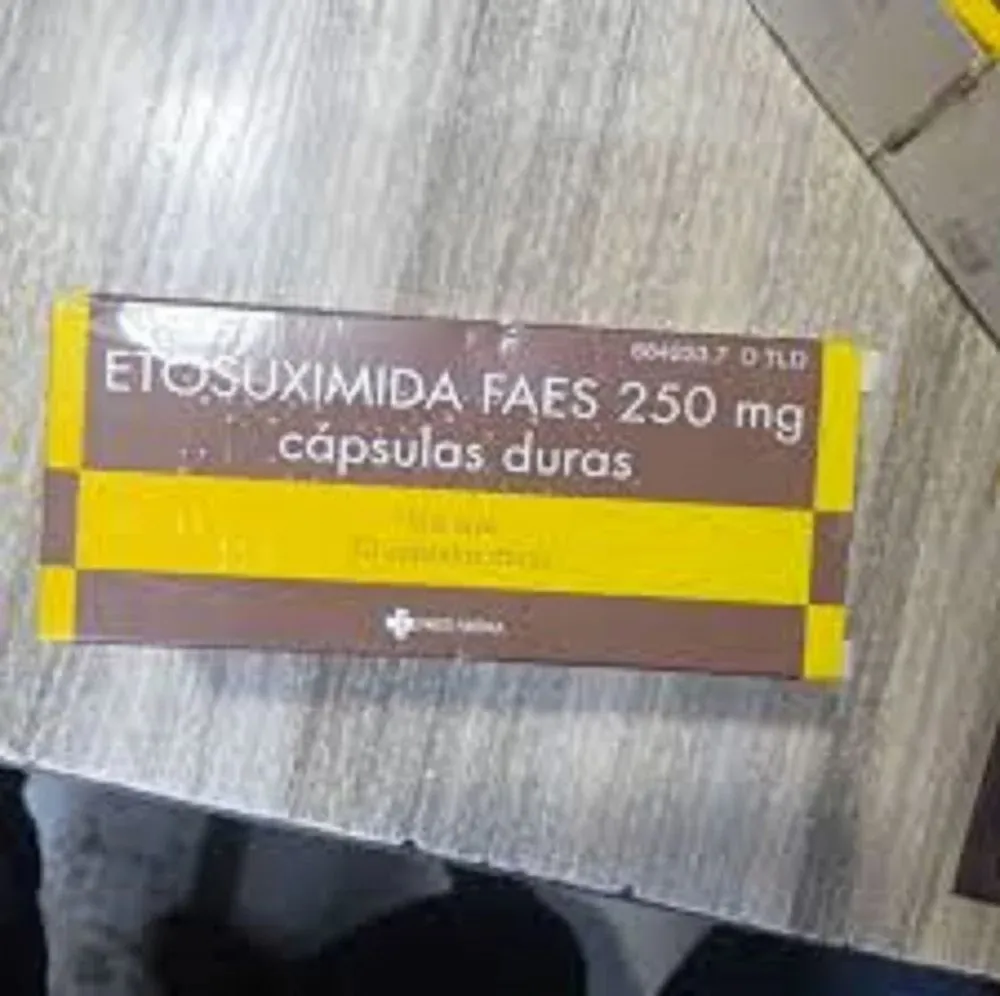
Table of Contents
- Package leaflet: Information for the user
- Introduction
- 1. What Etosuximida Faes is and what it is used for
- 2. What you need to know before taking Etosuximide Faes
- 3. How to take Etosuximide Faes
- 4. Possible adverse effects
- 5. Storage of Etosuximide Faes
- 6. Contents of the package and other information
Package leaflet: Information for the user
Introduction
Package leaflet: information for the user
ETOSUXIMIDE FAES 250 mg hard capsules
Read all of this leaflet carefully before you start taking this medicine, because it contains important information for you.
- Keep this leaflet; you may need to read it again.
- If you have any questions, ask your doctor or pharmacist.
- This medicine has been prescribed for you only, and you should not give it to other people, even if they have the same symptoms as you, because it may harm them.
- If you experience any adverse effects, consult your doctor or pharmacist, even if they are adverse effects not listed in this leaflet. See section 4.
Contents of the leaflet
- What Etosuximide Faes is and what it is used for.
- What you need to know before taking Etosuximide Faes.
- How to take Etosuximide Faes.
- Possible side effects.
- How to store Etosuximide Faes.
- Contents of the pack and other information.
1. What Etosuximida Faes is and what it is used for
Etosuximida Faes belongs to a group of medicines known as antiepileptics, which are used for the treatment of epilepsy.
Etosuximida Faes is primarily indicated for the treatment of patients with absence seizures (petit mal epilepsy). It may also be administered in combination with other antiepileptic medicines when other epileptic seizure manifestations coexist with petit mal.
2. What you need to know before taking Etosuximide Faes
Do not take Etosuximide Faes
- If you are allergic (hypersensitive) to ethosuximide or to any of the other ingredients of this medicine (listed in section 6).
Warnings and precautions
Talk to your doctor or pharmacist before starting to take Etosuximide Faes.
Your doctor needs to know, before you start treatment with ethosuximide, if you have or have previously had any of the following conditions:
-
If you experience symptoms such as persistent fever, sore throat, bruising, bleeding, or paleness. These symptoms may be due to a blood disorder. Inform your doctor immediately if you notice any of these symptoms.
-
If you have any kidney and/or liver disease, as you will require special monitoring during treatment.
-
A small number of people treated with certain antiepileptic medicines have had thoughts of harming themselves or of suicide. If at any time you experience such thoughts, contact your doctor as soon as possible.
-
Serious skin reactions have been reported, including Stevens-Johnson syndrome (SJS) and drug reaction with eosinophilia and systemic symptoms (DRESS), associated with treatment with Etosuximide Faes. Discontinue administration of Etosuximide Faes and seek immediate medical attention if any of the symptoms described in section 4 occur.
Your doctor may need to take periodic blood and/or urine samples for analysis.
Use of Etosuximide Faes with other medicines
Inform your doctor or pharmacist if you are currently using, have recently used, or might need to use any other medicines.
Some medicines may affect how ethosuximide works, or ethosuximide may affect the effectiveness of other medicines taken at the same time.
These include:
- Medicines for epilepsy such as carbamazepine, primidone, phenobarbital, and phenytoin, as they may reduce the effectiveness of ethosuximide. Valproic acid or sodium valproate may increase the toxicity of Etosuximide.
- Antibiotics such as isoniazid, as they may increase the toxicity of Etosuximide.
In addition, the following medicines may reduce the effectiveness of Etosuximide:
- Antidepressants.
- Antimalarials, medicines used for malaria (chloroquine, hydroxychloroquine, mefloquine).
- Antipsychotics, medicines used for schizophrenia.
- Ginkgo biloba.
Other medicines may increase the toxicity of Etosuximide, such as:
- Antihistamines, since ethosuximide increases their sedative effects.
- Ritonavir, used for the treatment of HIV infection.
In addition, Etosuximide:
- may increase the sedative effects of alcohol,
- may increase plasma concentrations of phenytoin,
- may decrease plasma concentrations of valproic acid/sodium valproate.
Your doctor may need to assess blood levels of these medicines to determine whether any of them are affecting your treatment.
Taking with food and alcohol
It is recommended to take this medicine preferably after meals.
Alcohol
Using ethosuximide together with alcohol may increase nervous system side effects such as dizziness, drowsiness, and difficulty concentrating. Some people may also experience impaired thinking and judgment. You should avoid or limit alcohol consumption during treatment with ethosuximide.
Pregnancy and breastfeeding
If you are pregnant or breastfeeding, think you might be pregnant, or plan to become pregnant, consult your doctor or pharmacist before using this medicine.
Both epilepsy and its treatment with Etosuximide carry a risk of congenital malformations. Therefore, if you are of childbearing age and wish to become pregnant, it is advisable to see your doctor to plan your pregnancy.
If you are pregnant, do not stop treatment with Etosuximide and inform your doctor immediately. Your doctor will need to weigh whether the expected benefit to the mother outweighs any potential risk to the fetus.
Breastfeeding
Ethosuximide is excreted in breast milk. If you are breastfeeding, inform your doctor. Unless your doctor advises otherwise, you should not breastfeed during treatment with Etosuximide.
Driving and using machines
Etosuximide Faes may cause symptoms such as drowsiness, dizziness, or visual disturbances and may reduce reaction ability. These effects, as well as the underlying illness itself, may impair your ability to drive or operate machinery. Therefore, do not drive, operate machinery, or perform other activities requiring special attention until your doctor has assessed your response to this medicine.
3. How to take Etosuximide Faes
Follow exactly the instructions for use of this medicine as given by your doctor or pharmacist. If in doubt, consult your doctor or pharmacist.
It is recommended to take Etosuximide Faes at the same time each day.
The recommended dose is:
Adults and children over 6 years
The required dose of Etosuximide may vary from person to person. Most people start with a dose of 500 mg daily (1 capsule twice daily) and gradually increase the dose up to 1000–1500 mg daily (4–6 capsules divided into two doses). In some cases, a higher daily dose of up to 2000 mg may be necessary (8 capsules divided into two doses).
The capsules are taken orally. They must be swallowed whole with a glass of water, preferably after meals. Do not chew the capsules.
If you feel that the effect of Etosuximide Faes is too strong or too weak, inform your doctor or pharmacist.
Use in children under 6 years
This formulation of the medicine is not suitable for use in children under 6 years of age, as it does not allow for safe and accurate dosing.
If you take more Etosuximide Faes than you should
In case of overdose or accidental ingestion, consult your doctor or pharmacist immediately or contact the nearest hospital emergency department, and bring the medicine with you. You may also call the Toxicology Information Service at telephone number 91.562.04.20, indicating the medicine and the amount ingested.
Symptoms of overdose may include nausea, vomiting, central nervous system depression, including respiratory depression, and even coma.
If you forget to take Etosuximide Faes
If you forget to take a dose, take it as soon as you remember, unless it is almost time for your next dose. Do not take a double dose to make up for a missed dose.
If you stop taking Etosuximide Faes
Do not stop treatment with Etosuximide unless your doctor tells you to. Abruptly stopping treatment with Etosuximide may increase the frequency of seizures. If your doctor considers it necessary to discontinue treatment with this medicine, they will decide on the most appropriate alternative treatment for you.
If you have any further questions about the use of this medicine, ask your doctor or pharmacist.
4. Possible adverse effects
Like all medicines, this medicine can cause adverse effects, although not everyone experiences them.
Stop taking Etouximida Faes and seek medical attention immediately if you notice any of the following symptoms:
- Reddish patches on the torso; the patches are often white or circular macules, frequently with central blisters, skin peeling, mouth ulcers, and sores in the throat, nose, genitals, and eyes. These severe skin rashes may be preceded by fever and flu-like symptoms (Stevens-Johnson Syndrome).
- Widespread rash, high body temperature, and enlarged lymph nodes (Drug Reaction with Eosinophilia and Systemic Symptoms (DRESS)).
Contact your doctor immediately if you experience any of these symptoms after taking this medicine. Although rare, these symptoms can be serious:
- If you develop a severe skin rash with blistering affecting the mouth and tongue (or swelling of the tongue), as these symptoms may indicate a severe allergic reaction. Your doctor will discontinue treatment in such cases.
- If you have bruising, fever, pale appearance, or severe sore throat. These may be early signs of a blood disorder, including reduced red blood cells, white blood cells, or platelets. Your doctor may need to perform regular blood tests to monitor for these effects.
- If you develop a skin rash and fever with swollen glands, particularly within the first two months of treatment, which may indicate a hypersensitivity reaction. If these signs are severe and you also experience joint pain and swelling, it could be related to a condition known as systemic lupus erythematosus (SLE).
- If the number of epileptic seizures you experience increases.
Other adverse effects that may occur include:
Blood and lymphatic system disorders: decreased number of white blood cells in the blood (leucopenia) or of a specific type of white blood cells (neutrophils), decreased number of blood cells (aplastic anemia), reduction in red blood cells, white blood cells, and platelets (pancytopenia).
Swelling of lymph nodes.
Blood changes (easy bruising or bleeding, fever, sore throat, mouth ulcers, fatigue, repeated infections, or persistent infections). Your doctor may need to take regular blood samples to detect these effects.
Psychiatric disorders: sleep disturbances, nightmares, speech problems, confusion, nervousness, aggression, feelings of persecution, hyperactivity, difficulty concentrating, increased sexual appetite, depression with suicidal thoughts.
Nervous system disorders: drowsiness, headache, dizziness, irritability, numbness, fatigue, difficulty controlling movements, abnormal or uncoordinated movements, muscle contractions, hiccups.
Eye disorders: myopia.
Gastrointestinal disorders: loss of appetite and weight loss, nausea, vomiting, diarrhea, abdominal pain.
Skin and subcutaneous tissue disorders: skin rash, including measles-like reactions which are usually mild, urticaria. Hair loss has also been reported.
Renal disorders: blood in the urine.
Reproductive system disorders: vaginal bleeding.
Reporting of adverse effects:
If you experience any adverse effect, consult your doctor or pharmacist, even if it is a possible adverse effect not listed in this leaflet. You may also report them directly via the Spanish Pharmacovigilance System for Human Medicines: https://www.notificaram.es/. By reporting adverse effects, you can help provide more information on the safety of this medicine.
5. Storage of Etosuximide Faes
Keep out of sight and reach of children.
Store below 30°C.
Do not use Etosuximide Faes after the expiry date stated on the packaging after EXP. The expiry date refers to the last day of the month indicated.
Medicines should not be disposed of via wastewater drains or household waste. Unused medicines and their containers should be taken to a pharmacy’s SIGRE point. If you have any doubts, ask your pharmacist how to properly dispose of unused medicines and their containers. This will help protect the environment.
6. Contents of the package and other information
Composition of Etosuximida Faes 250 mg hard capsules
- The active substance is etosuximide. Each hard capsule contains 250 mg of etosuximide.
- The other components are: macrogol 6000 and colloidal hydrated silica. The gelatin capsule consists of: gelatin, iron oxides (E172), erythrosine (E127), titanium dioxide (E171) and water.
Appearance of the product and contents of the pack
Etosuximida Faes is available in packs containing 30 hard capsules.
Each pack contains three PVC/AL blisters with 10 gelatin capsules each, with a red cap and grey body.
Marketing Authorization Holder
Faes Farma, S.A.
Autonomia Etorbidea, 10
48940 Leioa (Bizkaia)
Spain
Manufacturer
Faes Farma, S.A.
Maximo Agirre Kalea, 14
48940 Leioa (Bizkaia)
Spain
Date of the most recent revision of this leaflet: January 2021
Detailed and up-to-date information on this medicinal product is available on the website of the Spanish Agency of Medicines and Health Products (AEMPS): http://www.aemps.gob.es