Eskazole 400 mg tablets
Spain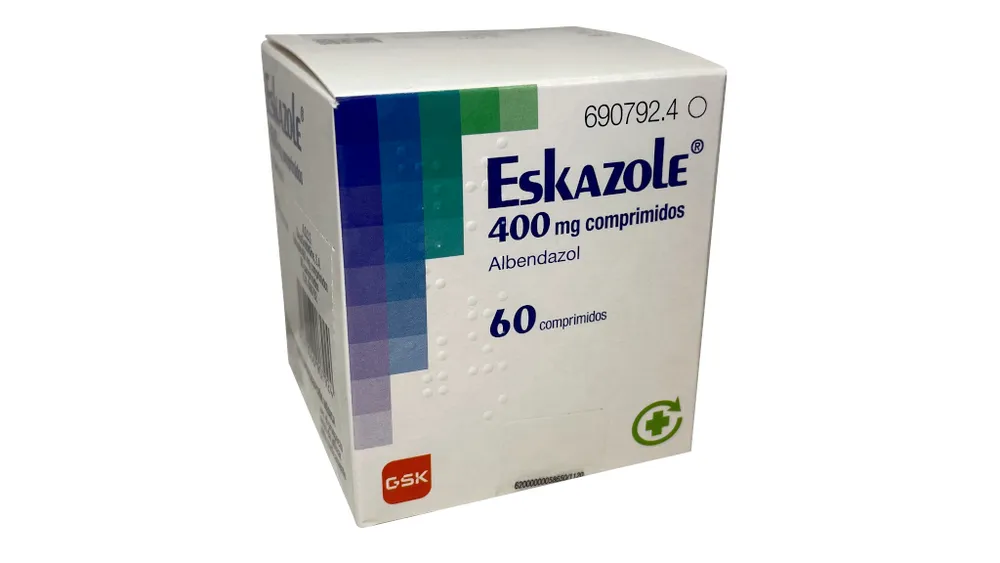
Table of Contents
- Package leaflet: Information for the user
- Introduction
- 1. What Eskazole 400 mg tablets are and what they are used for
- 2. What you need to know before taking Eskazole 400 mg tablets
- 3. How to take Eskazole 400 mg tablets
- ? **Cystic echinococcosis**
- ? **Alveolar echinococcosis**
- ? **Neurocysticercosis**
- 4. Possible adverse effects
- 5. Storage of Eskazole 400 mg tablets
- 6. Contents of the pack and other information
Package leaflet: Information for the user
Introduction
Package leaflet: information for the user
Eskazole 400mg tablets
albendazole
Read the entire leaflet carefully before you start taking this medicine because it contains important information for you.
- Keep this leaflet as you may need to read it again.
- If you have any questions, ask your doctor or pharmacist.
- This medicine has been prescribed for you only, and you should not give it to other people, even if they have the same symptoms as you, because it may harm them.
- If you experience any adverse effects, consult your doctor or pharmacist, even if they are adverse effects not listed in this leaflet. See section 4.
Leaflet contents
- What Eskazole 400 mg tablets are and what they are used for
- What you need to know before taking Eskazole 400 mg tablets
- How to take Eskazole 400 mg tablets
- Possible adverse effects
- How to store Eskazole 400 mg tablets
- Contents of the pack and other information
1. What Eskazole 400 mg tablets are and what they are used for
Eskazole is a medicine with anthelmintic and antiprotozoal activity against intestinal and tissue parasites.
Eskazole is indicated for the treatment of the following systemic helminthic infections: echinococcosis or hydatid disease and neurocysticercosis.
2. What you need to know before taking Eskazole 400 mg tablets
Do not take Eskazole 400 mg tablets
- If you are allergic to albendazole or to any of the other ingredients of this medicine (listed in section 6).
- If you are pregnant or think you might be pregnant. Women of childbearing age are advised to use an effective method of contraception during treatment and for at least one month after treatment has ended.
Warnings and precautions
Talk to your doctor or pharmacist before taking Eskazole 400 mg tablets.
- Your doctor will carry out liver function tests before starting each treatment cycle and at least every 2 weeks during treatment. If liver enzymes increase significantly, treatment must be discontinued. Your doctor will assess whether you can resume treatment with Eskazole once liver enzymes have returned to normal levels.
- Your doctor will perform blood counts at the beginning of treatment and every two weeks during treatment to monitor blood cell levels. Treatment with albendazole must be stopped if clinically significant reductions in blood cell counts occur.
- If you are a woman of childbearing age. To avoid administering Eskazole during the first months of pregnancy, treatment should only be started after a negative pregnancy test result. This test should be repeated at least once before starting the next treatment cycle. Pregnancy should be avoided during treatment and for at least one month after stopping the medication.
- Before starting treatment with Eskazole, in the rare cases of retinal neurocysticercosis, your doctor will monitor for lesions in the retina. If such lesions are observed, the benefits of therapy will be weighed against the potential for retinal damage.
- If you are being treated for a parasitic infection, you may also have a rare and serious brain infection called neurocysticercosis, which you may not be aware of. When the parasites die, a reaction in the brain may occur. Symptoms may include seizures, headache, and vision problems.
Taking Eskazole 400 mg tablets with other medicines
Inform your doctor or pharmacist if you are taking, have recently taken, or might need to take any other medicines.
It has been observed that cimetidine (used to treat stomach ulcers), praziquantel (used to treat parasitic infections), and dexamethasone (used to treat inflammation or allergy) increase plasma levels of the active metabolite of albendazole.
It has been observed that ritonavir (used to treat HIV infections), phenytoin, carbamazepine, and phenobarbital (used to treat seizures and epilepsy) may reduce plasma levels of the active metabolite of albendazole.
Pregnancy and breastfeeding
If you are pregnant or breastfeeding, think you may be pregnant, or are planning to become pregnant, consult your doctor or pharmacist before using this medicine.
Eskazole must not be administered during pregnancy or to women who suspect they may be pregnant. Women of childbearing age are advised to use an effective method of contraception during treatment and for at least one month after treatment ends. Treatment should only be started after a negative pregnancy test result.
There is insufficient information regarding the excretion of albendazole in breast milk. Therefore, Eskazole should not be used during breastfeeding.
Driving and using machines
Eskazole may cause adverse effects such as dizziness, and these symptoms may impair your ability to drive (see section 4). Do not drive or operate machinery unless you are certain you are not affected.
Eskazole 400 mg tablets contain lactose
This medicine contains lactose. If your doctor has informed you that you have an intolerance to certain sugars, consult with them before taking this medicine.
Eskazole 400 mg tablets contain sunset yellow FCF (E110)
This medicine may cause allergic reactions because it contains sunset yellow FCF. It may trigger asthma, especially in patients allergic to acetylsalicylic acid.
Eskazole 400 mg tablets contain sodium
This medicine contains less than 1 mmol of sodium (23 mg) per tablet; therefore, it is essentially “sodium-free”.
Eskazole 400 mg tablets contain benzyl alcohol
This medicine contains 0.98 mg of benzyl alcohol in each tablet.
Benzyl alcohol may cause allergic reactions.
Consult your doctor or pharmacist if you are pregnant or breastfeeding. This is because large amounts of benzyl alcohol may accumulate in your body and cause adverse effects (metabolic acidosis).
Consult your doctor or pharmacist if you have liver or kidney disease. This is because large amounts of benzyl alcohol may accumulate in your body and cause adverse effects (metabolic acidosis).
Benzyl alcohol has been associated with the risk of adverse effects, including respiratory problems (“gasping syndrome”), in children.
3. How to take Eskazole 400 mg tablets
Follow exactly the instructions for use of this medicine given by your doctor or pharmacist. If you are unsure, consult your doctor or pharmacist again.
Dosages depend on the parasites involved, the patient's weight, and the severity of the infection.
Eskazole should be taken with food to aid absorption. Swallow the tablets with water. For individuals who have difficulty swallowing the tablets whole, especially young children, the tablets may be crushed or chewed with a little water.
? Cystic echinococcosis
Patients weighing more than 60 kg: total daily dose of 800 mg, divided into two doses of 400 mg each, for a total of 28 days.
Patients weighing less than 60 kg: total daily dose of 15 mg/kg administered in two equal divided doses (maximum dose of 800 mg/day), for a total of 28 days.
These 28-day treatment cycles may be repeated with 14-day rest periods between cycles, depending on the therapeutic indication, for a total of 3 cycles.
- Inoperable multiple cysts:
Up to three 28-day treatment cycles with Eskazole may be administered for the treatment of hepatic, pulmonary, and peritoneal cysts. For cysts located in bone or brain, a longer treatment duration may be required.
- Before surgery:
Two 28-day cycles should be administered before surgery. In cases where surgical intervention is required before completion of the two cycles, Eskazole should be administered for as long as possible.
- After surgery:
In cases where only a short preoperative cycle (less than 14 days) was administered, or when emergency surgery was required, postoperative treatment with Eskazole should consist of two 28-day cycles separated by a 14-day rest period. Additionally, if cysts remain viable after preoperative treatment or if spillage has occurred, a full two-cycle treatment course should be administered.
- After percutaneous drainage of cysts: Treatment similar to that after surgery.
? Alveolar echinococcosis
Patients weighing more than 60 kg: total daily dose of 800 mg, divided into two doses of 400 mg each, administered in 28-day cycles with 14-day treatment-free intervals between cycles.
Patients weighing less than 60 kg: total daily dose of 15 mg/kg, given in two equally divided doses (maximum dose 800 mg/day), administered in 28-day cycles with 14-day treatment-free intervals between cycles.
Treatment is administered in 28-day cycles and may be continued for months or even years.
Continuous treatment at the same dose has been used for periods of up to 20 months.
Current follow-up data suggest that survival times are substantially improved following prolonged treatment. Continuous therapy has been shown, in a limited number of patients, to potentially lead to apparent cure.
? Neurocysticercosis
Patients weighing more than 60 kg: Total daily dose of 800 mg, divided into two doses of 400 mg, administered for 7 to 30 days depending on response.
Patients weighing less than 60 kg: Total daily dose of 15 mg/kg administered in two equal divided doses (maximum dose of 800 mg/day), for 7 to 30 days depending on response.
A second cycle may be administered after a 14-day treatment-free interval between cycles.
The duration of treatment for neurocysticercosis varies according to the type of cysts:
- Parenchymal cysts / granulomas:
Treatment is administered for a minimum of 7 days and up to a maximum of 28 days.
- Arachnoid and ventricular cysts:
Treatment usually lasts 28 days for non-parenchymal cysts.
- Cysts in clusters:
A minimum treatment duration of 28 days is required. The total duration is determined by radiological and clinical response, and treatment should be administered as a continuous regimen.
Patients being treated for neurocysticercosis should receive any required anticonvulsant and steroid therapy. During the first week of treatment, corticosteroids should be administered orally or intravenously to prevent episodes of cerebral hypertension.
Use in children and adolescents
The use of Eskazole is not recommended in children under 6 years of age.
Dosage recommendations for children aged 6 years and older are the same as for adults.
Use in elderly patients
Experience in patients aged 65 years or older is limited. Reports indicate that dose adjustments are not required.
Use in patients with renal impairment
No dose adjustments are required; however, patients with evidence of renal impairment should be monitored with caution.
Use in patients with hepatic impairment
Patients with abnormal liver function test results (transaminases) prior to starting albendazole treatment should be evaluated with caution, and treatment should be discontinued if there is a significant increase in liver enzymes or a decrease in total blood cell count.
If you take more Eskazole 400 mg tablets than you should
There is no experience with overdosage of Eskazole. In case of overdose or accidental ingestion, consult your doctor or pharmacist immediately, or call the Toxicology Information Service at 91 562 04 20, indicating the medication and amount taken.
If you forget to take Eskazole 400 mg tablets
- If more than 6 hours remain before your next dose, take the missed dose as soon as you remember, then take your next dose at the usual time.
- Do not take a double dose to make up for a missed dose.
If you are unsure what to do, consult your doctor or pharmacist.
If you interrupt treatment with Eskazole 400 mg tablets
Do not stop taking Eskazole, as this may compromise the effectiveness of your treatment. Therefore, carefully follow your doctor's instructions.
If you have any further questions about the use of this medicine, ask your doctor or pharmacist.
4. Possible adverse effects
Like all medicines, this medicine can cause adverse effects, although not everyone will experience them.
Serious skin reactions: consult your doctor immediately
A small number of people taking Eskazole may experience allergic reactions that could potentially be life-threatening and may lead to more serious problems if not treated.
Symptoms of these reactions include:
- skin rash, which may blister and resemble small targets (dark central spots surrounded by a lighter area, with a dark ring around the edge) (erythema multiforme)
- widespread skin rash with blisters and peeling of the skin, particularly around the mouth, nose, eyes, and genitals (Stevens-Johnson syndrome).
?If you experience any of these symptoms, contact a doctor immediately.
Symptoms to be aware of
Seizures (fits) and other symptoms
People being treated for parasitic infections may also have a rare and serious condition called neurocysticercosis, meaning the presence of parasites in the brain. Treatment with Eskazole may trigger a reaction in the brain as the parasites are eliminated. Be alert for the following combination of symptoms:
- headache, which may be severe
- feeling unwell (nausea) and vomiting
- seizures (fits)
- vision problems.
? If you experience any of these symptoms, contact a doctor immediately.
Very common adverse effects
May affect more than 1 in 10 patients:
- headache.
Very common adverse effects that may appear in your blood test:
- increased liver enzymes.
Common adverse effects
May affect up to 1 in 10 patients:
- dizziness
- stomach pain
- feeling unwell (nausea)
- vomiting
- fever
- weight loss and moderate, reversible hair loss (alopecia).
Uncommon adverse effects
May affect up to 1 in 100 patients:
- allergic reaction including skin rash and itching
- liver inflammation (hepatitis).
Uncommon adverse effects that may appear in your blood test:
- decreased number of white blood cells (leukopenia).
Very rare adverse effects
May affect up to 1 in 10,000 patients:
Severe skin rash
- skin rash, which may blister and resemble small targets (dark central spots surrounded by a lighter area, with a dark ring around the edge) (erythema multiforme)
- widespread skin rash with blisters and peeling of the skin, particularly around the mouth, nose, eyes, and genitals (Stevens-Johnson syndrome).
?If you experience any of these symptoms, contact a doctor immediately (see “serious skin reactions” at the beginning of section 4).
Very rare adverse effects that may appear in your blood test:
- decreased count of all blood cells (pancytopenia)
- severe decrease in the number of white blood cells (agranulocytosis)
- suppression of bone marrow’s ability to produce sufficient blood cells (aplastic anaemia)
If you experience adverse effects
?Consult your doctor or pharmacist if you consider any of the adverse effects you experience to be severe or bothersome, or if you notice any adverse effects not mentioned in this leaflet.
Reporting of adverse effects
If you experience any adverse effect, talk to your doctor or pharmacist, even if it is a possible adverse effect not listed in this leaflet.
You can also report them directly via the Spanish Pharmacovigilance System for Human Medicinal Products, www.notificaRAM.es. By reporting adverse effects, you can help provide more information on the safety of this medicine.
5. Storage of Eskazole 400 mg tablets
Do not store above 30 °C.
Keep this medicine out of the sight and reach of children.
Do not use this medicine after the expiry date stated on the container label. The expiry date refers to the last day of the month indicated.
Medicines should not be disposed of via wastewater or household waste. Dispose of unused containers and medicines at the SIGRE collection point at your pharmacy. If you are unsure, ask your pharmacist how to properly dispose of containers and unused medicines. This will help protect the environment.
6. Contents of the pack and other information
Composition of Eskazole 400 mg tablets
- The active substance is albendazole. Each tablet contains 400 mg of albendazole.
- The other components are: maize starch, povidone, sodium lauryl sulfate, sodium croscarmellose, microcrystalline cellulose, orange-yellow S (E-110), magnesium stearate, vanilla flavour (containing benzyl alcohol and propylene glycol (E-1520)), passion fruit flavour, orange flavour, lactose monohydrate, sodium saccharin.
Nature of the product and contents of the container
Eskazole tablets are mottled, pale orange in colour, oval-shaped, biconvex, with a score line on one side and engraved with "ALB 400" on the other. The tablets have a characteristic fruity odour.
The pack contains 60 tablets. The container is a plastic bottle (polypropylene) with a plastic cap (polyethylene).
Marketing Authorisation Holder and Manufacturer
Marketing Authorisation Holder
GlaxoSmithKline, S.A.
P.T.M. C/ Severo Ochoa, 2
28760 Tres Cantos (Madrid)
Spain
Tel: +34 900 202 700
Manufacturer
GlaxoSmithKline Trading Services Limited
12 Riverwalk,
Citywest Business Campus
Dublin 24,
Ireland
Date of the most recent revision of this leaflet: August 2025
Detailed information on this medicine is available on the website of the Spanish Agency for Medicines and Health Products (AEMPS): http://www.aemps.gob.es/.