Escitalopram Viatris 10 mg film-coated tablets EFG
Spain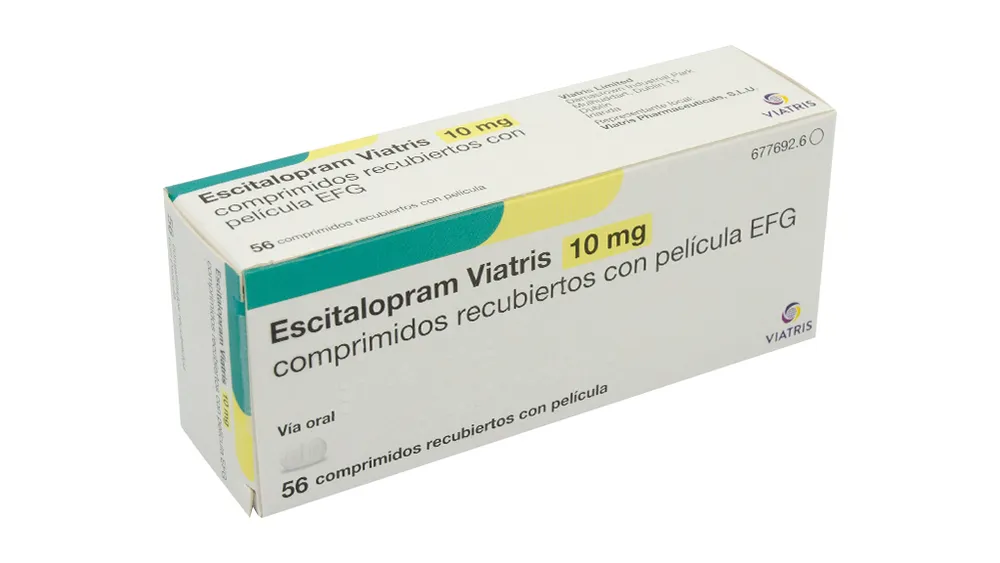
Table of Contents
- Package leaflet: Information for the user
- Introduction
- 1. What Escitalopram Viatris is and what it is used for
- 2. What you need to know before taking Escitalopram Viatris
- 3. How to take Escitalopram Viatris
- 4. Possible adverse effects
- 5. Storage of Escitalopram Viatris
- 6. Contents of the pack and other information
Package leaflet: Information for the user
Introduction
Package leaflet: information for the patient
Escitalopram Viatris 10 mg film-coated tablets EFG
Read the entire leaflet carefully before you start taking this medicine because it contains important information for you.
- Keep this leaflet as you may need to read it again.
- If you have any questions, ask your doctor or pharmacist.
- This medicine has been prescribed for you only and must not be given to other people, even if they have the same symptoms as you, because it may harm them.
- If you experience any side effects, talk to your doctor or pharmacist, even if they are side effects not listed in this leaflet. See section 4.
Leaflet contents:
- What Escitalopram Viatris is and what it is used for
- What you need to know before taking Escitalopram Viatris
- How to take Escitalopram Viatris
- Possible side effects
- How to store Escitalopram Viatris
- Contents of the pack and other information
1. What Escitalopram Viatris is and what it is used for
Escitalopram belongs to a group of antidepressants known as selective serotonin reuptake inhibitors (SSRIs). These medicines act on the serotonin system in the brain by increasing the level of serotonin.
Escitalopram may be prescribed to treat the following disorders:
- Major depressive episodes.
- Panic disorder with or without agoraphobia (fear of open spaces).
- Social anxiety disorder.
- Generalized anxiety disorder.
- Obsessive-compulsive disorder.
2. What you need to know before taking Escitalopram Viatris
Do not take Escitalopram Viatris:
- If you are allergic to escitalopram or to any of the other ingredients of this medicine (listed in section 6).
- If you are taking other medicines belonging to the group known as monoamine oxidase inhibitors (MAOIs), including selegiline (used to treat Parkinson’s disease), moclobemide (used to treat depression), or linezolid (an antibiotic).
- If you were born with or have experienced an episode of abnormal heart rhythm (detected on an ECG, a test to assess heart function).
- If you are taking medicines for heart rhythm problems or that may affect heart rhythm (see section 2 “Other medicines and Escitalopram Viatris”).
Warnings and precautions
Talk to your doctor or pharmacist before starting escitalopram:
- If you have liver or kidney impairment. Your doctor may need to adjust your dose.
- If you are elderly.
- If you have epilepsy or a history of seizures. Treatment with escitalopram should be discontinued if you experience seizures for the first time or notice an increase in seizure frequency (see also section 4 “Possible side effects”).
- If you are receiving electroconvulsive therapy.
- If you are prone to bleeding or bruising easily, or if you are pregnant (see “Pregnancy, breastfeeding and fertility”).
- If you have diabetes. Treatment with escitalopram may alter glycaemic control (blood sugar level control). A dose adjustment of insulin and/or oral hypoglycaemic agents may be necessary.
- If you have low sodium levels in your blood.
- If you have coronary artery disease.
- If you have or have had heart problems or recently suffered a heart attack.
- If you have a slow resting heart rate and/or you know you may have salt depletion due to prolonged and severe diarrhoea and vomiting (feeling unwell) or due to diuretic use (water tablets).
- If you experience a fast or irregular heartbeat, fainting, collapse, or dizziness upon standing, which may indicate abnormal heart rhythm function.
- If you have glaucoma (increased eye pressure).
To consider
Some patients with bipolar disorder may enter a manic phase. This is characterized by unusually rapid and shifting thoughts, excessive or inappropriate happiness without apparent reason, and excessive physical activity. If you experience this, contact your doctor.
You may experience symptoms such as restlessness or difficulty sitting still or staying still during the first weeks of treatment. If you experience these symptoms, contact your doctor immediately.
Suicidal thoughts and worsening of depression or anxiety disorder
If you are depressed and/or suffer from an anxiety disorder, you may occasionally have thoughts about harming yourself or ending your life. These thoughts may increase when starting antidepressants, as all such medicines require time to take effect—usually about two weeks, although in some cases it may take longer.
You are more likely to have these types of thoughts:
- If you have previously had thoughts of self-harm or suicide.
- If you are a young adult. Clinical trial data have shown an increased risk of suicidal behaviour in psychiatric patients under 25 years of age treated with antidepressants.
If at any time you have thoughts about harming or killing yourself, contact your doctor or go directly to a hospital. It may be helpful for you to inform a family member or close friend that you are depressed or have an anxiety disorder and ask them to read this leaflet. You may ask them whether they think your depression or anxiety disorder has worsened, or if they are concerned about changes in your behaviour.
Sexual dysfunction
Medicines such as escitalopram (also known as SSRIs/SNRIs) may cause symptoms of sexual dysfunction (see section 4). In some cases, these symptoms have persisted after discontinuation of treatment.
Children and adolescents under 18 years
Escitalopram should not normally be used to treat children and adolescents under 18 years of age. Also, be aware that in patients under 18 years, there is an increased risk of adverse effects such as suicide attempts, suicidal ideation, and hostility (predominantly aggression, confrontational behaviour, and irritability) when taking this type of medicine. Nevertheless, your doctor may prescribe escitalopram to patients under 18 years if they decide it is in the patient’s best interest. If your doctor has prescribed escitalopram to a patient under 18 years and you wish to discuss this decision, please consult your doctor again. You should inform your doctor if any of the symptoms described above worsen or become complicated while patients under 18 years are taking escitalopram. In addition, the long-term effects of escitalopram on growth, maturation, and cognitive and behavioural development in this age group have not been established.
Other medicines and Escitalopram Viatris
Inform your doctor or pharmacist if you are taking, have recently taken, or might need to take any other medicines.
It is very important that you inform your doctor if you are taking any of the following medicines:
- Non-selective monoamine oxidase inhibitors (MAOIs) containing phenelzine, iproniazid, isocarboxazid, nialamide, or tranylcypromine as active ingredients (used to treat depression). If you have taken any of these medicines, you must wait 14 days before starting escitalopram. After stopping escitalopram, you must wait 7 days before taking any of these medicines.
- Reversible selective MAO-A inhibitors, such as moclobemide (used to treat depression).
- Linezolid (an antibiotic).
- Irreversible MAO-B inhibitors, such as selegiline (used to treat Parkinson’s disease). These increase the risk of adverse effects.
- Sumatriptan and similar medicines (used to treat migraine) or buprenorphine and tramadol (used for severe pain). These medicines may interact with escitalopram and cause symptoms such as involuntary rhythmic muscle contractions (including muscles controlling eye movement), restlessness, hallucinations, coma, excessive sweating, tremors, exaggerated reflexes, increased muscle tension, and body temperature above 38°C. Contact your doctor if you experience these symptoms.
- Cimetidine, omeprazole, and lansoprazole (used to treat stomach ulcers), fluconazole (used to treat fungal infections), fluvoxamine (an antidepressant), and ticlopidine (used to reduce the risk of stroke). These may increase blood levels of escitalopram.
- St. John’s wort (Hypericum perforatum) – a herbal remedy used for depression.
- Lithium or tryptophan (used for depression), as they may enhance the effects of escitalopram.
- Acetylsalicylic acid (aspirin) (used for pain relief or to reduce the risk of thrombosis) and non-steroidal anti-inflammatory drugs (NSAIDs) (medicines used for pain relief). These may increase the risk of bleeding.
- Warfarin, dipyridamole, phenprocoumon, or other anticoagulants (medicines used to reduce the risk of thrombosis). Your doctor will likely monitor your blood clotting time at the beginning and end of escitalopram treatment to ensure your anticoagulant dose remains appropriate.
- Mefloquine (used to treat malaria), bupropion (used to help quit smoking or treat depression), and tramadol (used to treat severe pain), due to a possible risk of lowering the seizure threshold.
- Neuroleptics (medicines used to treat schizophrenia, psychosis), antidepressants, and other SSRIs, due to a possible risk of lowering the seizure threshold.
- Flecainide, propafenone, and metoprolol (used for cardiovascular conditions), imipramine, desipramine, clomipramine, and nortriptyline (used to treat depression), and risperidone, thioridazine, and haloperidol (antipsychotics). The dose of escitalopram may need to be adjusted.
- Medicines that cause low potassium levels in the blood (hypokalaemia) or low magnesium levels in the blood (hypomagnesaemia).
Do not take escitalopram if you are taking medicines for heart rhythm disorders or medicines that may affect heart rhythm, such as Class IA and III antiarrhythmics, antipsychotics (e.g., phenothiazine derivatives, pimozide, haloperidol), tricyclic antidepressants, certain antimicrobial agents (e.g., sparfloxacin, moxifloxacin, IV erythromycin, pentamidine, antimalarial treatment, especially halofantrine), and certain antihistamines (e.g., astemizole, hydroxyzine, mizolastine). If you have any doubts about this, speak to your doctor.
Escitalopram Viatris with food, drinks, and alcohol
Escitalopram may be taken with or without food (see section 3 “How to take Escitalopram Viatris”). You should avoid alcohol while taking this medicine.
Pregnancy, breastfeeding, and fertility
If you are pregnant, breastfeeding, think you may be pregnant, or plan to become pregnant, consult your doctor or pharmacist before taking this medicine.
Pregnancy
Inform your doctor if you are pregnant or planning to become pregnant. Do not take escitalopram during pregnancy unless you and your doctor have carefully considered the risks and benefits. Do not stop escitalopram treatment suddenly.
Ensure that your midwife and/or doctor know you are taking escitalopram. Medicines such as escitalopram, when taken during pregnancy—particularly during the last three months—may increase the risk of a serious condition in newborns called persistent pulmonary hypertension of the newborn (PPHN), which causes the baby to breathe faster and appear bluish. These symptoms usually begin within 24 hours after birth. If this occurs in your baby, contact your midwife and/or doctor immediately.
Other symptoms that may occur when escitalopram is taken late in pregnancy include difficulty sleeping and feeding, irregular breathing, being too hot or too cold, feeling unwell, constant crying, low blood sugar, muscle stiffness or floppiness, hyperreflexia, irritability, lethargy, tremors, shakiness, or seizures. If your baby shows any of these symptoms at birth, contact your doctor immediately for advice.
Taking escitalopram late in pregnancy may also increase the risk of heavy vaginal bleeding shortly after delivery, especially if you have a history of bleeding disorders. Your doctor or midwife should be aware you are taking escitalopram so they can advise you appropriately.
Breastfeeding
Inform your doctor if you are breastfeeding. Escitalopram may be excreted in human milk. Do not breastfeed while taking escitalopram. Your doctor will decide whether you should continue/interrupt breastfeeding or continue/interrupt treatment with escitalopram.
Fertility
Citalopram, a medicine similar to escitalopram, has been shown to reduce sperm quality in animal studies. In theory, this could affect fertility, but no impact on human fertility has been observed so far.
Driving and using machines
Do not drive or operate tools or machinery until you know how escitalopram affects you.
Escitalopram Viatris contains lactose and sodium
This medicine contains lactose. If your doctor has informed you of an intolerance to certain sugars, consult your doctor before taking this medicine.
This medicine contains less than 23 mg of sodium (1 mmol) per tablet, which is essentially “sodium-free”.
3. How to take Escitalopram Viatris
Follow exactly the instructions for using this medicine as given by your doctor or pharmacist. If in doubt, consult your doctor or pharmacist.
Remember that you may need to take escitalopram tablets for 2 or more weeks before you start to feel better.
Adults
Depression – The recommended dose is 10 mg of escitalopram per day. Your doctor may increase this up to a maximum of 20 mg per day. It may take between 2 and 4 weeks before you start to feel better. Treatment is recommended to continue for at least 6 months after you feel well again.
Panic disorder – The recommended initial dose is 5 mg of escitalopram per day. After the first week, your doctor may increase the dose to 10 mg per day and, if necessary, up to a maximum of 20 mg per day. Maximum effect is reached after 3 months.
Social anxiety disorder – The recommended dose is 10 mg of escitalopram per day. It may take between 2 and 4 weeks before you start to feel better. After this, your dose may be reduced to 5 mg per day or increased to 20 mg per day, depending on how you are responding to the medicine. Usually, the recommended treatment duration is 12 weeks.
Generalised anxiety disorder – The recommended dose is 10 mg of escitalopram per day. Your doctor may increase this up to a maximum of 20 mg per day. Your doctor should review your dose regularly.
Obsessive-compulsive disorder – The recommended dose is 10 mg of escitalopram per day. Your doctor may increase this up to a maximum of 20 mg per day. Your doctor should review your dose regularly.
Elderly patients (over 65 years)
In addition to the above, your doctor will prescribe a lower starting dose, as elderly patients may be more sensitive to the effects of escitalopram.
The recommended initial dose of escitalopram is 5 mg taken as a single daily dose.
Your doctor may increase the dose to 10 mg per day.
Children and adolescents (under 18 years)
Escitalopram should not, normally, be given to children and adolescents under 18 years of age. For further information, please consult section 2 “What you need to know before taking Escitalopram”.
If you have severe liver or kidney problems, your doctor will prescribe a lower dose than those indicated above.
You can take escitalopram with or without food. Swallow the tablets with water. Do not chew them, as they have a bitter taste.
Do not stop treatment until your doctor tells you to do so, and do not interrupt it even after you start to feel better. After recovery, you should continue treatment for a period of three to six months to prevent your symptoms from returning.
The tablets may be divided into equal doses.
If you take more Escitalopram Viatris than you should
In case of overdose or accidental ingestion, contact your doctor immediately or call the Toxicology Information Service at telephone number 915 620 420, stating the medicine and the amount taken. Go to hospital even if you do not have any symptoms of discomfort.
Some signs of overdose may include dizziness, tremor, agitation, seizures, coma, feeling unwell (nausea, vomiting), changes in heart rhythm (slow or faster heartbeat), decreased blood pressure, and disturbances in the body's fluid and electrolyte balance. Take the packaging and any remaining escitalopram tablets with you if you go to the doctor or hospital.
If you forget to take Escitalopram Viatris
Do not take a double dose to make up for missed doses. If you forget to take a dose and remember before going to bed, take it immediately. Continue as normal the next day. If you remember during the night or the following day, skip the missed dose and continue as usual.
If you stop taking Escitalopram Viatris
Do not stop treatment with escitalopram until your doctor tells you to do so. When you have completed your course of treatment, it is generally recommended that the dose of escitalopram be gradually reduced over several weeks.
When you stop taking escitalopram, especially if stopped abruptly, you may experience withdrawal symptoms. These are common when treatment with escitalopram is discontinued. The risk is greater when escitalopram has been used for a long time, at high doses, or when the dose is reduced too quickly. Most people find that these symptoms are mild and resolve on their own within two weeks. However, in some patients they may be severe or prolonged (2–3 months or longer). If you experience severe withdrawal symptoms when stopping escitalopram, please contact your doctor. They may advise you to restart taking your tablets and to stop more slowly.
Withdrawal symptoms include: dizziness (feeling unsteady or off balance), tingling sensations, prickling sensations, and (less frequently) electric shock-like sensations, even in the head; sleep disturbances (intense dreams, nightmares, inability to sleep); restlessness; headache; nausea; sweating (including night sweats); feelings of unease or agitation; tremors (shakiness); feelings of confusion or disorientation; emotional lability or irritability; diarrhoea (loose stools); visual disturbances or strong heartbeats (palpitations).
If you have any doubts about how to use this medicine, consult your doctor or pharmacist.
4. Possible adverse effects
Like all medicines, this medicine can cause adverse effects, although not everyone experiences them.
Adverse effects usually disappear after a few weeks of treatment. Keep in mind that some of these effects may also be symptoms of your illness and will therefore improve as you start to feel better.
If you experience any of the following symptoms, consult your doctor or go directly to the hospital:
Uncommon (may affect up to 1 in 100 people)
- Unusual bleeding, including gastrointestinal bleeding.
Rare (may affect up to 1 in 1,000 people)
- Swelling of the skin, tongue, lips, or face, or difficulty breathing or swallowing (severe allergic reaction).
- High fever, agitation, confusion, tremors, or sudden muscle contractions, which could be signs of a rare condition called serotonin syndrome.
Frequency not known (cannot be estimated from available data)
- Difficulty urinating.
- Seizures (fits), see also section 2 “Warnings and precautions”.
- Yellowing of the skin and whites of the eyes, signs of impaired liver function/hepatitis.
- Fast or irregular heartbeat, fainting, which could be symptoms of a potentially life-threatening condition known as Torsade de Pointes.
- Thoughts of self-harm or suicide, see also section 2 “Warnings and precautions”.
In addition to the above, the following adverse effects have been reported:
Very common (may affect more than 1 in 10 people)
- Headache.
- Feeling dizzy (nausea).
Common (may affect up to 1 in 10 people)
- Decreased appetite.
- Increased appetite.
- Weight gain.
- Anxiety, agitation.
- Difficulty falling asleep.
- Feeling drowsy.
- Abnormal dreams.
- Tingling or numbness in hands and feet.
- Tremors.
- Dizziness.
- Yawning.
- Inflammation or swelling of the sinuses, causing pain, high fever, sensitivity (known as sinusitis).
- Diarrhea.
- Constipation.
- Vomiting.
- Dry mouth.
- Increased sweating.
- Fever.
- Muscle and joint pain.
- Feeling unusually tired.
- Sexual problems (delayed ejaculation, erection problems, decreased sexual desire, and women may experience difficulty achieving orgasm).
Uncommon (may affect up to 1 in 100 people)
- Weight loss.
- Confusional state.
- Agitation.
- Nervousness.
- Teeth grinding during sleep.
- Panic attack.
- Taste disturbances.
- Sleep disturbances.
- Fainting.
- Pupil dilation (mydriasis), visual disturbances.
- Ringing in the ears (tinnitus).
- Fast heartbeat.
- Nosebleeds.
- Hair loss.
- Hives.
- Skin rash.
- Itching.
- Heavy menstrual periods or bleeding between periods.
- Fluid retention in the body.
Rare (may affect up to 1 in 1,000 people)
- Feeling aggressive or depersonalized.
- Hallucinations.
- Slow heartbeat.
Frequency not known (cannot be estimated from available data)
- Signs of abnormal bleeding, for example, from the skin and mucous membranes (bruising) and low platelet count in the blood (thrombocytopenia). Increase in levels of a hormone (ADH) causing fluid retention or water retention.
- Increased levels of prolactin hormone in the blood.
- Decreased sodium levels in the blood; symptoms include dizziness, malaise, muscle weakness, or confusion.
- Mania (feelings of euphoria or overexcitement leading to unusual behavior).
- Abnormal muscle movements.
- Dizziness upon standing due to low blood pressure (orthostatic hypotension).
- Abnormal liver function tests.
- Persistent painful erection of the penis.
- Abnormal milk production in the breasts of men and women.
- An increased risk of bone fracture has been observed in patients taking this class of medicines.
- Heavy vaginal bleeding shortly after childbirth (postpartum haemorrhage), see “Pregnancy” in section 2 for more information.
Additionally, other adverse effects are known to occur with drugs that act similarly to escitalopram. These include:
- Inability to sit still or restlessness (psychomotor agitation/acathisia).
- Anorexia.
Reporting of adverse effects
If you experience any adverse effect, talk to your doctor or pharmacist, even if it is a possible adverse effect not listed in this leaflet. You can also report them directly via the Spanish Pharmacovigilance System for Human Medicines: https://www.notificaram.es. By reporting adverse effects, you can help provide more information on the safety of this medicine.
5. Storage of Escitalopram Viatris
Keep this medicine out of the sight and reach of children.
Do not use this medicine after the expiry date stated on the packaging after EXP or CAD. The expiry date refers to the last day of the month indicated.
Store below 25 °C.
Bottles: Keep the bottle tightly closed.
Blister packs: Keep in the original packaging.
Medicines must not be disposed of via wastewater or household waste. Dispose of unused medicines and their containers at the SIGRE collection point at your pharmacy. If you are unsure, ask your pharmacist how to properly dispose of unused medicines and their packaging. This will help protect the environment.
6. Contents of the pack and other information
Composition of Escitalopram Viatris
The active substance is escitalopram. One tablet contains 10 mg of escitalopram (as oxalate). The other components are: microcrystalline cellulose, colloidal anhydrous silica, talc, sodium croscarmellose, magnesium stearate, lactose monohydrate, hypromellose, macrogol 400 and titanium dioxide (E-171). See section 2, “Escitalopram Viatris contains lactose and sodium”.
Appearance of the product and contents of the pack
Escitalopram is presented as film-coated tablets.
The film-coated tablet is oval, white, scored and marked with "EC|10" on one side and "G" on the other. The tablets may be divided into equal halves.
Escitalopram is available in bottles containing 28, 49, 100, 200, 250 and 500 film-coated tablets, in blisters containing 10, 14, 20, 28, 30, 49, 50, 56, 60, 90, 100, 180 and 200 film-coated tablets, and in unit-dose perforated blisters of 28 x 1 and 56 x 1 film-coated tablets.
Only certain pack sizes may be marketed.
Marketing Authorization Holder:
Viatris Limited
Damastown Industrial Park
Mulhuddart, Dublin 15
Dublin
Ireland
Manufacturer:
Mylan Hungary Kft.
Mylan utca 1
Komárom, 2900
Hungary
For further information about this medicinal product, please contact the local representative of the Marketing Authorization Holder:
Viatris Pharmaceuticals, S.L.
C/ General Aranaz, 86
28027 - Madrid
Spain
This medicinal product is authorized in the Member States of the European Economic Area under the following names:
Belgium: Escitalopram Viatris 10 mg filmomhulde tabletten
Denmark: Escitalopram Viatris
Slovakia: Escitalopram Viatris 10 mg
Spain: Escitalopram Viatris 10 mg film-coated tablets EFG
France: Escitalopram Viatris 10 mg, comprimé pelliculé sécable
Greece: Escitalopram/Mylan Film-coated Tablets 10mg/TAB
Hungary: Escigen 10 mg filmtabletta
Ireland: Escitalpro 10 mg film-coated tablets
Italy: Escitalopram Mylan
Luxembourg: Escitalopram Viatris 10 mg comprimés pelliculés
Norway: Escitalopram Viatris
Netherlands: Escitalopram Mylan 10 mg filmomhulde tabletten
Portugal: Escitalopram Mylan
Czech Republic: Escitalopram Viatris
Sweden: Escitalopram Viatris 10 mg
Date of the most recent review of this leaflet: February 2025
Detailed information on this medicinal product is available on the website of the Spanish Agency of Medicines and Health Products (AEMPS) https://www.aemps.gob.es/