Escitalopram Stada 20 mg film-coated tablets EFG
Spain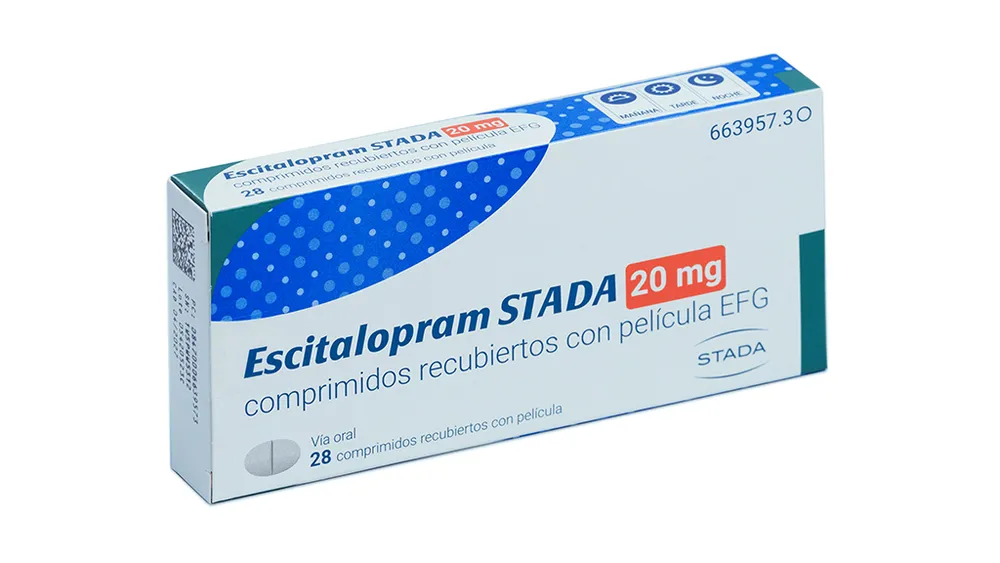
Table of Contents
- Package leaflet: Information for the user
- Introduction
- 1. What Escitalopram Stada is and what it is used for
- 2. What you need to know before taking Escitalopram Stada
- 3. How to take Escitalopram Stada
- 4. Possible adverse effects
- 5. Storage of Escitalopram Stada
- 6. Contents of the pack and other information
Package leaflet: Information for the user
Introduction
Package leaflet: Information for the user
Escitalopram Stada 20 mg film-coated tablets EFG
Read all of this leaflet carefully before you start taking this medicine because it contains important information for you.
- Keep this leaflet. You may need to read it again.
- If you have any questions, ask your doctor or pharmacist.
- This medicine has been prescribed for you only and must not be given to other people, even if they have the same symptoms as you, because it may harm them.
- If you experience any side effects, talk to your doctor or pharmacist, even if they are side effects not listed in this leaflet. See section 4.
Contents of the leaflet:
- What Escitalopram Stada is and what it is used for.
- What you need to know before taking Escitalopram Stada.
- How to take Escitalopram Stada.
- Possible side effects.
- How to store Escitalopram Stada.
- Contents of the pack and other information.
1. What Escitalopram Stada is and what it is used for
Escitalopram belongs to a group of antidepressants known as selective serotonin reuptake inhibitors (SSRIs). These medicines act on the serotonergic system in the brain by increasing the level of serotonin. Alterations in the serotonergic system are considered an important factor in the development of depression and related disorders.
Escitalopram Stada contains escitalopram and is indicated for the treatment of depression (major depressive episodes) and anxiety disorders (such as panic disorder with or without agoraphobia, social anxiety disorder, generalized anxiety disorder, and obsessive-compulsive disorder).
It may take a few weeks before you start to feel better. Continue taking Escitalopram Stada even if it takes some time before you notice any improvement.
You should consult a doctor if you get worse or do not improve.
2. What you need to know before taking Escitalopram Stada
Do not take Escitalopram Stada
- If you are allergic (hypersensitive) to escitalopram or to any of the other ingredients of this medicine (listed in section 6).
- If you are taking other medicines belonging to the group known as MAO inhibitors, including selegiline (used to treat Parkinson's disease), moclobemide (used to treat depression), and linezolid (an antibiotic).
- If you were born with or have experienced an episode of abnormal heart rhythm (detected on an ECG, a test to assess how the heart is functioning).
- If you are taking medicines for heart rhythm problems or medicines that may affect heart rhythm (see section 2 "Taking Escitalopram Stada with other medicines").
Warnings and precautions
Talk to your doctor or pharmacist before starting to take Escitalopram Stada. In particular, inform your doctor:
- if you have epilepsy. Treatment with Escitalopram Stada should be discontinued if seizures occur or you notice an increase in seizure frequency (see also section 4 “Possible side effects”).
- if you have hepatic or renal impairment. Your doctor may need to adjust your dose.
- if you have diabetes. Treatment with Escitalopram Stada may alter glycaemic control. Adjustment of insulin and/or oral hypoglycaemic agent dosage may be necessary.
- if you have low levels of sodium in your blood.
- if you are prone to bleeding or bruising easily.
- if you have a history of bleeding disorders, or if you are pregnant (see “Pregnancy, breastfeeding and fertility”).
- if you are receiving electroconvulsive therapy.
- if you have coronary artery disease.
- if you have or have previously had heart problems, or have recently had a heart attack.
- if you have a low resting heart rate and/or you know you may experience a loss of salts due to prolonged severe diarrhoea and vomiting (illness) or due to the use of diuretics.
- if you experience rapid or irregular heartbeats, fainting, collapse, or dizziness upon standing, which may indicate abnormal heart rhythm function.
- if you have or have previously had eye problems, such as certain types of glaucoma (increased pressure in the eye).
Some medicines in the group to which Escitalopram Stada belongs (called SSRIs) may cause symptoms of sexual dysfunction (see section 4). In some cases, these symptoms persist after stopping treatment.
Please note:
Some patients with bipolar disorder may enter a manic phase. This is characterized by unusual and rapid changes in thinking, excessive happiness, and excessive physical activity. If you experience this, contact your doctor.
Symptoms such as restlessness or difficulty sitting or standing still may also occur during the first few weeks of treatment. Inform your doctor immediately if you experience these symptoms.
Suicidal thoughts and worsening of depression or anxiety disorder
If you are depressed and/or suffer from an anxiety disorder, you may occasionally have thoughts about harming yourself or taking your own life. These thoughts may increase when you first start taking antidepressants, as all such medicines require time to take effect—usually about two weeks, although in some cases it may take longer.
You are more likely to have these types of thoughts:
- If you have previously had thoughts about harming or killing yourself.
- If you are a young adult. Clinical trial data have shown an increased risk of suicidal behaviour in psychiatric patients under 25 years of age treated with an antidepressant.
If at any time you have thoughts about harming or killing yourself, contact your doctor or go directly to a hospital.
It may be helpful for you to tell a family member or close friend that you are depressed or have an anxiety disorder and ask them to read this leaflet. You may ask them whether they think your depression or anxiety disorder has worsened, or if they are concerned about changes in your behaviour.
Children and adolescents
Escitalopram Stada should not normally be used in the treatment of children and adolescents under 18 years of age. Also, you should know that in patients under 18 years of age, there is an increased risk of adverse effects such as suicide attempts, suicidal ideation, and hostility (predominantly aggression, confrontational behaviour, and irritability) when taking this type of medicine. Nevertheless, your doctor may prescribe Escitalopram Stada to patients under 18 years of age if they decide it is the most appropriate treatment. If your doctor has prescribed Escitalopram Stada to a patient under 18 years of age and you wish to discuss this decision, please return to your doctor. You must inform your doctor if any of the symptoms described above worsen or complications arise while patients under 18 years of age are taking Escitalopram Stada. In addition, the long-term effects on safety, as well as on growth, maturation, and cognitive and behavioural development with Escitalopram Stada in this age group have not yet been established.
Taking Escitalopram Stada with other medicines
Tell your doctor or pharmacist if you are taking, have recently taken, or might need to take any other medicines.
Inform your doctor if you are taking any of the following medicines:
- "Non-selective monoamine oxidase inhibitors (MAOIs)" containing phenelzine, iproniazid, isocarboxazide, nialamide, or tranylcypromine as active ingredients. If you have taken any of these medicines, you must wait 14 days before starting Escitalopram Stada. After stopping Escitalopram Stada, 7 days must pass before starting any of these medicines.
- "Reversible selective MAO-A inhibitors" containing moclobemide (used to treat depression).
- "Irreversible MAO-B inhibitors" containing selegiline (used to treat Parkinson's disease). These increase the risk of side effects.
- The antibiotic linezolid.
- Lithium (used to treat bipolar disorder) and tryptophan.
- Imipramine and desipramine (both used to treat depression).
- Sumatriptan and similar medicines (used to treat migraine) and tramadol (used for severe pain). These increase the risk of side effects.
- Cimetidine, lansoprazole, and omeprazole (used to treat stomach ulcers), fluconazole (used to treat fungal infections), fluvoxamine (an antidepressant), and ticlopidine (used to reduce the risk of stroke). These may cause increased blood levels of Escitalopram Stada.
- St. John’s wort (Hypericum perforatum) – a herbal remedy used for depression.
- Acetylsalicylic acid and non-steroidal anti-inflammatory drugs (medicines used to relieve pain or reduce the risk of thrombosis, also known as anticoagulants). These may increase the tendency to bleed.
- Warfarin, dipyradimole, and phenprocoumon (medicines used to reduce the risk of thrombosis, also known as anticoagulants). Your doctor will likely monitor your blood clotting time at the beginning and end of treatment with Escitalopram Stada to ensure the anticoagulant dose remains appropriate.
- Mefloquine (used to treat malaria), bupropion (used to treat depression), and tramadol (used to treat severe pain), due to the possible risk of lowering the seizure threshold.
- Neuroleptics (medicines used to treat schizophrenia, psychosis) and antidepressants (tricyclic antidepressants and SSRIs), due to the possible risk of lowering the seizure threshold.
- Flecainide, propafenone, and metoprolol (used for cardiovascular conditions), desipramine, clomipramine, and nortriptyline (antidepressants), and risperidone, thioridazine, and haloperidol (antipsychotics). The dose of Escitalopram Stada may need to be adjusted.
- Medicines that reduce blood levels of potassium or magnesium, as this increases the risk of life-threatening heart rhythm disturbances.
Do not take Escitalopram Stada if you are taking medicines for heart rhythm problems or medicines that may affect heart rhythm, such as:
- Class IA and III antiarrhythmics
- Antipsychotics (e.g. phenothiazine derivatives, pimozide, haloperidol)
- Tricyclic antidepressants
- Certain antimicrobial agents (e.g. sparfloxacin, moxifloxacin, intravenous erythromycin, pentamidine, antimalarial treatments, particularly halofantrine)
- Certain antihistamines (astemizole, mizolastine)
If you have any doubts about this, contact your doctor.
Taking Escitalopram Stada with food, drinks and alcohol
Escitalopram Stada may be taken with or without food (see section 3 “How to take Escitalopram Stada”).
As with many medicines, combining Escitalopram Stada with alcohol is not recommended, although an interaction between Escitalopram Stada and alcohol is not expected.
Pregnancy, breastfeeding and fertility
If you are pregnant or breastfeeding, think you may be pregnant, or plan to become pregnant, consult your doctor or pharmacist. Do not take Escitalopram Stada during pregnancy or breastfeeding unless you and your doctor have discussed the risks and benefits involved.
If you take Escitalopram Stada during the last 3 months of pregnancy, be aware that the following effects may occur in the newborn baby: breathing difficulties, bluish skin, seizures, changes in body temperature, feeding difficulties, vomiting, low blood sugar, muscle stiffness or floppiness, exaggerated reflexes, tremors, restlessness, irritability, lethargy, constant crying, drowsiness, and difficulty sleeping. If your newborn baby shows any of these symptoms, please contact your doctor immediately.
Ensure your midwife and/or doctor know that you are taking Escitalopram Stada. When taken during pregnancy, particularly during the last 3 months, medicines like Escitalopram Stada may increase the risk of a serious condition in the newborn called persistent pulmonary hypertension of the newborn (PPHN), causing the baby to breathe faster and develop a bluish skin tone. These symptoms usually appear within the first 24 hours after birth. If this occurs, contact your midwife and/or doctor immediately.
If you take escitalopram late in pregnancy, there may be an increased risk of heavy vaginal bleeding shortly after delivery, especially if you have a history of bleeding disorders. Your doctor or midwife should be aware that you are taking escitalopram so they can advise you appropriately.
If Escitalopram Stada is used during pregnancy, it should never be stopped abruptly.
Escitalopram Stada is expected to be excreted in breast milk.
Citalopram, a medicine similar to escitalopram, has shown reduced sperm quality in animal studies. Theoretically, this could affect fertility, although no effect on human fertility has been observed.
Consult your doctor or pharmacist before using any medicine.
Driving and using machines
It is advised not to drive or operate machinery until you know how Escitalopram Stada affects you.
This medicine contains sodium
This medicine contains less than 1 mmol of sodium (23 mg) per coated tablet; i.e., essentially "sodium-free".
3. How to take Escitalopram Stada
Follow exactly the dosage instructions for this medicine as prescribed by your doctor. If you have any doubts, consult your doctor or pharmacist again.
Adults
Depression
The normally recommended dose of Escitalopram Stada is 10 mg taken as a single daily dose. Your doctor may increase this up to a maximum of 20 mg per day.
Panic disorder
The initial dose of Escitalopram Stada is 5 mg as a single daily dose for the first week before increasing the dose to 10 mg per day. Your doctor may subsequently increase the dose up to a maximum of 20 mg per day.
Social anxiety disorder
The normally recommended dose of Escitalopram Stada is 10 mg taken as a single daily dose. Your doctor may reduce your dose to 5 mg per day or increase the dose up to a maximum of 20 mg per day, depending on how you respond to the medication.
Generalized anxiety disorder
The normally recommended dose of Escitalopram Stada is 10 mg taken as a single daily dose.
The dose may be increased by your doctor up to a maximum of 20 mg per day.
Obsessive-compulsive disorder
The recommended dose of Escitalopram Stada is 10 mg taken as a single daily dose.
The dose may be increased by your doctor up to a maximum of 20 mg per day.
Elderly patients
The recommended initial dose of Escitalopram Stada is 5 mg taken as a single daily dose. The dose may be increased by the doctor to 10 mg/day.
Use in children and adolescents
Escitalopram Stada should not normally be given to children and adolescents. For further information, please see section 2 “What you need to know before taking Escitalopram Stada”.
You may take Escitalopram Stada with or without food. Swallow the tablets with water. Do not chew them, as they have a bitter taste.
If necessary, you may split the tablets by placing the tablet on a flat surface with the score line facing upwards. The tablets can be broken by pressing down on each end of the tablet with both index fingers.
Duration of treatment
It may take a few weeks before you start to feel better. Continue taking Escitalopram Stada even if you start to feel better before the expected time.
Do not change the dose of the medicine without first speaking to your doctor.
Continue taking Escitalopram Stada for the length of time recommended by your doctor. If you stop treatment too early, symptoms may return. It is recommended that treatment continues for at least 6 months after you feel well again.
If you take more Escitalopram Stada than you should
If you take more Escitalopram Stada than prescribed, contact your doctor immediately, go to the nearest hospital emergency department, or contact the Toxicology Information Service at telephone number 915.620.420, stating the medication and the amount ingested. Do this even if you do not observe discomfort or signs of poisoning. Some of the signs of overdose may include dizziness, tremor, agitation, seizures, coma, nausea, vomiting, changes in heart rate, decreased blood pressure, and disturbances in the body's fluid and electrolyte balance. Take the Escitalopram Stada packaging with you if you go to the doctor or hospital.
If you forget to take Escitalopram Stada
Do not take a double dose to make up for missed doses. If you forget to take a dose and remember before going to bed, take it immediately. The next day, continue as usual. If you remember during the night or the following day, skip the missed dose and continue as usual.
If you stop taking Escitalopram Stada
Do not stop treatment with Escitalopram Stada until your doctor tells you to. When you have completed your course of treatment, it is generally recommended that the dose of Escitalopram Stada be gradually reduced over several weeks.
When you stop taking Escitalopram Stada, especially if abruptly, you may experience withdrawal symptoms. These are common when treatment with Escitalopram Stada is discontinued. The risk is higher when Escitalopram Stada has been used for a long time, at high doses, or when the dose is reduced too quickly. Most people find that these symptoms are mild and disappear on their own within two weeks. However, in some patients they may be severe or prolonged (2–3 months or more). If you experience severe withdrawal symptoms when stopping Escitalopram Stada, please contact your doctor. He or she may ask you to resume taking your tablets and taper off more slowly.
Withdrawal symptoms include: dizziness (unstable or loss of balance), tingling sensations, burning sensations, and (less frequently) electric shock-like sensations, even in the head; sleep disturbances (overly vivid dreams, nightmares, inability to sleep); restlessness; headache; dizziness (nausea); sweating (including night sweats); feelings of unease or agitation; tremor (shakiness); feelings of confusion or disorientation; feelings of emotional distress or irritability; diarrhea (loose stools); visual disturbances; rapid heartbeat or palpitations.
If you have any further questions about the use of this medicine, ask your doctor or pharmacist.
4. Possible adverse effects
Like all medicines, this medicine can cause adverse effects, although not everyone will experience them.
Adverse effects usually disappear after a few weeks of treatment. Please be aware that many of these effects may be symptoms of your illness and will therefore improve as you start to feel better.
Visit your doctor if you experience any of the following adverse effects during treatment:
Uncommon (may affect up to 1 in 100 people):
- Unusual bleeding, including gastrointestinal bleeding.
Rare (may affect up to 1 in 1,000 people):
- If you notice swelling of the skin, tongue, lips or face, or have difficulty breathing or swallowing (allergic reaction), contact your doctor or go to hospital immediately.
- If you have high fever, agitation, confusion, tremors, and sudden muscle contractions, these may be signs of a rare condition called serotonin syndrome. If you feel this way, contact your doctor immediately.
If you experience the following adverse effects, you must contact your doctor or go to hospital immediately:
Frequency not known (cannot be estimated from available data):
- Difficulty urinating.
- Seizures (fits), see section “Warnings and precautions”.
- Yellowing of the skin and whites of the eyes, which are signs of liver function impairment/hepatitis.
- Fast or irregular heartbeat, fainting, symptoms which may indicate a life-threatening condition known as Torsade de Pointes.
- Thoughts of harming yourself or thoughts of suicide, see also section “Warnings and precautions”.
In addition to the above, the following adverse effects have been reported:
Very common (may affect more than 1 in 10 people):
- Feeling dizzy (nausea).
- Headache.
Common (may affect up to 1 in 10 people):
- Nasal congestion or runny nose (sinusitis).
- Decreased or increased appetite.
- Anxiety, restlessness, abnormal dreams, difficulty falling asleep, feeling drowsy, dizziness, yawning, tremors, skin itching.
- Diarrhea, constipation, vomiting, dry mouth.
- Increased sweating.
- Muscle and joint pain (arthralgia and myalgia).
- Sexual disturbances (delayed ejaculation, erection problems, decreased sexual drive; women may experience difficulty achieving orgasm).
- Fatigue, fever.
- Weight gain.
Uncommon (may affect up to 1 in 100 people):
- Hives, skin rash, itching (pruritus).
- Teeth grinding, restlessness, nervousness, panic attacks, confusion.
- Sleep disturbances, taste disturbances, fainting (syncope).
- Dilated pupils (mydriasis), visual disturbances, ringing in the ears (tinnitus).
- Hair loss.
- Excessive menstrual bleeding.
- Irregular menstrual periods.
- Weight loss.
- Fast heartbeat.
- Swelling of arms and legs.
- Nosebleeds.
Rare (may affect up to 1 in 1,000 people):
- Aggression, depersonalization, hallucinations.
- Slow heartbeat.
Some patients have reported (frequency cannot be estimated from available data):
- Decreased sodium levels in the blood (symptoms include dizziness, malaise, muscle weakness or confusion).
- Dizziness upon standing due to low blood pressure (orthostatic hypotension).
- Abnormal liver function tests (increased liver enzymes in the blood).
- Movement disorders (involuntary muscle movements).
- Painful erections (priapism).
- Bleeding disorders including skin and mucosal bleeding (ecchymosis) and low platelet counts in the blood (thrombocytopenia).
- Sudden swelling of the skin or mucous membranes (angioedema).
- Increased urine production (inappropriate ADH secretion).
- Milk discharge in women who are not breastfeeding.
- Mania.
- An increased risk of bone fractures has been observed in patients treated with this type of medicine.
- Changes in heart rhythm (known as “prolongation of the QT interval”, seen on an ECG, the heart's electrical activity).
- Heavy vaginal bleeding shortly after childbirth (postpartum hemorrhage), see “Pregnancy, breastfeeding and fertility” in section 2 for more information.
In addition, other adverse effects are known to occur with medicines that act similarly to escitalopram (the active substance in Escitalopram STADA). These include:
- Motor restlessness (akathisia).
- Anorexia.
Reporting of adverse effects:
If you experience any adverse effect, consult your doctor or pharmacist, even if it is a possible adverse effect not listed in this leaflet. You can also report them directly via the Spanish Pharmacovigilance System for Human Medicines: https://www.notificaram.es. By reporting adverse effects, you can help provide more information on the safety of this medicine.
5. Storage of Escitalopram Stada
Keep this medicine out of the sight and reach of children.
This medicine does not require any special storage conditions.
Do not use this medicine after the expiry date stated on the packaging after EXP. The expiry date is the last day of the month indicated.
This medicine does not require any special storage conditions.
Medicines must not be disposed of via wastewater or household waste. Dispose of unused medicines and their containers at the SIGRE collection point at your pharmacy. Ask your pharmacist how to dispose of medicines and containers you no longer need. This will help protect the environment.
6. Contents of the pack and other information
Composition of Escitalopram Stada
The active substance is escitalopram. Each tablet contains 20 mg of escitalopram (as oxalate).
The other components are:
Core: microcrystalline cellulose (E 460), sodium croscarmellose (E 468), colloidal anhydrous silica, and magnesium stearate (E 470b).
Coating: hypromellose (E 464), titanium dioxide (E 171), and macrogol 400.
Appearance of the product and contents of the pack
Escitalopram Stada is available as 20 mg film-coated tablets. The tablets are described below:
Escitalopram Stada 20 mg are film-coated, oval tablets (approximately 11.6 x 7.1 mm), white, with a score line on one side. The tablets can be divided into equal doses.
Escitalopram Stada 20 mg is available in the following pack sizes:
Blister packs containing 10, 14, 20, 28, 30, 50, 56, 60, 98, 100, 120 or 200 tablets.
Only some pack sizes may be marketed.
Marketing Authorization Holder and Manufacturer
Marketing Authorization Holder
Laboratorio STADA, S.L.
Frederic Mompou, 5
08960 Sant Just Desvern
(Barcelona)
Manufacturer
STADA Arzneimittel AG,
Stadastraße 2 – 18,
61118 Bad Vilbel,
Germany
or
Clonmel Healthcare Ltd,
Waterford Road,
Clonmel, Co. Tipperary,
Ireland
or
LAMP SANPROSPERO S.p.A.,
Via della Pace, 25/A,
41030 San Prospero (Modena),
Italy
or
HBM Pharma s.r.o.
Sklabinská 30
036 80 Martin
Slovak Republic
or
STADA Arzneimittel GmbH,
Muthgasse 36/2,
1190 Vienna,
Austria
or
Sanico NV,
Veedijk 59,
2300 Turnhout,
Belgium
or
DRAGENOPHARM APOTHEKER PÜSCHL GMBH
Göllstrasse, 1 (Tittmoning),
D-84529
Germany
or
ITC Farma S.R.L
Via Pontina KM 29
00071 Pomezia (RM)
Italy
or
Delorbis Pharmaceuticals LTD.
17 Athinon Street,
Ergates Industrial Area,
Ergates, Lefkosia, 2643
Cyprus
This medicinal product is authorized in the Member States of the European Economic Area under the following names:
Austria Escitalopram STADA 20 mg Filmtabletten
Belgium Escitalopram EG 20 mg filmomhulde tabletten
Denmark Escitalopram Stada
Spain Escitalopram STADA 20 mg film-coated tablets EFG
France ESCITALOPRAM EG 20 mg, comprimé pelliculé sécable
Germany Escitalopram AL 20 mg Filmtabletten
Ireland Etaloporo 20 mg film-coated tablets
Iceland Escitalopram STADA 20 mg filmuhúðuð tafla
Italy ESCITALOPRAM EG 20 mg
Luxembourg Escitalopram EG 20 mg comprimés pelliculés
Portugal Escitalopram Ciclum
Sweden Escitalopram STADA filmdragerade tabletter 20 mg
Date of the most recent review of this leaflet: June 2024
Detailed and up-to-date information on this medicinal product is available on the website of the Spanish Agency for Medicines and Health Products (AEMPS) http://www.aemps.gob.es/