Erleada 240 mg film-coated tablets
Spain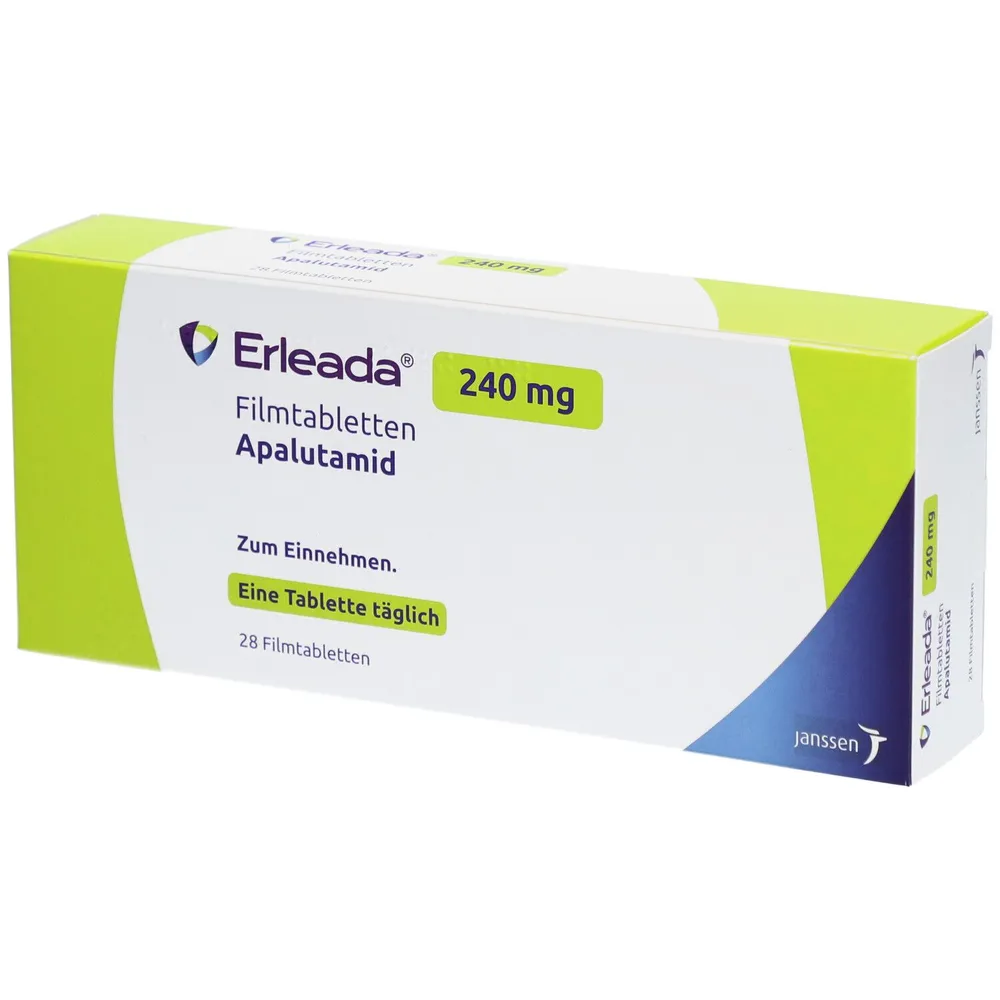
Table of Contents
Package leaflet: Information for the user
Introduction
Package leaflet: information for the user
Erleada 240 mg film-coated tablets
apalutamide
Read the entire leaflet carefully before you start taking this medicine, because it contains important information for you.
- Keep this leaflet; you may need to read it again.
- If you have any questions, ask your doctor or pharmacist.
- This medicine has been prescribed for you only, and you should not give it to others, even if they have the same symptoms as you, because it may harm them.
- If you experience any adverse effects, consult your doctor or pharmacist, even if they are adverse effects not listed in this leaflet. See section 4.
Leaflet contents
- What Erleada is and what it is used for
- What you need to know before taking Erleada
- How to take Erleada
- Possible side effects
- How to store Erleada
- Contents of the pack and other information
1. What Erleada is and what it is used for
What Erleada is
Erleada is a cancer medicine that contains the active substance apalutamide.
What Erleada is used for
It is used to treat adult men with prostate cancer that:
- has spread to other parts of the body and still responds to medical or surgical treatments that reduce testosterone levels (also called hormone-sensitive prostate cancer).
- has not spread to other parts of the body and no longer responds to medical or surgical treatments that reduce testosterone levels (also called non-metastatic castration-resistant prostate cancer).
How Erleada works
Erleada works by blocking the activity of hormones called androgens (such as testosterone). Androgens can cause prostate cancer to grow. By blocking the effect of androgens, apalutamide stops prostate cancer cells from growing and dividing.
2. What you need to know before taking Erleada
Do not take Erleada
- if you are allergic to apalutamide or any of the other ingredients of this medicine (listed in section 6);
- if you are a woman who is pregnant or could become pregnant (for more information, see the section on Pregnancy and contraception below).
Do not take this medicine if any of the above apply to you. If you are not sure, consult your doctor or pharmacist before taking this medicine.
Warnings and precautions
Talk to your doctor or pharmacist before starting this medicine if:
- you have ever had epileptic fits or seizures.
- you are taking any medicine to prevent blood clots (such as warfarin, acenocoumarol).
- you have any heart or blood vessel disease, including problems with heart rhythm (arrhythmia).
- you have ever had a widespread rash, high body temperature, and enlarged lymph nodes (drug reaction with eosinophilia and systemic symptoms or DRESS) or severe skin rash, skin peeling, blisters and/or mouth ulcers (Stevens-Johnson syndrome/toxic epidermal necrolysis or SJS/TEN) after taking Erleada or other related medicines.
If any of the above apply to you (or you are not sure), consult your doctor or pharmacist before taking this medicine.
Falls and bone fractures
Falls have been observed in patients taking Erleada. Take special precautions to reduce the risk of falling. Bone fractures have been observed in patients taking this medicine.
Heart disease, stroke, or mini-stroke
Some people have experienced blockage of the arteries to the heart or part of the brain, which may be fatal, during treatment with Erleada.
Your doctor will monitor you for signs and symptoms of heart or brain problems during treatment with this medicine.
Call your doctor or go immediately to the nearest emergency center if you experience:
- chest pain or discomfort at rest or during activity, or
- shortness of breath, or
- muscle weakness/paralysis anywhere in the body, or
- difficulty speaking.
If you are taking any medicine, talk to your doctor or pharmacist to see if they are associated with an increased risk of seizures, bleeding, or heart problems.
Severe cutaneous adverse reactions (SCARs)
Cases of severe cutaneous adverse reactions (SCARs), including drug reaction with eosinophilia and systemic symptoms (DRESS) or Stevens-Johnson syndrome/toxic epidermal necrolysis (SJS/TEN), have been reported with the use of Erleada. DRESS may present as a widespread rash, high body temperature, and enlarged lymph nodes. SJS/TEN may initially appear on the trunk as red, target-like spots or circular patches that often have central blisters. In addition, mouth, throat, nose, genital, and eye ulcers (red, swollen eyes) may occur. These severe skin rashes are often preceded by fever and/or flu-like symptoms. The rashes may progress to widespread skin peeling and potentially life-threatening or fatal complications.
If you develop a severe rash or any of these skin symptoms, stop taking this medicine immediately and contact your doctor or seek medical help right away.
If any of the above apply to you (or you are not sure), consult your doctor or pharmacist before taking this medicine. See the section “Serious adverse reactions” in section 4 for more information.
Children and adolescents
This medicine must not be used in children or adolescents under 18 years of age.
If a child or young person accidentally takes this medicine:
- go immediately to the hospital
- bring this leaflet with you to show the emergency doctor.
Other medicines and Erleada
Tell your doctor or pharmacist if you are taking, have recently taken, or might need to take any other medicines, as Erleada may affect how other medicines work. Likewise, other medicines may affect how Erleada works.
Specifically, inform your doctor if you are taking medicines for:
- lowering blood lipid levels (such as gemfibrozil)
- treating bacterial infections (such as moxifloxacin, clarithromycin)
- treating fungal infections (such as itraconazole, ketoconazole)
- treating HIV infection (such as ritonavir, efavirenz, darunavir)
- treating anxiety (such as midazolam, diazepam)
- treating epilepsy (such as phenytoin, valproic acid)
- treating gastroesophageal reflux disease (conditions with too much acid in the stomach) (such as omeprazole)
- preventing blood clots (such as warfarin, clopidogrel, dabigatran etexilate)
- treating pollen allergy and allergies (such as fexofenadine)
- lowering cholesterol levels (such as "statins" like rosuvastatin, simvastatin)
- treating heart problems or lowering blood pressure (such as digoxin, felodipine)
- treating heart rhythm problems (such as quinidine, disopyramide, amiodarone, sotalol, dofetilide, ibutilide)
- treating thyroid disorders (such as levothyroxine)
- treating gout (such as colchicine)
- lowering blood sugar (such as repaglinide)
- treating cancer (such as lapatinib, methotrexate)
- treating opioid dependence or pain (such as methadone)
- treating serious mental illnesses (such as haloperidol)
You should make a list of the names of all medicines you are taking and show it to your doctor or pharmacist when starting a new medicine. Inform your doctor that you are taking Erleada if your doctor plans to start any new treatment. It may be necessary to adjust the dose of Erleada or of any other medicines you are taking.
Information on pregnancy and contraception for men and women
Information for women
- Pregnant women, women who could become pregnant, or women who are breastfeeding must not take Erleada. This medicine may harm the unborn baby.
Information for men: follow these recommendations during treatment and for 3 months after stopping it
- If you have sexual intercourse with a pregnant woman: use a condom to protect the unborn baby.
- If you have sexual intercourse with a woman who could become pregnant: use a condom and another highly effective method of contraception.
Use contraception during treatment and for 3 months after stopping treatment. Consult your doctor if you have any questions about contraception.
This medicine may reduce male fertility.
Driving and use of machines
Erleada is unlikely to affect your ability to drive or use any tools or machines.
A side effect of this medicine is seizures. If you have an increased risk of seizures (see Section 2, ‘Warnings and precautions’), consult your doctor.
Erleada contains sodium
This medicine contains less than 1 mmol of sodium (23 mg) per 240 mg dose (1 tablet), which is essentially "sodium-free".
3. How to take Erleada
Follow exactly your doctor's instructions on how to take this medicine. If in doubt, consult your doctor or pharmacist again.
Your doctor may prescribe other medications while you are taking Erleada.
How much to take
The recommended dose of this medicine is 240 mg (one tablet) once daily.
How to take Erleada
- Take this medicine by mouth.
- You may take this medicine with food or between meals.
- Swallow the tablet whole to ensure you receive the full dose. Do not crush or split the tablet.
If you cannot swallow the tablet whole
-
If you are unable to swallow this medicine whole, you may:
-
Mix it with one of the following non-carbonated beverages or soft foods: orange juice, green tea, apple sauce, or drinkable yogurt, as follows:
-
Place the whole tablet in a cup. Do not crush or split the tablet.
-
Add approximately 10 mL (2 teaspoons) of non-carbonated water to completely cover the tablet.
-
Wait 2 minutes until the tablet breaks apart and disperses, then stir the mixture.
-
Add 30 mL (6 teaspoons or 2 tablespoons) of one of the following non-carbonated beverages or soft foods: orange juice, green tea, apple sauce, or drinkable yogurt, and stir the mixture.
-
Swallow the mixture immediately.
-
Rinse the cup with enough water to ensure you take the complete dose and drink it immediately.
-
Do not store the medicine/food mixture for later use.
-
Feeding tube: This medicine can also be administered through certain feeding tubes. Ask your doctor to instruct you exactly how to properly administer the tablet through a feeding tube.
If you take more Erleada than you should
If you take more than you should, stop taking this medicine and contact your doctor immediately.
You may have an increased risk of experiencing side effects.
If you forget to take Erleada
If you forget to take this medicine, take the usual dose as soon as you remember on the same day.
-
If you forget to take this medicine all day, take the usual dose the next day.
-
If you forget to take this medicine for more than one day, consult your doctor immediately.
-
Do not take a double dose to make up for forgotten doses.
If you stop taking Erleada
Do not stop taking this medicine without first consulting your doctor.
If you have any further questions about the use of this medicine, ask your doctor or pharmacist.
4. Possible adverse effects
Like all medicines, this medicine can cause adverse effects, although not everyone experiences them.
Serious adverse effects
Stop taking Erleada and seek immediate medical attention if you notice any of the following symptoms:
- widespread rash, high body temperature, and enlarged lymph nodes (drug reaction with eosinophilia and systemic symptoms or DRESS)
- flat, red, target-like or circular skin patches on the trunk, often with central blisters, skin peeling, and ulcers in the mouth, throat, nose, genitals, and eyes. These severe skin rashes may be preceded by fever and flu-like symptoms (Stevens-Johnson syndrome, toxic epidermal necrolysis).
Inform your doctor immediately if you experience any of the following serious adverse effects; your doctor may decide to discontinue treatment:
Very common: may affect more than 1 in 10 people
- falls or fractures (broken bones). Your doctor may monitor you more closely if you are at risk of fractures.
Common: may affect up to 1 in 10 people
- heart disease, stroke, or mini-stroke. Your doctor will monitor you for signs and symptoms of heart or brain problems during treatment. Call your doctor or go immediately to the nearest emergency room if you experience chest pain or discomfort at rest or with activity, shortness of breath, or if you develop muscle weakness/paralysis anywhere in the body or difficulty speaking during treatment with Erleada.
Uncommon: may affect up to 1 in 100 people
- epileptic seizure or convulsion. Your doctor will discontinue treatment with this medicine if you have a seizure during treatment.
Inform your doctor immediately if you notice any of the serious adverse effects listed above.
Side effects include
Inform your doctor immediately if you notice any of the following adverse effects:
Very common (may affect more than 1 in 10 people):
- feeling very tired
- joint pain
- skin rash
- decreased appetite
- high blood pressure
- hot flushes
- diarrhea
- bone fractures
- falls
- weight loss
Common (may affect up to 1 in 10 people):
- muscle spasms
- itching
- hair loss
- change in taste sensation
- blood tests showing high levels of cholesterol in the blood
- blood tests showing high levels of a type of fat known as "triglycerides" in the blood
- heart disease
- stroke or mini-stroke caused by insufficient blood flow to part of the brain
- underactive thyroid gland, which may make you feel more tired and sluggish in the mornings; an underactive thyroid can also be detected in blood tests
Uncommon (may affect up to 1 in 100 people):
- seizure/attack
Frequency not known (frequency cannot be estimated from available data):
- abnormal heart activity on an ECG (electrocardiogram)
- widespread rash, high body temperature, and enlarged lymph nodes (drug reaction with eosinophilia and systemic symptoms or DRESS)
- flat, red, target-like or circular skin patches on the trunk, often with central blisters, skin peeling, and ulcers in the mouth, throat, nose, genitals, and eyes, which may be preceded by fever and flu-like symptoms. These severe skin rashes may be potentially life-threatening (Stevens-Johnson syndrome, toxic epidermal necrolysis)
Inform your doctor immediately if you experience any of the adverse effects listed above.
Reporting of adverse effects
If you experience any type of adverse effect, consult your doctor or pharmacist, even if it is a possible adverse effect not listed in this leaflet. You may also report them directly through the national reporting system listed in Appendix V. By reporting adverse effects, you can help provide more information on the safety of this medicine.
5. Storage of Erleada
Keep this medicine out of the sight and reach of children.
Do not use this medicine after the expiry date stated on the packaging (blister, inner carton, outer carton, bottle, and box) after EXP. The expiry date is the last day of the month indicated.
Store in the original packaging to protect from moisture. This medicine does not require any special storage temperature.
Medicines must not be disposed of via wastewater or household waste. Ask your pharmacist how to dispose of medicines and packaging that you no longer need. This will help protect the environment.
6. Contents of the pack and other information
Composition of Erleada
- The active substance is apalutamide. Each film-coated tablet contains 240 mg of apalutamide.
- The other components of the tablet core are colloidal anhydrous silica, sodium croscarmellose, hypromellose acetate succinate, magnesium stearate and silicified microcrystalline cellulose. The film coating contains glycerol monocaprylocaprate, black iron oxide (E172), poly(vinyl alcohol), talc, titanium dioxide (E171) and poly(ethylene glycol) grafted poly(vinyl alcohol) copolymer (see Section 2, Erleada contains sodium).
Appearance of the product and contents of the pack
Erleada film-coated tablets are film-coated, bluish-grey to grey, oval-shaped tablets (21 mm long by 10 mm wide), with “E240” engraved on one side.
The tablets are available in a bottle or in a carton. Only certain pack sizes may be marketed.
Bottle
The tablets are supplied in a plastic bottle with a child-resistant closure. Each bottle contains 30 tablets and a total of 2 g of desiccant. Each carton contains one bottle. Keep in the original packaging. Do not ingest or discard the desiccant.
28-day pack
Each 28-day pack contains 28 film-coated tablets in 2 cardboard trays, each containing 14 film-coated tablets.
30-day pack
Each 30-day pack contains 30 film-coated tablets in 3 cardboard trays, each containing 10 film-coated tablets.
Marketing Authorisation Holder
Janssen-Cilag International NV
Turnhoutseweg 30
B-2340 Beerse
Belgium
Manufacturer
Janssen Cilag SpA
Via C. Janssen
Borgo San Michele
Latina 04100, Italy
More information on this medicinal product is available upon request to the local representative of the Marketing Authorisation Holder:
Belgium/Belgium/Belgium Janssen-Cilag NV Tel/Tel: +32 14 64 94 11 | Lithuania UAB "JOHNSON & JOHNSON" Tel: +370 5 278 68 88 |
| Luxembourg/Luxembourg Janssen-Cilag NV Tel/Tel: +32 14 64 94 11 |
Czech Republic Janssen-Cilag s.r.o. Tel.: +420 227 012 227 | Hungary Janssen-Cilag Kft. Tel.: +36 1 884 2858 |
Denmark Janssen-Cilag A/S Tlf: +45 4594 8282 | Malta AM MANGION LTD. Tel: +356 2397 6000 |
Germany Janssen-Cilag GmbH Tel: +49 2137 955 955 | Netherlands Janssen-Cilag B.V. Tel: +31 76 711 1111 |
Estonia UAB "JOHNSON & JOHNSON" Estonia branch Tel: +372 617 7410 | Norway Janssen-Cilag AS Tlf: +47 24 12 65 00 |
| Austria Janssen-Cilag Pharma GmbH Tel: +43 1 610 300 |
Spain Janssen-Cilag, S.A. Tel: +34 91 722 81 00 | Poland Janssen-Cilag Polska Sp. z o.o. Tel.: +48 22 237 60 00 |
France Janssen-Cilag Tel: 0 800 25 50 75 / +33 1 55 00 40 03 | Portugal Janssen-Cilag Farmacêutica, Lda. Tel: +351 214 368 600 |
Croatia Johnson & Johnson S.E. d.o.o. Tel: +385 1 6610 700 | Romania Johnson & Johnson România SRL Tel: +40 21 207 1800 |
Ireland Janssen Sciences Ireland UC Tel: 1 800 709 122 | Slovenia Johnson & Johnson d.o.o. Tel: +386 1 401 18 00 |
Iceland Janssen-Cilag AB c/o Vistor hf. Sími: +354 535 7000 | Slovakia Johnson & Johnson, s.r.o. Tel: +421 232 408 400 |
Italy Janssen-Cilag SpA Tel: 800.688.777 / +39 02 2510 1 | Finland Janssen-Cilag Oy Tel/Tel: +358 207 531 300 |
| Sweden Janssen-Cilag AB Tfn: +46 8 626 50 00 |
Latvia UAB "JOHNSON & JOHNSON" Latvia branch Tel: +371 678 93561 | United Kingdom (Northern Ireland) Janssen Sciences Ireland UC Tel: +44 1 494 567 444 |


Date of the most recent review of this leaflet:
Other sources of information
Detailed information on this medicinal product is available on the website of the European Medicines Agency: http://www.ema.europa.eu/, and on the website of the Spanish Agency of Medicines and Medical Devices (AEMPS) (http://www.aemps.gob.es/).