Eptadone 5 mg/ml oral solution
Spain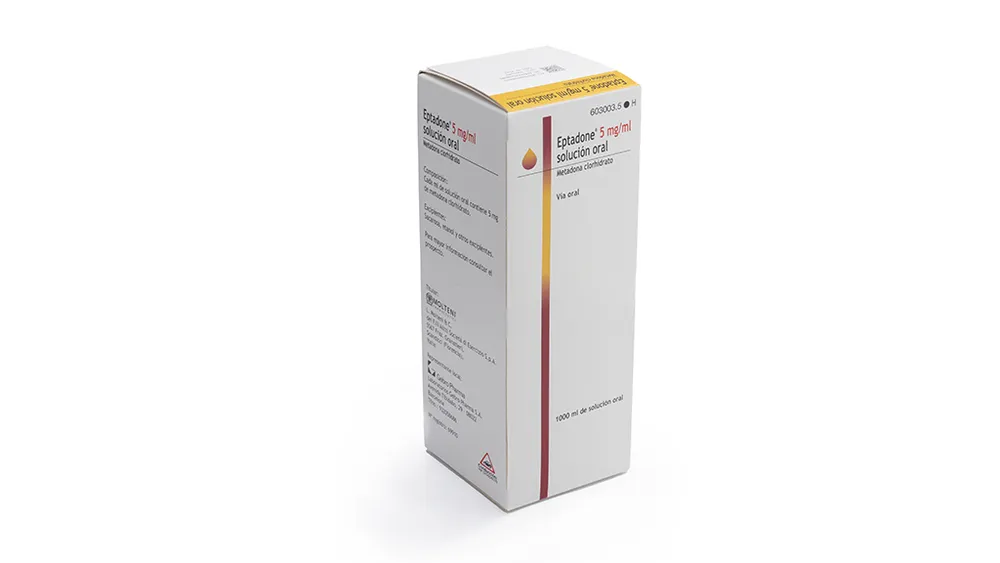
Table of Contents
- Package leaflet: Information for the user
- Introduction
- 1. What Eptadone 5 mg/ml oral solution is and what it is used for
- 2. What you need to know before taking Eptadone 5 mg/ml oral solution
- 3. How to take Eptadone 5 mg/ml oral solution
- 4. Possible adverse effects
- 5. Storage of Eptadone 5mg/ml oral solution
- 6. Contents of the pack and other information
Package leaflet: Information for the user
Introduction
Package leaflet: information for the patient
Eptadone 5 mg/ml oral solution
Metadone hydrochloride
Read the entire leaflet carefully before you start taking this medicine, because it contains important information for you.
- Keep this leaflet, as you may need to read it again.
- If you have any questions, ask your doctor or pharmacist.
- This medicine has been prescribed for you only, and you must not pass it on to other people, even if they have the same symptoms, as it may harm them.
- If you experience any adverse effects, consult your doctor or pharmacist, even if they are adverse effects not listed in this leaflet. See section 4.
Contents of the leaflet:
- What Eptadone 5 mg/ml oral solution is and what it is used for
- What you need to know before taking Eptadone 5 mg/ml oral solution
- How to take Eptadone 5 mg/ml oral solution
- Possible side effects
- Storage of Eptadone 5 mg/ml oral solution
- Contents of the pack and other information
1. What Eptadone 5 mg/ml oral solution is and what it is used for
Eptadone contains a medicine called methadone, which belongs to a group of medicines that act on the nervous system like morphine and diamorphine (also known as heroin). These are sometimes known as "opioids". Eptadone is a liquid medicine intended for drinking, which must only be taken by the oral route.
Eptadone is used:
- to treat addiction to drugs such as morphine or heroin (opioids). It works as a substitute for the addictive substances, but is less addictive
2. What you need to know before taking Eptadone 5 mg/ml oral solution
Do not take Eptadone:
- If you are allergic to methadone hydrochloride or any of the other ingredients of this medicine (listed in section 6).
- If you are addicted to medicines that are not opioids like morphine or heroin ("opioid" medicines).
- If you have had respiratory or lung problems, currently or in the past.
- If you are expecting to go into labour.
Warnings and precautions
Talk to your doctor or pharmacist before starting Eptadone:
- If you have kidney problems.
- If you have liver problems.
- If you have a severe headache or have recently had a head injury.
- If you have been diagnosed with increased intracranial pressure.
- If you have heart problems, such as irregular heartbeat.
- If you have low blood pressure.
- If you have been diagnosed with underactive thyroid gland.
- If you have been diagnosed with overactive adrenal glands.
- If you are a man with prostate problems.
- If you are over 65 years old.
- If you regularly feel unwell.
Talk to your doctor or pharmacist if you experience any of the following symptoms while taking Eptadone:
- Weakness, fatigue, loss of appetite, nausea, vomiting, or low blood pressure. These may be signs that your adrenal glands are producing very low levels of cortisol hormone, and you may need to take a hormonal supplement.
Long-term use may cause a decrease in sex hormone levels and an increase in prolactin hormone. Consult your doctor if you experience symptoms such as reduced libido, impotence, or absence of menstruation (amenorrhea).
Contact your doctor if you experience severe upper abdominal pain that may radiate to the back, nausea, vomiting, or fever, as these could be symptoms associated with inflammation of the pancreas (pancreatitis) or the biliary system.
Tolerance, dependence, and addiction
This medicine contains an opioid medicine called methadone. Repeated use of opioids may reduce the effectiveness of the medicine (your body becomes accustomed to the medicine, known as tolerance). Repeated use of Eptadone may also lead to dependence, abuse, and addiction, which could result in potentially fatal overdose.
Dependence or addiction may make you feel that you no longer have control over how much medicine you need to take or how often.
The risk of becoming dependent or addicted varies from person to person. You may have a higher risk of becoming dependent or addicted to Eptadone if:
- You or a family member has a history of alcohol, prescription medicine, or illicit substance abuse or dependence ("addiction").
- You are a smoker.
- You have previously had mood disorders (depression, anxiety, or personality disorder) or have received psychiatric treatment for other mental illnesses.
If you notice any of the following signs while taking Eptadone, it could indicate that you have become dependent or addicted:
- You need to take the medicine for longer than recommended by your doctor.
- You need higher doses than recommended.
- You are using the medicine for reasons other than prescribed, e.g., "to calm down" or "to help you sleep".
- You have made repeated unsuccessful attempts to stop or control your use of the medicine.
- You feel unwell when you stop taking the medicine and feel better when you take it again ("withdrawal symptoms").
If you notice any of these signs, talk to your doctor to discuss the most appropriate treatment strategy for your case, including when it is appropriate to stop taking Eptadone and how to do so safely (see section 3 “If you stop taking Eptadone”).
Sleep-related breathing disorders
Eptadone may cause sleep-related breathing disorders such as sleep apnoea (pauses in breathing during sleep) and sleep-related hypoxemia (low blood oxygen levels). Symptoms may include breathing pauses during sleep, waking up at night due to shortness of breath, difficulty maintaining sleep, or excessive daytime sleepiness. If you or someone else notices these symptoms, contact your doctor. Your doctor may consider reducing your dose.
Children and adolescents
This medicine is contraindicated in children.
Use in athletes:
This medicine contains methadone, which may result in a positive doping test.
Other medicines and Eptadone
Tell your doctor or pharmacist if you are taking, have recently taken, or might need to take any other medicines. Eptadone may affect how some medicines work. Also, other medicines may affect how Eptadone works.
Do not take this medicine and consult your doctor if you are taking:
- Medicines for depression called MAOIs (monoamine oxidase inhibitors) or if you have taken them within the last 2 weeks. MAOIs include medicines such as moclobemide, phenelzine, and tranylcypromine.
Consult your doctor if you are taking any of the following medicines:
- Medicines for fungal infections such as fluconazole, itraconazole, or ketoconazole.
- Medicines for epilepsy such as barbiturates, phenytoin, or carbamazepine.
- Medicines for diarrhoea such as loperamide or co-phenotrope.
- Medicines that acidify the urine such as ammonium chloride.
- Medicines used to block the effects of opioids such as naltrexone.
- Medicines used to treat addiction such as buprenorphine.
- Medicines for depression such as fluoxetine, paroxetine, sertraline, nefazodone, or fluvoxamine.
- Medicines for HIV such as nevirapine, delavirdine, didanosine, stavudine, zidovudine, ritonavir, abacavir, or efavirenz.
- Antibiotics such as rifampicin, clarithromycin, or erythromycin.
- Strong painkillers such as morphine, butorphanol, nalbuphine, pentazocine.
- Naloxone, used to reverse the effects of opioid medicines.
- Octreotide, used to treat certain types of cancer and to reduce secretions.
- Verapamil, used for heart problems.
- "Cannabinoids" used for pain, such as dronabinol and nabilone.
- Metamizole, a medicine used to treat pain and fever.
- Cannabidiol (a medicine used to treat seizures).
- Gabapentin and pregabalin (medicines used to treat epilepsy, nerve pain, or anxiety). These may increase the risk of opioid overdose, respiratory depression (difficulty breathing), and may be potentially fatal.
- Medicines to calm you, called benzodiazepines, such as diazepam or flunitrazepam. The concomitant use of Eptadone and sedative medicines such as benzodiazepines or related medicines increases the risk of drowsiness, difficulty breathing (respiratory depression), coma, and may be potentially fatal. For this reason, concomitant use should only be considered when no other treatment options are possible. However, if your doctor prescribes Eptadone together with sedative medicines, your doctor should limit the dose and duration of concomitant treatment. Inform your doctor about all sedative medicines you are taking and follow your doctor's dosage recommendations carefully. It may be helpful to inform friends or family members about the signs and symptoms mentioned above. Contact your doctor if you experience these symptoms.
The risk of side effects increases if methadone is taken simultaneously with antidepressants (such as citalopram, duloxetine, escitalopram, fluoxetine, fluvoxamine, paroxetine, sertraline, venlafaxine, amitriptyline, clomipramine, imipramine, nortriptyline). Consult your doctor if you experience symptoms such as:
- Changes in mental state (e.g., restlessness, hallucinations, coma)
- Rapid pulse, unstable blood pressure, fever
- Increased reflexes, lack of coordination, muscle stiffness
- Gastrointestinal symptoms (e.g., nausea, vomiting, diarrhoea)
If you are unsure whether any of the above points apply to you, consult your doctor or pharmacist before taking Eptadone.
Use of Eptadone with food, drinks, and alcohol
Do not drink alcohol while taking this medicine. Alcohol may increase the side effects of methadone. Do not drink grapefruit juice while taking this medicine. Grapefruit juice may alter the effect of methadone.
Pregnancy, breastfeeding, and fertility
If you are pregnant or breastfeeding, think you may be pregnant, or plan to become pregnant, consult your doctor or pharmacist before using this medicine.
Pregnancy:
- Do not take Eptadone if you are expecting to go into labour.
Some studies have reported congenital malformations or neurodevelopmental problems (issues related to early development) in children born to mothers who used methadone during pregnancy to treat opioid addiction. However, it is not possible to determine whether this is due to methadone use or other factors such as maternal health and social and environmental conditions associated with opioid addiction.
Breastfeeding:
- Talk to your doctor if you are breastfeeding or planning to breastfeed while taking methadone, as it may affect your baby. Small amounts may pass into breast milk.
- Monitor your baby for any abnormal signs or symptoms such as increased drowsiness (more than usual), difficulty breathing, or floppiness. Seek immediate medical attention if you notice any of these symptoms.
Driving and using machines:
- You must not drive or operate machinery while taking Eptadone. Your ability to handle such machinery will be impaired. This will occur while you are taking the medicine and also for some time afterwards.
- Only start driving or using tools or machinery when your doctor tells you it is safe to do so.
Eptadone contains:
- 0.1% ethanol (alcohol); this small amount corresponds to 0.0002 ml per mg.
- This medicine contains sucrose. If your doctor has informed you that you have an intolerance to certain sugars, consult with him before taking this medicine. Patients with diabetes should be aware that this medicine contains 40 g of sucrose per 100 ml.
3. How to take Eptadone 5 mg/ml oral solution
Follow exactly the instructions given by your doctor for taking this medicine. If in doubt, consult your doctor or pharmacist again.
The dosage must be individualized, so your doctor will determine the appropriate dose for you and make any necessary adjustments.
- Do not take more or less than the prescribed dose.
- Do not take it more or less frequently than instructed.
- Do not take it for longer than prescribed by your doctor.
- Take this medicine by mouth.
- The concentration of this liquid is 5 milligrams in each milliliter.
If you feel that the effect of Eptadone is too strong or too weak, inform your doctor or pharmacist.
For substance dependence
- The usual dose is initially 10 to 30 mg (2 to 6 ml) daily, increasing as needed to 40–60 mg (8–12 ml) per day over the course of 1 to 2 weeks. This will depend on how the medicine affects you.
- The maintenance dose is around 60/100 mg per day.
- Always take the dose prescribed by your doctor.
If you take more Eptadone than you should
In case of overdose or accidental ingestion, contact the Toxicology Information Service at telephone number 915 620 420, indicating the medicine and the amount taken.
The following effects may occur:
- breathing problems
- drowsiness, feeling almost unconscious, or even loss of consciousness
- very small pupils
- cold and clammy skin
- very slow pulse
- muscle weakness
- a brain disorder (known as toxic leukoencephalopathy)
In extreme cases, your breathing or blood circulation may stop, and you may have a heart attack.
Low blood sugar levels may occur.
If you forget to take Eptadone
If you miss a dose, do not take the medicine when you remember.
Wait until it is time for your next dose and take only one dose. Do not take a double dose to make up for missed doses.
If you stop taking Eptadone
Do not stop taking Eptadone without first consulting your doctor.
You may experience side effects. If you need to stop taking Eptadone, your doctor will gradually taper your dose.
If you have any further questions about the use of this medicine, ask your doctor or pharmacist.
4. Possible adverse effects
Like all medicines, this medicine can cause adverse effects, although not everyone experiences them.
The following criteria have been used to classify the frequency of adverse reactions:
Very common (may affect more than 1 in 10 people)
Common (may affect up to 1 in 10 people)
Uncommon (may affect up to 1 in 100 people)
Rare (may affect up to 1 in 1,000 people)
Very rare (may affect up to 1 in 10,000 people)
Frequency not known (cannot be estimated from the available data)
The following adverse effects may occur with this medicine:
Common (may affect up to 1 in 10 people)
- breathing problems
- headache, feeling of weakness, drowsiness, confusion, difficulty sleeping, feeling nervous or irritable, or mood changes, sensation of emptiness in the head
- vision problems or pupils becoming smaller (miosis)
- dizziness (nausea), vomiting, constipation, dry mouth, or loss of appetite
- slower heart rate or irregular heartbeats (palpitations)
- difficulty urinating
- loss of sexual desire or sexual impotence
- excessive sweating, facial flushing, itching, and edema
Uncommon (may affect up to 1 in 100 people)
- low blood pressure and dizziness (especially when standing up)
- fainting (syncope)
Rare (may affect up to 1 in 1,000 people)
- extreme weakness leading to cardiac arrest
- changes in a test called electrocardiogram or ECG
- internal bleeding
- high levels in the blood of a hormone called prolactin
- respiratory arrest
- hemorrhagic urticaria
- shock
Frequency not known (cannot be estimated from the available data)
- low blood sugar level
- you may become dependent on Eptadone (for further information, see section 2 “Warnings and precautions”)
- sleep apnoea (breathing pauses during sleep)
- symptoms associated with inflammation of the pancreas (pancreatitis) and of the biliary system (a condition affecting the intestinal valve known as Oddi sphincter dysfunction), for example, severe pain in the upper abdomen that may radiate to the back, nausea, vomiting, or fever.
You may notice that some of these adverse effects decrease in intensity over time.
Reporting of adverse effects
If you experience any type of adverse effect, consult your doctor or pharmacist, even if it is a possible adverse effect not listed in this leaflet. You can also report them directly via the Spanish Pharmacovigilance System for Human Medicinal Products: https://www.notificaram.es. By reporting adverse effects, you can help provide more information on the safety of this medicine.
5. Storage of Eptadone 5mg/ml oral solution
Keep the bottle in the original packaging.
- Keep out of the sight and reach of children. Store this medicine in a safe and secure place, where others cannot access it. It may cause serious harm or be fatal to individuals for whom it has not been prescribed.
- Do not use this medicine after the expiry date stated on the packaging after EXP.
- Once the bottle is opened, it should be used within 12 months.
Medicines should not be disposed of via wastewater or household waste. If you are unsure how to dispose of unused medicines and packaging, please consult your pharmacist. This will help protect the environment.
6. Contents of the pack and other information
Composition of Eptadone
- The active substance is methadone hydrochloride. Each ml of Eptadone contains 5 mg of methadone hydrochloride.
- The other components (excipients) are sucrose, glycerol, citric acid monohydrate, lemon flavour (containing citropten, citral and ethanol), sodium benzoate and purified water.
Appearance of the product and contents of the pack:
Eptadone 5 mg/ml oral solution is a lemon-flavoured, clear liquid supplied in a 1000 ml multidose bottle, for oral administration only.
It comes with a dosing cup. Each bottle contains 5000 mg of methadone hydrochloride.
Marketing Authorization Holder and Manufacturer:
- Molteni & C. dei F.lli Alitti Società di Esercizio S.p.A.
SS67 Fraz. Granatieri
50018 Scandicci (Florence)
Italy
For further information about this medicinal product, please contact the local representative of the Marketing Authorization Holder:
Laboratorios Gebro Pharma, S.A.
Avenida Tibidabo nº 29
08022 Barcelona
Tel.: 93 205 86 86
Date of the most recent review of this leaflet:
April 2026
Other sources of information
Detailed information on this medicinal product is available on the website of the {Spanish Agency for Medicines and Health Products (AEMPS)} (http://www.aemps.gob.es/)