Eplerenone Pensa 25 mg film-coated tablets EFG
Spain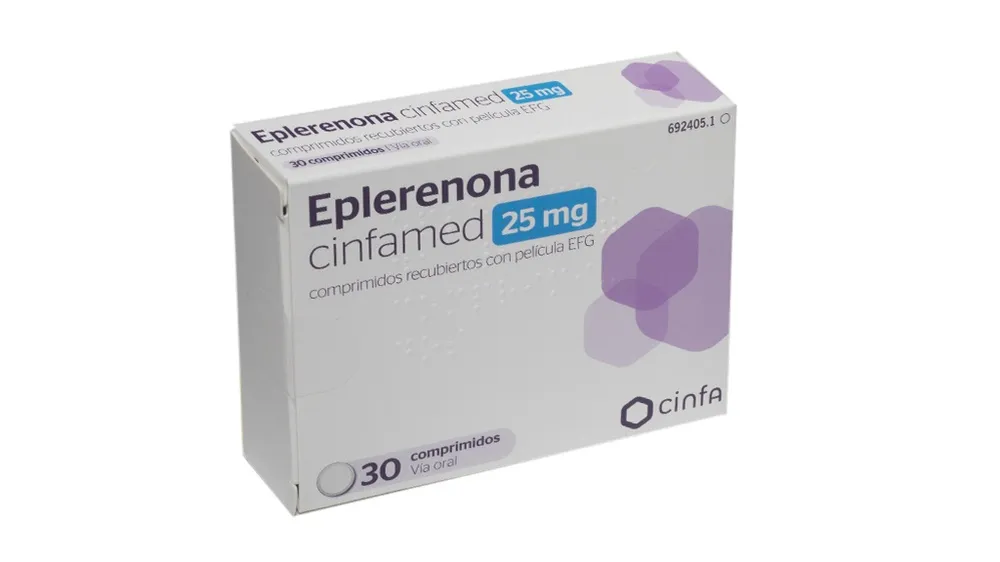
Instructions for Use
Package leaflet: Information for the user
Introduction
Package leaflet: information for the user
Eplerenone Pensa 25 mg film-coated tablets EFG
Read the entire leaflet carefully before you start taking this medicine, as it contains important information for you.
- Keep this leaflet; you may need to read it again.
- If you have any questions, ask your doctor or pharmacist.
- This medicine has been prescribed for you only; do not give it to others, even if they have the same symptoms as you, because it may harm them.
- If you experience any adverse effects, consult your doctor or pharmacist, even if such effects are not listed in this leaflet.
Contents of the leaflet
- What Eplerenone Pensa is and what it is used for
- What you need to know before taking Eplerenone Pensa
- How to take Eplerenone Pensa
- Possible adverse effects
- How to store Eplerenone Pensa
- Contents of the pack and other information
1. What Eplerenone Pensa is and what it is used for
Eplerenone Pensa belongs to a group of medicines known as selective aldosterone blockers. These blockers inhibit the action of aldosterone, a substance produced by the body that regulates blood pressure and heart function. Elevated levels of aldosterone can cause changes in your body that may lead to heart failure.
Eplerenone Pensa is used to treat heart failure to prevent worsening of the condition and reduce hospitalization in patients who have
-
recently had a myocardial infarction, in combination with other medicines used to treat their heart failure, or
-
persistent mild symptoms, despite ongoing treatment.
2. What you need to know before taking Eplerenona Pensa
Do not take Eplerenona Pensa
- If you are hypersensitive (allergic) to eplerenone or to any of the other components of Eplerenona Pensa.
- If you have high levels of potassium in your blood (hyperkalaemia).
- If you are taking medications from groups that help eliminate excess fluid from the body (potassium-sparing diuretics) or "salt tablets" (potassium supplements).
- If you have severe renal insufficiency.
- If you have severe hepatic insufficiency.
- If you are taking antifungal medications used to treat fungal infections (ketoconazole or itraconazole).
- If you are taking antiviral drugs for the treatment of HIV (ritonavir or nelfinavir).
- If you are taking antibiotics used to treat bacterial infections (clarithromycin or telithromycin).
- If you are taking nefazodone for the treatment of depression.
- If you are simultaneously taking medications used to treat certain heart conditions or hypertension (such as angiotensin-converting enzyme inhibitors (ACE inhibitors) and angiotensin receptor antagonists (ARBs)).
Warnings and precautions
Consult your doctor or pharmacist before starting to take eplerenone:
- If you have kidney or liver disease (see “Do not take Eplerenona Pensa”).
- If you are taking lithium (commonly used for manic-depressive disorders, also called bipolar disorder).
- If you are taking tacrolimus or cyclosporine (used to treat skin conditions such as psoriasis or eczema and to prevent rejection of transplanted organs).
Use of Eplerenona Pensa with other medicines
Inform your doctor or pharmacist if you are using, have recently used, or might need to use any other medicine.
Eplerenone may affect other medicines. In turn, these medicines may affect the proper functioning of eplerenone.
You must not take Eplerenona Pensa with the following medicines (see section “Do not use Eplerenona Pensa”):
-
Itraconazole or ketoconazole (used to treat fungal infections), ritonavir, nelfinavir (antiviral drugs for treating AIDS), clarithromycin, telithromycin (used to treat bacterial infections), or nefazodone (used to treat depression), as these medicines reduce the metabolism of Eplerenona Pensa, thereby prolonging its effect in the body.
-
Potassium-sparing diuretics (medicines that help eliminate excess fluid from the body) or potassium supplements (salt tablets), as these medicines increase the risk of developing high levels of potassium in the blood.
-
Angiotensin-converting enzyme inhibitors (ACE inhibitors) and angiotensin receptor antagonists (ARBs) taken together (used to treat high blood pressure, heart disease, or certain kidney diseases), as these medicines may increase the risk of developing high levels of potassium in the blood.
Inform your doctor if you are taking any of the following medicines:
- Lithium (commonly used for manic-depressive disorders, also called bipolar disorder). The use of lithium together with diuretics and ACE inhibitors (used to treat high blood pressure and heart disease) has been shown to cause excessively high levels of lithium in the blood, which may lead to the following adverse reactions: loss of appetite, visual disturbances, fatigue, muscle weakness, and muscle cramps.
- Cyclosporine or tacrolimus (used to treat skin conditions such as psoriasis or eczema and to prevent rejection of transplanted organs). These medicines may cause kidney problems and thus increase the risk of developing high levels of potassium in the blood.
- Non-steroidal anti-inflammatory drugs (NSAIDs – certain painkillers such as ibuprofen, used to relieve pain, stiffness, and inflammation). These medicines may cause kidney problems and thus increase the risk of high potassium levels in the blood.
- Trimethoprim (used to treat bacterial infections) may increase the risk of high potassium levels in the blood.
- Alpha-1 blockers, such as prazosin or alfuzosin (used to treat high blood pressure and certain prostate conditions), may lead to a decrease in blood pressure and the occurrence of dizziness upon standing.
- Tricyclic antidepressants such as amitriptyline or amoxapine (for the treatment of depression), antipsychotics (known as neuroleptics) such as chlorpromazine or haloperidol (for the treatment of psychiatric disorders), amifostine (used during cancer chemotherapy), and baclofen (used to treat muscle spasms). These medicines may lead to a decrease in blood pressure and the occurrence of dizziness upon standing.
- Glucocorticoids, such as hydrocortisone or prednisone (used to treat inflammation and certain skin diseases) and tetracosactide (mainly used to diagnose and treat adrenal cortex disorders), may reduce the blood pressure-lowering effect of Eplerenona Pensa.
- Digoxin (used in the treatment of heart conditions). Blood levels of digoxin may increase when taken together with Eplerenona Pensa.
- Warfarin (an anticoagulant medicine): Caution is required when taking warfarin, as high levels of warfarin in the blood may cause changes in the effect of Eplerenona Pensa in the body.
- Erythromycin (used to treat bacterial infections), saquinavir (antiviral drug for treating HIV infections), fluconazole (used to treat fungal infections), amiodarone, diltiazem, and verapamil (for the treatment of heart problems and high blood pressure) reduce the metabolism of Eplerenona Pensa, thereby prolonging its effect in the body.
- Hypericum perforatum or St. John's wort (herbal remedy), rifampicin (used to treat bacterial infections), carbamazepine, phenytoin, and phenobarbital (used, among others, to treat epilepsy) may increase the metabolism of Eplerenona Pensa and thus reduce its effect.
Inform your doctor or pharmacist if you are taking, have recently taken, or might need to take any other medicine.
Taking Eplerenona Pensa with food and drinks
Eplerenona Pensa may be taken with or without food.
Pregnancy and breastfeeding
The effect of Eplerenona Pensa during pregnancy has not been evaluated in humans.
It is unknown whether eplerenone is excreted in breast milk. Your doctor will decide with you whether to discontinue breastfeeding or to stop treatment.
If you are pregnant or breastfeeding, think you may be pregnant, or plan to become pregnant, consult your doctor or pharmacist before using this medicine.
Driving and use of machines
After taking Eplerenona Pensa, you may feel dizzy. If this occurs, do not drive or operate machinery.
Eplerenona Pensa contains lactose
If your doctor has informed you of an intolerance to certain sugars, consult with him before taking this medicine.
3. How to take Eplerenone Pensa
Follow exactly the instructions for administering Eplerenone Pensa as given by your doctor. Consult your doctor or pharmacist again if you have any doubts.
Eplerenone Pensa tablets should be swallowed whole, with or without food. Swallow the tablets whole with plenty of water.
Eplerenone Pensa is usually administered together with other medications for heart failure, for example, beta-blockers. The usual starting dose is one 25 mg tablet once daily, increasing after approximately 4 weeks to 50 mg daily (one 50 mg tablet or two 25 mg tablets). The maximum dosage regimen is 50 mg per day.
Blood potassium levels should be measured before starting treatment with Eplerenone Pensa, during the first week, and one month after initiating treatment or after any dose adjustment. Your doctor may adjust the dose based on your blood potassium levels.
If you have mild renal impairment, treatment should be initiated with one 25 mg tablet daily. If you have moderate renal impairment, treatment should be initiated with one 25 mg tablet every other day. These doses may be adjusted, as directed by your doctor, according to your blood potassium levels. Eplerenone Pensa is not recommended in patients with severe renal disease.
No initial dose adjustment is necessary in patients with mild to moderate hepatic impairment. If you have liver or kidney problems, you may require more frequent blood potassium monitoring (see also "Do not take Eplerenone Pensa").
In elderly patients: no initial dose adjustment is required.
In children and adolescents: Eplerenone Pensa is not recommended.
If you take more Eplerenone Pensa than you should
If you take more Eplerenone Pensa than you should, inform your doctor or pharmacist immediately. If you have taken too much medication, the most likely symptoms are low blood pressure (manifested as dizziness, blurred vision, weakness, acute loss of consciousness) or hyperkalemia, high levels of potassium in the blood (manifested by muscle cramps, diarrhea, nausea, dizziness, or headache).
In case of overdose or accidental ingestion, contact your doctor or pharmacist immediately or call the Toxicology Information Service at 91 562 04 20, indicating the medication and the amount ingested.
If you forget to take Eplerenone Pensa
If it is almost time for your next dose, skip the missed dose and take the next tablet at the scheduled time. Otherwise, take the tablet as soon as you remember, provided that more than 12 hours remain until the time of the next dose. Continue taking your medication as usual. Do not take a double dose to make up for a missed dose.
If you stop taking Eplerenone Pensa
It is important to continue taking Eplerenone Pensa as directed, unless your doctor advises you to stop treatment. If you have any further questions about the use of this medicine, ask your doctor or pharmacist.
4. Possible adverse effects
Like all medicines, Eplerenone Pensa can have adverse effects, although not everyone gets them.
If any of the following occur:
Seek immediate medical attention
- swelling of the face, tongue or throat
- difficulty swallowing
- blistering and difficulty breathing
These are symptoms of angioedema.
Other reported adverse effects include:
Common adverse effects (occur in 1 to 10 out of 100 patients):
- myocardial infarction
- high levels of potassium in the blood (these symptoms include muscle cramps, diarrhoea, nausea, dizziness or headache)
- dizziness
- fainting
- infection
- cough
- constipation
- low blood pressure
- diarrhoea
- nausea
- abnormal kidney function
- rash
- itching
- muscle spasm and pain
- increased levels of urea in the blood
Uncommon adverse effects (occur in 1 to 10 out of 1,000 patients):
- eosinophilia (increase in certain white blood cells)
- dehydration
- elevated levels of cholesterol or triglycerides (fats) in the blood
- low levels of sodium in the blood
- insomnia (difficulty sleeping)
- headache
- heart discomfort such as irregular heartbeat, rapid heartbeat and heart failure
- inflammation of the gallbladder
- drop in blood pressure which may cause dizziness upon standing
- thrombosis (blood clot) in the legs
- sore throat
- flatulence
- vomiting
- underactive thyroid gland
- increased blood glucose
- decreased sense of touch
- increased sweating
- back pain
- weakness and general malaise
- elevated levels of creatinine in the blood which may indicate kidney problems
- kidney inflammation
- breast enlargement in men
- changes in certain blood tests.
If you experience any adverse effects, consult your doctor or pharmacist, even if they are adverse effects not listed in this leaflet.
5. Storage of Eplerenone Pensa
Keep this medicine out of the sight and reach of children.
Do not use Eplerenone Pensa after the expiry date stated on the packaging after EXP. The expiry date refers to the last day of the month indicated.
No special storage conditions are required.
Medicines must not be disposed of via wastewater or household waste. Dispose of unused medicines and their containers at the SIGRE collection point at your pharmacy. If you have any doubts, ask your pharmacist how to properly dispose of unused medicines and their packaging. This will help protect the environment.
6. Contents of the pack and other information
Composition of Eplerenona Pensa
- The active substance is eplerenone. Each tablet contains 25 mg of eplerenone.
- The other components are monohydrate lactose, microcrystalline cellulose (type 101), sodium croscarmellose, hypromellose (Type 2910), microcrystalline cellulose (Type 102), sodium lauryl sulfate, talc, magnesium stearate (tablet core);
Opadry II white OY-L-28900: monohydrate lactose, hypromellose (Type 2910), titanium dioxide (E171), macrogol 4000 (tablet coating).
Appearance of the product and contents of the pack
25 mg tablet: film-coated tablets, white to almost white, round, biconvex, marked “CG3” on one side of the tablet and smooth (unmarked) on the other side.
Eplerenona Pensa 25 mg film-coated tablets EFG is available in blister packs containing 30 and 50 tablets.
Marketing Authorization Holder and Manufacturer
Marketing Authorization Holder
Towa Pharmaceutical, S.A.
C/ de Sant Martí, 75-97
08107 Martorelles (Barcelona)
Spain
Manufacturer
Laboratorios Liconsa S.A.
Avenida Miralcampo 7, Polígono Industrial Miralcampo
19200 Azuqueca de Henares, Guadalajara
Spain
Date of the most recent review of this leaflet: August 2012
Detailed information on this medicine is available on the website of the Spanish Agency of Medicines and Health Products (AEMPS) http://www.aemps.gob.es/
Similar Medications
-
Elecor 25 mg film-coated tablets
Form: tablets, film-coated
Active substance Dosage EPLERENONE 25,000 mg Manufacturer: Almirall S.A.
-
Elecor 50 mg film-coated tablets
Form: tablets, film-coated
Active substance Dosage EPLERENONE 50,000 mg Manufacturer: Almirall S.A.
-
Eplerenone Alter 25 mg film-coated tablets EFG
Form: tablets, film-coated
Active substance Dosage EPLERENONE 25.00 mg Manufacturer: Laboratorios Alter S.A.
-
Eplerenone Alter 50 mg film-coated tablets EFG
Form: tablets, film-coated
Active substance Dosage EPLERENONE 50.00 mg Manufacturer: Laboratorios Alter S.A.
-
Eplerenone Aristo 25 mg film-coated tablets EFG
Form: tablets, film-coated
Active substance Dosage EPLERENONE 25.000 mg Manufacturer: Aristo Pharma Iberia S.L.
-
Eplerenone Aurovitas Spain 25 mg film-coated tablets EFG
Form: tablets, film-coated
Active substance Dosage EPLERENONE 25 mg Manufacturer: Aurovitas Spain, S.A.U.
-
Eplerenone Aurovitas Spain 50 mg film-coated tablets EFG
Form: tablets, film-coated
Active substance Dosage EPLERENONE 50 mg Manufacturer: Aurovitas Spain, S.A.U.
-
Eplerenone Bluefish 25 mg film-coated tablets EFG
Form: tablets, film-coated
Active substance Dosage EPLERENONE 25,000 mg Manufacturer: Bluefish Pharmaceuticals Ab (Publ)
-
Eplerenone Bluefish 50 mg film-coated tablets EFG
Form: tablets, film-coated
Active substance Dosage EPLERENONE 50,000 mg Manufacturer: Bluefish Pharmaceuticals Ab (Publ)
-
Eplerenone Cinfamed 25 mg film-coated tablets EFG
Form: tablets, film-coated
Active substance Dosage EPLERENONE 25,000 mg Manufacturer: Laboratorios Cinfa S.A.
-
Eplerenone Cinfamed 50 mg film-coated tablets EFG
Form: tablets, film-coated
Active substance Dosage EPLERENONE 50,000 mg Manufacturer: Laboratorios Cinfa S.A.
-
Eplerenone Combix 25 mg film-coated tablets EFG
Form: tablets, film-coated
Active substance Dosage EPLERENONE 25,000 mg Manufacturer: Laboratorios Combix S.L.U.
This page has been machine-translated and may contain inaccuracies. The original data is available in the manufacturing country's language.
Last data check: May 18, 2026 · Data source: CIMA — AEMPS