Epidiolex 100 mg/ml oral solution
Spain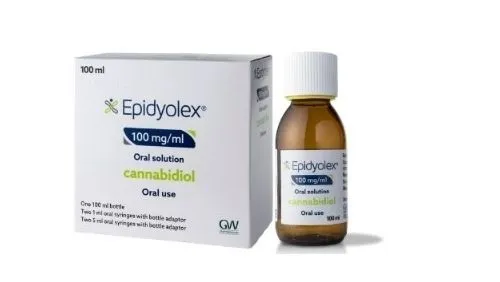
Table of Contents
- Package leaflet: Information for the user
- Introduction
- 1. What Epidyolex is and what it is used for
- 2. What you or your patient need to know before taking Epidyolex
- 3. How to take Epidyolex, either by you or your patient
- 4. Possible adverse effects
- 5. Storage of Epidyolex
- 6. Contents of the pack and other information
Package leaflet: Information for the user
Introduction
Package leaflet: information for the patient
Epidyolex 100 mg/ml oral solution
cannabidiol
Read all of this leaflet carefully before you or the patient starts taking this medicine, because it contains important information for you or the patient.
- Keep this leaflet, as you may need to read it again.
- If you have any questions, ask your doctor or pharmacist.
- This medicine has been prescribed for you or the patient only, and you must not give it to other people, even if they have the same symptoms as you or the patient, since it may harm them.
- If you experience any side effects, talk to your doctor or pharmacist, even if it is a side effect not listed in this leaflet. See section 4.
Contents of this leaflet
- What Epidyolex is and what it is used for
- What you or the patient need to know before taking Epidyolex
- How you or the patient should take Epidyolex
- Possible side effects
- How to store Epidyolex
- Contents of the pack and other information
1. What Epidyolex is and what it is used for
Epidyolex contains cannabidiol, a medicine that can be used to treat epilepsy, a condition that causes seizures or convulsions.
Epidyolex is used in combination with clobazam or with clobazam and other antiepileptic medicines to treat seizures occurring due to two rare conditions, Dravet syndrome and Lennox-Gastaut syndrome. It can be used in adults, adolescents, and children from 2 years of age.
Epidyolex is also used together with other antiepileptic medicines to treat seizures associated with a genetic disorder called tuberous sclerosis complex (TSC). It can be used in adults, adolescents, and children from 2 years of age.
2. What you or your patient need to know before taking Epidyolex
Do not take Epidyolex
- if you are allergic to cannabidiol or to any of the other ingredients of this medicine (listed in section 6).
- if your doctor determines that your liver blood tests show abnormalities.
Warnings and precautions
Talk to your doctor or pharmacist before taking Epidyolex or during treatment if:
- you have or have had liver problems, as your doctor may need to adjust the dose of Epidyolex or may decide that Epidyolex is not suitable for you.
Your doctor may carry out blood tests to monitor your liver function before starting or during treatment with this medicine, as Epidyolex may cause liver problems. If your liver is not functioning properly, treatment may need to be discontinued.
- you notice unusual changes in your mood or behaviour, or have thoughts of self-harm or suicide. Contact your doctor or go to hospital immediately (see section 4).
- Epidyolex may cause drowsiness. Do not drive, operate machinery, or engage in activities requiring alertness and adequate body control (such as cycling) until you know how Epidyolex affects you.
- you stop taking Epidyolex suddenly (see section 3).
- you experience seizures more frequently or have a severe seizure while taking Epidyolex. Contact your doctor or go to hospital immediately.
- you experience weight loss or are unable to gain weight. Your doctor will monitor your weight and assess whether continued treatment with Epidyolex is appropriate.
Children and adolescents
Epidyolex is not recommended for children under 2 years of age.
Other medicines and Epidyolex
Tell your doctor or pharmacist if you are taking, have recently taken, or might need to take any other medicines. Taking Epidyolex with certain other medicines may cause adverse effects, may affect how other medicines work, or may affect how Epidyolex works. Do not start or stop treatment with other medicines without consulting your doctor or pharmacist.
Inform your doctor if you are taking any of the following medicines, as dose adjustments may be necessary:
- other antiepileptic medicines such as carbamazepine, clobazam, lorazepam, stiripentol, and valproate, used to treat seizures;
- other medicines for the treatment of TSC (tuberous sclerosis complex), including everolimus and tacrolimus;
- medicines used to treat gastroesophageal reflux (heartburn or acid regurgitation), such as omeprazole;
- mitotane (a medicine used to treat tumours of the adrenal gland);
- morphine or diflunisal (medicines used to treat pain);
- efavirenz (a medicine used to treat HIV/AIDS);
- theophylline (a medicine used to treat asthma);
- caffeine (a medicine used in babies who need help with breathing);
- propofol (an anaesthetic used during surgery);
- simvastatin, fenofibrate, gemfibrozil (medicines used to lower cholesterol/lipids);
- enzalutamide (a medicine used to treat prostate cancer);
- St John’s wort (Hypericum perforatum), a herbal medicine used to treat mild anxiety;
- medicines used to treat bacterial infections, such as rifampicin, clarithromycin, and erythromycin.
Use of Epidyolex with food
Always take Epidyolex exactly as instructed by your doctor and consistently with or without food, including ketogenic meals (such as ketogenic diets). If you take Epidyolex with food, try to maintain a similar diet. (See also section 3: How to take Epidyolex.)
Pregnancy, breastfeeding, and fertility
If you are pregnant, think you may be pregnant, or plan to become pregnant, consult your doctor or pharmacist before using this medicine. You should not take Epidyolex during pregnancy unless your doctor decides that the benefits outweigh the possible risks. You must not breastfeed while taking Epidyolex, as Epidyolex may pass into breast milk.
Driving and using machines
Talk to your doctor about driving, using machinery, or children participating in activities such as cycling or other sports, as you or the patient may experience drowsiness after taking the medicine.
Do not drive, operate machinery, or engage in activities requiring alertness and adequate body control until it has been determined that your ability to perform such activities is not impaired.
Epidyolex contains sesame oil, alcohol (ethanol), and flavouring components including benzyl alcohol.
Epidyolex contains refined sesame oil, which may rarely cause severe allergic reactions.
Each ml of Epidyolex contains 79 mg of ethanol, equivalent to 10% v/v anhydrous ethanol, i.e. up to 691.3 mg of ethanol per maximum single dose of Epidyolex (12.5 mg/kg) for a 70 kg adult (9.9 mg of ethanol/kg). For a 70 kg adult, this is equivalent to 17 millilitres (ml) of beer or 7 ml of wine per dose. The small amount of alcohol in this medicine does not produce any noticeable effect.
This medicine contains 0.0003 mg/ml of benzyl alcohol, equivalent to 0.0026 mg per maximum dose of Epidyolex (Epidyolex 12.5 mg/kg dose for a 70 kg adult). Benzyl alcohol may cause allergic reactions.
This product should not be used for more than one week in children (under 3 years of age) unless directed by your doctor or pharmacist.
Consult your doctor or pharmacist if you are pregnant or breastfeeding. This is because large amounts of benzyl alcohol may accumulate in your body and cause adverse effects (called “metabolic acidosis”).
Consult your doctor or pharmacist if you have liver or kidney disease. This is because large amounts of benzyl alcohol may accumulate in your body and cause adverse effects (called “metabolic acidosis”).
3. How to take Epidyolex, either by you or your patient
Follow exactly the administration instructions for this medicine as given by your doctor.
If in doubt, consult your doctor or pharmacist again.
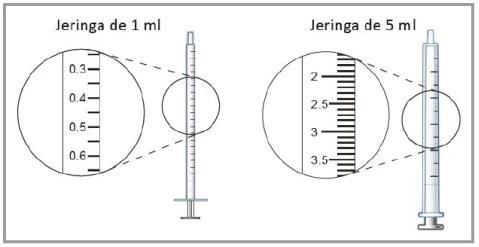
Epidyolex is an oral solution (a liquid to be swallowed). Your doctor or pharmacist will inform you of the amount of Epidyolex (number of ml) to take per day, how many times per day to take it, and which syringe to use for your dose (1 ml or 5 ml).
Your doctor will calculate the dose based on your body weight. Treatment may start with a low dose, which your doctor will gradually increase over time. Contact your doctor if you are unsure about your dose or if you think it may need to be adjusted.
Taking Epidyolex with food may increase the amount of medicine your body absorbs. You should try, as much as possible, to take Epidyolex consistently either with or without food, and in accordance with your daily routine, to achieve the same effect each time. If you take Epidyolex with food, you should consume a similar type of food (for example, with a similar fat content), if possible.
If necessary, Epidyolex can be administered via a nasogastric or gastrostomy tube. Your doctor should provide specific instructions regarding this. Consult your doctor or pharmacist if you are unsure how to proceed.
Inform your doctor if you have liver problems, as your doctor may need to adjust your dose.
Do not reduce the dose or stop treatment with this medicine unless instructed by your doctor.
Instructions for oral use of Epidyolex
The 1-bottle pack contains the following items:
- one bottle of Epidyolex oral solution
- one plastic bag containing two 1 ml oral dosing syringes and one bottle adapter
- one plastic bag containing two 5 ml oral dosing syringes and one bottle adapter
The 3-bottle pack contains the following items:
- three bottles of Epidyolex oral solution
- one plastic bag containing two 1 ml oral dosing syringes and one bottle adapter
- one plastic bag containing two 5 ml oral dosing syringes and two bottle adapters
Each pack includes one spare syringe of each size in case the first one is damaged or lost. For the 3-bottle pack, all three adapters from both syringe bags must be kept.
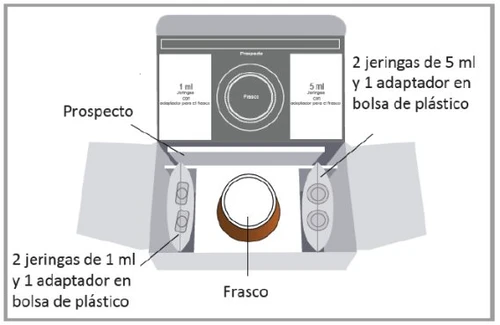
The image above is for illustrative purposes only.
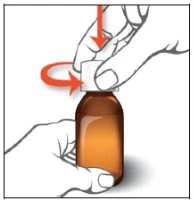
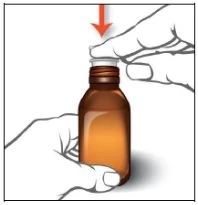
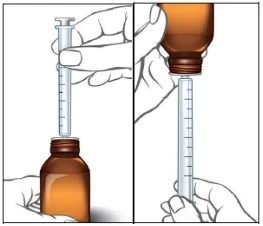
- Open the bag containing the correct oral syringe to measure your dose.
-
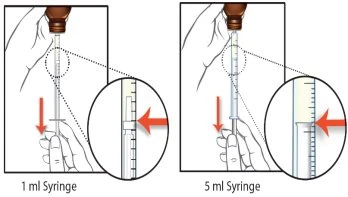
If your dose is 1 ml (100 mg) or less, you will use the smaller 1 ml syringe.
-
If your dose is more than 1 ml (100 mg), you will use the larger 5 ml syringe.
-
If your dose is more than 5 ml (500 mg), you will need to use the larger 5 ml syringe more than once. In this case, keep a careful record of how many times you fill the syringe (for example, by marking each 5 ml dose accordingly) to ensure you take the correct total dose.
It is important to use the correct oral syringe to measure your dose. Your doctor or pharmacist will tell you which syringe to use based on the dose prescribed.
According to your doctor’s or pharmacist’s instructions, the bag containing the additional syringes should be discarded, and the adapter from the pack should be discarded unless your doctor or pharmacist advises you to keep both syringes until reaching the final dose. If you are prescribed a 3-bottle pack, all three adapters must be kept.
|
| |||||||||||||||||||||||||||||
|
| |||||||||||||||||||||||||||||
|
| |||||||||||||||||||||||||||||
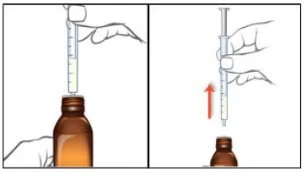
If there are any air bubbles in the syringe, return the liquid to the bottle by keeping it inverted and repeat step 5 until the air bubble is removed. |
| |||||||||||||||||||||||||||||
|
| |||||||||||||||||||||||||||||
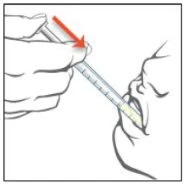
If the dose is greater than 5 mL, repeat steps 4 through 7 to administer the remaining dose using the 5 mL oral syringe. |
| |||||||||||||||||||||||||||||
|
| |||||||||||||||||||||||||||||
|
| |||||||||||||||||||||||||||||
|