Ephedrine Fresenius Kabi 10 mg/ml solution for injection
Spain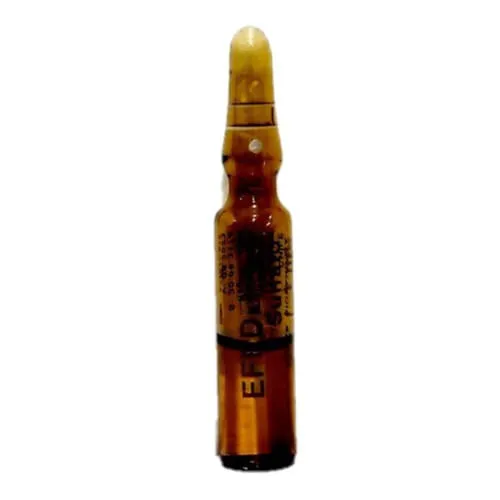
Table of Contents
- Package leaflet: Information for the user
- Introduction
- 1. What Efedrina Fresenius Kabi is and what it is used for
- 2. What you need to know before using Efedrina Fresenius Kabi
- 3. How to use Ephedrine Fresenius Kabi
- 4. Possible adverse effects
- 5. Storage of Ephedrine Fresenius Kabi
- 6. Contents of the container and other information
Package leaflet: Information for the user
Introduction
Package leaflet: information for the patient
Ephedrine Fresenius Kabi 10 mg/ml solution for injection
ephedrine hydrochloride
Read all of this leaflet carefully before you start using this medicine, because it contains important information for you.
- Keep this leaflet as you may need to read it again.
- If you have any questions, ask your doctor, pharmacist or nurse.
- If you experience any side effects, talk to your doctor, pharmacist or nurse, even if they are side effects not listed in this leaflet. See section 4.
What is in this leaflet
- What Efedrina Fresenius Kabi is and what it is used for
- What you need to know before using Efedrina Fresenius Kabi
- How to use Efedrina Fresenius Kabi
- Possible side effects
- How to store Efedrina Fresenius Kabi
- Contents of the pack and other information
1. What Efedrina Fresenius Kabi is and what it is used for
Efedrina Fresenius Kabi contains the active substance ephedrine hydrochloride.
Ephedrine belongs to a group of medicines called sympathomimetics. Sympathomimetic medicines affect the part of the nervous system that functions automatically.
This medicine is an injectable solution in ampoules used for the treatment of arterial hypotension during general and local/regional anaesthesia, either spinal or epidural, in adults and children (over 12 years of age).
This product should only be used by or under the supervision of an anaesthetist.
2. What you need to know before using Efedrina Fresenius Kabi
Your doctor will not administer Efedrina Fresenius Kabi to you if:
- You are allergic to ephedrine or to any of the other components of this medicine (listed in section 6).
- You are taking other indirect sympathomimetic agents such as phenylpropanolamine, phenylephrine, pseudoephedrine (medicines used to relieve nasal congestion) or methylphenidate (a medicine used to treat “attention deficit hyperactivity disorder (ADHD)”).
- You are taking an alpha-sympathomimetic agent (a medicine used to treat low blood pressure).
- You are currently taking or have taken a non-selective monoamine oxidase inhibitor within the last 14 days (a medicine used to treat depression).
Warnings and precautions
Talk to your doctor before using this medicine if:
- You have diabetes.
- You have heart disease or any other heart condition, including angina pectoris.
- You have weakness in the wall of a blood vessel causing a bulge (aneurysm).
- You have high blood pressure.
- You have stenosis and/or occlusion of blood vessels (occlusive vascular diseases).
- You have an overactive thyroid gland (hyperthyroidism).
- You know or suspect you may have glaucoma (increased eye pressure) or prostate enlargement (enlarged prostate gland).
- You are about to undergo surgery requiring anaesthesia.
- You are currently taking or have taken any monoamine oxidase inhibitor for depression within the last 14 days.
This medicine contains an active substance that may cause a positive anti-doping test.
Other medicines and Efedrina Fresenius Kabi
Inform your doctor, nurse, or pharmacist if you are taking, have recently taken, or might need to take any other medicines.
This information is especially important for the following medicines:
- Methylphenidate, used to treat “attention deficit hyperactivity disorder (ADHD)”.
- Other vasoconstrictors such as phenylpropanolamine or pseudoephedrine (medicines used as nasal decongestants), phenylephrine (a medicine used to treat low blood pressure).
- Alpha- and beta-adrenergic blockers (oral and/or nasal) used to treat low blood pressure or nasal congestion, among others.
- Medicines used to treat depression.
- Ergot alkaloids, a type of medicine used to treat migraine.
- Linezolid, used to treat infections.
- Guanethidine and related medicines, used to treat high blood pressure.
- Sibutramine, a medicine used as an appetite suppressant.
- Inhaled anaesthetics such as halothane.
- Medicines used to treat asthma, such as theophylline.
- Corticosteroids, a type of medicine used to reduce inflammation in a wide variety of different diseases.
- Medicines for epilepsy.
- Doxapram, a medicine used to treat breathing problems.
- Oxytocin, a medicine used during childbirth.
- Reserpine, methyldopa, and related medicines, used to treat high blood pressure.
Pregnancy and breastfeeding
If you are pregnant or breastfeeding, think you may be pregnant, or are planning to become pregnant, consult your doctor, pharmacist, or nurse before using this medicine.
During pregnancy, ephedrine should be avoided or used with caution, and only when necessary.
Depending on your condition and following your doctor's recommendations, breastfeeding may need to be interrupted for several days after administration of ephedrine.
Efedrina Fresenius Kabi contains sodium
This medicine contains 2.36 mg of sodium (main component of table/cooking salt) per ml. This corresponds to 0.12% of the maximum daily sodium intake recommended for an adult.
This medicine contains 11.8 mg of sodium (main component of table/cooking salt) in each 5 ml ampoule. This corresponds to 0.59% of the maximum daily sodium intake recommended for an adult.
3. How to use Ephedrine Fresenius Kabi
Your doctor or nurse will administer this medicine to you into a vein (intravenous route). Your doctor will determine the correct dose for you and when and how the injection should be given.
Recommended dose:
Adults and elderly patients for 10 mg/ml
A slow intravenous injection of 5 mg (maximum 10 mg) will be administered, repeated if necessary every 3-4 minutes up to a maximum of 30 mg.
The total dose must not exceed 150 mg / 24 hours.
The 10 mg/ml dose must be diluted before use.
Use in children and adolescents
- Children under 12 years
This medicine is not recommended for use in children under 12 years of age due to insufficient data on efficacy, safety, and dosage recommendations.
- Children over 12 years
The dosage and method of administration are the same as in adults.
Patients with kidney or liver disease
No dose adjustment is recommended for patients with kidney or liver disease.
If you have any further questions about the use of this medicine, ask your doctor, pharmacist, or nurse.
4. Possible adverse effects
Like all medicines, this medicine can cause adverse effects, although not everyone experiences them.
The most serious adverse effects requiring immediate medical attention are:
- abnormal heart rhythm;
- palpitations (feeling your heartbeat), high blood pressure, rapid heartbeat;
- chest pain, slow heartbeat, low blood pressure;
- heart failure (cardiac arrest);
- brain hemorrhage;
- fluid accumulation in the lungs (pulmonary edema);
- increased eye pressure (glaucoma);
- difficulty urinating.
The following is a list of other possible adverse effects that may occur.
Frequent (may affect up to 1 in 10 patients):
- confusion, anxiety, depression;
- nervousness, irritability, restlessness, weakness, insomnia, headache, sweating;
- shortness of breath;
- nausea, vomiting.
Frequency not known (cannot be estimated from available data):
- affects blood coagulation;
- allergic reaction;
- changes in personality or in the way of feeling or thinking, fear;
- tremor, excessive salivation;
- decreased appetite;
- reduction in blood potassium levels, changes in blood glucose levels.
Reporting of adverse effects
If you experience any adverse effect, consult your doctor or pharmacist, even if it is a possible adverse effect not listed in this leaflet. You may also report them directly via the Spanish Pharmacovigilance System for Human Medicines: www.notificaram.es. By reporting adverse effects, you can help provide more information on the safety of this medicine.
5. Storage of Ephedrine Fresenius Kabi
Keep this medicine out of the sight and reach of children.
Do not use this medicine after the expiry date stated on the label after “EXP”. The expiry date is the last day of the month indicated.
This medicine does not require any special storage conditions.
After opening the ampoule, the product should be used immediately; however, the undiluted solution may be stored in a syringe for up to 72 hours at 25 °C and for up to 72 hours at 2 to 8 °C.
The diluted product is stable for 72 hours at 25 °C and for 72 hours at 2 to 8 °C.
Do not use this medicine if you see particles in the solution.
Medicines must not be disposed of via wastewater or household waste. Ask your pharmacist how to dispose of medicines and containers you no longer need. This will help protect the environment.
6. Contents of the container and other information
Composition of Ephedrine Fresenius Kabi
The active substance is ephedrine hydrochloride.
Each ml of injectable solution contains 10 mg of ephedrine hydrochloride.
Each 5 ml glass ampoule contains 50 mg of ephedrine hydrochloride.
- The other components (excipients) are sodium chloride, sodium hydroxide (for pH adjustment), hydrochloric acid (for pH adjustment), and water for injections.
Appearance of the product and contents of the container
Ephedrine Fresenius Kabi is a clear, colourless to pale yellow injectable solution.
Ephedrine Fresenius Kabi 10 mg/ml solution for injection is available in 5 ml glass ampoules. Pack sizes of 5 and 10 ampoules are available.
Only certain pack sizes may be marketed.
 Marketing Authorization Holder and Manufacturer
Marketing Authorization Holder:
Fresenius Kabi España, S.A.U.
C/Marina 16-18
08005 – Barcelona
Spain
Manufacturer:
Labesfal Laboratorios Almiro S.A.
Zona Industrial Do Lagedo 3465-157 Santiago de Besteiros
Portugal
This medicinal product is authorized in the Member States of the European Economic Area and in the United Kingdom (Northern Ireland) under the following names:
Austria | Ephedrin Kabi 10 mg/ml solution for injection |
Bulgaria | Ephedrine Kabi 10 mg/ml solution for injection ??????? ???? 10 mg/ml ??????????? ??????? |
Czech Republic | Ephedrine Kabi |
Germany | Ephedrin Kabi 10 mg/ml solution for injection |
Greece | Ephedrine/Kabi 10 mg/ml ενέσιμο διάλυμα |
Spain | Ephedrine Fresenius Kabi 10 mg/ml solution for injection |
Hungary | Ephedrine Kabi 10 mg/ml oldatos injekció |
Ireland | Ephedrine hydrochloride 10 mg/ml solution for injection |
Norway | Ephedrine Kabi |
Poland | Ephedrine Kabi |
Portugal | Ephedrine Kabi |
Sweden | Ephedrine Kabi 10 mg/ml injection liquid, solution |
Slovakia | Ephedrine Kabi 10 mg/ml |
United Kingdom (Northern Ireland) | Ephedrine hydrochloride 10 mg/ml solution for injection |
Date of the most recent review of this summary of product characteristics: March 2024
Detailed information on this medicine is available on the website of the Spanish Agency of Medicines and Health Products (AEMPS) (http://www.aemps.gob.es/).
<------------------------------------------------------------------------------------------------------->
This information is intended for healthcare professionals only:
Therapeutic indication
Treatment of hypotension due to spinal, epidural, and general anesthesia.
Posology and method of administration
Concentration: 10 mg/ml
Adults
Slow intravenous injection of 5 mg (maximum 10 mg), repeated as necessary every 3–4 minutes up to a maximum of 30 mg. Lack of efficacy after 30 mg should prompt reconsideration of the choice of therapeutic agent. The total dose administered within 24 hours must not exceed 150 mg.
Paediatric population
In general, the use of Efedrina Fresenius Kabi in children is not recommended due to insufficient data on efficacy, safety, and dosing recommendations.
- Children under 12 years of age
The safety and efficacy of ephedrine have not been established in paediatric patients under 12 years of age. No data are available.
- Children over 12 years of age
The posology and method of administration are the same as in adults.
Patients with renal or hepatic impairment
Dose adjustment is not recommended in patients with renal or hepatic impairment.
Elderly patients
Same as in adults.
Method of administration
Ephedrine must be used only by or under the supervision of an anaesthetist as an intravenous injection.
The medicine must be diluted before use as appropriate (see "Preparation").
For intravenous use.
Overdose
In case of overdose, symptoms such as nausea, vomiting, fever, paranoid psychosis, ventricular and supraventricular arrhythmias, hypertension, respiratory depression, seizures, and coma may occur.
The lethal dose in humans is approximately 2 g, corresponding to blood concentrations of approximately 3.5 to 20 mg/l.
Treatment
Management of ephedrine overdose with this product may require intensive supportive treatment. A slow intravenous injection of 50 to 200 mg of labetalol with electrocardiographic monitoring may be administered for treatment of supraventricular tachycardia. Marked hypokalaemia (<2.8 mmol/l) due to transcompartmental shift of potassium predisposes to cardiac arrhythmias and can be corrected by infusion of potassium chloride, in addition to propranolol and correction of respiratory alkalosis, if present.
A benzodiazepine and/or a neuroleptic agent may be required to control central nervous system (CNS) stimulant effects.
For severe hypertension, parenteral antihypertensive options include intravenous nitrates, calcium channel blockers, sodium nitroprusside, labetalol, or phentolamine. The choice of antihypertensive agent depends on availability, concomitant conditions, and the patient's clinical status.
Preparation
For single use only.
Dilution instructions for 10 mg/ml:
Dilute the injectable solution to a final concentration of 5 mg/ml as appropriate, as described in Posology and method of administration.
Efedrina Fresenius Kabi is compatible with:
- Sodium chloride 9 mg/ml (0.9% w/v)
- Glucose 50 mg/ml (5% w/v) infusion
- Ringer Lactate infusion
Shelf life
Unopened: 3 years
Shelf life after opening the ampoule:
The product should be used immediately.
Shelf life of undiluted solution when stored in a syringe:
Chemical and physical in-use stability has been demonstrated for 72 hours at 25 °C and for 72 hours between 2 and 8 °C.
After dilution:
Chemical and physical in-use stability has been demonstrated for 72 hours at 25 °C and for 72 hours between 2 and 8 °C.
From a microbiological standpoint, the product should be used immediately. If not used immediately, the user is responsible for in-use storage times and conditions prior to use, which normally should not exceed 24 hours between 2 and 8 °C, unless dilution has taken place under strictly controlled and validated aseptic conditions.