Epclusa 400 mg/100 mg film-coated tablets
Spain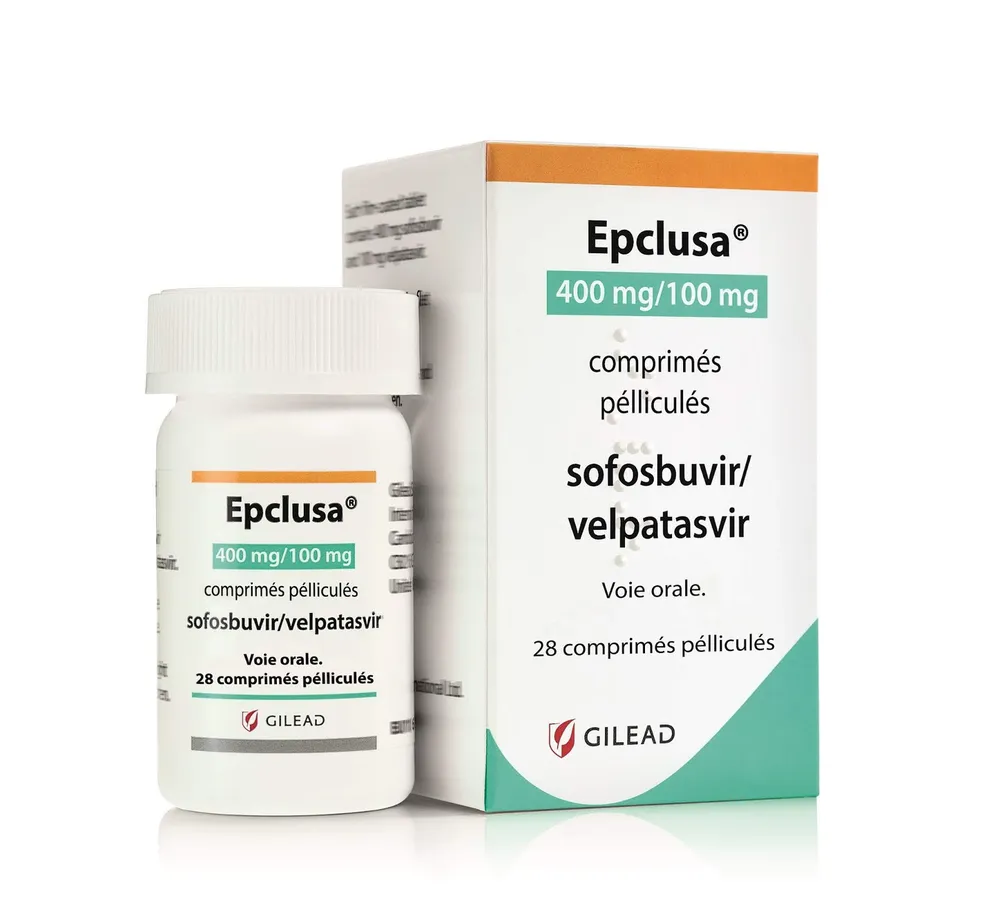
Table of Contents
Patient Information Leaflet
Introduction
Patient Information Leaflet
Epclusa 400 mg/100 mg film-coated tablets
Epclusa 200 mg/50 mg film-coated tablets
sofosbuvir/velpatasvir
This medicinal product is subject to additional monitoring, which will allow quicker identification of new safety information. You can help by reporting any side effects you may experience. Section 4 includes information on how to report side effects.
Read all of this leaflet carefully before you start taking this medicine, because it contains important information for you.
- Keep this leaflet as you may need to read it again.
- If you have any questions, ask your doctor or pharmacist.
- This medicine has been prescribed for you only and must not be given to other people, even if they have the same symptoms as you, because it may harm them.
- If you experience any side effects, talk to your doctor or pharmacist, even if they are side effects not listed in this leaflet. See section 4.
Leaflet Contents
- What Epclusa is and what it is used for
- What you need to know before taking Epclusa
- How to take Epclusa
- Possible side effects
- How to store Epclusa
- Contents of the pack and other information
If Epclusa has been prescribed for your child, please note that all information in this leaflet applies to your child (in this case, read "your child" instead of "you").
1. What Epclusa is and what it is used for
Epclusa is a medicine that contains the active substances sofosbuvir and velpatasvir in a single tablet. It is used to treat chronic (long-term) viral infection of the liver called hepatitis C in patients aged 6 years and older who weigh at least 17 kg.
The active substances in this medicine work together by blocking two different proteins that the virus needs to grow and reproduce, thereby enabling permanent elimination of the infection from the body.
Epclusa is sometimes taken together with another medicine: ribavirin.
It is very important that you also read the package leaflets of any other medicines you will be taking with Epclusa. If you have any questions about your medicines, consult your doctor or pharmacist.
2. What you need to know before taking Epclusa
Do not take Epclusa
- If you are allergic to sofosbuvir, velpatasvir, or any of the other ingredients of this
medicinal product (listed in section 6 of this leaflet).
→ If this applies to you, do not take Epclusa and inform your doctor immediately.
-
If you are currently taking any of the following medicines:
-
rifampicin and rifabutin (antibiotics used to treat infections, including tuberculosis);
-
St. John’s wort (a herbal medicine used to treat depression);
-
carbamazepine, phenobarbital, and phenytoin (medicines used to treat
epilepsy and prevent seizures).
Warnings and precautions
Talk to your doctor if:
-
- you have liver problems other than hepatitis C, for example
- you have or have previously had an infection caused by the hepatitis B virus, as your doctor may want to monitor you more closely;
- you have undergone a liver transplant
- you have kidney problems or are on dialysis, as Epclusa has not been fully studied in patients with certain severe kidney problems;
- you are receiving treatment for human immunodeficiency virus (HIV) infection, as your doctor may want to monitor you more closely.
Talk to your doctor or pharmacist before starting to take Epclusa if:
- you are currently taking or have stopped taking amiodarone, a medicine used to treat irregular heartbeat, as it may cause a potentially life-threatening slow heart rate. Your doctor may consider alternative treatments if you have taken this medicine. If treatment with Epclusa is required, you may need additional cardiac monitoring.
- you have diabetes. After starting Epclusa, you may need close monitoring of your blood glucose levels and/or adjustment of your antidiabetic medication. After starting treatment with medicines like Epclusa, some diabetic patients have experienced low blood sugar levels (hypoglycemia).
Contact your doctor immediately if you are currently taking or have taken in the past few months any medicine for heart problems and, during treatment, experience:
- slow or irregular heartbeat, or heart rhythm problems;
- shortness of breath or worsening of existing shortness of breath;
- chest pain;
- dizziness;
- palpitations;
- fainting or near-fainting.
Blood tests
Your doctor will perform blood tests before, during, and after treatment with Epclusa. This is so that:
- your doctor can decide whether you should take Epclusa and for how long;
- your doctor can confirm that the treatment has worked and that you no longer have the hepatitis C virus.
Children and adolescents
Do not give this medicine to children under 6 years of age or who weigh less than 17 kg. The use of Epclusa has not yet been studied in patients under 6 years of age.
Other medicines and Epclusa
Tell your doctor or pharmacist if you are taking, have recently taken, or might need to take any other medicines.
Warfarin and other similar medicines called vitamin K antagonists are used to thin the blood. Your doctor may increase the number of blood tests to check how well your blood is clotting.
Your liver function may change with hepatitis C treatment, and therefore may affect other medicines (e.g., medicines used to suppress your immune system, etc.). Your doctor may need to closely monitor these other medicines you are taking and make adjustments after starting treatment with Epclusa.
If you are unsure, consult your doctor or pharmacist.
Some medicines must not be taken with Epclusa.
- Do not take any other medicine containing sofosbuvir, one of the active substances in Epclusa.
Tell your doctor or pharmacist if you are taking any of the following medicines:
- amiodarone, used to treat irregular heartbeat;
- rifapentine (an antibiotic used to treat infections, including tuberculosis);
- oxcarbazepine (a medicine used to treat epilepsy and prevent seizures);
- tenofovir disoproxil fumarate or any medicine containing tenofovir disoproxil fumarate, used to treat HIV infection;
- efavirenz, used to treat HIV infection;
- digoxin, used to treat heart problems;
- dabigatran, used to thin the blood;
- modafinil, used to treat sleep disorders;
- rosuvastatin or other statins, used to treat high cholesterol levels.
Taking Epclusa with any of these medicines may prevent them from working properly or worsen their possible side effects. Your doctor may need to prescribe a different medicine or adjust the dose of the one you are taking. This change could involve Epclusa or another medicine you are taking.
-
Seek advice from a doctor or pharmacist if you take medicines used to treat stomach ulcers, heartburn, or acid reflux, as they may reduce the amount of velpatasvir in the blood. These medicines include:
-
antacids (such as aluminium/magnesium hydroxide or calcium carbonate). These medicines should be taken at least 4 hours before or 4 hours after taking Epclusa;
-
proton pump inhibitors (such as omeprazole, lansoprazole, rabeprazole, pantoprazole, and esomeprazole). Epclusa should be taken with food 4 hours before taking a proton pump inhibitor;
-
H2-receptor antagonists (such as famotidine, cimetidine, nizatidine, or ranitidine). If you require high doses of these medicines, your doctor may prescribe a different medicine instead or adjust the dose of the one you are taking.
These medicines may reduce the amount of velpatasvir in the blood. If you are taking any of these medicines, your doctor will prescribe a different medicine for stomach ulcers, heartburn, or acid reflux, or will advise you on how and when to take the medicine.
Pregnancy and contraception
The effects of Epclusa during pregnancy are unknown. If you are pregnant, think you might be pregnant, or plan to become pregnant, consult your doctor before using this medicine.
Epclusa is sometimes used together with ribavirin. Ribavirin may harm the unborn child. Therefore, it is very important that you (or your partner) do not become pregnant during this treatment and for a certain time after completing treatment. You must read the “Pregnancy” section of the ribavirin package leaflet very carefully. Ask your doctor which effective contraceptive method is suitable for you and your partner.
Breastfeeding
Do not breastfeed during treatment with Epclusa. It is unknown whether sofosbuvir or velpatasvir, the two active ingredients in Epclusa, pass into human breast milk.
Driving and using machines
Epclusa is not expected to affect your ability to drive or use tools or machinery.
3. How to take Epclusa
Follow exactly the dosing instructions for this medicine as provided by your doctor. If in doubt, consult your doctor or pharmacist again.
Recommended dose
The recommended dose of Epclusa in adults is one 400 mg/100 mg tablet once daily for 12 weeks.
The recommended dose of Epclusa in patients aged 6 to less than 18 years who weigh at least 17 kg is based on body weight. Take Epclusa according to your doctor's instructions.
Swallow the tablet(s) whole, with or without food. Do not chew, crush, or split the tablet, as it has a very bitter taste.
If you are taking an antacid, take it at least 4 hours before or at least 4 hours after taking Epclusa.
If you are taking a proton pump inhibitor, take Epclusa with food, 4 hours before taking the proton pump inhibitor.
If you vomit after taking Epclusa, this may affect the amount of Epclusa in your blood. This could reduce the effectiveness of Epclusa.
- If you vomit within 3 hours after taking Epclusa, take another tablet.
- If you vomit more than 3 hours after taking Epclusa, do not take another tablet; simply take your next scheduled dose at the regular time.
If you take more Epclusa than you should
If you accidentally take more than the recommended dose, contact your doctor or the nearest emergency department immediately for advice. Bring the medicine container with you to help describe what you have taken.
If you forget to take Epclusa
It is important not to miss any doses of this medicine.
If you miss a dose, consider how long it has been since you last took Epclusa:
- If you remember within 18 hours of your usual dosing time, take the tablet as soon as possible. Then take your next dose at the usual time.
- If 18 hours or more have passed since your usual dosing time, wait and take your next dose at the usual time. Do not take a double dose (do not take two doses together).
Do not interrupt treatment with Epclusa
Do not stop treatment with this medicine unless instructed by your doctor. It is very important to complete the full course of treatment so that the medicine can work optimally to treat hepatitis C virus infection.
If you have any further questions about the use of this medicine, ask your doctor or pharmacist.
4. Possible adverse effects
Like all medicines, this medicine can cause adverse effects, although not everyone will experience them.
Frequent adverse effects
(may affect up to 1 in 10 patients)
- rash
Uncommon adverse effects
(may affect up to 1 in 100 people)
- swelling of the face, lips, tongue, or throat (angioedema)
Other effects that may occur during treatment with sofosbuvir:
The frequency of the following adverse effects is unknown (frequency cannot be estimated from the available data).
- severe generalized rash with skin peeling, which may be accompanied by fever, flu-like symptoms, and blisters in the mouth, eyes and/or genital area (Stevens-Johnson syndrome)
→If you experience any type of adverse effect, inform your doctor.
Reporting of adverse effects
If you experience any type of adverse effect, consult your doctor or pharmacist, even if it is a possible adverse effect not listed in this leaflet. You may also report them directly through the national reporting system included in Appendix V. By reporting adverse effects, you can help provide more information on the safety of this medicine.
5. Storage of Epclusa
Keep this medicine out of the sight and reach of children.
Do not use this medicine after the expiry date stated on the bottle and the carton after "EXP". The expiry date refers to the last day of the month indicated.
No special storage conditions are required.
Medicines should not be disposed of via wastewater or household waste. Ask your pharmacist how to dispose of any unused medicines and their packaging. This will help protect the environment.
6. Contents of the container and other information
Composition of Epclusa
-
The active substances are sofosbuvir and velpatasvir. Each film-coated tablet contains either 400 mg of sofosbuvir and 100 mg of velpatasvir or 200 mg of sofosbuvir and 50 mg of velpatasvir.
-
The other components are
Tablet core:
Copovidone, microcrystalline cellulose, sodium croscarmellose, magnesium stearate.
Film coating:
Polyvinyl alcohol, titanium dioxide (E171), polyethylene glycol, talc, red iron oxide (E172).
Appearance of the product and contents of the container
Epclusa 400 mg/100 mg film-coated tablets are pink, diamond-shaped tablets, with «GSI» engraved on one side and «7916» on the other. The tablet measures 20 mm in length and 10 mm in width.
Epclusa 200 mg/50 mg film-coated tablets are pink, oval-shaped tablets, with «GSI» engraved on one side and «S/V» on the other. The tablet measures 14 mm in length and 7 mm in width.
The following pack sizes are available for both film-coated tablets; 400 mg/100 mg and 200 mg/50 mg:
- 1 bottle containing 28 film-coated tablets.
Marketing Authorization Holder
Gilead Sciences Ireland UC
Carrigtohill
County Cork, T45 DP77
Ireland
Manufacturer
Gilead Sciences Ireland UC
IDA Business & Technology Park
Carrigtohill
County Cork
Ireland
More information about this medicinal product is available upon request from the local representative of the marketing authorization holder:
Belgium/Belgium/Belgium Gilead Sciences Belgium SPRL-BVBA Tel/Tel: + 32 (0) 24 01 35 50 | Lithuania Gilead Sciences Poland Sp. z o.o. Tel: +48 22 262 8702 |
Ireland Gilead Sciences Ireland UC Tel: + 353 (0) 1 686 1888 | Luxembourg/Luxembourg Gilead Sciences Belgium SPRL-BVBA Tel/Tel: + 32 (0) 24 01 35 50 |
Czech Republic Gilead Sciences s.r.o. Tel: + 420 910 871 986 | Hungary Gilead Sciences Ireland UC Tel: + 353 (0) 1 686 1888 |
Denmark Gilead Sciences Sweden AB Tlf: + 46 (0) 8 5057 1849 | Malta Gilead Sciences Ireland UC Tel: + 353 (0) 1 686 1888 |
Germany Gilead Sciences GmbH Tel: + 49 (0) 89 899890-0 | Netherlands Gilead Sciences Netherlands B.V. Tel: + 31 (0) 20 718 36 98 |
Estonia Gilead Sciences Poland Sp. z o.o. Tel: +48 22 262 8702 | Norway Gilead Sciences Sweden AB Tlf: + 46 (0) 8 5057 1849 |
Greece Gilead Sciences Hellas MEPE Tel: + 30 210 8930 100 | Austria Gilead Sciences GesmbH Tel: + 43 1 260 830 |
Spain Gilead Sciences, S.L. Tel: + 34 91 378 98 30 | Poland Gilead Sciences Poland Sp. z o.o. Tel: + 48 22 262 8702 |
France Gilead Sciences Tel.: + 33 (0) 1 46 09 41 00 | Portugal Gilead Sciences, Lda. Tel: + 351 21 7928790 |
Croatia Gilead Sciences Ireland UC Tel: + 353 (0) 1 686 1888 | Romania Gilead Sciences Ireland UC Tel: + 353 (0) 1 686 1888 |
Ireland Gilead Sciences Ireland UC Tel: + 353 (0) 214 825 999 | Slovenia Gilead Sciences Ireland UC Tel: + 353 (0) 1 686 1888 |
Iceland Gilead Sciences Sweden AB Sími: + 46 (0) 8 5057 1849 | Slovakia Gilead Sciences Slovakia s.r.o. Tel: + 421 232 121 210 |
Italy Gilead Sciences S.r.l. Tel: + 39 02 439201 | Finland Gilead Sciences Sweden AB Puh/Tel: + 46 (0) 8 5057 1849 |
Cyprus Gilead Sciences Hellas MEPE Tel: + 30 210 8930 100 | Sweden Gilead Sciences Sweden AB Tel: + 46 (0) 8 5057 1849 |
Latvia Gilead Sciences Poland Sp. z o.o. Tel: +48 22 262 8702 | United Kingdom Gilead Sciences Ltd. Tel: + 44 (0) 8000 113 700 |
Date of the most recent review of this leaflet:
Detailed information on this medicine is available on the website of the European Medicines Agency: http://www.ema.europa.eu.