Epanutin 100 mg hard capsules
Spain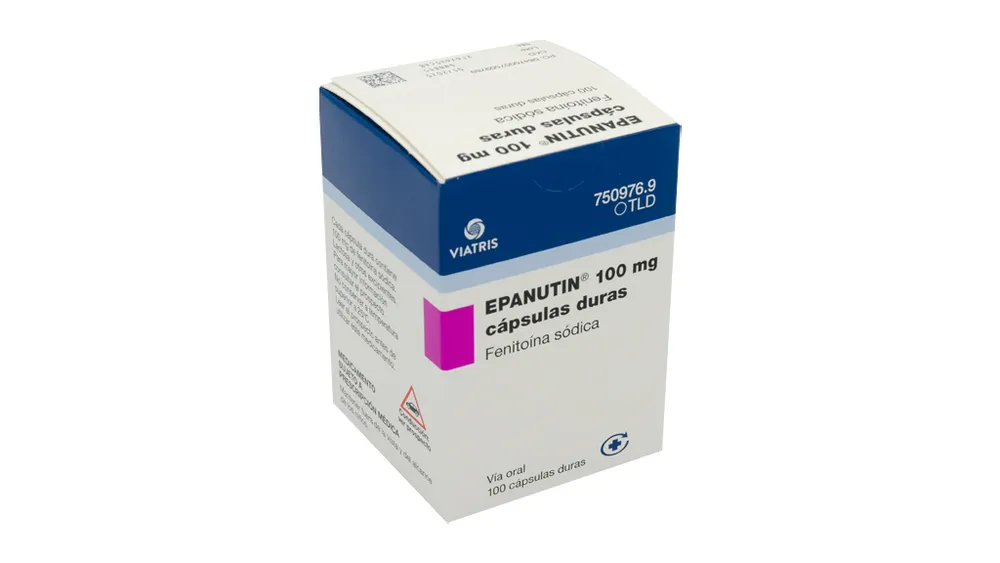
Table of Contents
Package leaflet: Information for the user
Introduction
Package leaflet: information for the user
Epanutin 100 mg hard capsules
Sodium phenytoin
Read all of this leaflet carefully before you start taking this medicine because it contains important information for you.
- Keep this leaflet, as you may need to read it again.
- If you have any questions, ask your doctor or pharmacist.
- This medicine has been prescribed for you only, and you should not give it to others, even if they have the same symptoms as you, because it may harm them.
- If you experience any adverse effects, consult your doctor or pharmacist, even if they are adverse effects not listed in this leaflet. See section 4.
Contents of the leaflet
- What Epanutin is and what it is used for
- What you need to know before taking Epanutin
- How to take Epanutin
- Possible side effects
- How to store Epanutin
- Contents of the pack and other information
1. What Epanutin is and what it is used for
Epanutin contains the active substance phenytoin.
Phenytoin belongs to a group of medicines called antiepileptics, which are used to treat epilepsy. Specifically, Epanutin is indicated for the treatment of the following types of epilepsy: generalized tonic-clonic seizures (grand mal seizures), complex partial seizures, as well as for the treatment and prevention of seizures in neurosurgery.
2. What you need to know before taking Epanutin
Do not take Epanutin
- if you are allergic to phenytoin or to any of the other ingredients of this medicine (listed in section 6).
- if you are allergic to medicines of the hydantoin type.
- if you are taking a medicine for HIV infection called delavirdine.
Warnings and precautions
Consult your doctor or pharmacist before taking Epanutin
- if you have liver or kidney disease, other serious illnesses, or are elderly. If during treatment you notice symptoms suggestive of hepatitis, such as jaundice (yellowing of the skin and whites of the eyes), you must consult your doctor immediately.
- if you have porphyria.
- if you are diabetic, as phenytoin may increase glucose levels.
- if you consume large amounts of alcohol or drink small amounts regularly.
- if you are undergoing cranial radiotherapy or reducing corticosteroid treatment.
- if you are of Taiwanese, Japanese, Malay, or Thai origin and tests have shown you carry the CYP2C9*3 mutation.
- if you are of African descent, have a suppressed immune system, or if you or a family member have previously had drug hypersensitivity syndrome (HSS) or drug reaction with eosinophilia and systemic symptoms (DRESS) (a syndrome typically presenting with fever, skin rash, lymph node swelling, and involvement of other organs such as the liver, kidneys, heart, lungs, and blood abnormalities), as you are at higher risk of developing this syndrome. If during treatment you develop fever or skin rash with swollen lymph nodes, which may be signs of drug hypersensitivity, consult your doctor immediately.
- cases of heart problems such as bradycardia (slower than normal heart rate) and asystole (cardiac arrest) have been reported, commonly associated with phenytoin toxicity. If you experience these symptoms during treatment, consult your doctor immediately.
- skin rashes that may be life-threatening (e.g., Stevens-Johnson syndrome and toxic epidermal necrolysis) have been reported with the use of Epanutin. Serious skin reactions occur rarely during treatment with phenytoin. They initially appear as red or purple spots or circular lesions, often with a central blister. Additional signs may include sores in the mouth, throat, nose, genitals, and conjunctivitis (swollen, red eyes). These potentially life-threatening skin rashes are often accompanied by flu-like symptoms. The risk may be associated with a genetic variant in some individuals of Thai or Chinese origin. If you are of this ancestry and have previously been tested and know you carry the genetic variant (HLA-B*1502), speak with your doctor before taking phenytoin. If you develop skin rashes or these symptoms, seek medical attention immediately and inform the doctor you are taking this medicine. Consult your doctor before stopping treatment with Epanutin.
- if during treatment you experience confusion (such as delirium, psychosis, etc.), which may indicate excessive phenytoin levels in the blood, consult your doctor immediately.
- a small number of people treated with antiepileptic medicines such as Epanutin have had thoughts of harming themselves or of suicide. If you experience such thoughts at any time, contact your doctor as soon as possible.
- there is a risk of fetal harm if Epanutin is used during pregnancy. Women of childbearing potential must use effective contraception during treatment with Epanutin (see “Pregnancy and breastfeeding”).
During treatment with Epanutin, it is important to maintain good oral hygiene. This helps prevent adverse effects in the mouth, such as gum enlargement.
It is very important that your doctor monitors your treatment during regular visits and performs routine blood tests to rule out blood abnormalities, monitor liver function, and occasionally to determine the most appropriate dose of Epanutin.
Cases of swelling of the face, mouth (lips, gums, tongue), and neck, which may lead to life-threatening breathing difficulties, have been reported in people receiving phenytoin treatment. If you experience any of these signs or symptoms, contact your doctor immediately.
Interference with laboratory tests:
Epanutin may interfere with certain laboratory tests you may undergo.
Phenytoin may reduce serum levels of protein-bound iodine. It may also produce lower-than-normal results in dexamethasone or metyrapone tests. Phenytoin may increase blood glucose levels or serum levels of alkaline phosphatase and gamma-glutamyl transferase (GGT), and may affect tests related to calcium and blood glucose metabolism.
Taking Epanutin with other medicines
Before using any new medicine together with Epanutin, you must consult your doctor.
Inform your doctor or pharmacist if you are taking, have recently taken, or might need to take any other medicines.
Epanutin and certain medicines may interact with each other, causing imbalances in the blood levels of both drugs.
The following is a summary of medicines that may increase phenytoin levels:
- Analgesics/anti-inflammatory drugs such as azapropazone, phenylbutazone, and salicylates.
- Anesthetics such as halothane.
- Antibiotics such as chloramphenicol, erythromycin, isoniazid, sulfadiazine, sulfametizole, sulfamethoxazole-trimethoprim, sulfaphenazole, sulfisoxazole, and sulfonamides.
- Anticonvulsants such as felbamate, oxcarbazepine, sodium valproate, succinimides, and topiramate.
- Antifungals such as amphotericin B, fluconazole, itraconazole, ketoconazole, miconazole, and voriconazole.
- Antineoplastic agents such as capecitabine and fluorouracil.
- Benzodiazepines/Psychotropics such as chlordiazepoxide, diazepam, disulfiram, methylphenidate, trazodone, and viloxazine.
- Calcium channel blockers/Cardiovascular agents such as amiodarone, dicoumarol, diltiazem, nifedipine, and ticlopidine.
- H2 antagonists such as cimetidine.
- HMG-Co reductase inhibitors such as fluvastatin.
- Hormones such as estrogens.
- Immunosuppressants such as tacrolimus.
- Oral antidiabetics such as tolbutamide.
- Proton pump inhibitors such as omeprazole.
- Serotonin reuptake inhibitors such as fluoxetine, fluvoxamine, and sertraline.
- Alcohol (acute intake).
The following is a summary of medicines that may decrease phenytoin levels:
- Antibiotics such as ciprofloxacin and rifampicin.
- Anticonvulsants such as vigabatrin.
- Antineoplastic agents such as bleomycin, carboplatin, cisplatin, doxorubicin, and methotrexate.
- Antiulcer agents such as sucralfate.
- Antiretrovirals: fosamprenavir, nelfinavir, and ritonavir.
- Bronchodilators such as theophylline.
- Cardiovascular agents such as reserpine.
- Folic acid.
- Hyperglycemic agents such as diazoxide.
- St. John’s wort.
- Alcohol (chronic intake).
- Calcium-containing preparations, including some antacids.
The following is a summary of medicines that may either increase or decrease phenytoin levels:
- Antibiotics such as ciprofloxacin.
- Anticonvulsants such as carbamazepine, phenobarbital, sodium valproate, and valproic acid.
- Antineoplastic agents.
- Psychotropics such as chlordiazepoxide, diazepam, and phenothiazines.
The following is a summary of drugs whose blood levels and/or effects may be altered by phenytoin administration. (Not all medicines are listed below. Consult your doctor or pharmacist):
- Antibiotics such as doxycycline, rifampicin, and tetracycline.
- Oral anticoagulants such as warfarin, apixaban, dabigatran, edoxaban, and rivaroxaban.
- Anticonvulsants such as carbamazepine, lacosamide, lamotrigine, phenobarbital, sodium valproate, and valproic acid.
- Antifungals of the azole family, such as posaconazole and voriconazole.
- Anthelmintics such as albendazole and praziquantel.
- Antineoplastic agents such as teniposide.
- Antiplatelet agents such as ticagrelor.
- Antiretrovirals such as delavirdine, efavirenz, fosamprenavir, indinavir, lopinavir/ritonavir, nelfinavir, ritonavir, and saquinavir.
- Bronchodilators such as theophylline.
- Calcium channel blockers/Cardiovascular agents such as digitoxin, digoxin, disopyramide, mexiletine, nicardipine, nimodipine, nisoldipine, quinidine, and verapamil.
- Corticosteroids.
- Cyclosporine.
- Diuretics such as furosemide.
- HMG-Co reductase inhibitors such as atorvastatin, fluvastatin, and simvastatin.
- Hormones such as estrogens and oral contraceptives.
- Hyperglycemic agents such as diazoxide.
- Immunosuppressants.
- Neuromuscular blockers such as alcuronium, cisatracurium, pancuronium, rocuronium, and vecuronium.
- Opioid analgesics such as methadone.
- Oral antidiabetics such as chlorpropamide, glyburide, and tolbutamide.
- Psychotropics/antidepressants such as clozapine, paroxetine, quetiapine, and sertraline.
- Vitamin D.
- Folic acid.
Some medicines used to treat depression (tricyclic antidepressants) may trigger seizures in certain patients, so your doctor may decide to adjust your phenytoin dose.
Taking Epanutin with food, drinks, and alcohol
Acute alcohol intake may increase phenytoin levels, while chronic alcohol intake may decrease them. Therefore, you should not consume alcohol during treatment with Epanutin.
If you are receiving enteral nutrition and/or nutritional supplements, you may have lower than expected plasma levels of phenytoin. Therefore, it is recommended that phenytoin not be administered at the same time as enteral nutrition and/or vitamin supplements. Your doctor may need to monitor your blood levels of the medicine.
Pregnancy, breastfeeding, and fertility
If you are pregnant or breastfeeding, think you may be pregnant, or plan to become pregnant, consult your doctor or pharmacist before using this medicine.
Consult your doctor if you are pregnant or wish to become pregnant; they will inform you of the potential risks to you and your baby. Epanutin should only be given to pregnant women if, in the doctor’s judgment, the expected benefit to the mother outweighs any possible risk to the fetus.
Epanutin may cause serious congenital malformations. If you take Epanutin during pregnancy, your baby has up to 3 times higher risk of congenital malformations than babies born to women who do not take an antiepileptic medicine. Serious congenital malformations have been reported, such as abnormalities in growth, skull, face, nails, fingers, and heart. Some of these may occur together as part of a fetal hydantoin syndrome.
Neurological development problems (brain development) have been reported in babies born to mothers who used phenytoin during pregnancy. Some studies have shown that phenytoin negatively affects neurological development in children exposed in utero, although other studies have not found such an effect. A possible effect on neurological development cannot be ruled out.
If you are a woman of childbearing potential and not planning to become pregnant, you must use an effective contraceptive method during treatment with Epanutin. Epanutin may affect how hormonal contraceptives, such as the oral contraceptive pill, work and make them less effective in preventing pregnancy. Consult your doctor, who will discuss with you the most appropriate type of contraception to use while taking Epanutin.
If you are a woman of childbearing potential and planning to become pregnant, consult your doctor before stopping contraception and before becoming pregnant about switching to other suitable treatments to avoid fetal exposure to phenytoin.
If you are pregnant or think you might be, inform your doctor immediately. Do not stop taking the medicine until you have discussed it with your doctor. Stopping your medicine without consulting your doctor could cause seizures, which may be dangerous for you and the fetus. Your doctor may decide to change your treatment.
Epanutin is not recommended during breastfeeding.
Driving and using machines
Phenytoin may cause symptoms such as drowsiness, dizziness, or visual disturbances, and may reduce reaction ability. These effects, as well as the underlying condition itself, may impair your ability to drive or operate machinery. Therefore, do not drive or operate machinery, or engage in other activities requiring special attention, until your doctor has assessed your response to this medicine.
Epanutin contains lactose.
This medicine contains lactose. If your doctor has informed you that you have an intolerance to certain sugars, consult them before taking this medicine.
This medicine contains less than 23 mg of sodium (1 mmol) per capsule, which is essentially “sodium-free”.
3. How to take Epanutin
Follow exactly the administration instructions for this medicine given by your doctor or pharmacist. It is very important that you strictly adhere to them. Inform your doctor of any reason that may prevent you from taking this medicine, such as undergoing surgery.
If in doubt, consult your doctor or pharmacist again.
Epanutin should be taken with at least half a glass of water. If you are prone to nausea or stomach heaviness, you may take the medicine during or after meals.
Adults:
The initial dose for treatment is 300 mg of Epanutin daily, divided into three equal doses (1 capsule every 8 hours before meals). Your doctor will determine the maintenance dose you require, which must not exceed the maximum daily dose of 600 mg.
In cases where patients are prone to nausea or stomach heaviness, the dose may be administered during or after meals.
For patients who need to rapidly achieve high serum levels of phenytoin at steady state, the recommended loading dose is 1,000 mg of phenytoin orally, divided into three doses [400 mg (4 capsules), 300 mg (3 capsules), and 300 mg (3 capsules)], administered at two-hour intervals. This should only be done in hospitalized patients, as monitoring of serum drug levels is required. Twenty-four hours after administration of the oral loading dose, your doctor will establish the maintenance dose.
Use in children and adolescents:
The initial dose is 5 mg/kg/day, divided into two or three equal doses. From there, the maintenance dose should be individually determined by your doctor, not exceeding the maximum dose of 300 mg.
The recommended daily maintenance dose is between 4 and 8 mg/kg/day. If the daily dose cannot be evenly divided, the larger dose should be taken at night.
This formulation is not suitable for use in newborns, infants, children, and adolescents who are unable to swallow the capsule whole, or for patients whose weight makes dose adjustment impossible with this formulation. For example, patients weighing less than 40 kg due to the inability to split the dose into at least two separate administrations. This pharmaceutical form is not suitable for patients with swallowing difficulties.
Patients with liver or kidney problems:
Inform your doctor if you have liver or kidney problems, as your doctor may need to adjust your dose.
If you take more Epanutin than you should:
If you have taken more Epanutin than prescribed, contact your doctor or pharmacist immediately.
Initial symptoms include: involuntary eye movements, lack of muscular coordination, difficulty speaking, tremors, exaggerated reflexes, drowsiness, numbness, excessively prolonged sleep, slurred speech, blurred vision, nausea, and vomiting. The patient may progress to coma and hypotension. Cases of slow heartbeat and cardiac arrest have been reported.
In case of overdose or accidental ingestion, contact your doctor or pharmacist immediately or call the Toxicology Information Service. Telephone: (91) 562 04 20. It is recommended to bring the medicine’s packaging and leaflet to the healthcare professional.
If you forget to take Epanutin:
Take the missed dose as soon as you remember. If it is nearly time for your next dose, do not take the missed dose and wait for the next scheduled dose, continuing with your established dosing regimen. Do not take a double dose to make up for a missed dose.
If you stop taking Epanutin:
Do not stop treatment with Epanutin unless instructed by your doctor. Abruptly stopping treatment with Epanutin may increase the frequency of seizures. If your doctor considers it necessary to discontinue treatment with this medicine, they will decide on the most appropriate alternative treatment for you.
If you have any further questions about the use of this medicine, ask your doctor or pharmacist.
4. Possible adverse effects
Like all medicines, this medicine can cause adverse effects, although not everyone experiences them.
Contact your doctor immediately if you experience any of the following symptoms after taking this medicine, as they may be serious:
- if you develop fever, skin rash and/or swollen lymph nodes, especially during the first two months of treatment, as these may be signs of hypersensitivity reactions to the medicine.
- if you experience mental confusion or severe mental disturbances, as this may indicate high levels of phenytoin in the blood. Your doctor will perform blood tests to determine the level of phenytoin and, if necessary, may reduce the dose or even discontinue treatment.
- if you notice bruising, fever, or oral bleeding. These may be early signs of blood abnormalities, including a reduced number of red blood cells, a decrease in a type of red blood cell (pure red cell aplasia), white blood cells, or platelets. Your doctor will perform periodic blood tests to detect these effects.
- if you experience nausea, vomiting, abdominal pain, loss of appetite, diarrhea, fatigue or weakness, yellowing of the skin and eyes (jaundice), or liver enlargement, as these may be signs of liver problems.
- if you develop a severe skin rash with blistering (affecting the mouth and tongue as well). These may be symptoms of a condition known as Stevens-Johnson syndrome or toxic epidermal necrolysis (TEN).
Other adverse effects that may occur include:
-
General disorders and administration site reactions: allergic reaction.
-
Nervous system disorders: nystagmus (abnormal eye movements), ataxia (lack of coordination), slurred speech, decreased coordination, dizziness, vertigo, insomnia, transient nervousness, motor twitching (involuntary movements of different parts of the body), headache, paresthesia (tingling or reduced sensation, usually in a hand or foot), somnolence. Rarely, various types of dyskinesias (involuntary movements or postures of different body parts) have been reported. With very long-term treatment: predominantly sensory peripheral polyneuropathy (altered sensation to pain and touch). Taste disturbances.
-
Skin and subcutaneous tissue disorders: life-threatening blistering skin rashes (especially around the mouth and tongue), coarsening of facial features, thickening of the lips, gum enlargement, hypertrichosis (localized or generalized excessive hair growth), urticaria.
-
Reproductive system and breast disorders: Peyronie's disease (fibrous thickening of the penis causing curvature during erection).
-
Gastrointestinal disorders: vomiting, nausea, constipation.
-
Immune system disorders: systemic lupus erythematosus (an immune disease affecting various organs), polyarteritis nodosa (a type of arterial inflammation), immunoglobulin abnormalities (changes in proteins produced during immune response). Difficulty breathing, swelling of the neck, face, or lips.
-
Musculoskeletal and connective tissue disorders: osteoporosis (bone demineralization) and other alterations, including decreased levels of calcium, phosphorus, vitamin D, and fractures, have been reported.
-
Investigations: taking phenytoin may lead to abnormal thyroid function test results.
Other adverse effects in children and adolescents
Reported adverse events are generally similar in children and adults. Gingival hyperplasia occurs more frequently in pediatric patients and in those with poor oral hygiene.
Reporting of adverse effects
If you experience any type of adverse effect, consult your doctor, pharmacist, or nurse, even if it is a possible adverse effect not listed in this leaflet. You may also report them directly via the Spanish Pharmacovigilance System for Human Medicines: https://www.notificaram.es. By reporting adverse effects, you can help provide more information on the safety of this medicine.
5. Storage of Epanutin
Keep this medicine out of sight and reach of children.
Do not store above 25°C.
Do not use this medicine after the expiry date stated on the packaging after EXP. The expiry date is the last day of the month indicated.
Medicines should not be disposed of via wastewater or household waste. Dispose of unused medicines and their containers at the SIGRE Point in your pharmacy. If you have any doubts, ask your pharmacist how to dispose of unused medicines and their containers. This will help protect the environment.
6. Contents of the pack and other information
Composition of Epanutin
- The active substance is sodium phenytoin.
- The other components are monohydrate lactose and magnesium stearate. The capsule shell consists of gelatin (E441), titanium dioxide (E171), erythrosine (E127), sodium dodecyl sulfate, and quinoline yellow (E104).
- Components of the printing ink (colour code 10A1): shellac (Shellac) in ethanol, black iron oxide (E172), n-butyl alcohol, propylene glycol, dehydrated alcohol, isopropyl alcohol, 28% ammonium hydroxide, and purified water.
or
- Components of the printing ink (colour code 1014): shellac (Shellac), dehydrated alcohol, isopropyl alcohol, butyl alcohol, propylene glycol, concentrated ammonium solution, black iron oxide (E172), potassium hydroxide, and purified water.
Appearance of the product and contents of the pack
The hard capsules have an orange-transparent cap and an opaque white body, with the inscription “Epanutin 100” printed in black on both the cap and the body.
They are supplied in a white high-density polyethylene (HDPE) bottle closed with a white polypropylene cap and containing 1 g of silica gel as desiccant. Each pack contains 100 hard capsules.
Marketing Authorisation Holder and Manufacturer
Marketing Authorisation Holder
Viatris Healthcare Limited
Damastown Industrial Park
Mulhuddart, Dublin 15
Dublin
Ireland
Manufacturer
Pfizer Manufacturing Deutschland GmbH,
Mooswaldallee 1
79108 Freiburg im Breisgau
Germany
Further information on this medicinal product is available upon request by contacting the local representative of the Marketing Authorisation Holder:
Viatris Pharmaceuticals, S.L.
Calle General Aranaz, 86
28027 Madrid
Spain
Date of the most recent review of this leaflet: September 2021
Detailed and up-to-date information on this medicinal product is available on the website of the Spanish Agency for Medicines and Health Products (AEMPS) http://www.aemps.gob.es/