Entocord 2 mg suppository and solvent for rectal suspension
Spain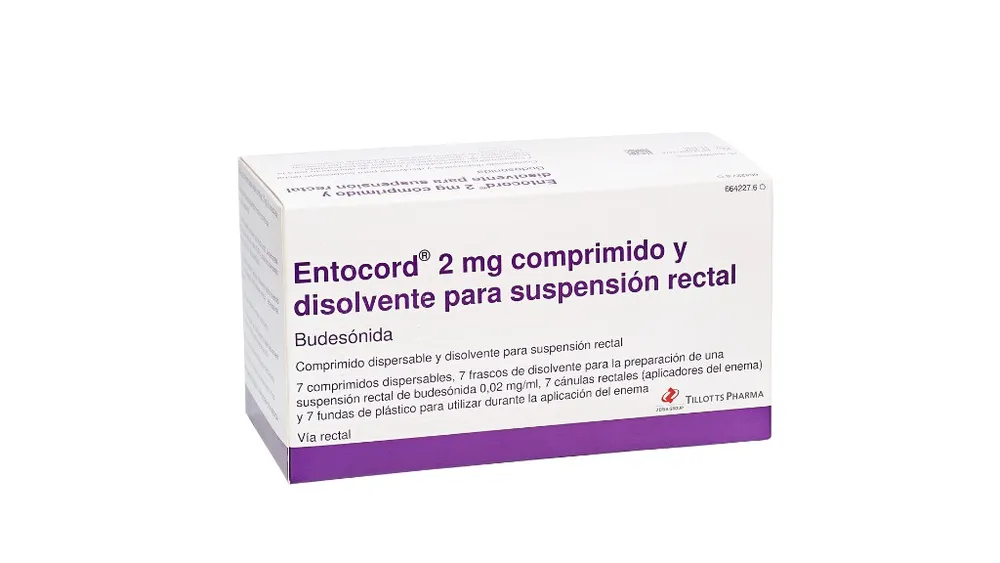
Table of Contents
- Patient Information Leaflet
- Introduction
- 1. What Entocord is and what it is used for
- 2. What you need to know before starting to use Entocord
- 3. How to use Entocord
- 4. Possible adverse effects
- **Frequency not known: cannot be estimated from the available data**
- 5. Storage of Entocord
- 6. Contents of the pack and other information
Patient Information Leaflet
Introduction
Package leaflet: Information for the patient
Entocord 2 mg tablet and solvent for rectal suspension
budesonide
Read the entire leaflet carefully before you start using this medicine, as it contains important information for you.
- Keep this leaflet, as you may need to read it again.
- If you have any questions, ask your doctor, pharmacist, or nurse.
- This medicine has been prescribed for you only, and you must not give it to others, even if they have the same symptoms as you, because it could harm them.
- If you experience any adverse effects, consult your doctor, pharmacist, or nurse, even if they are adverse effects not listed in this leaflet. See section 4.
Leaflet contents:
- What Entocord is and what it is used for
- What you need to know before using Entocord
- How to use Entocord
- Possible side effects
- How to store Entocord
- Contents of the pack and other information
1. What Entocord is and what it is used for
Entocord (budesonide) belongs to a group of medicines called glucocorticosteroids (a type of cortisone) that are used to reduce inflammation.
Entocord is used in the treatment of ulcerative colitis, a disease caused by inflammation of the intestinal wall affecting the rectum and the sigmoid and descending colon.
2. What you need to know before starting to use Entocord
Do not use Entocord
If you are allergic to budesonide or to any of the other ingredients of this medicine (listed in section 6).
Warnings and precautions
Talk to your doctor, pharmacist, or nurse before starting to use Entocord.
You must always inform your doctor about the following conditions:
- If you have other health problems, such as liver disease.
- If you currently have or contract an infection, particularly chickenpox or measles.
- If you have diabetes (including family history), osteoporosis, stomach ulcer, or high blood pressure.
- If you have an eye condition such as glaucoma (including family history) or cataracts.
- If your symptoms worsen while using Entocord.
Do not stop treatment with Entocord unless your doctor tells you to do so.
Contact your doctor if you experience blurred vision or other visual disturbances.
Entocord has been prescribed specifically for your current condition. Do not use it for other problems unless your doctor instructs you to do so.
If you were previously treated with "cortisone" tablets (such as prednisone, prednisolone, or methylprednisolone) and your medication has been switched to Entocord, symptoms that previously troubled you may temporarily reappear, for example, skin rashes, muscle and joint pain. If any of these symptoms bother you, or if symptoms such as headache, fatigue, nausea, or vomiting occur, please contact your doctor.
Children and adolescents
There are no long-term data on treatment in children and adolescents; regular monitoring of growth is recommended.
Other medicines and Entocord
Inform your doctor, pharmacist, or nurse if you are taking, have recently taken, or might need to take any other medicines.
Certain medicines may interact with Entocord; in such cases, it may be necessary to adjust the dose or discontinue one of the treatments.
It is important that you inform your doctor if you are taking any of the following drugs: ketoconazole, itraconazole (medicines used to treat fungal infections), carbamazepine (an antiepileptic), or in women, estrogens and certain contraceptives.
Some medicines may increase the effects of Entocord, and your doctor may wish to monitor you closely if you are taking these (including some medicines for the treatment of HIV: ritonavir (and other HIV protease inhibitors), cobicistat).
Diagnostic tests for pituitary gland activity may show falsely low results due to adrenal suppression.
Pregnancy and breastfeeding
If you are pregnant, breastfeeding, think you might be pregnant, or are planning to become pregnant, consult your doctor, pharmacist, or nurse before using this medicine.
Driving and using machines
Entocord does not affect the ability to drive vehicles or operate machinery.
Entocord contains methyl and propyl parahydroxybenzoate
May cause allergic reactions (possibly delayed) as it contains methyl and propyl parahydroxybenzoate.
Athletes should be aware that this medicine contains a component that could lead to a positive analytical finding in doping controls.
3. How to use Entocord
Follow exactly the administration instructions for this medicine as indicated by your doctor, pharmacist, or nurse. If in doubt, consult your doctor, pharmacist, or nurse again.
Remember to use your medicine.
Your doctor will tell you how long you should take Entocord. Do not stop treatment before your doctor tells you to do so.
Before using Entocord for the first time, it is important that you read the Instructions for Use described below. These instructions will guide you on how to prepare and use Entocord. Follow the instructions carefully.
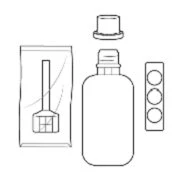
Instructions for use/handling Entocord should be administered at night before going to bed. Entocord consists of: one tablet, a 115 mL solvent bottle, and an individually packaged rectal cannula. To reconstitute the medication, the tablet must be dissolved in the solvent prior to use. To correctly administer Entocord, carefully follow the instructions below: |
| |
How to prepare Entocord | ||
|
| |
|
| |
How to administer Entocord Plastic sleeves are included in the package to protect your hand during administration of the medication (see illustrations below).
Adopt a comfortable sleeping position. Try to retain Entocord as long as possible, preferably throughout the night. |
| |
|
|
|
|
|
|
 (Fig. 1).
 (Fig. 2).
 (Fig. 3).
 (Fig. 4).


Once the rectal suspension is prepared, it must be administered immediately. It should not be stored in the bottle.
Dosage should be adjusted according to the individual. Follow your doctor's instructions carefully. These instructions may differ from the information contained in this leaflet.
Recommended dose for adults
It is recommended to administer one Entocord (tablet + 115 mL solvent bottle) daily (each night) for four weeks. The best time to use Entocord is at night, just before going to bed. This way, Entocord will remain in your intestine for the longest possible time while you are sleeping.
Full effect is generally achieved within 2–4 weeks. However, if your symptoms have not improved after four weeks of treatment, your doctor may extend your treatment for another 4 weeks.
Entocord must be used regularly as prescribed. Do not forget to administer Entocord, even if you start to feel better.
Elderly patients
Same dosage as for adults.
If you use more Entocord than you should
In case of overdose or accidental ingestion, contact the Toxicology Information Service. Telephone: 91 562 04 20
If you forget to use Entocord
If you occasionally forget to administer a dose of Entocord, do not compensate for the missed dose. Simply continue with the next dose as prescribed.
Do not use a double dose to make up for forgotten doses.
4. Possible adverse effects
Like all medicines, this medicine can cause adverse effects, although not everyone gets them.
If you have an allergic reaction, consult your doctor immediately. Signs may include lumps on the skin (rash) or swelling of the face, lips, mouth, tongue, or throat. This may make it difficult to breathe.
Other possible adverse effects:
Frequent: may affect up to 1 in 10 people
- Stomach or intestinal pain, such as stomach aches, flatulence, diarrhoea, heartburn, and feeling unwell.
- Cramps.
- Skin reactions, such as lumpy rash and skin rash.
- Changes in behaviour, such as nervousness, insomnia, mood changes, and depression.
- Palpitations.
- Low blood potassium levels.
- Menstrual disorders.
- Cushingoid features such as rounded face, acne, weight gain, and easy bruising.
Uncommon: may affect up to 1 in 100 people
- Involuntary movements or extreme restlessness, possibly accompanied by muscle spasms or jerks.
- Anxiety.
- Tremor.
Rare: may affect up to 1 in 1,000 people
- Adrenal gland disorder (a small gland near the kidney).
- Aggression.
- Opacity of the eye's natural lens including the posterior part (cataracts).
- Glaucoma (increased eye pressure).
- Blurred vision.
- Changes in skin colour due to internal bleeding.
Very rare: may affect up to 1 in 10,000 people
- Severe allergic reaction (called anaphylaxis) which may cause difficulty breathing or shock.
- Delayed growth rate in children and adolescents.
Frequency not known: cannot be estimated from the available data
- Allergic reactions that may cause swelling of the face, especially of the eyelids, lips, tongue, or throat (angioedema).
Medicines such as Entocord (corticosteroids) may affect the normal production of steroid hormones in your body. Effects include:
- Changes in bone mineral density (thinning of the bones).
- Glaucoma (increased eye pressure).
- Reduced growth rate in children and adolescents.
- Adrenal gland suppression (a small gland near the kidney).
Most of the adverse effects listed above may also be expected with treatment using other glucocorticoids.
Do not be alarmed by this list of adverse effects. You may not experience any of them. If you consider any of the adverse effects you experience to be severe, or if you notice any adverse effects not listed in this leaflet, inform your doctor, pharmacist, or nurse.
Reporting of adverse effects:
If you experience any type of adverse effect, consult your doctor, pharmacist, or nurse, even if they are possible adverse effects not mentioned in this leaflet. You may also report them directly through the Spanish Pharmacovigilance System for Human Medicines: https://www.notificaRAM.es. By reporting adverse effects, you can help provide more information on the safety of this medicine.
5. Storage of Entocord
Keep this medicine out of the sight and reach of children. Do not store the tablets and solvent bottles at temperatures above 30°C.
Do not use this medicine after the expiry date stated on the packaging after EXP. The expiry date refers to the last day of the month indicated.
Medicines must not be disposed of via wastewater or household waste. Dispose of unused medicines and their containers at the SIGRE collection point at your pharmacy. Ask your pharmacist how to properly dispose of medicines and containers you no longer need. This will help protect the environment.
6. Contents of the pack and other information
Composition of Entocord
-
The active substance is budesonide. Entocord (dispersible tablet and solvent bottle of 115 mL) contains 2 mg of budesonide per 100 mL (0.02 mg/mL).
-
Entocord consists of: one dispersible tablet, one 115 mL solvent bottle, and one individually packaged rectal cannula.
-
Each tablet contains: 2.3 mg of the active substance budesonide.
-
The other excipients are: lactose, colouring agent [riboflavin (E101)], crospovidone, colloidal anhydrous silica, and magnesium stearate.
-
Each 115 mL solvent bottle contains: sodium chloride, preservatives [methylparaben (E218), propylparaben (E216)], and water.
Appearance of the product and contents of the pack
Entocord is presented as dispersible tablets and solvent for rectal suspension. The packs contain a blister with 7 tablets, 7 solvent bottles of 115 mL, 7 rectal cannulas (enema applicators), and 7 plastic sheaths to be used during enema administration.
Marketing Authorization Holder and Manufacturer
Marketing Authorization Holder:
Tillotts Pharma GmbH
Warmbacher Str. 80
79618 Rheinfelden
Germany
Manufacturer:
Lusomedicamenta, Sociedade Técnica Farmacêutica, SA
Estrada Consiglieri Pedroso, 69-B
Queluz de Baixo
2730-055 Barcarena
Portugal
For further information on this medicinal product, please contact the local representative of the Marketing Authorization Holder:
Tillotts Pharma Spain, S.L.U.
Travessera de Gràcia 58, 5º 3ª
08006 Barcelona
Spain
Date of the most recent revision of this leaflet: July 2023
Other sources of information
Detailed and up-to-date information on this medicinal product is available on the website of the Spanish Agency of Medicines and Medical Devices (AEMPS): http://www.aemps.gob.es/