Engerix-B 20 micrograms/1 ml, suspension for injection in pre-filled syringe
Spain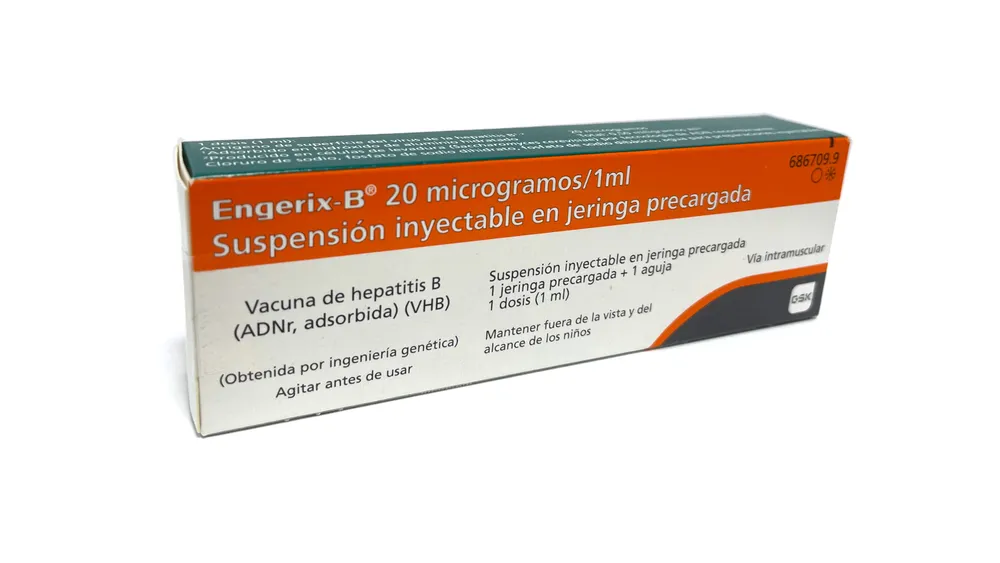
Table of Contents
Package leaflet: Information for the user
Introduction
Package leaflet: information for the user
Engerix-B 20 micrograms/1 ml suspension for injection in pre-filled syringe
Hepatitis B vaccine (rDNA, adsorbed) (HBV)
Read all of this leaflet carefully before you start receiving this vaccine, because it contains important information for you.
- Keep this leaflet, as you may need to read it again.
- If you have any questions, ask your doctor or pharmacist.
- This vaccine has been prescribed for you only, and you should not give it to others.
- If you experience any adverse reactions, consult your doctor or pharmacist, even if they are adverse reactions not listed in this leaflet. See Section 4.
Contents of this leaflet
- What Engerix-B is and what it is used for
- What you need to know before receiving Engerix-B
- How Engerix-B is administered
- Possible side effects
- How to store Engerix-B
- Contents of the pack and other information
1. What Engerix-B is and what it is used for
Engerix-B is a vaccine used to protect against infection by the hepatitis B virus. It may also help protect against infection by the hepatitis D virus.
This vaccine can be given to both adults and adolescents from the age of 16 years. Under exceptional circumstances, it may also be administered to children and adolescents between 11 and 15 years of age (see section 3).
Hepatitis B is an infectious disease of the liver caused by a virus. Some people carry the hepatitis B virus in their body but are unable to eliminate it. These individuals can continue to infect others and are known as carriers. The disease spreads when the virus enters the body through contact with body fluids, usually blood, from an infected person.
If a mother is a carrier of the virus, she may transmit it to her child during childbirth. In addition, it is possible to acquire the virus from a carrier through, for example, unprotected sexual intercourse, sharing of injectable syringes, or treatment with medical equipment that has not been properly sterilized.
The main signs of the disease include: headache, fever, malaise (nausea), and jaundice (yellowing of the skin and eyes), although approximately three out of ten patients show no signs of illness. Among those infected with hepatitis B, one in ten adults and up to nine in ten children will become carriers of the virus and are likely to develop serious liver damage and, in some cases, liver cancer.
How Engerix-B works
Engerix-B contains a small amount of the outer coat of the hepatitis B virus. This outer coat is non-infectious and cannot cause the disease.
- When the vaccine is administered, it will stimulate the body's immune system to prepare it to defend against these viruses in the future.
- Engerix-B will not protect you if you are already infected with the hepatitis B virus.
- Engerix-B can only help protect you against infection by the hepatitis B virus.
2. What you need to know before receiving Engerix-B
Do not administer Engerix-B:
- If you are allergic (hypersensitive) to Engerix-B or to any of the other components of this vaccine (listed in section 6).
- If you have a high temperature (fever).
Engerix-B must not be given if any of the above conditions apply to you. If you are unsure, speak with your doctor or pharmacist before receiving Engerix-B. Inform your doctor or pharmacist if you have any allergies or if you have ever experienced health problems after receiving a vaccine.
Warnings and precautions
Talk to your doctor or pharmacist before receiving Engerix-B if:
- You are on dialysis due to kidney problems or if you have a disease that may affect your immune system.
People who require dialysis, who have chronic liver disease, who are carriers of hepatitis C, or who are HIV positive may also receive Engerix-B. This is because hepatitis B infections can be severe in these patients. More information about kidney problems and dialysis can be found in Section 3.
If you are unsure whether any of the above conditions apply to you, consult your doctor before receiving Engerix-B.
Fainting (especially in adolescents) may occur before or after any injection. Therefore, inform your doctor or nurse if you or your child has previously fainted after receiving an injection.
Like other vaccines, Engerix-B may not fully protect you against hepatitis B. Various factors such as advanced age, sex, overweight, smoking, and certain chronic conditions may reduce the immune response to the vaccine. If any of these apply to you, your doctor may decide to perform a blood test or administer additional doses of Engerix-B to ensure you are protected.
Other medicines and Engerix-B
Tell your doctor or pharmacist if you are using, have recently used, or might need to use any other medicines.
Engerix-B can be given at the same time as most routine vaccines. Your doctor will ensure that the vaccines are injected separately and at different sites on the body.
Pregnancy and breastfeeding
- If you are pregnant or breastfeeding, think you might be pregnant, or plan to become pregnant, consult your doctor or pharmacist before using this medicine.
Driving and using machines
It is unlikely that Engerix-B will affect your ability to drive or operate machinery. However, do not drive or operate machinery if you do not feel well.
Engerix-B contains sodium
This vaccine contains less than 23 mg of sodium (1 mmol) per dose; hence, it is essentially "sodium-free".
3. How Engerix-B is administered
How your vaccine is administered
Your doctor will administer the recommended dose of Engerix-B.
Engerix-B will be given:
- as an injection into the muscle of the upper arm, or
- as an injection under the skin if you bruise easily or have bleeding problems.
How much is administered
You will receive a series of Engerix-B injections. Once you have completed the injection schedule, you can expect long-term protection against hepatitis B.
Adults and adolescents aged 16 years and older will receive the 20 microgram/1 ml vaccine.
There are several alternative administration schedules for Engerix-B. Your doctor will choose the most appropriate schedule for you:
Schedule 1 – for adults or adolescents aged 16 years and older
First injection – now
Second injection – 1 month after the first injection
Third injection – 6 months after the first injection
Schedule 2 – for adults or adolescents aged 16 years and older
First injection – now
Second injection – 1 month after the first injection
Third injection – 2 months after the first injection
Fourth injection – 12 months after the first injection
- This schedule may also be used if you are being vaccinated due to recent exposure to hepatitis B, as it will provide faster protection.
Schedule 3 – for adults only (aged 18 years and older)
This schedule will only be used in exceptional circumstances, for example if you need to travel to a high-risk area within one month after vaccination.
First injection – now
Second injection – 1 week after the first injection
Third injection – 3 weeks after the first injection
Fourth injection – 12 months after the first injection
Schedule 4 – for children and adolescents aged 11 to 15 years only
This schedule is only used if there is uncertainty that the child will receive the third injection. For this schedule, Engerix-B (20 micrograms/1 ml) will be used. This provides a higher level of protection than two doses of Engerix-B Junior (10 micrograms/0.5 ml).
First injection – now
Second injection – 6 months after the first injection
- When this schedule is used, protection may not always be achieved until after the second dose. This two-dose schedule is only used when the risk of hepatitis B infection during the vaccination schedule is relatively low, and when completion of the schedule can be ensured.
It is very important that you attend all your scheduled injection appointments. If you have any questions about the amount of vaccine you are to receive, please consult your doctor.
Kidney problems and dialysis
- Individuals aged 16 years and older
If you have kidney problems or are on dialysis, your doctor may decide to vaccinate you with four double doses (2 x 20 micrograms/1 ml) of the vaccine at months 0, 1, 2, and 6. Your doctor may also decide to perform a blood test to ensure you are protected against hepatitis B.
4. Possible adverse effects
Like all vaccines, this vaccine may cause adverse effects, although not everyone will experience them. The following adverse effects may occur with this vaccine:
Allergic reactions (these may occur in up to 1 in every 10,000 doses of the vaccine)
If you have an allergic reaction, seek medical attention immediately. Signs may include:
- swelling of the face
- low blood pressure
- difficulty breathing
- skin turning blue
- loss of consciousness
These signs usually begin very shortly after receiving the injection. Seek immediate medical attention if they occur after you have left the clinic.
Other adverse effects include:
Very common (may occur in more than 1 in every 10 doses of the vaccine): pain and redness at the injection site, feeling tired, irritability.
Common (may occur in up to 1 in every 10 doses of the vaccine): headache, numbness, nausea or vomiting, diarrhoea or abdominal pain, loss of appetite, fever (high body temperature), general feeling of being unwell, swelling at the injection site, reactions at the injection site such as induration.
Uncommon (may occur in up to 1 in every 100 doses of the vaccine): dizziness, muscle pain, flu-like symptoms.
Rare (may occur in up to 1 in every 1,000 doses of the vaccine): swollen glands, hives, skin rash and itching, joint pain, tingling.
Very rare (may occur in up to 1 in every 10,000 doses of the vaccine): easy bruising and inability to stop bleeding if cut, low blood pressure, inflammation of blood vessels, sudden swelling of the face around the mouth and throat area (angioneurotic oedema), inability to move muscles (paralysis), inflammation of nerves (neuritis) which may cause loss of sensation or numbness, including temporary inflammation of nerves causing pain, weakness and paralysis in the limbs, often progressing to the chest and face (Guillain-Barré syndrome), a disease affecting the nerves of the eye (optic neuritis), multiple sclerosis, difficulty moving arms or legs (neuropathy), inflammation of the brain (encephalitis), degenerative brain disease (encephalopathy), infection around the brain (meningitis), seizures (convulsions), loss of skin sensitivity to pain or touch (hypoesthesia), purple or purplish-red lumps on the skin (lichen planus), red or purplish spots on the skin, joint pain and stiffness (arthritis), muscle weakness.
Reporting of adverse effects
If you experience any adverse effect, consult your doctor or pharmacist, even if it is a possible adverse effect not listed in this leaflet. You can also report them directly via the Spanish Pharmacovigilance System for Human Medicinal Products: www.notificaRAM.es. By reporting adverse effects, you can help provide more information on the safety of this medicine.
5. Storage of Engerix-B
- Keep this vaccine out of the sight and reach of children.
- Do not use this vaccine after the expiry date stated on the label and packaging, after EXP. The expiry date refers to the last day of the month indicated.
- Store in a refrigerator (between 2 °C and 8 °C).
- Do not freeze.
- Keep in the original packaging to protect from light.
- Medicines should not be disposed of via wastewater or household waste. Dispose of unused medicines and their containers at the SIGRE collection point at your pharmacy. If you are unsure, ask your pharmacist how to properly dispose of unused medicines and their packaging. This will help protect the environment.
6. Contents of the pack and other information
Composition of Engerix-B
- The active substance is the outer coat protein of the hepatitis B virus. Each dose contains 20 micrograms/1 ml of protein composed of this outer coat, adsorbed onto aluminium hydroxide hydrate.
- The other components are sodium chloride, sodium dihydrogen phosphate dihydrate, disodium hydrogen phosphate, and water for injections.
Appearance of the product and contents of the pack
Engerix-B is a white, turbid injectable liquid.
Engerix-B (20 micrograms/ml) is available in a pre-filled syringe with either one or ten doses, with or without separate needles; pack sizes of 1 and 10.
Only certain pack sizes may be commercially available.
Marketing Authorization Holder and Manufacturer
Marketing Authorization Holder
GlaxoSmithKline, S.A.
P.T.M. C/ Severo Ochoa, 2
28760 Tres Cantos (Madrid)
Tel.: +34 900 202 700
Manufacturer
GlaxoSmithKline Biologicals S.A.
Rue de l’Institut 89
B-1330 Rixensart
Belgium
or
SmithKline Beecham, S.A.
Carretera de Ajalvir, Km. 2.5
28806 Alcalá de Henares
Madrid
This medicine is authorized in the European Economic Area member states under the following names:
Austria, Denmark, Spain, Finland, Netherlands, Iceland, Norway, Sweden: Engerix-B
Belgium, Luxembourg, Portugal: Engerix B
France, Ireland, Italy: Engerix B-20
Germany: Engerix-B Adult
Greece: Engerix
Date of the most recent revision of this leaflet: 02/2024
Other sources of information
Detailed information on this medicine is available on the website of the Spanish Agency of Medicines and Health Products (AEMPS) (http://www.aemps.gob.es/).
This information is intended for healthcare professionals only:
After storage, the product may appear as a fine white deposit with a clear, colourless supernatant. After shaking, the vaccine is slightly opaque.
Before use, the vaccine should be inspected visually for foreign particles and/or abnormal physical appearance. Do not administer the vaccine if either is observed.
The entire contents of the single-dose container should be withdrawn and used immediately after withdrawal.
Instructions for the pre-filled syringe
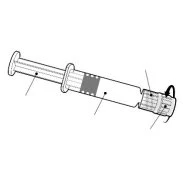
| Hold the syringe by the barrel, not by the plunger. Unscrew the syringe cap by turning it counterclockwise. |
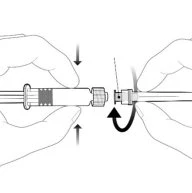
| To attach the needle, connect the base to the luer-lock adapter and turn it a quarter turn clockwise until you feel it lock into place. Do not remove the plunger from the syringe barrel. If this happens, do not administer the vaccine. |




Waste disposal
The disposal of unused medication and all materials that have come into contact with it must be carried out in accordance with local regulations.