Eneas 10 mg/20 mg tablets
Spain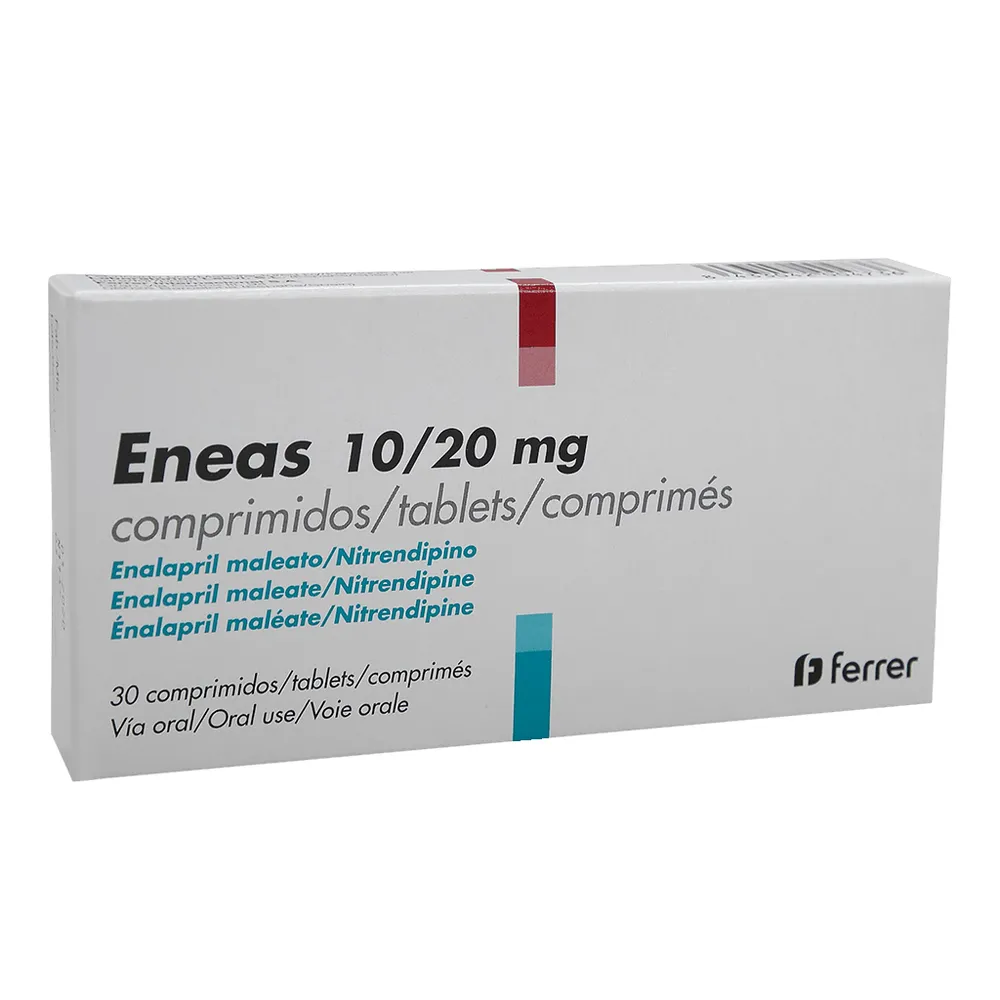
Table of Contents
Package leaflet: Information for the user
Introduction
Package leaflet: Information for the user
ENEAS 10 mg/20 mg tablets
Enalapril maleate/Nitrendipine
Read the entire leaflet carefully before you start taking this medicine, because it contains important information for you.
- Keep this leaflet, as you may need to read it again.
- If you have any questions, ask your doctor or pharmacist.
- This medicine has been prescribed for you only, and you should not give it to others, even if they have the same symptoms as you, because it could harm them.
- If you experience any adverse effects, consult your doctor or pharmacist, even if they are effects not listed in this leaflet. See section 4.
Leaflet contents:
- What Eneas is and what it is used for
- What you need to know before taking Eneas
- How to take Eneas
- Possible side effects
- How to store Eneas
- Contents of the pack and other information
1. What Eneas is and what it is used for
Enalapril maleate belongs to a group of medicines known as angiotensin-converting enzyme inhibitors (ACE inhibitors). Nitrendipine belongs to a group of medicines known as calcium channel antagonists.
It is indicated for the treatment of arterial hypertension in patients who are not adequately controlled with enalapril or nitrendipine alone.
2. What you need to know before taking Eneas
Do not take Eneas
- If you are allergic (hypersensitive) to enalapril maleate, nitrendipine, or any of the other components of this medicine (see composition in section 6).
- If you have had allergic reactions to similar medicines.
- If you are more than 3 months pregnant. (Eneas should also be avoided in the early stages of pregnancy – see section on pregnancy and breastfeeding).
- If you suffer from cardiovascular shock, heart failure, or have recently been diagnosed with angina, heart attack, or stroke.
- If you have severe renal failure or are undergoing hemodialysis.
- If you have severe hepatic impairment.
- If you suffer from diseases caused by narrowing of the heart valves.
- If you have renal artery stenosis.
- If you have diabetes or kidney disease and are being treated with a blood pressure-lowering medicine containing aliskiren.
- In children and adolescents.
- If you have taken or are currently taking sacubitril/valsartan, a medicine used to treat chronic heart failure in adults, as the risk of angioedema (rapid swelling under the skin, e.g., in the throat) is increased.
If you are taking any of the following medicines, the risk of developing angioedema may increase:
- Racecadotril, a medicine used to treat diarrhea.
- Medicines used to prevent organ transplant rejection and for cancer (e.g., temsirolimus, sirolimus, everolimus).
- Vildagliptin, a medicine used to treat diabetes.
In particular, talk to your doctor or pharmacist if you are taking, have recently taken, or might need to take any of the following medicines:
Potassium supplements (including salt substitutes), potassium-sparing diuretics, and other medicines that may increase blood potassium levels (for example, trimethoprim and cotrimoxazole for bacterial infections; cyclosporine, an immunosuppressive medicine used to prevent organ transplant rejection; and heparin, a medicine used to thin the blood to prevent clots).
Warnings and precautions
Talk to your doctor before starting Eneas
- If you experience swelling of the face, lips, tongue, and/or larynx, you must stop treatment immediately and inform your doctor right away.
- If you suffer from connective tissue disease affecting the vascular system (collagen vascular disease), if you are receiving therapy that suppresses the body's immune system (immunosuppressive therapy), and/or are being treated with allopurinol or procainamide, especially if you have impaired kidney function. Your doctor will regularly monitor your white blood cell count.
- If you have kidney disease, your doctor may consider it necessary to perform certain tests during treatment with this medicine.
- If you have mild or moderate impairment of liver function.
- If you think you are pregnant (or might become pregnant), you must inform your doctor. Eneas is not recommended during the first months of pregnancy and must not be taken if you are more than 3 months pregnant, as it may cause serious harm to your baby if used at this stage (see section on pregnancy and breastfeeding).
- If you develop fever or infection during treatment, inform your doctor as soon as possible.
- If you have heart problems.
- If you are undergoing treatment for severe metabolic disorder (LDL apheresis) or for allergic reaction to insect stings (immunotherapy), as you may experience life-threatening hypersensitivity reactions. Your doctor should temporarily replace Eneas with another antihypertensive medicine.
- If you experience side effects at the beginning of treatment.
- If you have fluid loss due to diuretic use, diarrhea, or vomiting; a low-salt diet; or other causes, as you may feel dizzy when changing position suddenly.
- If you are taking any of the following medicines used to treat high blood pressure (hypertension):
- an angiotensin II receptor antagonist (ARA) (also known as "sartans" – for example, valsartan, telmisartan, irbesartan), particularly if you have kidney problems related to diabetes.
- aliskiren.
Your doctor may monitor your kidney function, blood pressure, and blood electrolyte levels (e.g., potassium) at regular intervals.
See also the information under the heading “Do not take Eneas”.
Consult your doctor, even if any of the above circumstances have occurred to you in the past.
During treatment with Eneas, your doctor will carry out regular medical checks. Make sure you attend all scheduled medical appointments.
Taking Eneas with other medicines
Inform your doctor or pharmacist if you are taking, have recently taken, or might take any other medicines, including those obtained without a prescription.
Your doctor may need to adjust your dose and/or take other precautions:
If you are taking an angiotensin II receptor antagonist (ARA) or aliskiren (see also information under the headings “Do not take Eneas” and “Warnings and precautions”).
Eneas may increase the effect of other medicines used to treat high blood pressure.
-
Do not take Eneas with
- potassium-sparing diuretics (a type of diuretic that may increase potassium levels).
- potassium supplements (salt substitutes containing potassium).
- or other medicines that increase plasma potassium levels.
-
Take special care if you are being treated with any of the following medicines:
- Lithium (a medicine used to treat certain psychiatric disorders).
- muscle relaxants (a type of medicine used to relieve symptoms such as muscle spasms).
- non-steroidal anti-inflammatory drugs (a type of medicine used to relieve pain, swelling, and other symptoms of inflammation).
- oral antidiabetics.
- baclofen (a medicine used to treat spasticity).
- antipsychotics (a type of medicine used to treat certain psychiatric disorders).
- antidepressants.
- allopurinol (a medicine used to treat chronic gout).
- cytostatics (a type of medicine used to treat malignant diseases such as cancer).
- immunosuppressants (a type of medicine used to suppress the immune system, used to prevent organ transplant rejection).
- systemic glucocorticoids.
- procainamide (a medicine used to treat cardiac arrhythmias).
- amifostine (a medicine used during treatment of certain malignant diseases such as cancer).
- cimetidine (a medicine used to treat duodenal or gastric ulcer).
- ranitidine (a medicine used to treat duodenal or gastric ulcer).
- digoxin (a medicine used to treat congestive heart failure).
- anticonvulsants.
- rifampicin (an antibiotic).
- and medicines used to treat fungal infections.
Taking Eneas with food and drink
Eneas can be taken with food.
You must not drink grapefruit juice at the same time as taking Eneas.
Pregnancy, breastfeeding, and fertility
If you are pregnant or breastfeeding, think you may be pregnant, or plan to become pregnant, consult your doctor or pharmacist before using this medicine.
Pregnancy
You must inform your doctor if you are (or think you might be) pregnant. Your doctor will usually advise you to stop treatment with Eneas before becoming pregnant or as soon as pregnancy is confirmed, and will recommend an alternative medicine. Eneas is not recommended during early pregnancy and must not be taken after the third month of pregnancy, as it may cause serious harm to your baby if used beyond the third month.
Breastfeeding
Inform your doctor if you are breastfeeding or about to start. Eneas is not recommended for breastfeeding mothers, and your doctor should prescribe an alternative treatment if you are in this situation, especially if your baby is a newborn or premature.
Fertility
In isolated cases of in vitro fertilization, nitrendipine, one of the active substances in Eneas, has been associated with impaired sperm function. In men experiencing repeated failure of in vitro fertilization with no other explanation, Eneas may be considered a possible cause.
Driving and use of machines
This medicine may affect your ability to drive or use machines at the beginning of treatment; therefore, caution is advised during this period.
Eneas contains lactose
If your doctor has informed you that you have an intolerance to certain sugars, consult him before taking this medicine.
3. How to take Eneas
Follow exactly the instructions for use of this medicine given by your doctor. If you are unsure, please consult your doctor or pharmacist again.
Remember to take your medicine.
Your doctor will tell you how long to take treatment with Eneas. Do not stop treatment early.
The recommended dose is 1 tablet per day, swallowed with some water. The tablets must be taken whole, without splitting or chewing them.
If you take more Eneas than you should
If you have taken more Eneas than you should, you may experience an excessive decrease in blood pressure.
In case of overdose or accidental ingestion, consult your doctor or pharmacist immediately or call the Toxicology Information Service at telephone number: 91 562 04 20, indicating the medicine and the amount ingested.
If you forget to take Eneas
Do not take a double dose to make up for missed doses.
If you stop taking Eneas
Do not stop treatment unless your doctor tells you to.
If you have any further questions about the use of this medicine, ask your doctor or pharmacist.
4. Possible adverse effects
Like all medicines, Eneas may cause adverse effects, although not everyone experiences them.
- Common adverse reactions (frequent, 1–10%): headache, facial flushing, cough, and swelling of the legs.
- Uncommon adverse reactions (0.1–1%): dizziness, tachycardia, flushing, nausea, gastrointestinal discomfort, and hypotension.
- Very rare (<0.01%): isolated cases of weakness, hypothermia, palpitations, peripheral ischemia, blood in urine, pharyngitis, tracheitis, breathing difficulty, abdominal distension, changes in liver function tests, changes in blood potassium levels, somnolence, tingling sensation, tremor, and cramps.
The following adverse reactions may occur as they have been associated with the use of either of the active substances (Enalapril or Nitrendipine) when used alone:
General:
Occasionally: flu-like symptoms.
Cardiovascular system:
Occasionally: heart failure, hypertension, loss of consciousness, arrhythmias, vasodilation.
Rarely (including isolated cases): angina pectoris, chest pain, myocardial infarction, vascular occlusion due to blood clot, pulmonary embolism.
Kidney:
Occasionally: worsening of renal function.
Rarely (including isolated cases): oliguria (reduced urine production), proteinuria (presence of proteins in urine), urinary urgency, increased volume of excreted urine, flank pain.
Respiratory tract:
Occasionally: sore throat, hoarseness, bronchitis.
Rarely (including isolated cases): bronchospasm/asthma, pulmonary infiltrates, pneumonia, paranasal sinusitis (inflammation of the paranasal sinuses), common cold, sudden swelling of the pharynx with fatal respiratory obstruction in individual cases, with a higher incidence in black patients.
Gastrointestinal tract / liver:
Occasionally: upper abdominal pain, diarrhea.
Rarely (including isolated cases): constipation, loss of appetite, hepatitis, altered liver function, pancreatitis, ileus (a syndrome beginning with cholestatic jaundice (yellowing of the skin and mucous membranes due to biliary tract obstruction) and progressing to hepatic necrosis with fatal outcomes in some cases).
Skin, blood vessels:
Occasionally: skin allergic reactions.
Rarely (including isolated cases): urticaria, pruritus, severe skin reactions, psoriasis-like rash, photosensitivity, diaphoresis (excessive sweating), hair loss, onycholysis (separation of the nails), skin reactions which may be accompanied by fever, sudden swelling of the face, mouth and/or extremities, vasculitis (inflammation of blood vessels), skin inflammation.
Nervous system:
Rarely (including isolated cases): somnolence, depression, sleep disorders, impotence, balance disorders, muscle cramps, nervousness, confusion.
Endocrine system:
Rarely (including isolated cases): gynecomastia (abnormal development of male breast tissue).
Sensory organs:
Rarely (including isolated cases): changes in taste perception or transient loss of taste, anosmia (loss of sense of smell), tinnitus (ringing or buzzing in the ears), dry eyes, lacrimation.
Musculoskeletal system:
Rarely (including isolated cases): myalgia (muscle pain), arthralgia (joint pain).
Laboratory parameters:
Occasionally: changes in blood cell counts, altered uric acid levels.
Reporting of adverse effects
If you experience any type of adverse effect, consult your doctor, pharmacist, or nurse, even if it is a possible adverse effect not listed in this leaflet. You may also report them directly via the Spanish Pharmacovigilance System for Human Medicines (www.notificaram.es). By reporting adverse effects, you can help provide more information on the safety of this medicine.
5. Storage of Eneas
No special storage conditions are required.
Keep this medicine out of the sight and reach of children.
Do not use this medicine after the expiry date stated on the blister and on the carton after EXP. The expiry date refers to the last day of the month indicated.
Medicines should not be disposed of via wastewater or household waste. Dispose of unused medicines and their packaging at the SIGRE collection point at your pharmacy. If you have any doubts, ask your pharmacist how to properly dispose of unused medicines and their packaging. This will help protect the environment.
6. Contents of the pack and other information
Composition of Eneas
- The active substances are enalapril maleate and nitrendipine. Each tablet contains 10 mg of enalapril maleate and 20 mg of nitrendipine.
- The other components are sodium hydrogen carbonate, monohydrate lactose, microcrystalline cellulose, corn starch, povidone, sodium lauryl sulfate, magnesium stearate.
Appearance of the product and contents of the pack
The tablets are yellow, oblong and biconvex, with the imprint “E/N” on one side.
Eneas is available in packs containing 20, 30, 50, 60, 100, 300 and 500 tablets.
Not all pack sizes may be marketed.
Marketing Authorization Holder and Manufacturer
Marketing Authorization Holder FERRER INTERNACIONAL S.A. Gran Vía de Carlos III, 94 08028 – Barcelona SPAIN | Manufacturer Responsible Ferrer Internacional S.A. Joan Buscallà, 1-9 08173 Sant Cugat del Vallès (Barcelona) SPAIN |
This medicinal product is authorised in the Member States of the European Economic Area under the following names:
Austria: BAROPRINE 10 mg/20 mg Tabletten
Germany: ENEAS 10 mg/20 mg Tabletten
Greece: ENEAS 10 mg/20 mg δισκ?α
Luxembourg: ENEAS 10 mg/20 mg comprimés
Spain: ENEAS 10 mg/20 mg comprimidos
Date of the most recent review of this leaflet: March 2019
Version: March 2019
Detailed and up-to-date information on this medicinal product is available on the website of the Spanish Agency of Medicines and Medical Devices (AEMPS) http://www.aemps.gob.es/.