Enalapril Normon 20 mg tablets EFG
Spain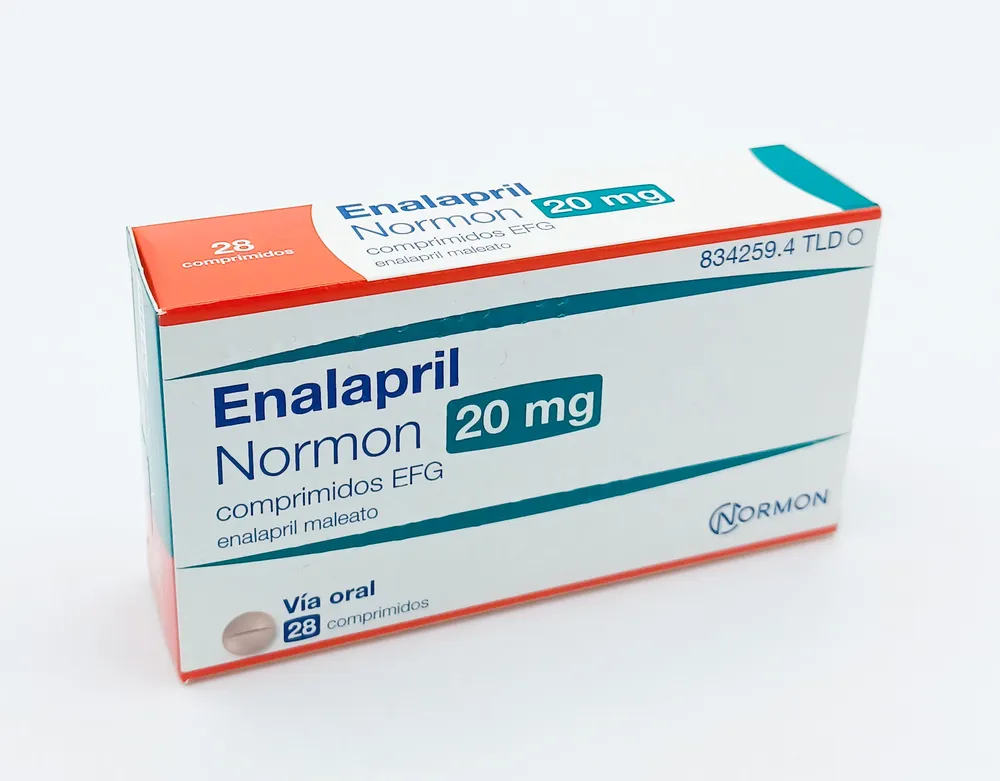
Table of Contents
Patient Information Leaflet
Introduction
Patient Information Leaflet
Enalapril Normon 20 mg Tablets EFG
enalapril maleate
Read the entire leaflet carefully before you start taking this medicine, as it contains important information for you.
- Keep this leaflet as you may need to read it again.
- If you have any questions, ask your doctor or pharmacist.
- This medicine has been prescribed for you only, and you should not give it to other people, even if they have the same symptoms as you, because it could harm them.
- If you experience any adverse effects, consult your doctor or pharmacist, even if they are adverse effects not listed in this leaflet.
Leaflet Contents:
- What Enalapril Normon is and what it is used for
- What you need to know before taking Enalapril Normon
- How to take Enalapril Normon
- Possible adverse effects
- How to store Enalapril Normon
- Contents of the pack and other information
1. What Enalapril Normon is and what it is used for
Enalapril Normon belongs to a group of medicines called angiotensin-converting enzyme (ACE) inhibitors.
Enalapril is indicated for:
-
treating hypertension (high blood pressure).
-
treating symptomatic heart failure.
-
preventing symptomatic heart failure.
2. What you need to know before taking Enalapril Normon
Do not take Enalapril Normon:
- if you are allergic to enalapril or to any of the other components of this medicine (listed in section 6),
- if you have previously been treated with a medicine from the same drug class as Enalapril Normon (ACE inhibitors) and experienced allergic reactions with swelling of the face, lips, tongue, and/or throat, accompanied by difficulty swallowing or breathing,
- if you have been diagnosed with hereditary angioedema or angioedema of unknown cause,
- if you have diabetes or renal impairment and are being treated with a blood pressure-lowering medicine containing aliskiren,
- if you are more than 3 months pregnant. (Enalapril Normon should also be avoided in early pregnancy – see Pregnancy section)
Take special care with Enalapril Normon
You should inform your doctor if you think you may be pregnant (or could become pregnant). Enalapril Normon is not recommended during early pregnancy and must not be taken after the third month of pregnancy, as it may cause serious harm to your baby if used during this period (see Pregnancy section).
Warnings and precautions
Talk to your doctor or pharmacist before starting Enalapril Normon.
- If you have heart disease.
- If you have a condition affecting the blood vessels in the brain.
- If you have blood disorders such as low or absent white blood cell counts (neutropenia/agranulocytosis), low platelet count (thrombocytopenia), or low red blood cell count (anemia).
- If you have diabetes mellitus or any kidney problems (including kidney transplant), as these may lead to high levels of potassium in the blood, which can be serious.
- If you have liver problems.
- If you are undergoing dialysis.
- If you are being treated with diuretics (medicines that increase urine elimination).
- If you have recently experienced excessive vomiting or diarrhea.
- If you are on a salt-free diet, taking potassium supplements, potassium-sparing medicines, salt substitutes containing potassium, or medicines associated with increased blood potassium levels (e.g., anticoagulants such as heparin).
- If you are over 70 years of age.
- If during treatment you develop an allergic reaction with swelling of the face, lips, tongue, and/or throat, accompanied by difficulty swallowing or breathing. Please note that black patients are more susceptible to this type of reaction to ACE inhibitors.
- If you are about to undergo a treatment called LDL apheresis, or desensitization therapy to reduce the effect of an allergy to bee or wasp stings.
- If you have low blood pressure (you may experience fainting or dizziness, especially with initial doses and when standing up. In such cases, lying down may help).
- If you have vascular collagen disease (e.g., systemic lupus erythematosus, rheumatoid arthritis, or scleroderma), are being treated with immunosuppressive medicines, or are taking allopurinol, procainamide, or any combination of these.
- If you are taking any of the following medicines used to treat high blood pressure (hypertension):
- an angiotensin II receptor antagonist (ARA) (also known as "sartans" – for example, valsartan, telmisartan, irbesartan), particularly if you have kidney problems related to diabetes.
- aliskiren
Your doctor may monitor your kidney function, blood pressure, and blood electrolyte levels (e.g., potassium) at regular intervals.
See also the information under the heading “Do not take Enalapril Normon”.
Please note that Enalapril Normon is less effective in lowering blood pressure in black patients compared to non-black patients.
In all these cases, inform your doctor, as you may require a dose adjustment, discontinuation of Enalapril Normon, or monitoring of your blood potassium levels. If you have diabetes and are taking oral antidiabetic medicines or insulin, you should closely monitor your blood glucose levels, especially during the first month of treatment with Enalapril Normon. Before undergoing surgery or anesthesia (including at the dentist's), inform the doctor or dentist that you are taking Enalapril Normon, as a sudden drop in blood pressure may occur in association with anesthesia.
Taking Enalapril Normon with other medicines:
Inform your doctor or pharmacist if you are currently using, have recently used, or might need to use any other medicines. Certain medicines may interact with Enalapril Normon; in such cases, it may be necessary to adjust the dose or discontinue one of the treatments. Your doctor may need to adjust your dose and/or take other precautions.
It is important to inform your doctor if you are taking or have recently taken any of the following medicines:
- an angiotensin II receptor antagonist (ARA) or aliskiren (see also information under the headings “Do not take Enalapril Normon” and “Warnings and precautions”).
- Antihypertensive medicines (reduce high blood pressure).
- Diuretics (medicines that increase urine elimination).
- Potassium-containing medicines (including dietary salt substitutes).
- Lithium (a medicine used to treat certain types of depression).
- Tricyclic antidepressants.
- Antipsychotics.
- Anesthetics.
- Antidiabetic medicines (including oral antidiabetics and insulin).
- Non-steroidal anti-inflammatory drugs (NSAIDs) (medicines used to treat pain or certain inflammations, e.g., acetylsalicylic acid).
- Sympathomimetics.
- Certain medicines for pain or arthritis, including gold therapy.
- Non-steroidal anti-inflammatory drugs (NSAIDs), including COX-2 inhibitors (medicines that reduce inflammation and may help relieve pain).
Taking Enalapril Normon with food, drinks, and alcohol:
Food does not affect the absorption of Enalapril Normon.
Alcohol enhances the hypotensive effect (blood pressure-lowering effect) of enalapril. Therefore, inform your doctor if you are consuming alcoholic beverages while taking this medicine.
Enalapril Normon can be taken with meals or between meals, with a glass of water.
Pregnancy and breastfeeding:
Consult your doctor or pharmacist before using any medicine.
Pregnancy
Inform your doctor if you think you are pregnant (or could be). Your doctor will usually advise you to stop taking Enalapril Normon before becoming pregnant or as soon as pregnancy is confirmed, and will recommend an alternative medicine. Enalapril Normon is not recommended during early pregnancy and must not be taken after the third month of pregnancy, as it may cause serious harm to your baby if used from the third month of pregnancy onwards.
Breastfeeding
Inform your doctor if you are breastfeeding or planning to breastfeed. Breastfeeding is not recommended in newborns (first weeks after birth) while taking Enalapril Normon, especially in premature infants. For older infants, your doctor should advise you on the benefits and risks of taking Enalapril Normon compared to other treatments during breastfeeding.
Driving and using machines
Individual responses to medication may vary.
Since Enalapril Normon may cause dizziness or fatigue, avoid tasks requiring special attention (such as driving vehicles or operating machinery) until you know how you react to the medicine.
Enalapril Normon contains lactose and sodium
This medicine contains lactose. If your doctor has informed you of an intolerance to certain sugars, consult him before taking this medicine.
This medicine contains less than 23 mg of sodium (1 mmol) per tablet; thus, it is essentially “sodium-free”.
3. How to take Enalapril Normon
Follow exactly the instructions for use of this medicine as given by your doctor or pharmacist. If in doubt, consult your doctor or pharmacist again.
Use in children and adolescents
There is limited clinical experience with the use of enalapril in pediatric hypertensive patients.
The tablet can be divided into equal doses.
Hypertension:
For most patients, the recommended initial dose is usually 5 to 20 mg once daily. Some patients may require a lower initial dose.
The usual long-term dose is 20 mg once daily.
Heart failure:
The recommended initial dose is usually 2.5 mg once daily. Your doctor will gradually increase the dose until the appropriate dose for your case is reached. The usual long-term dose is 20 mg daily, given in one or two doses.
Extreme caution should be taken at the beginning of treatment due to the possibility of dizziness or vertigo.
Inform your doctor immediately if you experience these symptoms.
If you think that the effect of Enalapril Normon is too strong or too weak, tell your doctor or pharmacist.
If you take more Enalapril Normon than you should
If you take more Enalapril Normon than you should, consult your doctor or pharmacist immediately.
In case of overdose, the most likely symptom is dizziness or vertigo due to a sudden or excessive drop in blood pressure.
In case of overdose or accidental ingestion, consult your doctor or pharmacist immediately or call the Toxicology Information Service. Telephone 91 562 04 20, indicating the medicine and the amount ingested.
If you forget to take Enalapril Normon
You should continue taking Enalapril Normon as prescribed. Do not take a double dose to make up for forgotten doses.
If you stop taking Enalapril Normon
If you have any further questions about the use of this medicine, ask your doctor or pharmacist.
4. Possible adverse effects
Like all medicines, Enalapril Normon may cause adverse effects, although not everyone experiences them.
If you consider any of the adverse effects you experience to be severe, or if you notice any adverse effects not listed in this leaflet, consult your doctor or pharmacist.
Blood and lymphatic system disorders:
Uncommon: Anaemia (including aplastic and haemolytic anaemia). Rare: Blood disorders such as abnormally low neutrophil count, low haemoglobin levels, reduced or complete absence of granulocytes, deficiency of all blood cell elements, bone marrow depression, lymph node disease, or abnormal immune response.
Metabolism and nutrition disorders:
Uncommon: Low blood glucose levels (hypoglycaemia).
Nervous system and psychiatric disorders:
Frequent: Headache, depression. Uncommon: Confusion, drowsiness or inability to sleep, nervousness, tingling or numbness sensation, dizziness. Rare: Sleep disturbances, sleep-related problems.
Eye disorders:
Very frequent: Blurred vision.
Cardiac and vascular disorders:
Very frequent: Dizziness. Frequent: Drop in blood pressure (including orthostatic hypotension), fainting, chest pain, heart rhythm disturbances, angina pectoris, rapid heartbeat. Uncommon: Orthostatic hypotension (decrease in blood pressure when sitting or standing up), rapid and strong heartbeat, myocardial infarction or stroke possibly due to excessively low blood pressure in high-risk patients (patients with impaired blood flow to the heart and/or brain). Rare: Small arteries, usually in the fingers or toes, that produce spasms causing the skin to become pale or mottled blue-red to blue (Raynaud's phenomenon).
Respiratory, thoracic and mediastinal disorders:
Very frequent: Cough. Frequent: Difficulty breathing. Uncommon: Runny nose, sore throat and hoarseness, asthma. Rare: Fluid in the lungs, inflammation of the nasal mucosa, allergic inflammation of the lungs.
Gastrointestinal disorders:
Very frequent: Nausea. Frequent: Diarrhoea, abdominal pain, altered taste. Uncommon: Intestinal obstruction, inflammation of the pancreas (pancreatitis), vomiting, indigestion, constipation, anorexia, gastric irritation, dry mouth, peptic ulcer. Rare: Mouth inflammation and ulcers, inflammation of the tongue. Very rare: Intestinal angioedema (intestinal swelling).
Hepatobiliary disorders:
Rare: Liver failure, inflammation of the liver (hepatitis), reduced or obstructed flow of bile from the bile duct to the liver (cholestasis including jaundice).
Skin and subcutaneous tissue disorders:
Frequent: Skin rash, hypersensitivity or allergic reaction causing swelling of the face, limbs, lips, tongue, glottis and larynx. Uncommon: Sweating, pruritus (itching sensation), urticaria (red, itchy swellings), hair loss. Rare: Severe skin reaction, including excessive redness of the skin, blisters, skin peeling.
A symptomatic complex has been observed which may include some of the following reactions: fever, inflammation of blood vessels, muscle and joint pain and swelling, blood disorders affecting blood components usually detected in a blood test, skin rash, photosensitivity (sensitivity to sunlight) and other skin effects.
Kidney and urinary disorders:
Uncommon: Reduced kidney function or renal failure, presence of protein in the urine. Rare: Decreased daily urine output.
Reproductive system and breast disorders:
Uncommon: Impotence. Rare: Breast enlargement in men.
General disorders and administration site conditions:
Very frequent: Weakness. Frequent: Fatigue. Uncommon: Muscle cramps, flushing, ringing in the ears, general malaise, fever.
Clinical laboratory findings:
Frequent: High blood potassium levels, increased blood creatinine levels. Uncommon: Increased blood urea levels, decreased blood sodium levels. Rare: Increased liver enzymes, increased blood bilirubin levels.
Stop taking Enalapril Normon and contact your doctor immediately if any of the following occur:
-
Swelling of the face, lips, tongue and/or throat causing difficulty breathing or swallowing.
-
Swelling of the hands, feet or ankles.
-
Appearance of urticaria (itching and redness in certain areas of the body).
Please note that patients of black African descent are more susceptible to these types of adverse reactions.
If you consider any of the adverse effects you experience to be severe, or if you notice any other reactions not described in this leaflet, consult your doctor or pharmacist.
Reporting of adverse effects:
If you experience any adverse effects, talk to your doctor or pharmacist, even if they are possible adverse effects not listed in this leaflet. You can also report them directly through the Spanish Pharmacovigilance System for Human Medicines: https://www.notificaram.es. By reporting adverse effects, you can help provide more information on the safety of this medicine.
5. Storage of Enalapril Normon
Keep this medicine out of sight and reach of children.
Store below 25°C.
Store in the original packaging to protect from moisture.
Do not use this medicine after the expiry date stated on the blister and on the container after {CAD}. The expiry date refers to the last day of the month indicated.
Medicines should not be disposed of via wastewater or household waste. Dispose of unused medicines and their containers at the SIGRE collection point at your pharmacy. If you have any doubts, ask your pharmacist how to dispose of unused medicines and their containers. This will help protect the environment.
6. Contents of the pack and other information
Composition of Enalapril Normon 20 mg Tablets EFG:
- The active substance is enalapril maleate.
- The other components are: sodium hydrogen carbonate, lactose monohydrate, pregelatinized corn starch, magnesium stearate and iron oxide (E-172).
Appearance of the product and contents of the pack
Enalapril Normon is presented as tablets. Each pack contains 28 or 30 tablets. The tablets are pinkish in colour, round, biconvex and scored on one side.
Marketing Authorisation Holder and Manufacturer
LABORATORIOS NORMON, S.A.
Ronda de Valdecarrizo, 6 – 28760 Tres Cantos – Madrid (SPAIN)
Date of the most recent revision of this leaflet: September 2017
Detailed and up-to-date information on this medicinal product is available on the website of the Spanish Agency for Medicines and Health Products (AEMPS) http://www.aemps.gob.es
You can access detailed and up-to-date information about this medicine by scanning with your mobile phone (smartphone) the QR code included in the leaflet and packaging. You can also access this information at the following internet address:
https://cima.aemps.es/cima/dochtml/p/63599/P_63599.html