Enalapril/hydrochlorothiazide Tecnigen 20/12.5 mg tablets EFG
Spain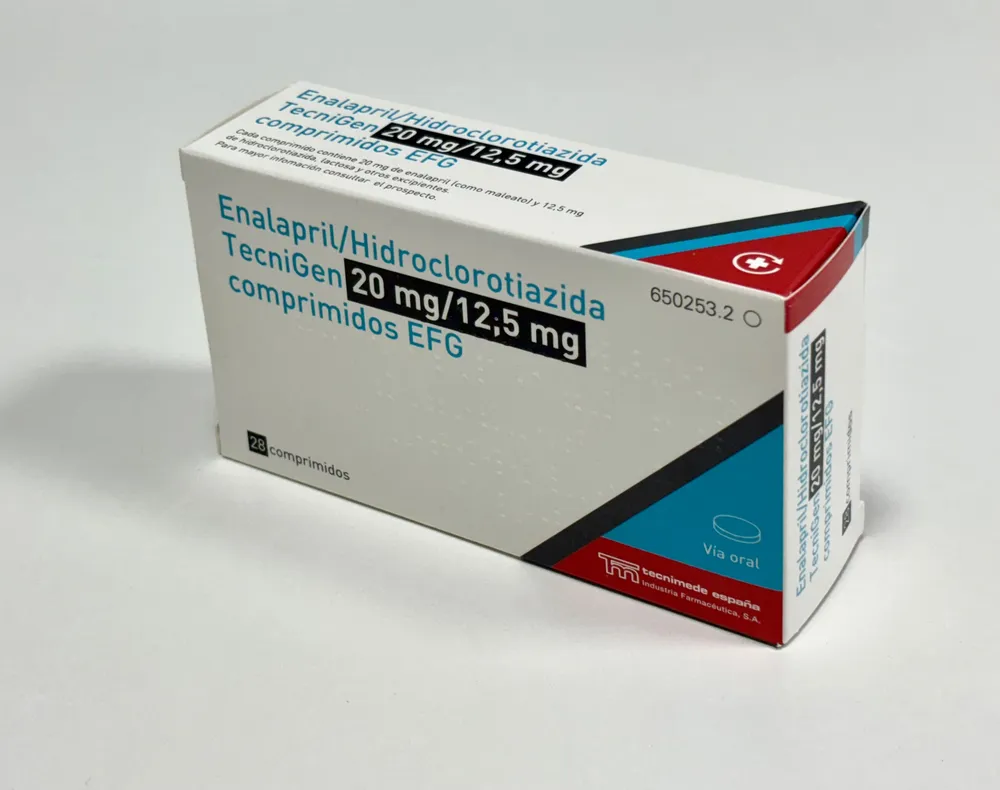
Table of Contents
- Patient Information Leaflet
- Introduction
- 1. What Enalapril/Hydrochlorothiazide TecniGen is and what it is used for
- 2. What you need to know before taking Enalapril/Hydrochlorothiazide TecniGen
- 3. How to take Enalapril/Hydrochlorothiazide TecniGen 20/12.5 mg tablets
- 4. Possible adverse effects
- 5. Storage of Enalapril/Hydrochlorothiazide TecniGen
- 6. Contents of the pack and other information
Patient Information Leaflet
Introduction
Patient Information Leaflet
Enalapril/Hydrochlorothiazide TecniGen 20 mg/12.5 mg tablets EFG
Enalapril maleate/Hydrochlorothiazide
Read the entire leaflet carefully before you start taking this medicine, as it contains important information for you.
− | Keep this leaflet, as you may need to read it again. |
− | If you have any questions, consult your doctor, pharmacist, or nurse. |
− | This medicine has been prescribed for you only and must not be given to other people, even if they have the same symptoms as you, because it may harm them. |
− | If you experience any adverse effects, consult your doctor, pharmacist, or nurse, even if they are adverse effects not listed in this leaflet. See section 4. |
Package leaflet:
- What Enalapril/Hydrochlorothiazide TecniGen is and what it is used for
- What you need to know before taking Enalapril/Hydrochlorothiazide TecniGen
- How to take Enalapril/Hydrochlorothiazide TecniGen
- Possible side effects
- How to store Enalapril/Hydrochlorothiazide TecniGen
- Contents of the pack and other information
1. What Enalapril/Hydrochlorothiazide TecniGen is and what it is used for
This medicine contains enalapril maleate and hydrochlorothiazide.
The active substance enalapril belongs to a group of medicines called angiotensin-converting enzyme (ACE) inhibitors, which work by dilating blood vessels to allow the heart to pump blood more easily to all parts of the body.
The active substance hydrochlorothiazide belongs to a group of medicines known as thiazide diuretics, which cause the kidneys to eliminate increased amounts of water and salts.
Together, enalapril and hydrochlorothiazide effectively help reduce high blood pressure in cases where either component alone has not achieved the desired effect.
Your doctor has prescribed Enalapril/Hydrochlorothiazide to treat your hypertension (high blood pressure).
2. What you need to know before taking Enalapril/Hydrochlorothiazide TecniGen
Do not take Enalapril/Hydrochlorothiazide TecniGen:
- If you are allergic to enalapril, hydrochlorothiazide, or any other component of this medicine listed in section 6.
- If you have previously been treated with a medicine from the same drug class as enalapril (ACE inhibitors) and experienced allergic reactions with swelling of the face, lips, tongue, and/or throat, accompanied by difficulty swallowing or breathing. You must not take Enalapril/Hydrochlorothiazide if you have had such reactions without a known cause, or if you have been diagnosed with idiopathic or hereditary angioedema.
- If you are allergic to sulfonamide-derived substances. Ask your doctor if you are unsure about what sulfonamide-derived medicines are.
- If you are unable to urinate.
- If you have kidney or liver disease.
- If you are more than 3 months pregnant. (It is preferable to avoid treatment with Enalapril/Hydrochlorothiazide during the first 3 months. See section “Pregnancy, breastfeeding and fertility”.)
- If you have diabetes or renal insufficiency and are being treated with a blood pressure-lowering medicine containing aliskiren.
- If you have taken or are currently taking sacubitril/valsartan, a medicine used to treat chronic heart failure in adults, as the risk of angioedema (rapid swelling beneath the skin, e.g., in the throat) is increased.
If you are unsure, consult your doctor before starting Enalapril/Hydrochlorothiazide.
Warnings and precautions
Talk to your doctor, pharmacist, or nurse before taking Enalapril/Hydrochlorothiazide:
-
If you have previously experienced respiratory or lung problems (such as inflammation or fluid in the lungs) after taking hydrochlorothiazide. If you develop dyspnea or severe difficulty breathing after taking Enalapril/Hydrochlorothiazide, seek medical attention immediately.
-
If you are taking any of the following medicines used to treat high blood pressure (hypertension):
-
an angiotensin II receptor antagonist (ARA) (also known as "sartans" – for example, valsartan, telmisartan, irbesartan), particularly if you have kidney problems related to diabetes.
-
aliskiren
-
If you think you may be pregnant (or could become pregnant). Enalapril/Hydrochlorothiazide is not recommended during early pregnancy and must not be used after the third month of pregnancy, as it may cause serious harm to your baby if used at this stage. (See section “Pregnancy, breastfeeding and fertility”.)
-
Inform your doctor about any health problems you have or may have, particularly any history of allergies.
-
If you have heart disease, blood disorders, gout, are undergoing dialysis, are being treated with diuretics, or have recently experienced excessive vomiting or diarrhea.
-
If you are on a salt-free diet, take potassium supplements, potassium-sparing medicines (medicines that increase urine output), or salt substitutes containing potassium.
-
If you are over 70 years old.
-
If you have diabetes or kidney problems (including kidney transplant), as these may lead to elevated potassium levels in the blood, which can be serious. In such cases, your doctor will adjust your dose of Enalapril/Hydrochlorothiazide and monitor your blood potassium levels.
-
If you have diabetes and are taking medicines for diabetes, including insulin, as your dose of diabetes medication may need adjustment, especially during the first month of treatment with Enalapril/Hydrochlorothiazide.
-
If you have previously experienced an allergic reaction with swelling of the face, lips, tongue, and/or throat, accompanied by difficulty swallowing or breathing.
-
If you are about to undergo LDL apheresis (a procedure similar to dialysis used to remove LDL or "bad" cholesterol particles from the blood when levels are excessively high), or if you are scheduled for desensitization therapy to reduce the effects of an allergy to bee or wasp stings.
-
If you have low blood pressure, as the use of Enalapril/Hydrochlorothiazide, especially with the first doses, may cause a sudden drop in blood pressure (you may experience fainting or dizziness, particularly when standing up).
-
If you are scheduled for surgery or anesthesia (including at the dentist), inform the doctor or dentist that you are taking Enalapril/Hydrochlorothiazide, as you may experience a sudden drop in blood pressure due to anesthesia.
-
If you have had skin cancer or develop an unexpected skin lesion during treatment. Treatment with hydrochlorothiazide, particularly long-term use at high doses, may increase the risk of certain types of non-melanoma skin and lip cancer. Protect your skin from exposure to sunlight and UV rays while taking Enalapril/Hydrochlorothiazide.
-
If you experience a decrease in vision or eye pain, which could be symptoms of fluid accumulation in the vascular layer of the eye (choroidal effusion) or increased eye pressure, occurring within hours to weeks after taking Enalapril/Hydrochlorothiazide. If untreated, this may lead to permanent vision loss. Your risk may be higher if you have had an allergy to penicillin or sulfonamides.
Your doctor may regularly monitor your kidney function, blood pressure, and blood electrolyte levels (e.g., potassium).
See also the information under the heading “Do not take Enalapril/Hydrochlorothiazide TecniGen”.
Elderly patients
In studies combining enalapril and hydrochlorothiazide, the drug effects and tolerability were similar in younger adult patients and elderly patients with high blood pressure.
Children and adolescents
The safety and efficacy of enalapril/hydrochlorothiazide have not been established in this population group; therefore, its use is not recommended in children.
Taking Enalapril/Hydrochlorothiazide TecniGen with other medicines:
Inform your doctor or pharmacist if you are taking, have recently taken, or might need to take any other medicines.
In general, Enalapril/Hydrochlorothiazide can be used with other medicines. However, your doctor may need to adjust your dose and/or take additional precautions:
- If you are taking an angiotensin II receptor antagonist (ARA) or aliskiren (see also information under the headings “Do not take Enalapril/Hydrochlorothiazide TecniGen” and “Warnings and precautions”).
To prescribe the correct dose of Enalapril/Hydrochlorothiazide, your doctor must know if you are taking other blood pressure-lowering medicines, diabetes treatments (including oral antidiabetics or insulin), diuretics, potassium-containing medicines (including dietary salt substitutes), lithium (a medicine used to treat a specific type of depression), tricyclic antidepressants, antipsychotics, sympathomimetic medicines, certain painkillers or medicines for arthritis (including gold salts), alcohol, anesthetics, non-depolarizing muscle relaxants, barbiturates, narcotics, cholestyramine and colestipol resins, digitalis glycosides, corticosteroids, ACTH, laxatives, cytostatics (such as cyclophosphamide, methotrexate), medicines that may prolong the QT interval (e.g., quinidine, procainamide, amiodarone, sotalol), acetylsalicylic acid, thrombolytics, or beta-blockers.
Taking Enalapril/Hydrochlorothiazide TecniGen with food, drinks, and alcohol:
Enalapril/hydrochlorothiazide can be taken with or without food. Most people take enalapril/hydrochlorothiazide with a glass of water.
Pregnancy, breastfeeding and fertility:
If you are pregnant or breastfeeding, think you may be pregnant, or plan to become pregnant, consult your doctor or pharmacist before using this medicine.
Pregnancy:
Inform your doctor if you think you may be pregnant (or could be).
Generally, your doctor will advise stopping treatment with Enalapril/Hydrochlorothiazide before becoming pregnant or as soon as pregnancy is confirmed, and will prescribe an alternative medicine. Enalapril/Hydrochlorothiazide is not recommended during early pregnancy and must not be used from the third month of pregnancy onward, as it may cause serious harm to your baby.
Breastfeeding:
Inform your doctor if you are breastfeeding or plan to breastfeed. Enalapril/Hydrochlorothiazide is not recommended during breastfeeding.
Driving and using machines:
Individual responses to this medicine may vary. Some adverse reactions reported with Enalapril/Hydrochlorothiazide may affect the ability of some patients to drive or operate machinery (see section 4. Possible side effects).
Enalapril/Hydrochlorothiazide contains lactose and sodium:
If your doctor has informed you of an intolerance to certain sugars, consult him before taking this medicine.
This medicine contains less than 1 mmol of sodium (23 mg) per tablet; therefore, it is essentially “sodium-free”.
Interference with diagnostic tests:
If you are scheduled for diagnostic tests to assess parathyroid gland function, inform your doctor that you are being treated with Enalapril/Hydrochlorothiazide, as it may alter test results.
Use in athletes:
Athletes should be aware that this medicine contains a component that may lead to a positive result in doping control tests.
3. How to take Enalapril/Hydrochlorothiazide TecniGen 20/12.5 mg tablets
Follow exactly the administration instructions given by your doctor. If in doubt, consult your doctor or pharmacist again.
Your doctor will determine the appropriate dose based on your condition and whether you are taking other medications.
The recommended dose is 1 or 2 tablets taken once daily. They should preferably be taken with water.
The maximum daily dose is 2 tablets.
Take Enalapril/Hydrochlorothiazide TecniGen every day, exactly as directed by your doctor. It is very important to continue taking this medicine for the length of time recommended by your doctor.
Do not change the prescribed dose and do not stop taking the medicine without consulting your doctor.
If you have been taking diuretics before starting treatment, or follow a low-salt diet, your doctor will stop the diuretic 2 or 3 days before starting treatment or will reduce the initial dose of this medicine.
If you take more Enalapril/Hydrochlorothiazide TecniGen than you should:
Symptoms:
The most likely symptoms in case of overdose are: feeling dizzy or lightheaded due to a sudden or excessive drop in blood pressure, and/or excessive thirst, disorientation, decreased urine output, and/or rapid heartbeat (tachycardia).
Treatment:
If you have taken an excessive dose, contact your doctor or pharmacist immediately, or contact the Toxicology Information Service, Telephone: 91-562 04 20.
If you forget to take Enalapril/Hydrochlorothiazide TecniGen:
Take the dose of Enalapril/Hydrochlorothiazide prescribed by your doctor as soon as possible. However, if it is almost time for your next dose, do not take the missed dose. Do not take a double dose to make up for forgotten doses.
Resume taking the medicine as originally instructed.
If you stop treatment with Enalapril/Hydrochlorothiazide TecniGen:
Do not stop treatment with Enalapril/Hydrochlorothiazide unless your doctor tells you to.
If you have any further questions about the use of this medicine, ask your doctor, pharmacist, or nurse.
4. Possible adverse effects
Like all medicines, this medicine can cause adverse effects, although not everyone will experience them.
Very common adverse effects are blurred vision, dizziness, cough, nausea, and weakness.
Frequent adverse effects are hypokalaemia, increased cholesterol, increased triglycerides, hyperuricaemia, headache, depression, syncope, taste disturbance, hypotension, orthostatic hypotension, changes in heart rate, angina, tachycardia, dyspnoea, diarrhoea, abdominal pain, skin rash, muscle cramps, chest pain, fatigue, hyperkalaemia, and increased serum creatinine.
Uncommon adverse effects are anaemia (including aplastic and haemolytic anaemia), hypoglycaemia, hypomagnesaemia, gout, confusion, somnolence, insomnia, nervousness, paraesthesia, vertigo, decreased libido, tinnitus, flushing, palpitations, myocardial infarction or stroke, possibly secondary to excessive reduction in blood pressure in high-risk patients, rhinorrhoea, throat irritation, hoarseness, bronchospasm/asthma, ileus, pancreatitis, vomiting, dyspepsia, constipation, anorexia, gastric irritation, dry mouth, peptic ulcer, flatulence, sweating, pruritus, urticaria, alopecia, arthralgia, renal failure, renal insufficiency, proteinuria, impotence, malaise, generalised fever, increased uraemia, hyponatraemia.
Rare adverse effects are neutropenia, decreased haemoglobin, decreased haematocrit, thrombocytopenia, agranulocytosis, bone marrow depression, leucopenia, pancytopenia, lymphadenopathy, autoimmune diseases, increased blood glucose, abnormal dreams, sleep disorders, paralysis (due to hypokalaemia), Raynaud's phenomenon, pulmonary infiltrates, respiratory distress (including pneumonia and pulmonary oedema), rhinitis, allergic alveolitis/eosinophilic pneumonia, stomatitis/aphthous ulcers, glossitis, hepatic failure, hepatic necrosis (which may be fatal), hepatocellular or cholestatic hepatitis, jaundice, cholecystitis (particularly in patients with pre-existing gallstones), erythema multiforme, Stevens-Johnson syndrome, exfoliative dermatitis, toxic epidermal necrolysis, purpura, cutaneous lupus erythematosus, erythroderma, pemphigus, oliguria, interstitial nephritis, gynaecomastia, increased liver enzymes, increased serum bilirubin.
Very rare adverse effects are hypercalcaemia, interstitial angioedema, and acute respiratory difficulty (signs include severe breathing difficulty, fever, weakness, and confusion).
Adverse effects with unknown frequency are syndrome of inappropriate antidiuretic hormone secretion (SIADH), skin and lip cancer (non-melanoma skin cancer), and decreased vision or eye pain due to elevated pressure [possible signs of fluid accumulation in the vascular layer of the eye (choroidal effusion) or acute angle-closure glaucoma].
Other adverse effects may rarely occur, and some may be serious. Consult your doctor or pharmacist for more detailed information about adverse effects.
Stop taking Enalapril/Hydrochlorothiazide and contact your doctor immediately if:
- You notice swelling of the face, tongue, lips, or throat causing difficulty in swallowing or breathing.
- Your hands, feet, or ankles swell.
- You develop skin hives (urticaria).
Please note that black patients have a higher risk of developing these types of reactions to ACE inhibitors.
The initial dose may cause a greater drop in blood pressure than occurs during continued treatment. You may feel faint or dizzy, and lying down may help. If this happens to you, consult your doctor.
Reporting of adverse effects
If you experience any adverse effect, talk to your doctor, pharmacist, or nurse, even if it is a possible adverse effect not listed in this leaflet. You can also report them directly via the Spanish Pharmacovigilance System for Human Medicinal Products. Website: www.notificaRAM.es.
By reporting adverse effects, you can help provide more information on the safety of this medicine.
5. Storage of Enalapril/Hydrochlorothiazide TecniGen
Keep this medicine out of the sight and reach of children.
Do not store above 25 °C.
Do not use this medicine after the date stated on the container. The expiry date is indicated by "CAD". The expiration date refers to the last day of the month shown.
Medicines must not be disposed of via wastewater or household waste. Dispose of unused medicines and their packaging at the SIGRE collection point at your pharmacy. If you are in doubt, please ask your pharmacist how to dispose of medicines you no longer need. This will help protect the environment.
6. Contents of the pack and other information
Composition of Enalapril/Hydrochlorothiazide Tecnigen 20 mg/12.5 mg
The active substances are enalapril maleate and hydrochlorothiazide.
The other components (excipients) are: microcrystalline cellulose, corn starch, sodium bicarbonate, magnesium stearate, lactose monohydrate and sodium starch glycolate.
Appearance of the medicinal product and contents of the pack
Enalapril/Hydrochlorothiazide Tecnigen 20 mg/12.5 mg tablets are white, round and biconvex. Each pack contains 10, 28, 30, 60 or 500 tablets in blister packs. Only certain pack sizes may be commercially available.
Marketing Authorization Holder and Manufacturer:
Marketing Authorization Holder:
Tecnimede España, Industria Farmacéutica, S.A.
Avda. de Bruselas, 13, 3º D. Edificio América. Polígono Arroyo de la Vega,
28108 Alcobendas, Madrid. Spain
Manufacturer:
Atlantic Pharma – Produções Farmacêuticas, S.A.
Rua da Tapada Grande, n.º 2, Abrunheira, 2710-228 Sintra, Portugal
This medicinal product is authorized in Portugal under the name Enalapril/Hydrochlorothiazide Farmoz 20/12.5 mg tablets.
Date of the most recent review of this leaflet: May 2023
Detailed and up-to-date information on this medicinal product is available on the website of the Spanish Agency of Medicines and Health Products (AEMPS) http://www.aemps.gob.es/