Enalapril/hydrochlorothiazide Sandoz 20/12.5 mg tablets EFG
Spain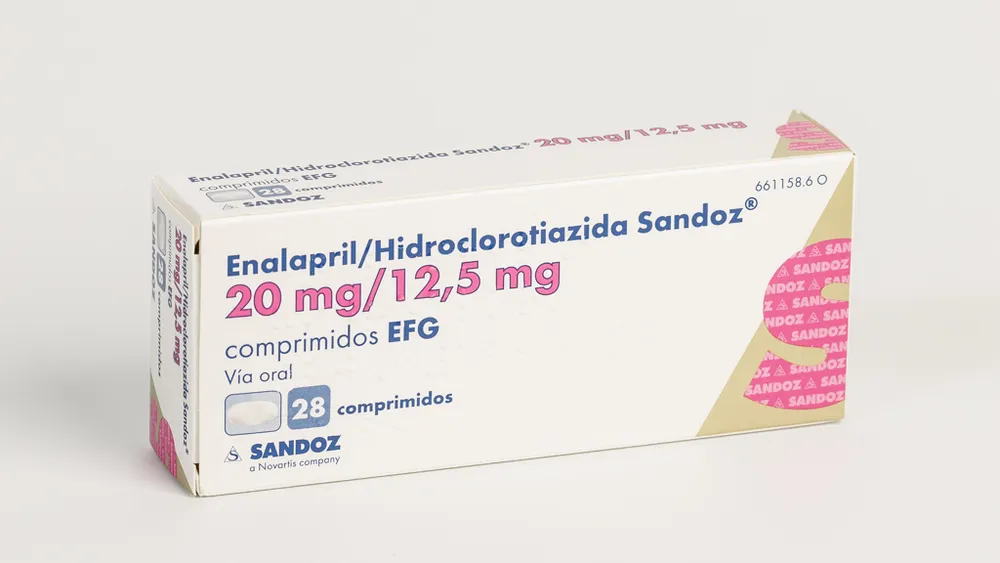
Table of Contents
- Patient Information Leaflet
- Introduction
- 1. What Enalapril/Hydrochlorothiazide Sandoz is and what it is used for
- 2. What you need to know before taking Enalapril/Hydrochlorothiazide Sandoz
- 3. How to take Enalapril/Hydrochlorothiazide Sandoz
- 4. Possible adverse effects
- 5. Storage of Enalapril/Hydrochlorothiazide Sandoz
- 6. Contents of the pack and other information
Patient Information Leaflet
Introduction
Package leaflet: Information for the patient
Enalapril/Hydrochlorothiazide Sandoz 20 mg/12.5 mg tablets EFG
Enalapril maleate/Hydrochlorothiazide
Read the entire leaflet carefully before you start taking this medicine, as it contains important information for you.
- Keep this leaflet, as you may need to read it again.
- If you have any questions, ask your doctor or pharmacist.
- This medicine has been prescribed for you only, and you should not give it to others, even if they have the same symptoms as you, because it could harm them.
- If you experience any adverse effects, consult your doctor or pharmacist, even if they are adverse effects not listed in this leaflet. See section 4.
Leaflet contents
- What Enalapril/Hydrochlorothiazide Sandoz is and what it is used for
- What you need to know before taking Enalapril/Hydrochlorothiazide Sandoz
- How to take Enalapril/Hydrochlorothiazide Sandoz
- Possible side effects
- How to store Enalapril/Hydrochlorothiazide Sandoz
- Contents of the pack and other information
1. What Enalapril/Hydrochlorothiazide Sandoz is and what it is used for
Enalapril/Hydrochlorothiazide Sandoz contains a combination of enalapril and hydrochlorothiazide and is used as a treatment for high blood pressure when treatment with enalapril alone has proven insufficient on its own.
Your doctor may also prescribe you Enalapril/Hydrochlorothiazide Sandoz instead of separate tablets containing the same doses of enalapril and hydrochlorothiazide.
This fixed-dose combination is not suitable for initial treatment.
You should speak with a doctor if you do not feel better or if you feel worse.
Enalapril belongs to a group of medicines called angiotensin-converting enzyme (ACE) inhibitors; it lowers blood pressure by dilating blood vessels.
Hydrochlorothiazide belongs to a group of medicines called diuretics and reduces blood pressure by increasing urine production.
2. What you need to know before taking Enalapril/Hydrochlorothiazide Sandoz
Do not take Enalapril/Hydrochlorothiazide Sandoz
- if you are allergic to enalapril, hydrochlorothiazide or any of the other ingredients of this medicine (listed in section 6),
- if you are allergic to sulfonamide-derived medicines (most are antibiotics, e.g., sulfamethoxazole),
- if you have previously experienced swelling of the limbs, face, lips, throat, mouth or tongue (angioedema) when treated with other medicines belonging to the group known as ACE inhibitors (angiotensin-converting enzyme inhibitors),
- if you have previously experienced swelling of the limbs, face, lips, throat, mouth or tongue (angioedema) under any other circumstances,
- if a member of your family has previously had swelling of the limbs, face, lips, throat, mouth or tongue (angioedema),
- if you have severe kidney problems,
- if you have difficulty urinating,
- if you have diabetes or renal impairment and are being treated with an antihypertensive medicine containing aliskiren,
- if you have severe liver problems or a neurological disorder as a result of severe liver problems (hepatic encephalopathy),
- if you are more than 3 months pregnant (enalapril maleate/hydrochlorothiazide should also be avoided at the beginning of pregnancy; see pregnancy section),
- if you have taken or are currently taking sacubitril/valsartan, a medicine used to treat chronic heart failure in adults, as the risk of angioedema (rapid swelling beneath the skin, e.g., in the throat) is high.
Warnings and precautions
Consult your doctor or pharmacist before starting Enalapril/Hydrochlorothiazide Sandoz if:
-
you have narrowing of the arteries (atherosclerosis), cerebrovascular disorders such as stroke or transient ischemic attack (TIA, a “mini-stroke”),
-
you have a disease characterized by reduced blood supply to the heart muscle, usually due to coronary artery disease (ischemic heart disease),
-
you have heart failure,
-
you have low blood pressure, follow a low-salt diet, or are taking diuretics,
-
you have imbalances in body fluids or electrolytes (e.g., irregular levels of water and minerals in your body), indicated by nausea, abdominal pain, and/or vomiting, headache, edema (swelling), muscle weakness and/or tremors, among others,
-
you have a heart muscle disease (hypertrophic cardiomyopathy), narrowing of the main artery carrying blood from the heart (aortic stenosis), narrowing of the artery to the functioning kidney, have a transplanted kidney, or another type of heart problem known as outflow tract obstruction,
-
you are undergoing LDL apheresis (removal of cholesterol from the blood using a machine),
-
you are undergoing desensitization treatment for insect venom, such as bee or wasp stings,
-
you have diabetes,
-
you suffer from gout, have high levels of uric acid in your blood, or are being treated with allopurinol,
-
you require anesthesia,
-
you have recently experienced severe, prolonged vomiting and/or severe diarrhea,
-
you are due to have a blood test to check your parathyroid function,
-
you have or have had liver or kidney problems, renal artery stenosis (narrowing of the kidney arteries), only one functioning kidney, or are undergoing hemodialysis,
-
you have a collagen vascular disease such as systemic lupus erythematosus (SLE) or scleroderma, which may be associated with skin rashes, joint pain, and fever,
-
if you have had skin cancer or develop an unexpected skin lesion during treatment. Treatment with hydrochlorothiazide, particularly long-term use at high doses, may increase the risk of certain types of non-melanoma skin cancer and lip cancer. Protect your skin from exposure to sunlight and UV rays while taking Enalapril/Hydrochlorothiazide Sandoz,
-
you have allergies or asthma,
-
if you have previously experienced respiratory or lung problems (such as inflammation or fluid in the lungs) after taking hydrochlorothiazide. If you develop dyspnea or severe difficulty breathing after taking enalapril/hydrochlorothiazide, seek medical attention immediately,
-
you are taking lithium, used to treat certain psychiatric disorders,
-
you are taking any of the following medicines, which increase the risk of angioedema (rapid swelling beneath the skin, e.g., in the throat):
-
racecadotril, a medicine used to treat diarrhea,
-
medicines used to prevent organ transplant rejection and for cancer (e.g., temsirolimus, sirolimus, everolimus and other medicines belonging to the pharmacological class of mTOR inhibitors),
-
vildagliptin, a medicine used to treat diabetes.
-
you are taking any of the following medicines used to treat high blood pressure (hypertension):
-
an angiotensin II receptor antagonist (ARA) (also known as “sartans”, e.g., valsartan, telmisartan, irbesartan), particularly if you have kidney problems related to diabetes,
-
aliskiren.
Your doctor may need to monitor your kidney function, blood pressure, and blood electrolyte levels (e.g., potassium) at regular intervals.
See also the information under the heading “Do not take Enalapril/Hydrochlorothiazide Sandoz”.
You should consult your doctor if you think you are (or might become) pregnant. Enalapril maleate/hydrochlorothiazide is not recommended during early pregnancy and must not be taken if you are more than 3 months pregnant, as it may cause serious harm to your baby if taken during this period (see pregnancy section). Breastfeeding is not recommended while taking Enalapril/Hydrochlorothiazide Sandoz.
Enalapril/Hydrochlorothiazide Sandoz is generally not recommended if any of the following apply, so you should consult your doctor before starting this medicine:
- if you have recently undergone a kidney transplant,
- if you have high potassium levels in your blood, your potassium levels should be monitored during treatment. Risk factors for elevated potassium include reduced kidney function, age (>70 years), dehydration, acute heart failure, acidification of the blood (metabolic acidosis), diabetes (diabetes mellitus), concomitant use of potassium-sparing diuretics, potassium supplements, potassium-containing salt substitutes, or medicines that increase blood potassium levels. You may also develop low blood potassium levels, indicated by high blood pressure, irregular heartbeat, etc. (e.g., caused by drug interactions, excessive urine loss, etc.).
See also the section “Other medicines and Enalapril/Hydrochlorothiazide Sandoz” later in this leaflet.
Inform your doctor if you are an athlete subject to doping controls, as Enalapril/Hydrochlorothiazide Sandoz contains an active substance that may lead to positive results in doping tests.
Elderly patients (>70 years) or malnourished individuals should exercise particular caution when using Enalapril/Hydrochlorothiazide Sandoz.
Enalapril/Hydrochlorothiazide Sandoz may be less effective in individuals of Black race.
Children and adolescents
This medicine is not recommended for use in children.
If, while taking Enalapril/Hydrochlorothiazide Sandoz, you develop any of the following symptoms, inform your doctor immediately:
- you feel dizzy after the first dose. Some people react to their first dose or dose increase with mild weakness and discomfort,
- sudden swelling of the lips, face, and neck, possibly also hands and feet, difficulty breathing or hoarseness. This condition is called angioedema. It can occur at any time during treatment. ACE inhibitors cause a higher incidence of angioedema in Black patients or patients of other races,
- high temperature, sore throat, or mouth ulcers (these may be symptoms of infection due to reduced white blood cell count),
- yellowing of the skin and whites of the eyes (jaundice), which may indicate liver disease,
- a persistent dry cough that lasts a long time. Cough has been observed with ACE inhibitors, but it may also be a symptom of another upper respiratory tract disease,
- sudden myopia,
- if you experience decreased vision or eye pain, which could be symptoms of fluid accumulation in the vascular layer of the eye (choroidal effusion) or increased eye pressure, occurring within hours to weeks after taking Enalapril/Hydrochlorothiazide Sandoz. This may lead to permanent vision loss if untreated. If you have previously had an allergy to penicillins or sulfonamides, you may be at higher risk of developing this condition.
Other medicines and Enalapril/Hydrochlorothiazide Sandoz
Inform your doctor or pharmacist if you are taking, have recently taken, or might need to take any other medicines.
Do not take enalapril/hydrochlorothiazide at the same time as the following medicines:
- potassium supplements (including potassium substitutes),
- diuretics used to treat high blood pressure, including potassium-sparing diuretics such as spironolactone, triamterene, or amiloride, and other medicines that may increase potassium levels in your body (e.g., trimethoprim and cotrimoxazole, also known as trimethoprim/sulfamethoxazole for bacterial infections; cyclosporine, an immunosuppressant used to prevent organ transplant rejection; and heparin, a medicine used to thin the blood to prevent clots),
- other medicines used to treat high blood pressure.
Your doctor may need to adjust your dose and/or take other precautions if you are taking an angiotensin II receptor antagonist (ARA) or aliskiren (see also sections “Do not take Enalapril/Hydrochlorothiazide Sandoz” and “Take special care with Enalapril/Hydrochlorothiazide Sandoz”).
- anesthetics and medicines for mental disorders or depression, medicines for psychosis, tricyclic antidepressants or sedatives,
- lithium (a medicine used to treat psychiatric disorders),
- analgesics and anti-inflammatory medicines, such as acetylsalicylic acid, indomethacin, and selective cyclooxygenase-2 inhibitors (COX-2 inhibitors),
- gold injections (sodium aurothiomalate), a medicine for rheumatoid arthritis,
- medicines such as ephedrine, used in some cough and cold medicines, or noradrenaline and adrenaline, used for low blood pressure, shock, heart failure, asthma, or allergies,
- medicines that lower blood sugar, such as insulin and oral antidiabetics,
- cholestyramine and colestipol resins, active substances that lower blood lipid levels,
- corticosteroids, anti-inflammatory hormonal substances,
- corticotropin (ACTH), used mainly to determine if your adrenal glands are functioning properly,
- muscle relaxants (e.g., tubocurarine chloride, medicines used to relax muscles during surgery),
- allopurinol, probenecid, sulfinpyrazone, medicines used to treat gout,
- medicines such as atropine or biperiden used to treat various disorders such as gastrointestinal cramps, urinary bladder spasm, asthma, dizziness, muscle spasms, or as an aid in anesthesia,
- medicines used to treat cancer, such as cyclophosphamide or methotrexate,
- medicines that suppress the immune system, medicines used to prevent rejection after organ or bone marrow transplants such as cyclosporine,
- cardiac glycosides (e.g., digoxin, medicines to strengthen the heart),
- medicines that may cause conduction abnormalities in the heart as an adverse effect, such as medicines for heart rhythm disorders, some medicines for psychosis, and other medicines used to treat bacterial infections,
- calcium salts and vitamin D, high calcium levels in blood (may lead to gastrointestinal disturbances, excessive thirst, excessive urination, fatigue, weakness, and weight loss),
- carbamazepine, a medicine mainly used to treat epilepsy and bipolar disorder,
- amphotericin B, medicines used to treat fungal infections,
- laxatives, medicines to promote defecation,
- ionic contrast media, used to enhance visibility of blood vessels and organs during radiographic procedures,
- barbiturates, medicines that act as central nervous system depressants causing sedation,
- opioid analgesics, strong analgesics with non-anti-inflammatory effects,
- carbenoxolone, a medicine used to treat gastrointestinal tract inflammation,
- salicylates, medicines used to treat pain and/or inflammatory diseases,
- medicines commonly used to prevent rejection of transplanted organs (sirolimus, everolimus and other medicines belonging to the pharmacological class of mTOR inhibitors). See section “Warnings and precautions”.
Inform your doctor or pharmacist if you are currently using or have recently used other medicines, including those obtained without a prescription, natural products, or herbal remedies.
Taking Enalapril/Hydrochlorothiazide Sandoz with food, drinks, and alcohol
Enalapril/Hydrochlorothiazide Sandoz can be taken regardless of meals. Drinking alcohol with this medicine may enhance its blood pressure-lowering effect (and thus may cause dizziness upon standing, among other things).
Pregnancy and breastfeeding
If you are pregnant or breastfeeding, think you may be pregnant, or plan to become pregnant, consult your doctor or pharmacist before using this medicine.
Pregnancy
Inform your doctor if you think you are (or might become) pregnant. Your doctor will usually advise you to stop treatment with enalapril/hydrochlorothiazide before becoming pregnant or as soon as pregnancy is confirmed, and will recommend an alternative medicine. Enalapril/hydrochlorothiazide is not recommended during early pregnancy and must not be taken after 3 months of pregnancy, as it may cause serious harm to your baby if used beyond the third month of pregnancy.
Breastfeeding
Consult your doctor if you are breastfeeding or plan to start breastfeeding.
The use of enalapril/hydrochlorothiazide is not recommended in breastfeeding mothers.
Driving and using machines
Dizziness and fatigue have been reported in patients treated with enalapril/hydrochlorothiazide. If you experience any of these symptoms, do not drive or operate machinery (see also section “4. Possible side effects”).
Enalapril/Hydrochlorothiazide Sandoz contains lactose
If your doctor has informed you of an intolerance to certain sugars, consult him before taking this medicine.
Enalapril/Hydrochlorothiazide contains sodium
This medicine contains less than 1 mmol of sodium (23 mg) per tablet; hence, it is essentially “sodium-free”.
3. How to take Enalapril/Hydrochlorothiazide Sandoz
Follow exactly the instructions for using this medicine as given by your doctor or pharmacist. If in doubt, consult your doctor or pharmacist again.
Adults
The recommended dose is one tablet once daily.
Elderly
Your doctor may carefully adjust the dose of enalapril and hydrochlorothiazide.
Renal impairment
Your doctor will carefully adjust the dose of enalapril and hydrochlorothiazide.
If you are taking other diuretic tablets
If you are taking other diuretic tablets, your doctor will inform you that you should stop taking them 2 or 3 days before starting enalapril/hydrochlorothiazide.
Method of administration
The tablets should be swallowed with a glass of water.
Enalapril/Hydrochlorothiazide Sandoz may be taken with or without food.
The score line is only intended to facilitate tablet splitting and swallowing, and not for dividing the tablet into equal doses.
If you take more Enalapril/Hydrochlorothiazide Sandoz than you should
If you have taken more Enalapril/Hydrochlorothiazide Sandoz than you should, contact your doctor, pharmacist, or go immediately to the nearest hospital, or call the Toxicology Information Service at telephone number: 91 562 04 20, indicating the medicine and the amount ingested.
If you (or someone else) have ingested several tablets at once, or if you suspect that a child has swallowed any of the tablets, seek immediate medical attention. An overdose may cause low blood pressure, excessively fast or slow heartbeat, palpitations (sensation of rapid or irregular heartbeat), shock, rapid breathing, cough, discomfort, cramps, dizziness, numbness, confusion, or anxiety, excessive urination or inability to urinate. Take this leaflet, any remaining tablets, and the packaging to the doctor or hospital so they know which tablets have been taken.
If you forget to take Enalapril/Hydrochlorothiazide Sandoz
Do not take a double dose to make up for forgotten doses. Take the next dose at the usual time. If you have any further questions about the use of this medicine, ask your doctor or pharmacist.
If you stop taking Enalapril/Hydrochlorothiazide Sandoz
Treatment of high blood pressure is long-term, and stopping treatment should be discussed with your doctor. Interrupting or stopping your treatment may result in increased blood pressure.
If you have any further questions about the use of this medicine, ask your doctor or pharmacist.
4. Possible adverse effects
Like all medicines, this medicine can cause adverse effects, although not everyone will experience them.
If you experience any of the following, stop taking Enalapril/Hydrochlorothiazide Sandoz immediately and contact your doctor or go to the nearest hospital emergency department:
- A severe allergic reaction called angioedema (rash, itching, swelling of the limbs, face, lips, mouth or throat, which may cause difficulty swallowing or breathing). This is a serious and common adverse effect (may affect up to 1 in 10 patients). It may require urgent medical attention or hospitalization.
- A severe allergic reaction called anaphylactic reaction causing difficulty breathing or dizziness. This is an uncommon side effect (may affect up to 1 in 1,000 people).
- Severe blistering, Stevens-Johnson syndrome (blisters on the skin, mouth, eyes and genitals), skin appearing burned and peeling, skin sensitivity to light, skin conditions with red, scaly patches on the nose and cheeks (lupus erythematosus), pemphigus (a disease causing blisters and lesions usually starting in the mouth), hives, hair loss and itching. These are uncommon side effects (may affect up to 1 in 1,000 people).
- Jaundice (yellowing of the skin and whites of the eyes).
This is a potentially serious but rare adverse effect (may affect up to 1 in 10,000 patients), indicating inflammation of the liver. It may require urgent medical attention or hospitalization.
- Sudden myopia. Adverse effect of unknown frequency (cannot be estimated from available data).
- Decreased vision or eye pain due to increased pressure (possible signs of fluid accumulation in the vascular layer of the eye (choroidal effusion) or acute angle-closure glaucoma). Adverse effect of unknown frequency (cannot be estimated from available data).
- Acute breathing difficulty (symptoms include severe shortness of breath, fever, weakness and confusion). This is a very rare adverse reaction (may affect up to 1 in 10,000 people).
Enalapril maleate/hydrochlorothiazide frequently (may affect up to 1 in 10 patients) causes a drop in blood pressure, which may be associated with feelings of faintness and weakness. In some patients, this may occur after the first dose or when the dose is increased. If you experience these symptoms, you should contact your doctor immediately.
Enalapril maleate/hydrochlorothiazide rarely (may affect up to 1 in 1,000 patients) may reduce the number of white blood cells and may decrease your resistance to infections. If you develop an infection with symptoms such as fever and severe deterioration in your general condition, or fever with signs of localized infection such as sore throat/pharynx/mouth or urinary problems, you should see your doctor immediately. A blood test will be performed to check for possible reduction in white blood cells (agranulocytosis). It is important to inform your doctor about your medication.
With the use of enalapril maleate/hydrochlorothiazide and other ACE inhibitors, a dry cough has been very commonly reported (may affect more than 1 in 10 patients), which may persist for a long time, but may also be a symptom of another upper respiratory tract illness. You should contact your doctor if this symptom occurs.
The following adverse effects have also been reported:
Very common (may affect more than 1 in 10 patients)
- blurred vision,
- dizziness,
- nausea,
- weakness,
- cough.
Common (may affect up to 1 in 10 patients)
- low blood potassium levels, which may cause muscle weakness, cramps or irregular heartbeat,
- high levels of blood fats or uric acid,
- headache, depression,
- fainting, low blood pressure associated with changes in posture (such as dizziness or weakness when standing up after lying down), chest pain, irregular heartbeat, excessively fast heartbeat (tachycardia),
- shortness of breath,
- diarrhea, abdominal pain,
- altered sense of taste,
- rash,
- fatigue,
- elevated blood potassium levels, which may cause irregular heartbeat; increased blood creatinine levels,
- muscle cramps.
Uncommon (may affect up to 1 in 100 patients)
- reduction in the number of red blood cells, which may cause paleness, weakness or difficulty breathing (anemia),
- hypoglycemia (low blood sugar levels) (see section 2 “Warnings and precautions”),
- low blood magnesium levels,
- uric acid crystals in the joints (gout),
- confusion, drowsiness, insomnia, nervousness, restlessness, tingling or numbness, dizziness, decreased sexual desire,
- yellow tint in vision due to yellowing of the eye's optical medium (xanthopsia),
- palpitations (sensation of rapid or particularly strong heartbeat),
- heart attack or stroke (mini-stroke) (mainly in patients with low blood pressure),
- inflammation of blood vessels (necrotizing vasculitis),
- runny nose, sore throat, hoarseness, breathing difficulty, wheezing,
- intestinal obstruction, pancreatitis (inflammation of the pancreas causing severe abdominal and back pain), vomiting, indigestion, constipation, loss of appetite, stomach irritation, dry mouth, peptic ulcer, flatulence,
- sweating, itching, hives, hair loss,
- skin sensitivity to sunlight,
- joint pain,
- kidney problems, protein in urine,
- impotence,
- flushing, ringing in the ears,
- malaise, fever,
- inflammation of the salivary glands,
- abnormal levels of salts in the body (electrolyte imbalance), including low blood sodium levels, which may cause fatigue and confusion, muscle twitching, seizures or coma; also leads to dehydration and low blood pressure causing dizziness upon standing,
- increased blood urea levels.
Rare (may affect up to 1 in 1,000 patients)
- reduction in the number of white blood cells, making infections more frequent, reduction in other blood cells, changes in blood composition, reduced bone marrow production, lymph node disease, autoimmune disease in which the body attacks itself,
- unusual dreams, sleep disorders,
- paresis,
- Raynaud's syndrome (a blood vessel disorder causing tingling in fingers and toes, which turn pale, then blue, then red),
- lung problems including pneumonia, inflammation of the nasal lining causing runny nose (rhinitis),
- mouth ulcers, tongue inflammation,
- liver problems, inflammation of the gallbladder,
- skin rash, redness of the skin,
- reduced urine production,
- kidney inflammation (interstitial nephritis),
- breast enlargement (including in men),
- increased levels of liver enzymes and waste products,
- increased blood sugar levels.
Very rare (may affect up to 1 in 10,000 patients)
- inflammation of the intestines,
- high levels of calcium in the blood (see “Other medicines and Enalapril/Hydrochlorothiazide Sandoz” in section 2).
Not known (cannot be estimated from available data)
-
A complex adverse reaction has also been reported, which may include some or all of the following signs:
-
fever, inflammation of blood vessels, muscle or joint pain and swelling,
-
blood disorders affecting blood components (usually detected by blood test),
-
skin rash, photosensitivity and other skin effects.
-
inappropriate secretion of antidiuretic hormone (known as SIADH), causing symptoms such as confusion, nausea, mood changes, seizures and loss of consciousness.
-
glucose excretion in urine (glucosuria),
-
decreased appetite, dizziness,
-
skin and lip cancer (non-melanoma skin cancer).
Reporting of adverse effects
If you experience any adverse effect, talk to your doctor or pharmacist, even if it is a possible adverse effect not listed in this leaflet. You can also report them directly via the Spanish Pharmacovigilance System for Human Medicines: https://www.notificaram.es. By reporting adverse effects, you can help provide more information on the safety of this medicine.
5. Storage of Enalapril/Hydrochlorothiazide Sandoz
Keep this medicine out of the sight and reach of children.
Do not use this medicine after the expiry date which is stated on the carton and on the blister after CAD/EXP. The expiry date refers to the last day of the month indicated.
Do not store above 30 °C. Keep in the original packaging to protect from moisture.
Medicines must not be disposed of via wastewater or household waste. Dispose of containers and unused medicines at the SIGRE Point in your usual pharmacy. Ask your pharmacist how to dispose of containers and medicines you no longer need. This will help protect the environment.
6. Contents of the pack and other information
Composition of Enalapril/Hydrochlorothiazide Sandoz
- The active substances are enalapril maleate and hydrochlorothiazide. Each tablet contains 20 mg of enalapril maleate and 12.5 mg of hydrochlorothiazide.
- The other components (excipients) are sodium hydrogen carbonate, gluten-free corn starch, lactose monohydrate, calcium hydrogen phosphate dihydrate, talc, magnesium stearate.
Appearance of the medicine and contents of the pack
Enalapril/Hydrochlorothiazide Sandoz 20/12.5 mg tablets are white, oval, biconvex, divisible tablets, scored on both sides, with the mark “E|H” on one side.
The tablets are presented in OPA-Al-PVC/Al blisters, contained in a cardboard box.
Enalapril/Hydrochlorothiazide Sandoz 20/12.5 mg tablets are available in pack sizes of 10, 14, 20, 28, 30, 49, 50, 50x1, 60, 84, 90, 98 and 100 tablets.
Only certain pack sizes may be marketed.
Marketing Authorization Holder and Manufacturer
Marketing Authorization Holder
Sandoz Farmacéutica, S.A.
Centro Empresarial Parque Norte
Edificio Roble
C/ Serrano Galvache, 56
28033 Madrid
Spain
Manufacturer
Salutas Pharma GmbH
Otto-von-Guericke-Allee 1
39179 Barleben
Germany
or
Sandoz A/S
Edvard Thomsens Vej 14
2300 København S
Denmark
This medicine is authorized in the Member States of the European Economic Area under the following names:
Austria: Enalapril HCT Sandoz 20 mg/12.5 mg - Tabletten
France: ENALAPRIL/HYDROCHLOROTHIAZIDE SANDOZ 20 mg/12.5 mg, comprimé sécable
Italy: ENALAPRIL IDROCLOROTIAZIDE HEXAL 20 mg + 12.5 mg compresse
Netherlands: ENALAPRILMALEAAT/HYDROCHLOORTHIAZIDE 20/12,5 MG, tabletten 20/12,5 mg
Slovenia: ANATON 20 mg/12,5 mg tablete
Date of the latest revision of this leaflet: April 2022
Detailed and up-to-date information on this medicine is available on the website of the Spanish Agency of Medicines and Health Products (AEMPS) http://www.aemps.gob.es/