Elixifilin 5.33 mg/ml oral solution
Spain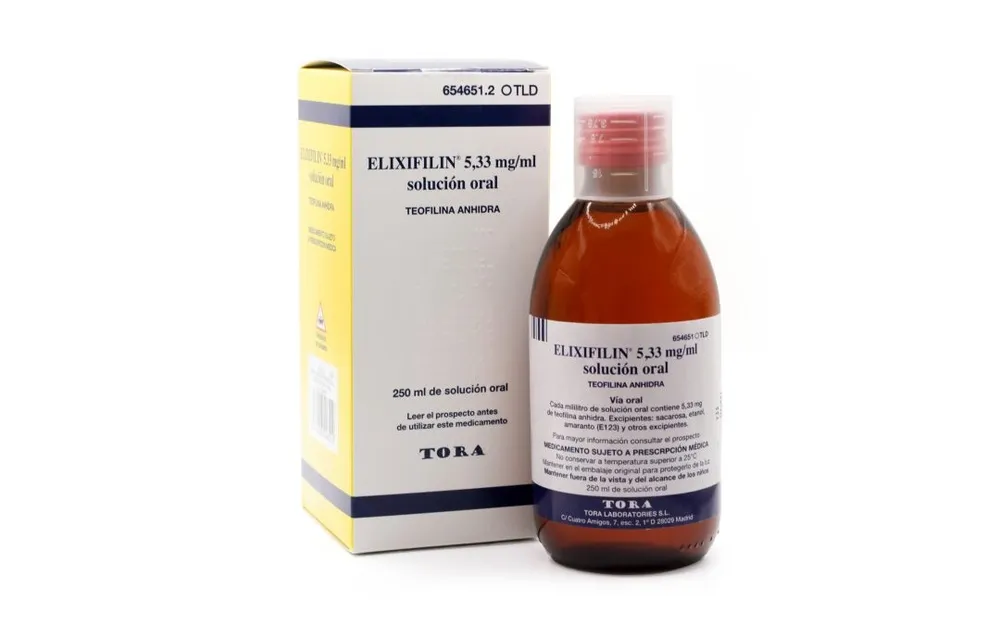
Table of Contents
Package leaflet: Information for the user
Introduction
PACKAGE LEAFLET: INFORMATION FOR THE USER
Elixifilin 5.33 mg/ml oral solution
Anhydrous theophylline
Read the entire leaflet carefully before you start taking this medicine because it contains important information for you.
- Keep this leaflet; you may need to read it again.
- If you have any questions, ask your doctor or pharmacist.
- This medicine has been prescribed for you and should not be given to other people, even if they have the same symptoms as you, because it could harm them.
- If you experience any adverse effects, consult your doctor or pharmacist, even if they are effects not listed in this leaflet. See section 4.
Leaflet contents:
- What Elixifilin is and what it is used for
- What you need to know before taking Elixifilin
- How to take Elixifilin
- Possible side effects
- How to store Elixifilin
- Contents of the pack and other information
1. What Elixifilin is and what it is used for
This medicine belongs to a group of medicines called bronchodilators, which means they dilate the bronchi and make breathing easier.
It is indicated for the prevention and treatment of asthma or bronchial spasm associated with lung diseases such as chronic bronchitis or emphysema.
Theophylline should not be the first-choice medicine for treating asthma in children.
2. What you need to know before taking Elixifilin
Do not take Elixifilin
- If you are allergic to theophylline or to any other medicine in the same group, or to any of the other ingredients of this medicine (listed in section 6).
- If you have acute tachyarrhythmia (accelerated heart rate).
- If you have recently suffered a myocardial infarction.
- In children under 6 months of age.
Warnings and precautions
Talk to your doctor before starting to take Elixifilin.
If you have any of the following conditions, you must inform your doctor, as you may require a dose adjustment:
- If you have or have had heart diseases: unstable angina, tachyarrhythmia (rapid heartbeat), obstructive hypertrophic cardiomyopathy (abnormally thick heart muscle), heart failure (poor heart function).
- If you have very high blood pressure.
- If you have glaucoma (an eye disease characterized by increased pressure inside the eyeball).
- If you have hyperthyroidism (overactive thyroid gland).
- If you have epilepsy (you suffer from seizures).
- If you have severe hypoxemia or cor pulmonale (lung problems, pulmonary).
- If you have gastric and/or duodenal ulcer.
- If you have hepatic insufficiency (your liver does not function properly).
Special caution should be taken when adjusting the dose in patients who meet any of the following conditions:
- If you consume alcohol, smoke, or are an ex-smoker, please inform your doctor.
- If you are an obese patient.
- If you are over 65 years old, or if this medicine is to be administered to a child, bear in mind that your doctor must adjust the dose before prescribing this medicine.
- If you are taking other medicines, please inform your doctor.
- If you have a fever, it may be necessary to reduce the theophylline dose.
- If you visit another doctor or dentist, please inform them that you are taking this product.
Children and adolescents
The use of Elixifilin is not recommended in children between 1 year and 6 months of age. Children under 6 months must not take this medicine.
The alcohol content of this medicine should be taken into account before use in children and adolescents.
Other medicines and Elixifilin
Tell your doctor or pharmacist if you are taking, have recently taken, or might need to take any other medicines.
Theophylline may decrease or increase the effect of other drugs, and likewise, the effect of theophylline may be decreased or increased by other drugs when taken simultaneously. For this reason, it is essential to inform your doctor if you are taking:
- barbiturates (used to induce sedation, relaxation), such as phenobarbital, pentobarbital,
- antiepileptic medicines (carbamazepine, phenytoin and fosphenytoin),
- antibiotics (rifampicin and rifapentine),
- medicines for high blood pressure (sulfinpyrazone),
- products containing St. John's wort (Hypericum perforatum).
Theophylline levels may increase (with high risk of overdose and occurrence of adverse reactions) when Elixifilin is taken simultaneously with:
- oral contraceptives,
- certain antibiotics (erythromycin, troleandomycin, clarithromycin, josamycin and spiramycin),
- quinolones (gyrase inhibitors, especially ciprofloxacin, enoxacin and pefloxacin), imipenem (especially central nervous system adverse effects such as seizures),
- isoniazid (treatment of tuberculosis),
- thiabendazole (treatment of fungal infections),
- calcium channel blockers (for heart diseases), such as verapamil and diltiazem,
- propranolol (treatment of hypertension or high blood pressure),
- mexiletine (treatment of hypertension or high blood pressure),
- propafenone (treatment of heart problems),
- ticlopidine (prevention of blood clotting),
- cimetidine, ranitidine (reduce stomach acid production),
- allopurinol, febuxostat (treatment of gout),
- fluvoxamine (treatment of mental disorders),
- interferon alfa and peginterferon alfa-2 (treatment of immunological disorders),
- zafirlukast (treatment of asthma),
- influenza vaccines,
- zileuton (treatment of asthma),
- other products containing theophylline or other xanthines (such as caffeine and similar substances).
If you are taking any of the medicines listed above, your doctor may prescribe an alternative medicine or adjust the dose of Elixifilin or of the other medicine.
Taking Elixifilin with food, drinks and alcohol
Avoid consuming large amounts of caffeine-containing beverages such as tea, coffee, cocoa, cola drinks, or large quantities of chocolate. These products may increase the adverse reactions of this medicine.
Pregnancy, breastfeeding and fertility
If you are pregnant or breastfeeding, think you may be pregnant, or are planning to become pregnant, consult your doctor before using this medicine.
Pregnancy
The use of theophylline during pregnancy is not recommended.
Breastfeeding
The use of theophylline during breastfeeding is not recommended.
Consult your doctor or pharmacist before using any medicine.
The alcohol content of this medicine should be taken into account in pregnant or breastfeeding women.
Interference with diagnostic tests
If you are scheduled to undergo any diagnostic tests (including blood and urine tests, skin tests using allergens), inform your doctor that you are taking this medicine, as it may alter the test results.
Driving and using machines
This medicine may affect reaction speed; therefore, exercise caution if you are driving or operating machinery, especially at the beginning of treatment, when adjusting the dose, or when taking it together with other medicines.
Due to its ethanol content, it is recommended not to drive or operate dangerous machinery.
Elixifilin contains sucrose, ethanol and amaranth (E123)
This medicine contains sucrose. If your doctor has informed you that you have an intolerance to certain sugars, consult with him before taking this medicine.
It may cause dental caries.
This medicine contains 10.66% ethanol (alcohol), equivalent to 2,575.2 mg of ethanol per 30 ml dose, which corresponds to 64 ml of beer or 27 ml of wine.
This medicine is harmful for people suffering from alcoholism.
The alcohol content should be taken into account in pregnant or breastfeeding women, children, and high-risk groups such as patients with liver disease or epilepsy.
This medicine may cause allergic reactions because it contains amaranth (E123).
It may trigger asthma, especially in patients allergic to acetylsalicylic acid.
3. How to take Elixifilin
Follow exactly the instructions for using this medicine as given by your doctor or pharmacist. If in doubt, consult your doctor or pharmacist again.
Recommended dose:
Adults and adolescents over 16 years of age
A typical recommended regimen for an adult is 160 mg of theophylline, equivalent to 30 ml (2 measuring caps) of oral solution, three times daily, spaced sufficiently apart: upon waking, at midday, and at bedtime.
If blood levels of theophylline are not being monitored, you must never take more than 20 mg/kg/day of theophylline.
Smokers may require higher doses and/or shorter dosing intervals. The dose for ex-smokers should be selected carefully due to a possible change in theophylline dosage requirements.
For patients with hepatic insufficiency, congestive heart failure, over 65 years of age, and obese patients, lower doses should be used.
Adults and adolescents Theophylline
over 16 years of age mg/kg/day
Smokers 15
Non-smokers 11
- cardiac, cor pulmonale,
acute pulmonary edema 7 - hepatic 5
- cardiac and hepatic 2
65 years 9.5
Paediatric population
Children and adolescents between 1 and 16 years of age
The metabolism of theophylline changes during growth, becoming similar to that of adults around age 16. The recommended maximum doses are:
Children and adolescents Theophylline
between 1 and 16 years of age mg/kg/day
1–9 years 21
9–12 years 18
12–16 years 13
Children between 1 year and 6 months of age
The use of this medicine is not recommended.
Children under 6 months of age
Elixifilin must not be used in children under 6 months of age.
How to take Elixifilin:
This medicine is taken orally.
If you experience gastrointestinal discomfort with this medicine, you may take it with food.
If you take more Elixifilin than you should
In case of overdose or accidental ingestion, consult your doctor or pharmacist immediately or call the Toxicology Information Service at telephone number: 91 562 04 20, indicating the medicine and the amount ingested.
Poisoning may present as agitation, logorrhea (excessive and disorganized speech), mental confusion, vomiting, fever, rapid heart rate, and very low blood pressure. In adults, seizures and cardiac arrest may also occur.
If you forget to take Elixifilin
If you forget to take a dose of this medicine, take the next dose as scheduled. Do not take a double dose to make up for missed doses.
It is important that you continue taking Elixifilin until your doctor tells you otherwise.
If you have any further questions about the use of this medicine, ask your doctor or pharmacist.
4. Possible adverse effects
Like all medicines, this medicine may cause adverse effects, although not everyone experiences them.
The following adverse effects have been observed during the period of theophylline use, whose frequency could not be established from the available data. These effects are more frequently associated with plasma theophylline levels exceeding 20 micrograms/ml.
Nervous system disorders
Irritability, nervousness, headache, insomnia, increased reflex excitability, muscle twitching, convulsions, behavioral disturbances.
Cardiac disorders
Palpitations, sinus or ventricular tachycardia, extrasystoles, or ventricular arrhythmia.
Vascular disorders
Peripheral vasodilation and hypotension.
Gastrointestinal disorders
Nausea, vomiting, diarrhoea, and upper abdominal pain (epigastric pain).
Skin and subcutaneous tissue disorders
Skin rashes.
Additional investigations
Reduction in prothrombin time and increased serum GOT.
If theophylline overdose is suspected, plasma theophylline concentration should be monitored. If this is not possible, the dose should be reduced or administration discontinued, depending on the severity of symptoms.
Reporting of adverse effects
If you experience any type of adverse effect, consult your doctor or pharmacist, even if it is a possible adverse effect not listed in this leaflet. You may also report them directly via the Spanish Pharmacovigilance System for Human Medicines (website: www.notificaRAM.es). By reporting adverse effects, you can help provide more information on the safety of this medicine.
5. Storage of Elixifilin
Keep this medicine out of the sight and reach of children.
Do not store above 25°C.
Keep in the outer packaging to protect from light.
Do not use this medicine after the expiry date stated on the packaging after EXP. The expiry date refers to the last day of the month indicated.
Medicines must not be disposed of via wastewater or household waste. Dispose of unused medicines and their containers at the SIGRE collection point at your pharmacy. If you are unsure, ask your pharmacist how to properly dispose of unused medicines and their packaging. This will help protect the environment.
6. Package contents and other information
Composition of Elixifilin 5.33 mg/ml oral solution
- The active substance is theophylline. Each millilitre contains 5.33 mg of theophylline.
- The other components (excipients) are: citric acid monohydrate (E330), ethanol, sucrose, cherry flavour, ethyl vanillin, glycerol (E422), amaranth (E123), sodium saccharin (E954), antifoaming silicone, quinoline yellow (E104), purified water.
Appearance of the product and contents of the container
Amber glass bottle containing 250 ml of oral solution, including a 15 ml dosing cap with markings at 2.5, 3.75, 5, 7.5, 10 and 15 ml.
Marketing Authorization Holder and Manufacturer:
Marketing Authorization Holder
Tora Laboratories, S.L.U.
Avenida de Oporto, 60
28019 Madrid, Spain
Manufacturer
Farmasierra Manufacturing, S.L.
Carretera de Irún Km 26,200
San Sebastián de los Reyes
28706 Madrid, Spain
Date of the most recent revision of this leaflet: October 2021
Detailed and up-to-date information on this medicinal product is available on the website of the Spanish Agency of Medicines and Medical Devices (AEMPS) http://www.aemps.gob.es/