Eligard Trimestral 22.5 mg powder and solvent for solution for injection
Spain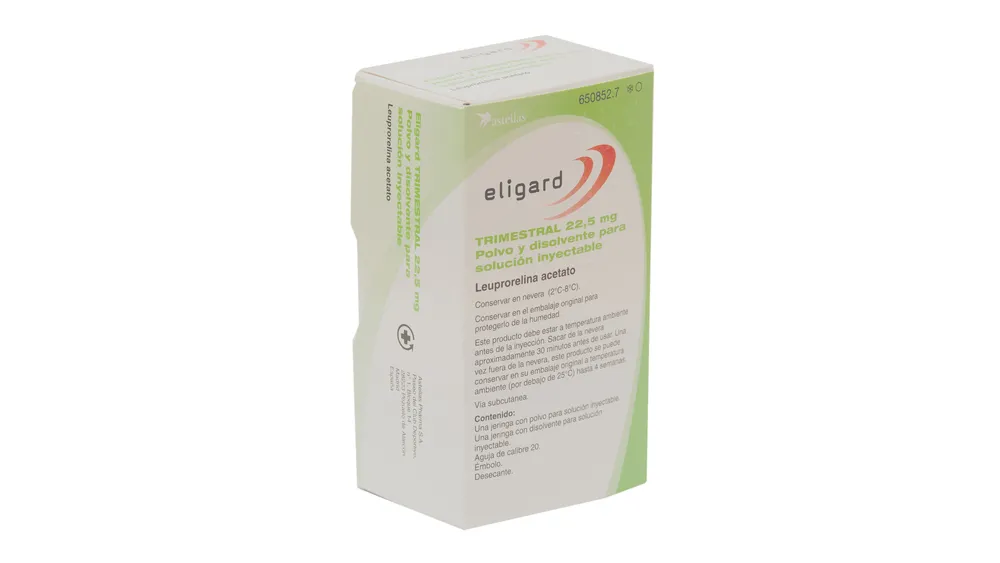
Table of Contents
Patient Information Leaflet
Introduction
Patient Information Leaflet
Eligard Quarterly 22.5 mg
powder and solvent for injectable solution
Leuprorelin acetate.
Read the entire leaflet carefully before you start using this medicine, as it contains important information for you.
|
Package leaflet:
- What Eligard trimestral is and what it is used for
- What you need to know before using Eligard trimestral
- How to use Eligard trimestral
- Possible side effects
- How to store Eligard trimestral
- Contents of the pack and other information
1. What Eligard 3-Month is and what it is used for
The active substance in Eligard 3-Month belongs to the group of gonadotropin-releasing hormone analogues. These medicines are used to reduce the production of certain sex hormones (testosterone).
Eligard 3-Month is used to treat metastatic hormone-dependent prostate carcinoma in adult males and for the treatment of high-risk non-metastatic hormone-dependent prostate carcinoma in combination with radiotherapy.
2. What you need to know before using Eligard quarterly
Do not use Eligard quarterly
- If you are a woman or a child.
- If you are hypersensitive (allergic) to the active substance leuprorelin acetate, to medicines with activity similar to natural gonadotropin-releasing hormone, or to any of the other components of Eligard quarterly (listed in section 6).
- After surgical removal of your testicles, since in this case Eligard quarterly does not lead to any further reduction in serum testosterone concentrations.
- As monotherapy if you have symptoms related to pressure on the spinal cord or a tumor in the vertebral column. In this case, Eligard quarterly may only be used in combination with other medications for prostate carcinoma.
Warnings and precautions
Consult your doctor, pharmacist, or nurse before starting to use Eligard quarterly
-
If you have: any heart or blood vessel condition, including heart rhythm disorders (arrhythmias), or if you are being treated with medicines to correct these conditions. The risk of heart rhythm problems may be increased when using Eligard quarterly.
-
If you have difficulty urinating. You should be closely monitored during the first weeks of treatment.
-
If you start experiencing pressure on the spinal cord or difficulty urinating. Serious cases (associated with other medicines with a mechanism of action similar to Eligard quarterly) of pressure on the spinal cord and narrowing of the ducts between the kidneys and the urinary bladder, which may lead to symptoms resembling paralysis, have been reported. If these complications occur, standard treatment for such conditions should be initiated.
-
If, within two weeks after taking Eligard quarterly, you experience sudden headache, vomiting, altered mental status, and sometimes cardiac collapse, contact your doctor or medical team. Rarely, such cases have been reported with OTHER MEDICINES that have a similar mechanism of action to Eligard quarterly, known as pituitary apoplexy.
-
If you have diabetes mellitus (high blood glucose levels). You should be monitored frequently during treatment.
-
Treatment with Eligard quarterly may increase the risk of fractures due to osteoporosis (reduced bone density).
-
Cases of depression have been reported in patients using Eligard quarterly. If you are using Eligard quarterly and begin to experience depressive mood, inform your doctor.
-
Cases of cardiovascular effects have been reported in patients using medicines similar to Eligard quarterly; it is unknown whether these are related to the medicines. If you are using Eligard quarterly and develop signs or symptoms of cardiovascular problems, inform your doctor.
-
Seizures have been reported in patients after administration of Eligard quarterly. If you are using Eligard quarterly and begin to experience seizures, inform your doctor.
-
Contact your doctor immediately if you experience severe or recurrent headaches, visual disturbances, or tinnitus (ringing in the ears).
-
You have fatty liver disease.
Severe skin reactions, including Stevens-Johnson syndrome/toxic epidermal necrolysis (SJS/TEN), have been reported in association with leuprorelin. Discontinue leuprorelin and seek immediate medical attention if you notice any symptoms related to these serious skin reactions described in section 4.
Complications at the start of treatment
During the first week of treatment, there is usually a brief increase in the male sex hormone testosterone in the blood. This may lead to a temporary worsening of disease-related symptoms and may also cause new symptoms not previously experienced. These symptoms include especially bone pain, urinary disturbances, pressure on the spinal cord, or blood in the urine. These symptoms usually resolve as treatment continues. If symptoms do not resolve, you must contact your doctor.
If you do not improve with Eligard quarterly
A proportion of patients will have tumors that are not sensitive to reduced serum testosterone concentrations. If you feel that the effect of Eligard quarterly is not as expected, inform your doctor.
Use of Eligard quarterly with other medicines
This medicine may interfere with certain medicines used to treat heart rhythm disorders (e.g., quinidine, procainamide, amiodarone, and sotalol) or may increase the risk of heart rhythm problems when used with certain other medicines (e.g., methadone (used for pain relief and as part of drug addiction detoxification), moxifloxacin (an antibiotic), antipsychotics used for serious mental illnesses).
Inform your doctor or pharmacist if you are taking or have recently taken any other medicines, including those obtained without a prescription.
Pregnancy and breastfeeding
This medicine is contraindicated in women.
Driving and use of machines
Fatigue, dizziness, and visual disturbances are possible side effects of treatment with Eligard quarterly or may occur due to the underlying disease. If you experience these adverse effects, take care when driving or operating machinery.
3. How to use Eligard quarterly
Dosage
Follow exactly the instructions for use of this medicine given by your doctor or pharmacist. If in doubt, consult your doctor or pharmacist again.
Unless otherwise prescribed by your doctor, this medicine is administered once every three months.
The injected solution forms a depot of active substance from which the active ingredient, leuprorelin acetate, is continuously released over a period of three months.
Additional tests
The response to treatment with this medicine must be reviewed by your doctor by checking specific clinical values and determining blood concentrations of the so-called prostate-specific antigen (PSA).
Method of administration
This medicine must only be administered by your doctor or nurse. They will also be responsible for its preparation.
After preparation, Eligard quarterly is administered as a subcutaneous injection (injection into the tissue beneath the skin). Intra-arterial (into an artery) or intravenous (into a vein) injection must be completely avoided. As with other active substances administered by subcutaneous injection, the injection site should be changed periodically.
If you receive more Eligard quarterly than you should
Since the injection is normally administered by your doctor or qualified personnel, overdose is not expected.
However, if a larger amount than intended has been administered, contact your doctor so that you can be closely monitored and additional treatment provided as necessary, or contact the Toxicology Information Service. Telephone: 91 562 04 20.
If you forget to administer Eligard quarterly
Talk to your doctor if you think you have missed your quarterly administration of the medicine.
Effects when stopping treatment with Eligard quarterly
As a general rule, treatment of prostate cancer with this medicine is prolonged. Therefore, treatment must not be stopped even if symptoms improve or disappear completely.
If treatment with this medicine is stopped prematurely, worsening of disease-related symptoms may occur.
Do not stop treatment prematurely without first consulting your doctor.
If you have any further questions about the use of this medicine, ask your doctor, pharmacist, or nurse.
4. Possible adverse effects
Like all medicines, Eligard monthly may cause adverse effects, although not everyone experiences them.
The adverse effects observed during treatment with Eligard monthly are primarily attributed to the specific action of the active substance, leuprorelin acetate, particularly the increase and decrease of certain hormones. The most frequently reported adverse effects are hot flushes (approximately 58% of patients), nausea, malaise, fatigue, and temporary local irritation at the injection site.
Adverse effects at the start of treatment
During the first weeks of treatment with Eligard monthly, symptoms specific to the disease may worsen, because initially there is a brief increase in the male sex hormone, testosterone, in the blood. Therefore, your doctor may administer an appropriate antiandrogen (a substance that inhibits the effect of testosterone) during the initial phase of treatment to reduce possible undesirable effects. (See also Section 2 Before using Eligard monthly, Complications at the start of treatment).
Local adverse effects
Local adverse effects reported after injection of Eligard monthly are typically those often associated with similar preparations administered subcutaneously (preparations injected into the tissue beneath the skin). Mild burning immediately after injection is very common. Stinging and pain after injection, as well as bruising at the injection site, are common. Redness of the skin at the injection site has been frequently reported. Tissue hardening and ulceration are uncommon.
These local adverse effects following subcutaneous injection are mild and have been reported to be of short duration. They do not recur between individual injections.
Very common adverse effects (may affect more than 1 in 10 people)
- Hot flushes
- Spontaneous bleeding into the skin or mucous membranes, redness of the skin
- Fatigue, injection-related adverse effects (See also local adverse effects above)
Common adverse effects (may affect up to 1 in 10 people)
- Nasopharyngitis (common cold symptoms)
- Nausea, malaise, diarrhoea, inflammation of the stomach and intestines (gastroenteritis/colitis)
- Itching, night sweats
- Joint pain
- Irregular urination (also at night), difficulty starting to urinate, pain when urinating, reduced urine volume
- Breast tenderness, breast enlargement, testicular atrophy, testicular pain, infertility, erectile dysfunction, reduction in penis size
- Rigidity (episodes of exaggerated shivering with high fever), weakness
- Prolonged bleeding time, changes in blood values, decreased red blood cells/low red blood cell count
Uncommon adverse effects (may affect up to 1 in 100 people)
- Urinary tract infection, local skin infection
- Worsening of diabetes mellitus
- Abnormal dreams, depression, decreased libido
- Dizziness, headache, skin sensory disturbances, insomnia, taste disturbance, smell disturbance
- Hypertension (increased blood pressure), hypotension (decreased blood pressure)
- Shortness of breath
- Constipation, dry mouth, dyspepsia (indigestion, symptoms of full stomach, stomach pain, belching, nausea, vomiting, burning sensation in the stomach), vomiting
- Feeling of warmth, increased sweating
- Low back pain, muscle cramps
- Haematuria (presence of blood in urine)
- Bladder spasms, increased frequency of urination, inability to urinate
- Gynaecomastia (increase in male breast tissue), impotence
- Lethargy (drowsiness), pain, fever
- Weight gain
- Loss of balance, dizziness
- Loss of muscle mass/muscle tissue loss after prolonged use
Rare adverse effects (may affect up to 1 in 1,000 people)
- Abnormal involuntary movements
- Sudden loss of consciousness, fainting
- Flatulence, belching
- Hair loss, skin rash (skin pimples)
- Breast pain
- Ulceration at the injection site
Very rare adverse effects (may affect up to 1 in 10,000 people)
- Necrosis at the injection site
Not known (frequency cannot be estimated from available data)
- Changes in electrocardiogram (prolongation of QT interval)
- Inflammation of the lungs, lung disease
- Idiopathic intracranial hypertension (increased intracranial pressure around the brain characterized by headaches, diplopia and other visual symptoms, tinnitus or ringing in one or both ears)
- If you notice circular or target-shaped, reddish, non-elevated spots on your trunk, often with central blisters, skin peeling, and ulcers in the mouth, throat, nose, genitals, and eyes. These serious skin rashes may be preceded by fever and flu-like symptoms (Stevens-Johnson syndrome/toxic epidermal necrolysis)
- Redness of the skin and itchy rash (toxic skin eruption)
- A skin reaction causing pimples or red spots on the skin, which may resemble a target, with a dark red center surrounded by rings of lighter red (erythema multiforme)
Other adverse effects
Other adverse effects reported with leuprorelin, the active substance in Eligard monthly, include oedema (fluid accumulation in tissues, appearing as swelling of hands and feet), pulmonary embolism (causing symptoms such as breathlessness, difficulty breathing, and chest pain), palpitations (awareness of heartbeats), muscle weakness, chills, skin rash, memory loss, and deterioration of vision. An increased loss of bone tissue (osteoporosis) can be expected after prolonged treatment with Eligard monthly. Due to osteoporosis, the risk of fractures increases.
Severe allergic reactions causing difficulty breathing or dizziness have rarely been reported following administration of products of the same class as Eligard monthly.
Seizures have been reported following administration of products of the same class as Eligard monthly.
Reporting of adverse effects
If you experience any adverse effects, consult your doctor, pharmacist, or nurse, even if they are possible adverse effects not listed in this leaflet. You may also report them directly via the Spanish Pharmacovigilance System for Human Medicines: www.notificaRAM.es. By reporting adverse effects, you can help provide more information on the safety of this medicine.
5. Storage of Eligard Quarterly
Keep this medicine out of the sight and reach of children.
Do not use this medicine after the expiry date stated on the packaging after EXP. The expiry date refers to the last day of the month indicated.
Storage instructions
Store in a refrigerator (between 2°C and 8°C).
Keep in the original packaging to protect from moisture.
This product should be brought to room temperature before injection. Remove from the refrigerator approximately 30 minutes before use. After removal from the refrigerator, this product may be stored in its original packaging at room temperature (below 25°C) for up to 4 weeks.
Once the tray has been opened, the product must be prepared immediately and used right away. For single use only.
Instructions for disposal of unused or expired Eligard Quarterly containers
Medicines should not be disposed of via wastewater or household waste. Unused medicines and their containers should be handed over to the SIGRE point at your pharmacy. If in doubt, ask your pharmacist how to dispose of medicines and containers you no longer need. This will help protect the environment.
6. Contents of the pack and other information
Composition of Eligard Quarterly
The active substance is leuprorelin acetate.
One pre-filled syringe (Syringe B) contains 22.5 mg of leuprorelin acetate.
The other components are poly(DL-lactic-co-glycolic acid) (75:25) and N-methyl-2-pyrrolidone in the pre-filled syringe with injectable solution (Syringe A).
Appearance of Eligard Quarterly and contents of the pack
Powder and solvent for injectable solution.
It is available in the following packs:
-
One thermoformed tray and one sterile 20-gauge needle inserted into a cardboard holder. The tray contains a desiccant bag and a pre-connected syringe system consisting of:
-
Syringe A pre-filled with solvent
-
Syringe B pre-filled with powder
-
a connector with a locking button for Syringes A and B.
-
A multiple pack containing 2 pre-connected syringe system kits.
Only certain pack sizes may be marketed.
Marketing Authorization Holder
Recordati Industria Chimica e Farmaceutica S.p.A.
Via Matteo Civitali, 1
20148 Milan
Italy
Manufacturer
Recordati Industria Chimica e Farmaceutica S.p.A.
Via Matteo Civitali, 1
20148 Milan
Italy
For further information about this medicinal product, please contact the local representative of the Marketing Authorization Holder:
Casen Recordati, S.L.
Autovía de Logroño, km 13.300
50180 Utebo - Zaragoza
Spain
This medicinal product is authorized in the European Economic Area member states under the following names:
Austria: Eligard Depot 22.5 mg
Belgium: Depo-Eligard 22.5 mg
Cyprus: Eligard
Czech Republic: Eligard
Denmark: Eligard
Estonia: Eligard
Finland: Eligard
France: Eligard 22.5 mg
Germany: Eligard 22.5 mg
Hungary: Eligard 22.5 mg
Iceland: Eligard
Ireland: Eligard 22.5 mg
Italy: Eligard
Latvia: Eligard 22.5 mg
Lithuania: Eligard 22.5 mg
Luxembourg: Depo-Eligard 22.5 mg
Netherlands: Eligard 22.5 mg
Norway: Eligard
Poland: Eligard 22.5 mg
Portugal: Eligard 22.5 mg
Slovakia: Eligard 22.5 mg
Slovenia: Eligard 22.5 mg
Spain: Eligard trimestral 22.5 mg
Sweden: Eligard
Date of the most recent review of this leaflet: 10/2024
Detailed and up-to-date information on this medicinal product is available on the website of the Spanish Agency for Medicines and Health Products (AEMPS): http://www.aemps.es/
This information is intended for healthcare professionals only:
Allow the medicine to reach room temperature by removing it from the refrigerator approximately 30 minutes before use.
Please first prepare the patient for injection, then prepare the medicine following the instructions below. If the medicine is not prepared using the correct technique, it must not be administered, as incorrect reconstitution may result in lack of clinical efficacy.
Step 1
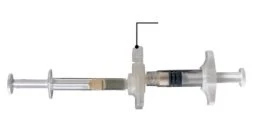
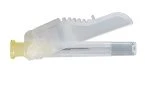
On a clean surface, open the tray by peeling back the aluminum foil at the corner to remove the contents. Discard the desiccant bag. Remove the pre-connected syringe system (Figure 1.1) from the tray. Open the safety needle package (Figure 1.2) by removing the paper tab. Note: Syringe A and Syringe B should not be aligned yet.
Figure 1.1 Contents of the tray: pre-connected syringe system | Figure 1.2 Under the tray: safety needle and cap |
|
|
Step 2
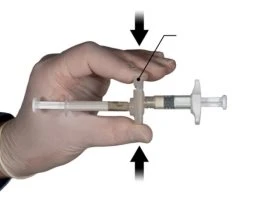
Hold the connector's locking button with your index finger and thumb and press (Figure 2) until you hear a click. The two syringes will be aligned. No specific orientation of the syringe system is required to activate the connector. Do not bend the syringe system (please note that some medication may leak out if the syringes are partially unscrewed).
Figure 2 |
|

Step 3
Hold the syringes horizontally and transfer the liquid contents from syringe A into the leuprorelin acetate powder contained in syringe B. Mix the product thoroughly for 60 cycles by gently pushing the contents back and forth between both syringes (one cycle consists of one plunger push for syringe A and one plunger push for syringe B), while keeping the syringes in a horizontal position, until a homogeneous and viscous solution is obtained (Figure 3). Do not bend the syringe system (please note that some of the medication may leak out if the syringes are partially unscrewed).
Figure 3 |
|

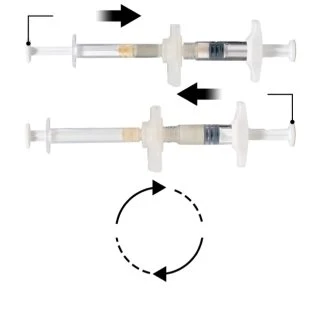
When thoroughly mixed, the viscous solution will have a color ranging from colorless to white-yellowish (which may include shades from white to pale yellow).
Important: After mixing, proceed immediately to the next step, as the viscosity of the product increases over time. Do not refrigerate the medication once reconstituted.
Please note: The medication must be mixed as described; shaking will not yield an adequate mixture.
Step 4
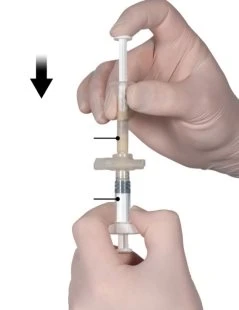
After mixing, hold the syringes vertically with syringe B at the bottom. The syringes must remain securely connected. Transfer the entire contents into syringe B (the wide, short syringe) by pushing the plunger of syringe A while slightly retracting the plunger of syringe B (Figure 4).
Figure 4 |
|
Step 5
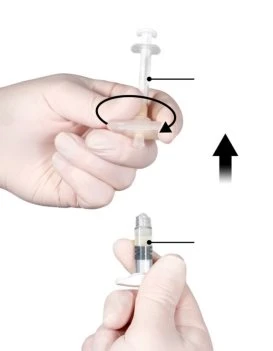
While ensuring the plunger of syringe A is fully pressed down, hold the connector and unscrew it from syringe B. Syringe A will remain attached to the connector (Figure 5). Make sure the contents do not come out, as otherwise the needle will not fit properly when attached.
Please note: It is acceptable if a large air bubble or several small ones remain after preparation.
Please do not expel the air bubbles from syringe B at this time, as medication would be lost!
Figure 5 |
|


Step 6
-
Keep syringe B upright and hold the white plunger pulled back to prevent loss of medication.
-
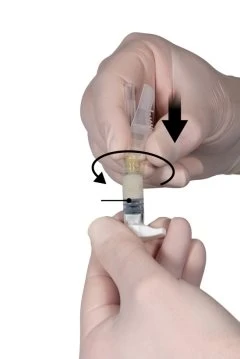
Attach the safety needle to syringe B by holding syringe B and gently turning the needle clockwise about three-quarters of a turn until securely attached (Figure 6).
Do not overtighten, as this may crack the needle hub and cause medication to leak during injection. The safety cap may also be damaged if the needle is screwed on too tightly.
The medication must not be used if the needle hub cracks, is damaged, or leaks its contents. A damaged needle must not be replaced or substituted, and the medication must not be injected. All components of the delivery device must be safely discarded.
If the needle hub becomes damaged, the medication must be replaced with a new one.
Figure 6 |
|
Step 7
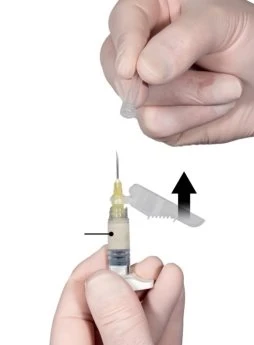
Immediately before administration, remove the safety cover away from the needle and take off the needle protective cap (Figure 7).
Important: Do not handle the safety needle mechanism before administration. If the needle appears damaged or is leaking, the product MUST NOT be used. The damaged needle MUST NOT be replaced and the medication MUST NOT be injected. In case of needle damage, use another ELIGARD kit.
Figure 7 |
|
Step 8
Before administration, purge any large air bubbles from syringe B. Administer the medication subcutaneously while keeping the safety cover away from the needle.
Administration procedure:
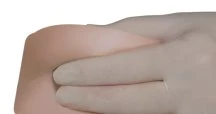
- Select an injection site on the abdomen, upper buttocks, or another area with adequate subcutaneous tissue that does not have excess pigmentation, nodules, lesions, or hair, and that has not been used recently.
- Clean the injection site area with an alcohol wipe (not included).
- Using the thumb and index finger, pinch and lift the skin around the injection site.
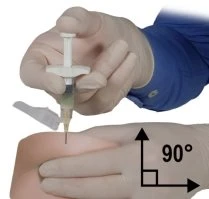
- Using your dominant hand, insert the needle quickly at a 90° angle relative to the skin surface. The depth of penetration will depend on the amount and thickness of the subcutaneous tissue and the length of the needle. After inserting the needle, release the skin.
- Inject the medication by slowly and steadily pushing the plunger until the syringe is empty. Be sure to inject the full amount of medication from syringe B before removing the needle.
- Remove the needle quickly at the same 90° angle used for insertion, while maintaining pressure on the plunger.
Figure 8
Step 9
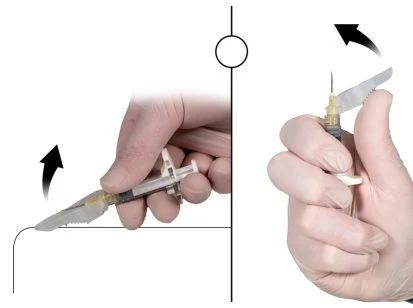
After injection, activate the safety mechanism using either of the activation methods described below.
- Closing against a flat surface
Press the safety cover with the slider facing downward against a flat surface (Figure 9a) to cover the needle and lock the cover.
Verify the locked position by an audible and tactile "click." The locked position will completely cover the needle tip.
- Closing with your thumb
Place your thumb on the safety cover (Figure 9b) and slide it forward to cover the needle tip and lock the cover.
Verify the locked position by an audible and tactile "click." The locked position will completely cover the needle tip.
Figure 9a Closing on a flat surface | Figure 9b Closing with your thumb |
|
Once the safety cover is locked in place, immediately dispose of the needle and syringe in an authorized sharps container.