Elebloc 20 mg/ml eye drops in solution
Spain
Table of Contents
- Package leaflet: Information for the user
- Introduction
- 1. What Elebloc 20 mg/ml is and what it is used for
- 2. What you need to know before using Elebloc 20 mg/ml
- 3. How to use Elebloc 20 mg/ml
- 4. Possible adverse effects
- 5. Storage of Elebloc
- 6. Contents of the container and other information
- **Marketing Authorization Holder**
- **Manufacturer**
Package leaflet: Information for the user
Introduction
Package leaflet: information for the user
ELEBLOC 20 mg/ml eye drops solution
Carteolol hydrochloride
Read the entire leaflet carefully before you start using this medicine, because it contains important information for you.
- Keep this leaflet, as you may need to read it again.
- If you have any questions, ask your doctor or pharmacist.
- This medicine has been prescribed for you only and must not be given to other people, even if they have the same symptoms as you, because it may harm them.
- If you experience any adverse reactions, consult your doctor or pharmacist, even if they are adverse reactions not listed in this leaflet. See section 4.
Leaflet contents:
- What Elebloc 20 mg/ml is and what it is used for
- What you need to know before using Elebloc 20 mg/ml
- How to use Elebloc 20 mg/ml
- Possible adverse effects
- How to store Elebloc 20 mg/ml
- Contents of the pack and other information
1. What Elebloc 20 mg/ml is and what it is used for
Elebloc belongs to a group of medicines called beta-blockers and contains an active substance (carteolol) that works by reducing pressure in the eye (intraocular pressure).
This medicine is used in adults to treat elevated pressure in the eyes (ocular hypertension) and chronic open-angle glaucoma.
2. What you need to know before using Elebloc 20 mg/ml
Do not use Elebloc
-
If you are allergic to carteolol, beta-blockers, or any of the other ingredients of this medicine (listed in section 6).
-
If you currently have or have previously had respiratory problems such as asthma, severe chronic obstructive bronchitis (a serious lung disease that may cause wheezing, difficulty breathing, and/or long-term cough).
-
If you have a slow heart rate, heart failure, or heart rhythm disorders (irregular heartbeats).
Warnings and precautions
Talk to your doctor or pharmacist before starting to use Elebloc.
Before starting to use this medicine, inform your doctor if you currently have or have previously had:
- Coronary heart disease (symptoms may include chest tightness or pain, shortness of breath, or suffocation), heart failure, low blood pressure.
- Heart rate disorders such as bradycardia (slow heartbeat).
- Respiratory problems, asthma, or chronic obstructive pulmonary disease.
- Disease caused by poor blood circulation (such as Raynaud's disease or Raynaud's syndrome).
- Diabetes, as carteolol may mask the signs and symptoms of low blood sugar.
- Overactive thyroid gland, as carteolol may mask its signs and symptoms.
Myasthenia gravis (muscle weakness).
Inform your doctor that you are using Elebloc before undergoing any surgical procedure, as carteolol may interfere with the effects of certain medications used during anesthesia.
If you use this medicine for a long period of time, your doctor should monitor you annually for treatment failure (loss of drug efficacy).
If you experience any severe allergic reaction (skin rash, eye redness and itching) while using this medicine, regardless of the cause, treatment with adrenaline may be less effective. Therefore, when receiving any other treatment, inform your doctor that you are using this medicine.
If you have corneal disorders, consult your doctor, as this medicine may cause dry eyes.
If you have undergone glaucoma surgery, consult your doctor before using this medicine.
Contact lens wearers
If you wear contact lenses, reduced tear production possibly associated with this class of medicines may increase the risk of intolerance in contact lens wearers. In addition, the preservative used (benzalkonium chloride) may cause ocular irritation; it may deposit on soft contact lenses and slightly discolor them. Therefore, you should not use this eye drop if you wear soft contact lenses. For instructions on how to use Elebloc while wearing contact lenses, refer to the section “Elebloc contains benzalkonium chloride”.
Use in elderly patients
This medicine should be used with caution in elderly patients, as they are more likely to have age-related heart problems and peripheral vascular diseases. Also, elderly patients using ophthalmic beta-blockers may have an increased risk of corneal sensitivity, with a consequent risk of keratitis.
Use in patients with renal and/or hepatic impairment
Your doctor may adjust the dose of Elebloc if it is administered concomitantly with another beta-blocking medicine.
Use in athletes
This medicine contains carteolol, which may result in a positive doping test.
Children and adolescents
This medicine is not recommended for premature infants or newborns, or for children and adolescents, as safety and efficacy have not been established in the pediatric population.
Use of Elebloc with other medicines
Tell your doctor or pharmacist if you are currently using, have recently used, or might need to use any other medicines.
This medicine may affect, or be affected by, other medicines you are using, including other eye drops for glaucoma treatment. Consult your doctor if you are using or plan to use medicines to lower blood pressure such as parasympathomimetics and guanethidine, amiodarone or other medicines for heart rhythm disorders, glycosides for treating heart failure, other heart medications, or medicines for treating diabetes.
Pregnancy and breastfeeding
If you are pregnant or breastfeeding, think you may be pregnant, or plan to become pregnant, consult your doctor or pharmacist before using this medicine.
Do not use Elebloc if you are pregnant or think you might be pregnant, unless your doctor considers it necessary.
Do not use Elebloc if you are breastfeeding, as carteolol may pass into breast milk. However, if your doctor considers treatment with this medicine necessary for the mother's benefit, they will assess whether breastfeeding should be discontinued.
Consult your doctor before using any medicine during breastfeeding.
Driving and use of machines
After administration of this medicine, you may experience blurred vision. Do not drive or operate machinery until this effect has subsided and your vision is clear again.
Elebloc contains benzalkonium chloride
This medicine may cause eye irritation because it contains benzalkonium chloride. Avoid contact with soft contact lenses. Remove contact lenses before administration and wait at least 15 minutes before reinserting them. This medicine may alter the color of soft contact lenses.
3. How to use Elebloc 20 mg/ml
Follow exactly the instructions for administration of this medicine as given by your doctor or pharmacist. If in doubt, consult your doctor or pharmacist again.
Recommended dose:
Adults (including elderly patients)
Treatment should be initiated with the lowest available dose of carteolol. If the clinical response is not adequate, your doctor may adjust the dose to one drop of Elebloc 20 mg/ml instilled twice daily (morning and evening) into each affected eye.
The daily dose must not exceed two drops in each affected eye.
Always follow your doctor's instructions. Eye pressure should be monitored periodically, especially during the dose adjustment period.
Instructions for use:
This medicine is for ophthalmic use (in the eyes). If you need to use more than one ophthalmic medicine, the applications should be spaced at least 5 minutes apart. Ophthalmic ointments should be administered last.
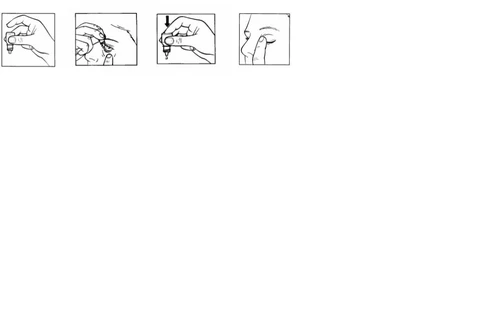
1 2 3 4
If you wear contact lenses, remove them before instilling Elebloc and wait 15 minutes before reinserting them.
- Wash your hands thoroughly before instilling the drops.
- Take the bottle and position yourself in front of a mirror.
- After opening the bottle for the first time, remove the plastic seal ring.
- Hold the bottle upside down between your fingers (figure 1).
- Tilt your head backward. Gently pull down the eyelid of the eye with one finger to form a pouch between the eyelid and your eye, into which the drop should fall (figure 2).
- Bring the tip of the bottle close to the eye. A mirror may be helpful.
- Do not touch the eye, eyelid, nearby areas, or any other surface with the dropper tip. The eye drops could become contaminated.
- Gently squeeze the base of the bottle so that one drop falls at a time (figure 3).
- After using Elebloc, press with your finger on the inner corner of the eye next to the nose (figure 4) for 2 minutes. This helps prevent carteolol from passing into the rest of the body.
- If applying drops to both eyes, repeat all the previous steps for the other eye.
- Close the bottle tightly immediately after each use.
If a drop misses the eye, try again.
If you use more Elebloc than you should
If too many drops are administered into the eyes, rinse them with lukewarm water or physiological saline.
If the entire contents of the container are accidentally ingested, symptoms that may occur include slow heart rate, low blood pressure, breathing difficulties, and heart failure.
In case of overdose or accidental ingestion, contact your doctor or pharmacist immediately or call the Toxicology Information Service at telephone: 91 562 04 20, indicating the medicine and the amount ingested.
If you forget to use Elebloc
Apply a single dose as soon as possible. However, if it is almost time for the next dose, do not administer the missed dose and continue with your regular dosing schedule. Do not use a double dose to make up for a missed dose.
If you stop using Elebloc
Never discontinue treatment without first consulting your doctor or pharmacist.
If you have any further questions about the use of this medicine, ask your doctor or pharmacist.
4. Possible adverse effects
Like all medicines, Elebloc may cause adverse effects, although not everyone experiences them.
Generally, you may continue using the drops unless the effects are severe. If you are concerned, consult your doctor or pharmacist. Do not stop treatment with Elebloc without first consulting your doctor.
In some patients with significantly damaged corneas, very rare cases of corneal calcification related to the use of eye drops containing phosphates have been reported.
Like other ophthalmic medicines applied to the eyes, carteolol is absorbed into the bloodstream. This may cause adverse effects similar to those observed with intravenous and/or oral beta-blocking agents. The incidence of these adverse effects after ophthalmic administration is lower than when the medicines are, for example, administered orally or by injection. The adverse reactions described include those observed within the class of ophthalmic beta-blockers when used for the treatment of ocular diseases:
Allergy: Systemic allergic reactions including swelling under the skin, which may occur in the face and limbs and may obstruct the airway and cause difficulty swallowing or breathing, urticaria and skin rash with itching, localized and generalized rash, pruritus, severe and sudden allergic reaction potentially fatal.
Metabolism: Low blood sugar levels.
Nervous system and general disorders: Difficulty sleeping (insomnia), depression, nightmares, memory loss, syncope, stroke, reduced blood supply to the brain, worsening of signs and symptoms of myasthenia gravis (a muscle disorder), dizziness, abnormal sensations of tingling such as "pins and needles", headache, tiredness/fatigue.
Eye effects: Signs and symptoms of eye irritation (such as burning, stinging, itching, tearing, redness), eyelid inflammation, corneal inflammation, blurred vision, detachment of the layer beneath the retina containing blood vessels which may cause visual disturbances after filtration surgery, decreased eye sensitivity, dry eyes, corneal erosion (the front layer of the eyeball), drooping of the upper eyelids (causing the eye to be half-closed), double vision, conjunctival inflammation.
Heart and circulation: Slow heartbeat, chest pain, palpitations, edema (fluid accumulation), changes in heart rhythm or heart rate, congestive heart failure (heart disease with difficulty breathing and swelling of feet and legs due to fluid accumulation), a type of heart rhythm disturbance, cardiac arrest, heart failure, low blood pressure, Raynaud's disease, cold hands and feet.
Respiratory: Narrowing of the airways in the lungs (mainly in patients with pre-existing bronchospastic disease), difficulty breathing, cough.
Gastrointestinal: Taste disturbance, nausea, indigestion, diarrhea, dry mouth, abdominal pain, vomiting.
Skin: Hair loss, skin rash with silvery-white appearance (psoriasiform rash) or worsening of psoriasis, skin rash.
Musculoskeletal: Muscle pain not caused by exercise, muscle weakness.
Reproduction: Sexual dysfunction, decreased libido.
Reporting of adverse effects
If you experience any adverse effect, talk to your doctor or pharmacist, even if it is a possible adverse effect not listed in this leaflet. You can also report them directly via the Spanish Pharmacovigilance System for Human Medicines: https://www.notificaRAM.es. By reporting adverse effects, you can help provide more information on the safety of this medicine.
5. Storage of Elebloc
Keep this medicine out of the sight and reach of children.
Do not use this medicine after the expiry date stated on the bottle and outer carton after “EXP:”. The expiry date refers to the last day of the month indicated.
Do not store above 25°C.
To prevent infection, the bottle should be discarded 4 weeks after first opening. Please write the date of first opening in the space provided for this purpose on the carton.
Medicines should not be disposed of via wastewater or household waste. Instead, return any unused medicines and their packaging to the SIGRE point at your pharmacy. If you are unsure, please consult your pharmacist on how to dispose of unused medicines and their packaging. This will help protect the environment.
6. Contents of the container and other information
Composition of Elebloc
- The active substance is carteolol hydrochloride. Each ml of solution contains 20 mg of carteolol hydrochloride.
- The other components are benzalkonium chloride, sodium chloride, monobasic sodium phosphate, sodium hydrogen phosphate dodecahydrate, and purified water.
Appearance of the product and contents of the container
Elebloc is presented as a clear, colourless solution in a 5 ml plastic bottle with a cap.
Marketing Authorization Holder
Immedica Pharma AB
SE-113 63 Stockholm
Sweden
Manufacturer
Siegfried El Masnou, S.A.
C/Camil Fabra, 58
08320 El Masnou - Barcelona
Date of the most recent review of this leaflet: October 2016.
Detailed information on this medicinal product is available on the website of the Spanish Agency for Medicines and Medical Devices (AEMPS) http://www.aemps.gob.es/