Eladynos 80 micrograms/dose solution for injection in pre-filled pen
Spain
Table of Contents
Package leaflet: Information for the user
Introduction
Package leaflet: information for the user
Eladynos 80 micrograms/dose injectable solution in a pre-filled pen
abaloparatide
This medicinal product is subject to additional monitoring, which will allow quicker identification of new safety information. You can help by reporting any side effects you may experience. Information on how to report side effects is provided at the end of section 4.
Read this entire leaflet carefully before you start using this medicine, as it contains important information for you.
- Keep this leaflet, as you may need to read it again.
- If you have any questions, ask your doctor or pharmacist.
- This medicine has been prescribed for you only, and you should not give it to other people, even if they have the same symptoms as you, because it may harm them.
- If you experience any side effects, consult your doctor or pharmacist, even if they are side effects not listed in this leaflet. See section 4.
Leaflet contents
- What Eladynos is and what it is used for
- What you need to know before using Eladynos
- How to use Eladynos
- Possible side effects
- How to store Eladynos
- Contents of the pack and other information
1. What Eladynos is and what it is used for
Eladynos contains the active substance abaloparatide. It is used to treat osteoporosis in postmenopausal women.
Osteoporosis is particularly common in women after menopause. This condition causes thinning and weakening of the bones. If you have osteoporosis, you have a higher risk of bone fractures, especially in the spine, hips, and wrists.
This medicine is used to strengthen the bones and reduce the likelihood of fractures.
2. What you need to know before using Eladynos
Do not use Eladynos if
- you are allergic to abaloparatide or to any of the other ingredients of this medicine (listed in section 6)
- you are pregnant or breastfeeding
- you are still able to become pregnant
- you have high levels of calcium in your blood
- your kidney function is significantly reduced
- you have unexplained high levels of the enzyme alkaline phosphatase in your blood
- you have received radiotherapy to your bones
- you have ever been diagnosed with bone cancer or other cancers that have spread to the bones
Warnings and precautions
Talk to your doctor or pharmacist before starting to use Eladynos or during treatment if:
- you feel dizzy when standing up, which may be due to a drop in blood pressure. Some patients may feel dizzy or experience a fast heartbeat within 4 hours after injection of Eladynos. The first injection(s) should be given under the supervision of a healthcare professional, who may monitor you for the first hour after the injection. Always inject Eladynos in a place where you can sit or lie down if you feel dizzy.
- you have heart disease or high blood pressure. Your doctor may wish to monitor you more closely.
- you have persistent nausea, vomiting, constipation, low energy, or muscle weakness. These may be signs of too much calcium in your blood.
- you have high calcium levels in your urine, or you have or have had kidney stones. Eladynos may worsen your condition.
Before starting treatment with Eladynos, you will have examinations of your blood pressure and heart condition.
The recommended treatment duration of 18 months must not be exceeded.
Children and adolescents
Abaloparatide must not be used in children and adolescents under 18 years of age.
Other medicines and Eladynos
Tell your doctor or pharmacist if you are taking, have recently taken, or might need to take any other medicines.
In particular, inform your doctor or pharmacist if you are taking:
- digoxin or digitalis: medicines used to treat heart weakness, as blood calcium levels may increase with abaloparatide use;
- medicines for controlling high blood pressure, as they may worsen symptoms of low blood pressure, such as dizziness.
Pregnancy and breastfeeding
Do not use Eladynos if you are pregnant, could become pregnant, or are breastfeeding.
Driving and using machines
Some patients may feel dizzy after receiving this medicine. If you feel dizzy, do not drive or operate machinery until you feel better.
Eladynos contains sodium
This medicine contains less than 1 mmol of sodium (23 mg) per dose; essentially "sodium-free".
3. How to use Eladynos
Follow exactly the instructions for administration of this medicine given by your doctor. If in doubt, consult your doctor or pharmacist again.
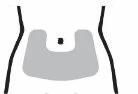
The recommended dose is one injection (80 µg) once daily administered subcutaneously in the lower abdominal area (abdomen). See the grey-shaded area in the first figure in step 5 of the section "Instructions for use" at the end of this leaflet.
It is preferable to inject Eladynos at the same time each day to help you remember to take the medicine.
Do not inject Eladynos into the same site on the abdomen on consecutive days. Change the injection site daily to reduce the risk of injection site reactions. Administer the injection only into normal skin. Do not administer the injection into areas where the skin is tender, bruised, red, scaly, or hardened. Avoid areas with scars or stretch marks.
Follow carefully the "Instructions for use" at the end of this leaflet.
Your doctor may advise you to take calcium and vitamin D supplements. Your doctor will tell you how much you should take each day.
Duration of use
Inject Eladynos daily for the period indicated by your doctor. The total maximum duration of treatment with Eladynos must not exceed 18 months.
If you use more Eladynos than you should
If you accidentally use more Eladynos than you should, inform your doctor or pharmacist. Effects expected from an overdose may include, among others, nausea, vomiting, dizziness (especially when standing up quickly), rapid heartbeat, and headache.
If you forget to use Eladynos
If you miss a dose, administer it as soon as possible within 12 hours of the scheduled time. Then inject the next dose the following day at your usual time.
If more than 12 hours have passed since the time you were supposed to use Eladynos, skip the missed dose. Then inject the next dose on the following scheduled day as usual.
Do not use a double dose to make up for a missed dose. Do not use more than one injection on the same day.
If you stop using Eladynos
Consult your doctor before stopping treatment. Your doctor will advise you and decide how long you should continue treatment with Eladynos.
If you have any further questions about the use of this medicine, ask your doctor or pharmacist.
4. Possible adverse effects
Like all medicines, this medicine can cause adverse effects, although not everyone experiences them.
Stop treatment with Eladynos and contact your doctor immediately or go to an emergency department if you experience the following symptoms (severe allergic reaction):
Swelling of the face or tongue, wheezing and difficulty breathing, hives, itching and red skin, severe vomiting or diarrhoea, dizziness or loss of consciousness (frequency not known). These symptoms can be serious and potentially fatal.
Other adverse effects may occur with the following frequencies:
Very common (may affect more than 1 in 10 people)
- increased level of calcium in urine tests
- dizziness; see section 2 "Warnings and precautions"
Common (may affect up to 1 in 10 people)
- increased level of calcium in blood tests
- increased level of uric acid in blood tests
- headache
- palpitations, increased heart rate
- increased blood pressure
- abdominal pain
- constipation, diarrhoea
- nausea, vomiting
- weakness, fatigue, malaise
- reactions at the injection site such as bruising, skin rash and pain
- bone, joint, hand, foot or back pain
- muscle spasms (in the back and legs)
- difficulty sleeping
- kidney stones
- itching, skin rash
Uncommon (may affect up to 1 in 100 people)
- allergic reactions
- feeling of abdominal bloating
- pain
- feeling dizzy or lightheaded when standing up or sitting down due to a drop in blood pressure
Reporting of adverse effects
If you experience any type of adverse effect, talk to your doctor or pharmacist, even if they are possible adverse effects not listed in this leaflet. You can also report them directly through the national reporting system included in Appendix V. By reporting adverse effects, you can help provide more information on the safety of this medicine.
5. Storage of Eladynos
Keep this medicine out of the sight and reach of children.
Do not use this medicine after the expiry date stated on the carton and on the pen after EXP. The expiry date refers to the last day of the month indicated.
Before first use, store in a refrigerator (between 2 °C and 8 °C). Do not freeze. Avoid placing the pens near the freezer compartment of the refrigerator to prevent freezing. Do not use Eladynos if it has been frozen or is frozen.
After first use, store below 25 °C and discard after 30 days.
Eladynos must only be stored at room temperature (below 25 °C) for a maximum of 30 days. Record the date of day 1 in the space provided on the carton. Day 1 is the date of first use or the date the pen was removed from the refrigerator. This is to ensure that the pen is not used for more than 30 consecutive days or stored for longer than 30 days. After 30 days, dispose of the pen according to local requirements, even if there is still unused medicine remaining.
- Dispose of the used pen before opening a new Eladynos pen to avoid possible confusion.
- Do not store the pen with the needle attached.
- Do not use this medicine if the solution is cloudy, discoloured, or contains visible particles.
Medicines and needles must not be disposed of via wastewater or household waste. Ask your pharmacist how to properly dispose of medicines and containers you no longer need. This helps protect the environment.
6. Contents of the pack and other information
Composition of Eladynos
- The active substance is abaloparatide.
Each 40 microliters dose contains 80 micrograms of abaloparatide.
Each pre-filled pen contains 3 mg of abaloparatide in 1.5 ml of solution (equivalent to 2 mg per millilitre).
-
The other components are:
-
phenol
-
water for injections
-
sodium acetate trihydrate (see section 2, "Eladynos contains sodium"), and acetic acid (both used for pH adjustment)
Nature of the product and pack contents
Eladynos is a colourless, clear injectable solution (injection). It is supplied in a cardboard box containing one multidose pre-filled pen with 30 doses.
Marketing Authorisation Holder and Responsible Person
Theramex Ireland Limited
3rd Floor, Kilmore House,
Park Lane, Spencer Dock,
Dublin 1
D01 YE64
Ireland
Manufacturer
Cilatus Manufacturing Services Ltd
Pembroke House, 28-32 Pembroke Street
Dublin, D02 EK84, Ireland
Date of the latest revision of this leaflet:
Other source of information
Detailed information on this medicine is available on the website of the European Medicines Agency: https://www.ema.europa.eu/.
Instructions for use
Do not inject Eladynos until you or your caregiver have been trained by a doctor, nurse, or pharmacist on how to use the Eladynos pen.
DO NOT start the administration procedure until you have carefully read this leaflet and the instructions for use included in the Eladynos pack. Always follow these instructions carefully when using the Eladynos pen.
Contact your doctor, nurse, or pharmacist if you have any questions about how to use the Eladynos pen.
Important information before using the Eladynos pen
- Do not share needles with other people. This could transmit a serious infection. Never share the Eladynos pen, even if the needle has been changed.
- Use a new needle for each injection.
Materials you will need for each injection with the Eladynos pen
- 1 needle
Needles are not included with the Eladynos pen. The correct needles to use with the Eladynos pen are 8 mm, 31 gauge needles.
- 1 alcohol swab
- 1 cotton ball or 1 gauze pad
- 1 sharps disposal container for used needles and used Eladynos pens. See section 5 of the leaflet for disposal information.
Components of the Eladynos pen
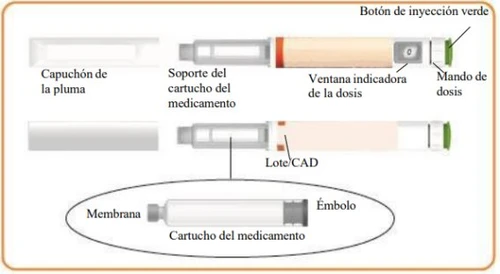
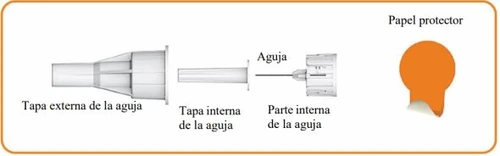
Components of the needle (not included with the pen) to be used with the pen
How to inject Eladynos
Step 1 Check the Eladynos pen Wash your hands. Check the label on the pen to make sure it is the correct medicine. Check the expiration date (EXP) shown on the pen to ensure it has not expired.
Record the date of day 1 to ensure you do not use the pen for more than 30 consecutive days. Remove the pen cap.
Check that the pen, including the medicine cartridge, is not damaged. The liquid should be clear and colorless and should not contain visible particles; if it does not, do not use it. You may see small air bubbles in the liquid. This is normal. |
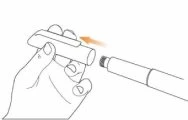
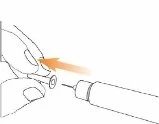
Step 2 Attach the needle to the Eladynos pen Remove the protective paper from a new needle.
Push straight onto the pen the needle with the cap in place and turn until it is securely attached. Make sure the needle is straight so it does not bend during insertion. The pen will not work if the needle is not properly attached. Do not overtighten, as this may make it difficult to remove the needle later. If the needle bends, refer to "Troubleshooting" below.
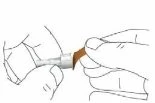
Remove the outer needle cap from the needle and keep it for use after the injection.
Carefully remove the inner needle cap and dispose of it.
|
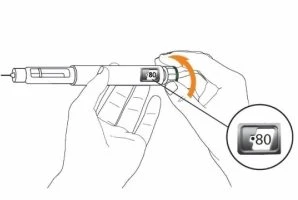
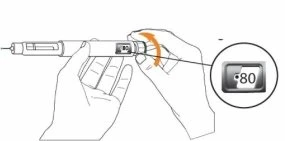
Step 3 Day 1 only: Check the Eladynos pen before the first injection The pen contains enough medicine for 30 days plus a small amount to test each pen once to confirm it is working correctly. Warning: If you test the pen before each injection, the medicine will run out prematurely. Therefore, perform Step 3 only on day 1, before the first injection with each pen. From day 2 to day 30, do not test the pen again; proceed directly to Step 4 to set the dose for injection. Hold the pen as shown and turn the dose knob away from you until it stops. You will see “?80” in the dose display window.
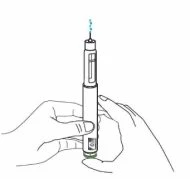
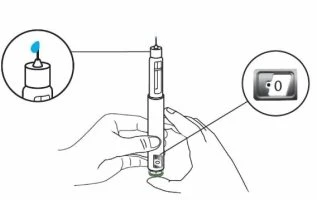
Hold the pen with the needle pointing upward. Press the green injection button until it no longer moves. You should see liquid, either as a drop or a stream, coming out from the tip of the needle.
You should see “?0” in the dose display window. Note: If no liquid comes out of the needle tip, refer to "Troubleshooting".
|
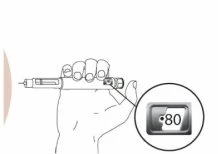
Step 4 Set the dose on the Eladynos pen Turn the white dose knob of the pen away from you until it stops and “?80” appears in the dose display window. The pen is now ready for injection.
Note: If you cannot set the pen to “?80”, refer to "Troubleshooting" below. |
Step 5 Choose and clean the injection site Injections should be administered in the lower abdominal area as shown by the shaded gray area. Avoid the area within 5 cm of the navel.
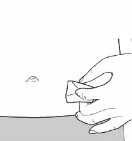
Select a different injection site in the abdomen each day. Administer the injection only into normal skin. Do not administer the injection into areas where the skin is painful to touch, bruised, red, scaly, or hardened. Avoid areas with scars or stretch marks. Clean the injection site with an alcohol wipe and let it dry. Do not touch, fan, or blow on the injection site after cleaning.
Note: Your doctor, nurse, or pharmacist may recommend that you pinch the skin at the injection site. Once the needle enters the skin, you may release the pinch. |
Step 6 Administering the injection with the Eladynos pen Insert the needle straight into the skin.
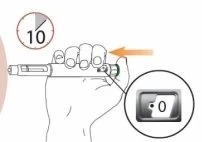
Press and HOLD DOWN the green button until ALL of the following events are completed:
and THEN release the button. Do not press the green button without a needle attached.
Note: Do not move the pen once inserted. If you cannot press the green injection button or it stops before “?0” appears, refer to "Troubleshooting" below. Slowly remove the pen from the injection site by pulling the needle straight out. You may have slight bleeding; this is normal. Do not rub the injection site. If slight bleeding occurs, press a cotton ball or gauze pad against the injection site as needed. You may also cover the area with a small adhesive bandage. |
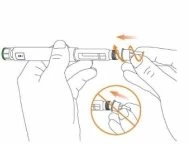
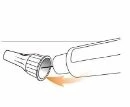
Step 7 Remove the needle from the pen Caution: To prevent needlestick injury, follow this step carefully. Carefully place the outer needle cap back over the needle. Then press the outer needle cap until it clicks into place and is secured.
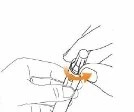
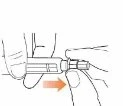
Unscrew the needle with the cap in place. To unscrew the needle with the cap on, press the base of the cap against the needle and then turn it eight or more full turns before gently pulling until the needle with the cap attached comes off. Note: Do not press down on the outer needle cap while unscrewing the needle.
Note: You should see the space between the outer needle cap and the pen increase as you unscrew the needle.
|
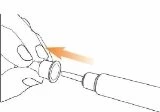
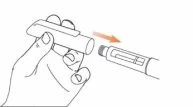
Step 8 After the injection Replace the pen cap firmly onto the Eladynos pen. Keep the cap on the pen between injections.
|
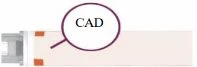
Troubleshooting
What should I do if the needle bends?
- Carefully remove the bent needle and follow step 2 to attach a new needle to the pen. The pen needle has a visible part that enters the skin and a hidden internal part that penetrates the pen membrane.
- Inspect the parts of the pen needle, paying close attention to the internal part of the needle. The visible part of the needle may appear straight, but the internal part may have bent when attaching the needle to the pen.
- Make sure to keep the entire pen needle straight when attaching it to the pen to prevent bending the internal part of the needle.
What should I do if no liquid comes out of the needle tip when testing the pen on day 1?
- If you do not see liquid coming out of the needle, the pen preparation is not complete. The needle may be blocked, bent, or incorrectly attached.
- Follow step 2 to attach a new needle to the pen and repeat step 3, "Checking a new Eladynos pen before the first injection."
- If you still do not see a drop of liquid, contact your pharmacist, nurse, or doctor.
What should I do if I cannot turn the white dose knob to set the Eladynos pen to "?80"?
- There is not enough medication left in the pen to deliver a full dose. You will need a new pen.
What should I do if it is difficult to press the green injection button?
- If the green injection button cannot be pressed or stops before "?0" appears in the dose display window, the new pen test is not complete. The needle may be blocked or incorrectly attached.
- Follow step 2 to attach a new needle to the pen.
- If you still cannot press the green injection button or it stops before "?0" appears in the dose display window, contact your pharmacist, nurse, or doctor.