Effralgan 1 g effervescent tablets
Spain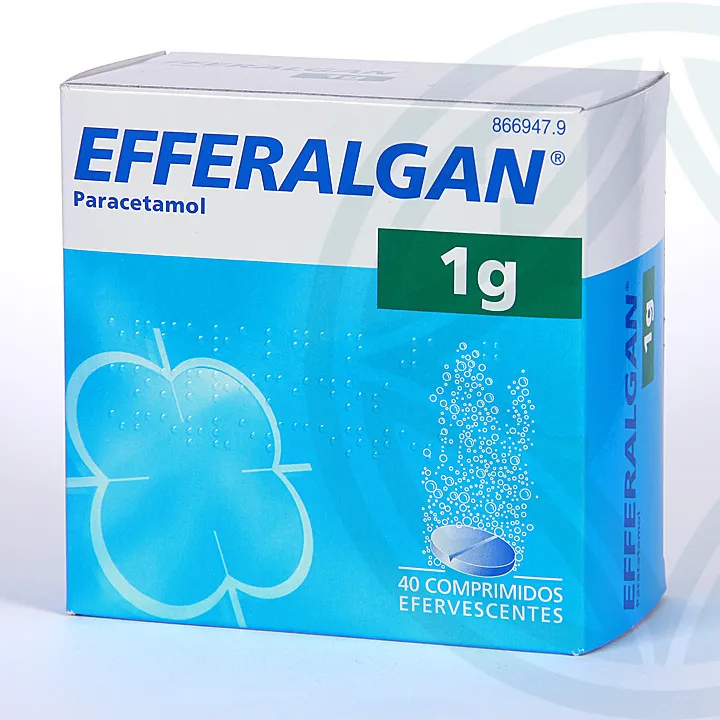
Table of Contents
- Package leaflet: Information for the user
- Introduction
- 1. What Efferalgan is and what it is used for
- 2. What you need to know before taking Efferalgan
- **Pregnancy and breastfeeding**
- **Driving and use of machines**
- The influence of paracetamol on the ability to drive and operate machinery is none or negligible.
- 3. How to take Efferalgan
- 4. Possible adverse effects
- 5. Storage of Efferalgan
- 6. Contents of the pack and other information
Package leaflet: Information for the user
Introduction
Package leaflet: information for the user
Efferalgan 1 g effervescent tablets
paracetamol
Read the entire leaflet carefully before you start taking this medicine, because it contains important information for you.
Follow exactly the instructions for administration of the medicine contained in this leaflet or those indicated by your doctor or pharmacist.
- Keep this leaflet, as you may need to read it again.
- If you have any questions, consult your doctor or pharmacist.
- This medicine has been prescribed for you and you should not give it to other people, even if they have the same symptoms, as it may harm them.
- If you experience any adverse reactions, consult your doctor or pharmacist, even if they are adverse reactions not listed in the leaflet. See section 4.
Leaflet contents
- What Efferalgan is and what it is used for
- What you need to know before taking Efferalgan
- How to take Efferalgan
- Possible side effects
- How to store Efferalgan
- Contents of the pack and other information
1. What Efferalgan is and what it is used for
Efferalgan belongs to a group of medicines called analgesics and antipyretics.
This medicine is used for the symptomatic treatment of mild to moderate pain and fever in adults and adolescents aged 15 years and older, weighing over 50 kg.
2. What you need to know before taking Efferalgan
Do not take Efferalgan:
- if you are allergic (hypersensitive) to paracetamol or to any of the other ingredients of this medicine (listed in section 6).
Warnings and precautions
Consult your doctor or pharmacist before starting to take Efferalgan.
- Do not take more medicine than the recommended dose stated in section 3, How to take Efferalgan.
- Avoid using this medicine simultaneously with other medicines containing paracetamol, such as cold and flu remedies, as high doses may cause liver damage. Do not use more than one medicine containing paracetamol without consulting your doctor.
- Chronic alcoholics should take care not to exceed 2 g of paracetamol in 24 hours.
- Alcohol consumption is not recommended during treatment.
- Patients with chronic malnutrition, anorexia, cachexia, bulimia, or fasting should consult their doctor before taking this medicine.
- Patients with kidney disease should not take this medicine due to its 1 g paracetamol content. Patients with liver, heart, or lung disease, or those with anemia, should consult their doctor before taking this medicine.
- If you are being treated with medications for epilepsy, consult your doctor before taking this medicine, as concomitant use may reduce efficacy and increase the hepatotoxicity of paracetamol, especially with high-dose paracetamol regimens.
- Inform your doctor before taking this medicine if you are an asthmatic patient sensitive to acetylsalicylic acid.
- Paracetamol may cause serious skin reactions such as acute generalized exanthematous pustulosis (AGEP), Stevens-Johnson syndrome (SJS), and Toxic Epidermal Necrolysis (TEN), which can be fatal. Patients should be informed about signs of serious skin reactions, and treatment should be discontinued at the first sign of skin rash or any other sign of hypersensitivity.
- Frequent long-term use of analgesics may cause or worsen headaches. If you suffer from chronic headaches and have been taking analgesics for more than 3 months, at least on alternate days, do not increase the analgesic dose but consult your doctor.
During treatment with Efferalgan, inform your doctor immediately if:
- You have serious conditions such as severe renal failure or sepsis (when bacteria and their toxins circulate in the blood, causing organ damage), or if you suffer from malnutrition, chronic alcoholism, or are also taking flucloxacillin (an antibiotic). A serious condition called metabolic acidosis (an abnormality in blood and body fluids) has been reported in patients under these conditions when paracetamol is used at regular doses over a prolonged period or when paracetamol is taken together with flucloxacillin. Symptoms of metabolic acidosis may include: severe breathing difficulties with deep and rapid breathing, drowsiness, feeling unwell (nausea), and vomiting.
Children and adolescents
Due to the paracetamol dose, this medicine must not be used in children or adolescents under 15 years of age (and weighing less than 50 kg). Ask your pharmacist about available formulations that allow appropriate dosing for these patients.
Interference with laboratory tests
If you are scheduled for any laboratory tests (including blood and urine tests), inform your doctor that you are taking this medicine, as it may alter test results.
Paracetamol may affect the analytical values of uric acid and glucose.
Other medicines and Efferalgan
Inform your doctor or pharmacist if you are taking, have recently taken, or might need to take any other medicines.
In particular, if you are taking any of the following medicines, dosage adjustment or discontinuation of treatment may be necessary:
- Medicines to prevent blood clots: oral anticoagulants (acenocoumarol, warfarin)
- Medicines for epilepsy: antiepileptics (lamotrigine, phenytoin or other hydantoins, phenobarbital, methylphenobarbital, primidone, carbamazepine)
- Medicines for tuberculosis: isoniazid, rifampicin
- Medicines for depression and seizures: barbiturates (used as hypnotics, sedatives, and anticonvulsants)
- Medicines to lower blood cholesterol levels: colestyramine
- Medicines used to increase urine output (loop diuretics such as furosemide)
- Medicines used for gout treatment: probenecid and sulfinpyrazone
- Medicines used to prevent nausea and vomiting: metoclopramide and domperidone
- Medicines used for high blood pressure (hypertension) and heart rhythm disorders (cardiac arrhythmias): propranolol
- Flucloxacillin (antibiotic): due to a serious risk of blood and fluid imbalance (called metabolic acidosis with high anion gap) that requires urgent treatment (see section 2).
Taking Efferalgan with food, drinks, and alcohol
Taking paracetamol in patients who habitually consume alcohol may cause liver damage.
Taking this medicine with food does not affect its efficacy.
Pregnancy and breastfeeding
If you are pregnant or breastfeeding, think you may be pregnant, or are planning to become pregnant, consult your doctor or pharmacist before using this medicine. Efferalgan 1g may be used during pregnancy if necessary.
You should use the lowest dose that relieves pain or fever, and use it for the shortest possible time. Contact your doctor or midwife if pain or fever do not improve, or if you need to take the medicine more frequently.
Paracetamol passes into breast milk, therefore women who are breastfeeding should consult their doctor or pharmacist before taking this medicine.
Driving and use of machines
The influence of paracetamol on the ability to drive and operate machinery is none or negligible.
Efferalgan contains sorbitol (E-420), sodium, sodium benzoate (E-211), fructose, glucose, and sucrose.
This medicine contains 252 mg of sorbitol (E-420) in each tablet.
Sorbitol is a source of fructose. If your doctor has informed you (or your child) that you have an intolerance to certain sugars, or if you (or your child) have been diagnosed with hereditary fructose intolerance (HFI), a rare genetic disorder in which patients cannot break down fructose, consult your doctor before taking this medicine.
This medicine contains 394 mg of sodium (the main component of table/cooking salt) in each tablet. This corresponds to approximately 20% of the maximum recommended daily sodium intake for an adult. Consult your doctor or pharmacist if you need to take 1 or more tablets daily for a prolonged period, especially if you have been advised to follow a low-salt (low-sodium) diet.
This medicine contains 100 mg of sodium benzoate (E-211) in each tablet. Sodium benzoate may increase the risk of jaundice (yellowing of the skin and eyes) in newborns (up to 4 weeks of age).
This medicine contains 1.93 mg of fructose in each tablet. This medicine contains glucose and sucrose. If your doctor has informed you of an intolerance to certain sugars, consult them before taking this medicine. Fructose, glucose, and sucrose may damage teeth in case of chronic or very prolonged treatments.
3. How to take Efferalgan
Follow exactly the instructions for use of this medicine as given by your doctor. If in doubt, consult your doctor again.
This medicine is taken orally.
Dissolve the tablet in a glass of water and do not drink until the fizzing has completely stopped.
The tablets must not be chewed or swallowed whole.
Always take the lowest effective dose.
The recommended dose is:
Adults and adolescents over 15 years of age (and weighing more than 50 kg)
1 tablet (1 g of paracetamol) every 6–8 hours, 3 or 4 times daily.
Do not exceed 1 g of paracetamol per dose under any circumstances. Do not take more than 4 g of paracetamol in 24 hours, divided into 4 doses.
Elderly patients:
Your doctor will advise you on the frequency and whether a dose reduction is necessary. Concomitant risk factors, some of which are more common in the elderly, should be taken into account, as they may require dose adjustment.
Patients with liver disease:
Should take the amount of medicine prescribed by their doctor, with a minimum interval of 8 hours between doses.
Do not take more than 2 g of paracetamol in 24 hours, divided into several doses.
Patients with kidney disease:
Because this medicine contains 1 g of paracetamol per tablet, these patients must not take this medicine.
Use in children and adolescents
Due to the paracetamol content per tablet (1 g), this medicine must not be used in patients under 15 years of age (see section 2).
This medicine should be taken only when symptoms appear, such as pain or fever. As symptoms subside, treatment should be discontinued.
High daily doses of paracetamol should be avoided for prolonged periods, as this increases the risk of adverse effects such as liver damage.
If pain persists for more than 5 days, fever for more than 3 days, or if pain or fever worsen or new symptoms appear, consult your doctor and reassess the clinical situation.
If you take more Efferalgan than you should
You must consult your doctor or pharmacist immediately.
Symptoms of overdose may include: dizziness, vomiting, loss of appetite, yellowing of the skin and eyes (jaundice), and abdominal pain.
The following events have been observed after paracetamol overdose:
- Acute inability of the kidneys to function properly.
- A disease in which small blood clots form in the bloodstream, blocking blood vessels.
- Rare cases of inflammation of the pancreas.
If you have ingested an overdose, you must go immediately to a medical center even if you do not feel symptoms, as symptoms often do not appear until 3 days after ingestion, even in cases of severe poisoning.
Treatment for overdose is most effective when started within 4 hours of taking the overdose.
Patients undergoing treatment with barbiturates or chronic alcoholics may experience greater toxicity from a paracetamol overdose than other patients.
In case of overdose or accidental ingestion, go immediately to a medical center or call the Toxicology Information Service (telephone 91 562 04 20), stating the medicine and the amount ingested.
4. Possible adverse effects
Like all medicines, this medicine can cause adverse effects, although not everyone will experience them.
The possible adverse effects of this medicine are:
Rare adverse effects, which may affect up to 1 in 1,000 people: malaise, increased blood transaminase levels, anaphylactic reaction (including hypotension), anaphylactic shock, hypersensitivity, and angioedema.
Very rare adverse effects, which may affect up to 1 in 10,000 people: kidney disorders, cloudy urine, allergic dermatitis (skin rash), jaundice (yellowing of the skin), blood disorders (agranulocytosis, leucopenia, neutropenia, haemolytic anaemia), and hypoglycaemia (low blood sugar). Very rare cases of severe skin reactions have been reported.
Adverse effects with unknown frequency: purpura, fixed drug eruption (red or purple skin patch that reappears in the same location), bronchospasm (excessive and prolonged contraction of the muscles in the airways causing breathing difficulty), and a serious condition that may cause the blood to become more acidic (called metabolic acidosis) in severely ill patients using paracetamol (see section 2).
Paracetamol may damage the liver when taken at high doses or during prolonged treatment.
Reporting of adverse effects
If you experience any type of adverse effect, consult your doctor or pharmacist, even if it is a possible adverse effect not listed in this leaflet. You may also report them directly via the Spanish Pharmacovigilance System for Human Medicines: https://www.notificaram.es. By reporting adverse effects, you can help provide more information on the safety of this medicine.
5. Storage of Efferalgan
Keep this medicine out of the sight and reach of children.
This medicine does not require any special storage conditions.
Do not use this medicine after the expiry date stated on the packaging after EXP. The expiry date is the last day of the month indicated.
Medicines must not be disposed of via wastewater or household waste. Dispose of empty containers and unused medicines at the SIGRE collection point at your pharmacy. Ask your pharmacist how to dispose of containers and medicines you no longer need. This will help protect the environment.
6. Contents of the pack and other information
Composition of Efferalgan
The active substance is paracetamol. Each tablet contains 1 g of paracetamol.
The other components (excipients) are citric acid, sodium bicarbonate, sodium carbonate, sorbitol (E-420), sodium docusate, povidone, sodium saccharin, sodium benzoate (E-211), grapefruit-orange flavour (contains fructose, glucose, sucrose). See section 2 Efferalgan contains sorbitol (E-420), sodium, sodium benzoate (E-211), fructose, glucose and sucrose.
Appearance of Efferalgan and contents of the pack
Effervescent tablets, white to off-white, flat and round, with bevelled edges and a groove.
The groove is not intended for dividing the tablet.
Presented in packs of 8 or 20 effervescent tablets, packed in aluminium blisters within a cardboard box.
Not all pack sizes may be marketed.
Marketing Authorisation Holder
UPSA SAS
3 rue Joseph Monier
92500 Rueil-Malmaison
France
Manufacturer
UPSA
979, Avenue des Pyrénées
47520 Le Passage - FRANCE
or
UPSA
304, Av. Dr. Jean Bru
Agen, France
Local Representative
NEWLINE PHARMA, S.L.U.
Calle Tarragona 151-157, 11th Floor, Door 1, Block A
08014 Barcelona (Spain)
Tel.: 931851380
Date of latest revision of this leaflet: June 2025
Detailed information on this medicine is available on the website of the Spanish Agency for Medicines and Health Products (AEMPS) http://www.aemps.gob.es/