Efavirenz/emtricitabine/tenofovir disoproxil Glenmark 600 mg/200 mg/245 mg film-coated tablets EFG
Spain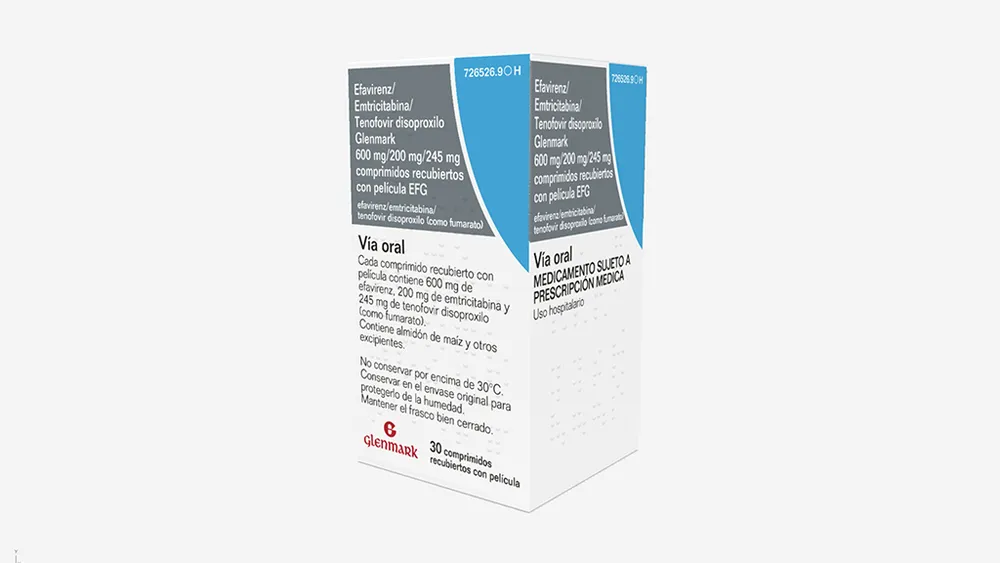
Table of Contents
- Patient Information Leaflet
- Introduction
- 1. What Efavirenz/Emtricitabine/Tenofovir Disoproxil Glenmark is and what it is used for
- 2. What you need to know before starting to take Efavirenz/Emtricitabine/Tenofovir disoproxil Glenmark
- 3. How to take Efavirenz/Emtricitabine/Tenofovir Disoproxil Glenmark
- 4. Possible adverse effects
- 5. Storage of Efavirenz/Emtricitabine/Tenofovir Disoproxil Glenmark
- 6. Contents of the pack and other information
Patient Information Leaflet
Introduction
Patient Information Leaflet
Efavirenz/Emtricitabine/Tenofovir Disoproxil Glenmark 600 mg/200 mg/245 mg film-coated tablets EFG
efavirenz/emtricitabine/tenofovir disoproxil
Read the entire leaflet carefully before you start taking this medicine, as it contains important information for you.
- Keep this leaflet, as you may need to read it again.
- If you have any questions, ask your doctor or pharmacist.
- This medicine has been prescribed for you only, and you should not give it to others, even if they have the same symptoms as you, because it may harm them.
- If you experience any adverse effects, consult your doctor or pharmacist, even if they are effects not listed in this leaflet. See section 4.
Leaflet Contents:
- What Efavirenz/Emtricitabine/Tenofovir Disoproxil Glenmark is and what it is used for
- What you need to know before taking Efavirenz/Emtricitabine/Tenofovir Disoproxil Glenmark
- How to take Efavirenz/Emtricitabine/Tenofovir Disoproxil Glenmark
- Possible side effects
- How to store Efavirenz/Emtricitabine/Tenofovir Disoproxil Glenmark
- Contents of the pack and other information
1. What Efavirenz/Emtricitabine/Tenofovir Disoproxil Glenmark is and what it is used for
Efavirenz/emtricitabine/tenofovir disoproxil contains three active substances used to treat human immunodeficiency virus (HIV) infection.
- Efavirenz is a non-nucleoside reverse transcriptase inhibitor (NNRTI)
- Emtricitabine is a nucleoside reverse transcriptase inhibitor (NRTI)
- Tenofovir is a nucleotide reverse transcriptase inhibitor
Each of these active substances is also known as an antiretroviral medicine; they work by interfering with the normal function of an enzyme (reverse transcriptase) that is essential for the virus to replicate.
Efavirenz/emtricitabine/tenofovir disoproxil is a treatment for human immunodeficiency virus (HIV) infection in adults aged 18 years or older who have previously been treated with other antiretroviral medicines and who have HIV-1 infection under control for at least three months. Patients must not have experienced prior treatment failure with previous antiretroviral therapy for HIV infection.
2. What you need to know before starting to take Efavirenz/Emtricitabine/Tenofovir disoproxil Glenmark
Do not take efavirenz/emtricitabine/tenofovir disoproxil if:
-
you are allergic to efavirenz, emtricitabine, tenofovir, tenofovir disoproxil, or any of the other components of this medicine (listed in section 6).
-
you have severe liver disease
-
you have a heart condition, such as an abnormal electrical signal called QT interval prolongation, which puts you at high risk of serious heart rhythm problems (Torsade de Pointes).
-
any member of your family (parents, grandparents, siblings) has died suddenly due to a heart problem or was born with heart problems.
-
your doctor has told you that you have high or low levels of electrolytes, such as potassium or magnesium, in your blood.
-
you are currently taking any of the following medicines (see also “Other medicines and efavirenz/emtricitabine/tenofovir disoproxil”):
- astemizole or terfenadine (used to treat hay fever or other allergies),
- bepridil (used to treat heart conditions),
- cisapride (used to treat heartburn),
- ergot alkaloids (e.g., ergotamine, dihydroergotamine, ergonovine, and methylergonovine) (used to treat migraines and cluster headaches),
- midazolam or triazolam (used to help sleep),
- pimozide, imipramine, amitriptyline, or clomipramine (used to treat certain mental health conditions),
- St. John’s wort (Hypericum) (Hypericum perforatum) (a herbal medicine used to treat depression and anxiety),
- voriconazole (used to treat fungal infections),
- flecainide, metoprolol (used to treat irregular heartbeat),
- certain antibiotics (macrolides, fluoroquinolones, imidazoles),
- triazole antifungal agents,
- certain antimalarial agents,
- methadone (used to treat opioid addiction).
?If you are taking any of these medicines, inform your doctor immediately. Taking these medicines with efavirenz/emtricitabine/tenofovir disoproxil could cause serious and/or potentially life-threatening side effects or may cause these medicines to stop working properly.
Warnings and precautions
Talk to your doctor or pharmacist before starting efavirenz/emtricitabine/tenofovir disoproxil.
-
While taking this medicine, you may still transmit HIV to others, although effective antiretroviral treatment reduces the risk. Consult your doctor about which precautions are necessary to avoid infecting others. This medicine is not a cure for HIV infection. While taking this medicine, you may still develop infections or other illnesses associated with HIV infection.
-
While taking this medicine, you must remain under your doctor’s supervision.
-
Tell your doctor:
- If you are taking other medicines containing efavirenz, emtricitabine, tenofovir disoproxil, tenofovir alafenamide, lamivudine, or adefovir dipivoxil. Efavirenz/emtricitabine/tenofovir disoproxil must not be taken with any of these medicines.
-
If you have or have had kidney disease, or if blood tests have shown kidney problems. This medicine is not recommended if you have moderate to severe kidney disease.
This medicine can affect your kidneys. Before starting treatment, your doctor may request blood tests to check your kidney function. Your doctor may also request blood tests during treatment to monitor your kidneys.
This medicine is generally not taken with other medicines that may harm your kidneys (see also “Other medicines and efavirenz/emtricitabine/tenofovir disoproxil”): If this is unavoidable, your doctor will monitor your kidney function weekly.
-
If you have a heart condition, such as an abnormal electrical signal called QT interval prolongation.
-
If you have a history of mental illness, including depression, or alcohol or substance abuse. Inform your doctor immediately if you feel depressed, have suicidal thoughts, or experience unusual thoughts (see section 4, Possible side effects).
-
If you have a history of seizures (spasms or fits) or if you are being treated with anticonvulsant therapy such as carbamazepine, phenobarbital, or phenytoin. If you are taking any of these medicines, your doctor may need to check your anticonvulsant blood levels to ensure they are not affected while taking efavirenz/emtricitabine/tenofovir disoproxil. Your doctor may prescribe a different anticonvulsant.
-
If you have a history of liver disease, including active chronic hepatitis. Patients with liver disease, including chronic hepatitis B or C, treated with combination antiretroviral therapy, have an increased risk of severe and potentially life-threatening liver complications. Your doctor may perform blood tests to monitor your liver function or switch you to another medicine. Do not take efavirenz/emtricitabine/tenofovir disoproxil if you have severe liver disease (see above, section 2, Do not take Efavirenz/Emtricitabine/Tenofovir disoproxil Glenmark).
If you have hepatitis B infection, your doctor will carefully consider the best treatment regimen for you. Tenofovir disoproxil and emtricitabine, two of the active substances in efavirenz/emtricitabine/tenofovir disoproxil, show some activity against hepatitis B virus, although emtricitabine is not authorized for the treatment of hepatitis B infection. Symptoms of your hepatitis may worsen after stopping efavirenz/emtricitabine/tenofovir disoproxil. Your doctor may perform blood tests at regular intervals to monitor your liver (see section 3, If you stop taking Efavirenz/Emtricitabine/Tenofovir disoproxil Glenmark).
-
Regardless of whether you have a history of liver disease, your doctor will consider performing regular blood tests to monitor your liver function.
-
If you are over 65 years of age. The number of patients over 65 years old studied is insufficient. If you are over 65 and have been prescribed this medicine, your doctor will monitor you closely.
-
Once you start taking efavirenz/emtricitabine/tenofovir disoproxil, be alert for:
- Signs of dizziness, difficulty sleeping, drowsiness, difficulty concentrating, or abnormal dreams. These side effects may begin within the first 1 or 2 days of treatment and usually resolve after the first 2 to 4 weeks.
-
Any sign of a skin rash. This medicine can cause skin rashes. If you notice any signs of a severe rash with blisters or fever, stop taking this medicine and inform your doctor immediately. If you have had a skin rash while taking another NNRTI, you may be at higher risk of developing a rash with this medicine or other medicines containing efavirenz.
-
Any sign of inflammation or infection. In some patients with advanced HIV infection (AIDS) and a history of opportunistic infections, signs and symptoms of inflammation due to previous infections may appear shortly after starting anti-HIV treatment. These symptoms are believed to result from improved immune response, enabling the body to fight infections that were previously present without apparent symptoms. If you notice any signs of infection, please inform your doctor immediately.
In addition to opportunistic infections, autoimmune disorders (a condition where the immune system attacks healthy body tissue) may also occur after you start taking medicines for your HIV infection. Autoimmune disorders may appear many months after starting treatment. If you notice any signs of infection or other symptoms such as muscle weakness, weakness starting in the hands and feet and moving upward toward the trunk, palpitations, tremors, or hyperactivity, inform your doctor immediately to receive necessary treatment.
- Bone problems. Some patients receiving combination antiretroviral therapy may develop a bone disease called osteonecrosis (death of bone tissue due to reduced blood supply to the bone). Among the many risk factors for developing this disease are duration of combination antiretroviral therapy, corticosteroid use, alcohol consumption, severe immunosuppression, and high body mass index. Symptoms of osteonecrosis include joint stiffness, pain, and discomfort (especially in the hip, knee, and shoulder), and difficulty moving. If you notice any of these symptoms, inform your doctor.
Bone problems (manifesting as persistent or worsening bone pain and sometimes leading to fractures) may also occur due to damage to renal tubule cells (see section 4, Possible side effects). Inform your doctor if you experience bone pain or fractures.
Tenofovir disoproxil (a component of efavirenz/emtricitabine/tenofovir) may also cause loss of bone mineral density. The most pronounced bone loss was observed in clinical studies when patients received HIV treatment with tenofovir disoproxil in combination with a boosted protease inhibitor.
Overall, the long-term effects of tenofovir disoproxil on bone health and future fracture risk in adult and pediatric patients are uncertain.
Inform your doctor if you know you have osteoporosis. Patients with osteoporosis are at higher risk of fractures.
Children and adolescents
- Do not give efavirenz/emtricitabine/tenofovir disoproxil to children and adolescents under 18 years of age. The use of efavirenz/emtricitabine/tenofovir disoproxil in children and adolescents has not yet been studied.
Other medicines and efavirenz/emtricitabine/tenofovir disoproxil
You must not take efavirenz/emtricitabine/tenofovir disoproxil with certain medicines. These are listed under Do not take efavirenz/emtricitabine/tenofovir disoproxil, at the beginning of section 2. These include some commonly used medicines and some herbal medicines (including St. John’s wort) that may cause serious interactions.
Inform your doctor or pharmacist if you are taking, have recently taken, or might need to take any other medicine.
Additionally, efavirenz/emtricitabine/tenofovir disoproxil must not be taken with any other medicine containing efavirenz (unless recommended by your doctor), emtricitabine, tenofovir disoproxil, tenofovir alafenamide, lamivudine, or adefovir dipivoxil.
Tell your doctor if you are taking other medicines that may harm your kidneys. Some examples include:
- aminoglycosides, vancomycin (medicines for bacterial infections),
- foscarnet, ganciclovir, cidofovir (medicines for viral infections),
- amphotericin B, pentamidine (medicines for fungal infections),
- interleukin-2 (for treating cancer),
- non-steroidal anti-inflammatory drugs (NSAIDs, for relieving bone or muscle pain).
This medicine may interact with other medicines, including herbal medicines such as Ginkgo biloba extracts. This may result in altered blood levels of efavirenz/emtricitabine/tenofovir disoproxil or other medicines. This may prevent the medicines from working properly or may worsen side effects. In some cases, your doctor may need to adjust your dose or check blood levels. It is important to inform your doctor or pharmacist if you are taking any of the following:
-
Medicines containing didanosine (for HIV infection): taking this medicine with other antiviral medicines containing didanosine may increase didanosine levels in your blood and may reduce CD4 cell count. Rare cases of pancreatitis and lactic acidosis (excess lactic acid in the blood), some fatal, have been reported when medicines containing tenofovir disoproxil and didanosine are taken together. Your doctor will consider whether to treat you with medicines containing tenofovir and didanosine.
-
Other medicines used for HIV infection: the following protease inhibitors: darunavir, indinavir, lopinavir/ritonavir, ritonavir, or atazanavir boosted by ritonavir or saquinavir. Your doctor may consider prescribing a different medicine or adjusting the dose of protease inhibitors. Also, inform your doctor if you are taking maraviroc.
-
Medicines used to treat hepatitis C virus infection: boceprevir, elbasvir/grazoprevir, simeprevir, sofosbuvir/velpatasvir, sofosbuvir/velpatasvir/voxilaprevir.
-
Medicines used to lower blood fat (also called statins): atorvastatin, pravastatin, simvastatin. This medicine may reduce statin levels in the blood. Your doctor will check cholesterol levels and consider adjusting the statin dose if necessary.
-
Medicines used to treat seizures/fits (anticonvulsants): carbamazepine, phenytoin, phenobarbital. Efavirenz/emtricitabine/tenofovir disoproxil may reduce anticonvulsant levels in the blood. Carbamazepine may reduce efavirenz levels, one of the components of this medicine, in the blood. Your doctor may need to consider prescribing a different anticonvulsant.
-
Medicines used to treat bacterial infections, including tuberculosis and Mycobacterium avium complex associated with AIDS: clarithromycin, rifabutin, rifampicin. Your doctor may need to consider changing the dose or prescribing an alternative antibiotic. Additionally, your doctor may consider prescribing an additional dose of efavirenz to treat your HIV infection.
-
Medicines used to treat fungal infections (antifungals): itraconazole or posaconazole. Efavirenz/emtricitabine/tenofovir disoproxil may reduce itraconazole or posaconazole levels in the blood. Your doctor may need to consider administering a different antifungal.
-
Medicines used to treat malaria: atovaquone/proguanil or artemether/lumefantrine. This medicine may reduce atovaquone/proguanil or artemether/lumefantrine levels in the blood.
-
Hormonal contraceptives, such as birth control pills, a contraceptive injection (e.g., Depo-Provera), or a contraceptive implant (e.g., Implanon): you should also use a reliable barrier method of contraception (see Pregnancy and breastfeeding). Efavirenz/emtricitabine/tenofovir disoproxil may alter the effectiveness of hormonal contraceptives. Cases of pregnancy have been reported in women taking efavirenz, a component of this medicine, while using a contraceptive implant, although a causal link to efavirenz treatment has not been established.
-
Sertraline, a medicine used to treat depression, as your doctor may need to adjust the sertraline dose.
-
Bupropion, a medicine used to treat depression or to help you quit smoking, as your doctor may need to adjust the bupropion dose.
-
Diltiazem or similar medicines (called calcium channel blockers): when starting treatment with this medicine, your doctor will need to adjust your calcium channel blocker dose.
-
Medicines used to prevent organ transplant rejection (also called immunosuppressants) such as cyclosporine, sirolimus, or tacrolimus. When starting or stopping treatment with this medicine, your doctor will closely monitor your immunosuppressant blood levels and may need to adjust your dose.
-
Warfarin or acenocoumarol (medicines used to reduce blood clotting): your doctor may need to adjust your warfarin or acenocoumarol dose.
-
Ginkgo biloba extracts (herbal medicine).
-
Metamizole, a medicine used to treat pain and fever.
-
Praziquantel, a medicine used to treat parasitic worm infections.
Pregnancy and breastfeeding
If you are pregnant or breastfeeding, think you may be pregnant, or plan to become pregnant, consult your doctor or pharmacist before using this medicine.
Women must not become pregnant during treatment with efavirenz/emtricitabine/tenofovir disoproxil or within 12 weeks after stopping treatment. Your doctor may perform a pregnancy test to ensure you are not pregnant before starting treatment with this medicine.
If you could become pregnant while receiving efavirenz/emtricitabine/tenofovir disoproxil, you must use a reliable barrier method of contraception (e.g., a condom) in addition to other contraceptive methods, including oral contraceptives (the pill) or other hormonal contraceptives (e.g., implants, injections). Efavirenz, one of the active ingredients in this medicine, may remain in your blood for some time after stopping treatment. Therefore, you must continue using contraceptive measures as indicated above for 12 weeks after stopping this medicine.
Inform your doctor immediately if you become pregnant or plan to become pregnant. You should only take this medicine during pregnancy if both you and your doctor decide it is strictly necessary.
Severe birth defects have been observed in newborn animals and human infants born to women treated with efavirenz during pregnancy.
Consult your doctor or pharmacist before using any medicine.
If you have taken efavirenz/emtricitabine/tenofovir disoproxil during pregnancy, your doctor may request periodic blood tests and other diagnostic tests to monitor your baby’s development. In children whose mothers took NNRTIs during pregnancy, the benefit of protection against HIV outweighed the risk of adverse effects.
Do not breastfeed your baby during treatment with efavirenz/emtricitabine/tenofovir disoproxil. Both HIV and the ingredients of this medicine can pass into breast milk and cause serious harm to the baby.
Driving and using machines
Efavirenz/emtricitabine/tenofovir disoproxil may cause dizziness, difficulty concentrating, and drowsiness. If affected, do not drive and do not operate tools or machinery.
Efavirenz/emtricitabine/tenofovir disoproxil contains sodium
This medicine contains less than 1 mmol of sodium (23 mg) per film-coated tablet, which is essentially “sodium-free”.
3. How to take Efavirenz/Emtricitabine/Tenofovir Disoproxil Glenmark
Follow exactly the instructions for using this medicine as given by your doctor or pharmacist. If in doubt, consult your doctor or pharmacist again.
The recommended dose is:
One tablet per day, taken orally. Efavirenz/emtricitabine/tenofovir disoproxil should be taken on an empty stomach (typically defined as one hour before or two hours after a meal), preferably at bedtime. This may help make some of the adverse effects (e.g., dizziness, drowsiness) less troublesome. Swallow this medicine whole with a glass of water.
Efavirenz/emtricitabine/tenofovir disoproxil should be taken daily.
If your doctor decides to discontinue one of the components of efavirenz/emtricitabine/tenofovir disoproxil, you may be given efavirenz, emtricitabine and/or tenofovir disoproxil separately or in combination with other medicines for the treatment of HIV infection.
If you take more efavirenz/emtricitabine/tenofovir disoproxil than you should
If you accidentally take too many tablets of efavirenz/emtricitabine/tenofovir disoproxil, you may be at an increased risk of experiencing possible adverse effects with this medicine (see section 4, Possible adverse effects). Contact your doctor or go to the nearest emergency department. Take the bottle of tablets with you so that you can easily describe what you have taken. Alternatively, call the Toxicology Information Service at telephone number: 91 562 04 20, stating the medicine and the amount ingested.
If you forget to take efavirenz/emtricitabine/tenofovir disoproxil
It is important that you do not miss a dose of efavirenz/emtricitabine/tenofovir disoproxil.
If you miss a dose of efavirenz/emtricitabine/tenofovir disoproxil within 12 hours of when you usually take it, take it as soon as possible, and then take your next dose at the usual time.
If it is almost time for your next dose (less than 12 hours away), do not take the missed dose. Wait and take the next dose at the usual time. Do not take a double dose to make up for missed doses.
If you vomit the tablet (within 1 hour after taking efavirenz/emtricitabine/tenofovir disoproxil), you should take another tablet. Do not wait until the time of your next dose. You do not need to take another tablet if you vomited more than one hour after taking this medicine.
If you interrupt treatment with efavirenz/emtricitabine/tenofovir disoproxil
Do not interrupt treatment with efavirenz/emtricitabine/tenofovir disoproxil without first talking to your doctor. Interrupting treatment with this medicine may seriously affect your response to future treatments. If treatment with this medicine is interrupted, consult your doctor before restarting the tablets. Your doctor may consider giving you the components of this medicine separately if you have problems or require dose adjustments.
When your supply of efavirenz/emtricitabine/tenofovir disoproxil starts to run low, request a new supply from your doctor or pharmacist. This is extremely important because the amount of virus will begin to increase if you stop taking the medicine, even for a short period. In this case, the virus may become more difficult to treat.
If you have both HIV infection and hepatitis B, it is especially important not to stop your treatment with efavirenz/emtricitabine/tenofovir disoproxil without first talking to your doctor. Some patients have had blood test results or symptoms indicating that their hepatitis worsened after stopping emtricitabine or tenofovir disoproxil (two of the three components of this medicine). If you stop treatment with this medicine, your doctor may recommend that you restart treatment for hepatitis B. You may need blood tests to monitor liver function during the four months following discontinuation of treatment. In some patients with advanced liver disease or cirrhosis, discontinuation of treatment is not recommended, as this may lead to worsening of hepatitis, which could be life-threatening.
?Contact your doctor immediately about any new or unusual symptoms after stopping your treatment, particularly symptoms you associate with hepatitis B virus infection.
If you have any further questions about the use of this medicine, consult your doctor or pharmacist.
4. Possible adverse effects
During HIV treatment, there may be an increase in weight and in blood glucose and lipid levels. This may be partly related to improved health and lifestyle, and in the case of blood lipids, sometimes to the HIV medicines themselves. Your doctor will monitor these changes.
Like all medicines, this medicine can cause adverse effects, although not everyone experiences them.
Possible serious adverse effects: inform your doctor immediately
-
Lactic acidosis (excess lactic acid in the blood) is a rare but serious adverse effect (may affect up to 1 in 1,000 people) that can be life-threatening. The following adverse effects may be signs of lactic acidosis:
-
deep, rapid breathing,
-
drowsiness,
-
feeling sick (nausea), being sick (vomiting), and stomach pain.
?If you think you may have lactic acidosis, contact your doctor immediately.
Other possible serious adverse effects
The following adverse effects are uncommon (may affect up to 1 in 100 people):
- allergic reaction (hypersensitivity) that may cause severe skin reactions (Stevens-Johnson syndrome, erythema multiforme, see section 2),
- swelling of the face, lips, tongue, or throat,
- aggression, suicidal thoughts, abnormal thoughts, paranoia, inability to think clearly, mood changes, seeing or hearing things that are not really there (hallucinations), suicide attempts, personality changes (psychosis), catatonia (a condition in which the patient becomes immobile and speechless for a period).
- abdominal pain (stomach), caused by inflammation of the pancreas,
- forgetfulness, confusion, spasms (seizures), incoherent speech, tremor (shaking),
- yellowing of the skin or eyes, itching, or abdominal pain (stomach) caused by inflammation of the liver,
- kidney tubule damage.
Psychiatric adverse effects, in addition to those listed above, include delusions (false beliefs), neurosis. Some patients have died by suicide. These problems tend to occur more frequently in those with a history of mental illness. Always inform your doctor immediately if you experience these symptoms.
Liver effects: if you are also infected with hepatitis B virus, you may experience worsening of hepatitis after stopping treatment (see section 3).
The following adverse effects are rare (may affect up to 1 in 1,000 patients):
- liver failure, which in some cases leads to death or liver transplantation. Most cases occurred in patients who already had liver disease, but there have been some reports in patients without prior liver disease,
- kidney inflammation, increased urine volume, and feeling thirsty,
- back pain due to kidney problems, including kidney failure. Your doctor may perform blood tests to check whether your kidneys are functioning properly,
- weakening of the bones (with bone pain and sometimes leading to fractures) that may occur due to damage to kidney tubule cells,
- fatty liver.
?If you think you may have any of these serious adverse effects, speak with your doctor.
More frequent adverse effects
The following adverse effects are very common (may affect more than 1 in 10 people):
- dizziness, headache, diarrhea, feeling unwell (nausea), vomiting,
- skin rashes (including red spots or pimples, sometimes with blisters and skin swelling), which may be allergic reactions,
- weakness.
Blood tests may also show:
- decreased blood phosphate levels,
- increased blood creatine kinase levels, which may cause muscle pain and weakness.
Other possible effects
The following adverse effects are common (may affect up to 1 in 10 people):
- allergic reactions,
- problems with balance and coordination,
- feelings of anxiety or depression,
- difficulty sleeping, abnormal dreams, difficulty concentrating, drowsiness,
- pain, stomach ache,
- digestive problems with discomfort after meals, feeling bloated, gas (flatulence),
- loss of appetite,
- fatigue,
- itching,
- changes in skin color such as darkening of the skin in patches, often starting on the hands and soles of the feet.
Blood tests may also show:
- low white blood cell count (a reduced number of white blood cells may make you more prone to infections),
- problems with the liver and pancreas,
- increased fatty acids (triglycerides), bilirubin, or blood sugar levels.
The following adverse effects are uncommon (may affect up to 1 in 100 people):
- muscle rupture, muscle pain, muscle weakness,
- anaemia (low red blood cell count),
- sensation of spinning or swaying (dizziness), ringing, buzzing, or other persistent noises in the ears,
- blurred vision,
- chills,
- breast enlargement in men,
- loss of sex drive,
- flushing,
- dry mouth,
- increased appetite.
Blood tests may also show:
- decreased blood potassium levels,
- increased blood creatinine,
- protein in the urine,
- increased blood cholesterol.
If kidney tubule cells are damaged, muscle rupture, bone weakening (with bone pain and sometimes leading to fractures), muscle pain, muscle weakness, and decreased blood potassium or phosphate levels may occur.
The following adverse effects are rare (may affect up to 1 in 1,000 people):
- skin rash with itching, caused by a reaction to sunlight.
Reporting of adverse effects
If you experience any adverse effect, consult your doctor or pharmacist, even if it is a possible adverse effect not listed in this leaflet. You may also report them directly via the Spanish Pharmacovigilance System for Human Medicinal Products: https://www.notificaram.es. By reporting adverse effects, you can help provide more information on the safety of this medicine.
5. Storage of Efavirenz/Emtricitabine/Tenofovir Disoproxil Glenmark
Keep this medicine out of the sight and reach of children.
Do not use this medicine after the expiry date stated on the bottle and carton after "EXP". The expiry date refers to the last day of the month indicated.
Do not store above 30°C.
Keep in the original packaging to protect from moisture. Keep the bottle tightly closed.
Medicines must not be disposed of via wastewater or household waste. Dispose of unused medicines and their containers at the SIGRE collection point at your pharmacy. If you are unsure, ask your pharmacist how to properly dispose of unused medicines and their packaging. This will help protect the environment.
6. Contents of the pack and other information
Composition of Efavirenz/Emtricitabine/Tenofovir Disoproxil Glenmark
-
The active substances are efavirenz, emtricitabine and tenofovir disoproxil. Each film-coated tablet of this medicine contains 600 mg of efavirenz, 200 mg of emtricitabine and 245 mg of tenofovir disoproxil (as fumarate).
-
The other components in the tablet are:
-
Core: microcrystalline cellulose, sodium croscarmellose, hydroxypropylcellulose, sodium lauryl sulfate, magnesium stearate, pregelatinized maize starch
-
Coating: partially hydrolysed polyvinyl alcohol, titanium dioxide (E171), macrogol, talc (E553b), red iron oxide (E172), black iron oxide (E172).
Appearance of the product and contents of the pack
Efavirenz/Emtricitabine/Tenofovir Disoproxil Glenmark are pink, capsule-shaped, biconvex, film-coated tablets with “CL 81” engraved on one side and smooth on the other side (approx. 20.3 mm x 10.7 mm).
Efavirenz/Emtricitabine/Tenofovir Disoproxil Glenmark is available in bottles of 30 or 90 tablets containing a silica gel desiccant. The silica gel must not be swallowed.
The following pack sizes are available:
- Carton pack containing 1 bottle of 30 film-coated tablets and 90 (3 bottles of 30 film-coated tablets and 1 bottle of 90 film-coated tablets) film-coated tablets.
Only some pack sizes may be marketed.
Marketing Authorisation Holder and Manufacturer
Marketing Authorisation Holder:
Glenmark Arzneimittel GmbH
Industriestr. 31
82194 Gröbenzell
Germany
Manufacturer:
Glenmark Pharmaceuticals s.r.o.
Fibichova, 143
56617 Vysoke Myto
Czech Republic
Mawdsley-Brooks Company Limited
Unit 22, Quest Park, Wheatley Hall Road
DN2 4LT Doncaster
United Kingdom
For further information about this medicine, contact the local representative of the Marketing Authorisation Holder:
Glenmark Farmacéutica, S.L.U.
C/ Retama 7, 7th floor
28045 Madrid
Spain
This medicine is authorised in the European Economic Area member states under the following names:
Germany: Efavirenz/Emtricitabin/Tenofovirdisoproxil Glenmark 600 mg/200 mg/245mg Filmtabletten
Denmark: Efavirenz/Emtricitabine/Tenofovir disoproxil Glenmark 600 mg/200 mg/245mg filmovertrukne tabletter
Netherlands: Efavirenz/Emtricitabine/Tenofovir disoproxil Glenmark 600 mg/200 mg/245mg filmomhulde tabletten
United Kingdom: Efavirenz/Emtricitabine/Tenofovir disoproxil Glenmark 600 mg/200 mg/245mg film-coated tablets
Sweden: Efavirenz/Emtricitabine/Tenofovir disoproxil Glenmark 600 mg/200 mg/245mg filmdragerade tabletter
Date of latest review of this leaflet: September 2022
Detailed information on this medicine is available on the website of the Spanish Agency of Medicines and Health Products (AEMPS) http://www.aemps.gob.es/