Edunix 2.6 mg/ml oral solution
SpainTable of Contents
Package leaflet: Information for the user
Introduction
Package leaflet: information for the patient
Edunix 2.6 mg/ml oral solution
Hydrochloride of hydromorphone
For use in adolescents from 12 years of age and adults
Read the entire leaflet carefully before you start taking this medicine, because it contains important information for you.
- Keep this leaflet, as you may need to read it again.
- If you have any questions, consult your doctor or pharmacist.
- This medicine has been prescribed for you only, and you should not give it to other people, even if they have the same symptoms as you, because it may harm them.
- If you experience any adverse effects, consult your doctor or pharmacist, even if they are adverse effects not listed in this leaflet. See section 4.
Contents of the leaflet
- What Edunix is and what it is used for
- What you need to know before taking Edunix
- How to take Edunix
- Possible side effects
- How to store Edunix
- Contents of the pack and other information
1. What Edunix is and what it is used for
The oral solution has been prescribed for you to relieve severe pain.
It contains the active substance hydromorphone, which is a strong painkiller ('analgesic') belonging to a group of medicines called opioid analgesics.
2. What you need to know before taking Edunix
Do not take Edunix
- if you are allergic to hydromorphone hydrochloride or any of the other ingredients of this medicine (listed in section 6, Additional information);
- if you have breathing problems, such as severe chronic obstructive airway disease, respiratory depression, or severe asthma. Symptoms may include shortness of breath, cough, or slower and weaker breathing than expected;
- if you have stomach problems or unexpected abdominal pain (acute abdomen);
- if you have a bowel problem with absence of motility (paralytic ileus);
- if you are taking monoamine oxidase inhibitors (for example, tranylcypromine, phenelzine, isocarboxazid, moclobemide, and linezolid), or if you have taken any of these medicines within the last 2 weeks.
Warnings and precautions
Talk to your doctor or pharmacist before starting hydromorphone hydrochloride if any of the following apply to you:
- difficulty breathing normally (such as chronic obstructive pulmonary disease or reduced respiratory capacity like asthma); symptoms may include shortness of breath and cough; difficulty sleeping (sleep apnea);
- you have a severe headache or feel unwell due to increased intracranial pressure or head injury (for example, due to brain disease). This is because the oral solution may worsen symptoms or mask the extent of a head injury;
- you suffer from seizures, convulsions, or epileptic fits;
- you have a mental disorder due to intoxication (toxic psychosis);
- you have low blood pressure (hypotension);
- you feel weak or dizzy;
- you have bile duct problems, gallstones, or kidney stones;
- you have colicky-type abdominal pain or discomfort;
- you have inflammation of the pancreas (which may cause severe abdominal and back pain);
- you have intestinal obstruction or inflammatory bowel disorders;
- enlarged prostate, causing difficulty in urination (in men);
- you have reduced adrenal gland function, for example, Addison’s disease (the adrenal gland does not function properly);
- low thyroid activity (hypothyroidism);
- you have severe kidney or liver problems;
- if you or a family member has a history of alcohol, prescription medicine, or illicit substance abuse or dependence (“addiction”);
- if you smoke;
- if you have ever had mood disorders (depression, anxiety, or a personality disorder) or have received psychiatric treatment for other mental illnesses;
- you experience withdrawal symptoms such as restlessness, anxiety, tremors, or sweating when stopping alcohol or drugs;
- elderly or debilitated patients;
- you have constipation.
Tolerance, dependence, and addiction
This medicine contains hydromorphone, which is an opioid. It may cause dependence and/or addiction.
This medicine contains hydromorphone, which is an opioid medicine. Repeated use of opioid painkillers may reduce their effectiveness (you become accustomed to their effects, known as tolerance). Repeated use of hydromorphone may also lead to dependence, abuse, and addiction, which may result in potentially fatal overdose. The risk of these side effects may increase with higher doses and longer duration of use.
Dependence or addiction may make you feel that you no longer control how much medicine you need to take or how often you need to take it.
The risk of developing dependence or addiction varies from person to person. You may have a higher risk of developing dependence or addiction to hydromorphone if:
- You or a family member has abused or been dependent on alcohol, prescription medicines, or illegal substances (“addiction”).
- You are a smoker.
- You have ever had mood disorders (depression, anxiety, or a personality disorder) or have received psychiatric treatment for other mental illnesses.
If you notice any of the following signs while taking hydromorphone, it could be a sign that you have become dependent or addicted:
- You need to take the medicine for longer than prescribed by your doctor.
- You need to take a higher dose than recommended.
- You may feel the need to continue taking the medicine, even if it does not help relieve your pain.
- You are using the medicine for reasons other than prescribed, for example, to stay calm or to sleep.
- You have repeatedly tried, without success, to stop or control your use of the medicine.
- When you stop taking the medicine, you feel unwell and feel better when you take it again (“withdrawal syndrome”).
If you notice any of these signs, talk to your doctor to discuss the best treatment for you, including when it is appropriate to stop taking it and how to do so safely (see section 3, If you stop taking Edunix).
Sleep-related breathing disorders
Hydromorphone may cause sleep-related breathing disorders such as sleep apnea (pauses in breathing during sleep) and sleep-related hypoxemia (low blood oxygen levels). Symptoms may include breathing interruptions during sleep, nighttime awakenings due to difficulty breathing, difficulty maintaining sleep, or excessive daytime sleepiness. If you or someone else notices these symptoms, consult your doctor. Your doctor may consider reducing the dose.
You may experience hormonal changes while taking this oral solution. Your doctor may wish to monitor these changes.
You may experience increased sensitivity to pain despite taking high doses of the oral solution (hyperalgesia). Your doctor will decide whether you need a dose adjustment or a change to another strong painkiller (“analgesic”).
If you are undergoing surgery, inform your doctor that you are taking this oral solution.
The contents of the oral solution must never be injected, as this may cause serious adverse effects that could be fatal.
Other medicines and Edunix
Tell your doctor or pharmacist if you are taking, have recently taken, or might need to take any other medicines.
If you take this oral solution with another medicine, the effect of the oral solution or the other medicine may be altered.
This oral solution must not be used together with a monoamine oxidase inhibitor, or if you have taken this type of medicine within the last two weeks (see section 2, 'Do not take Edunix').
Tell your doctor or pharmacist if you are taking:
- medicines to help you sleep or stay calm (for example, tranquilizers, hypnotics, or sedatives, including benzodiazepines);
- medicines known as barbiturates to treat seizures or help you sleep;
- medicines to prevent or relieve nausea or vomiting;
- medicines to prevent or relieve allergy symptoms (antihistamines);
- medicines to treat depression;
- medicines to treat psychiatric or mental disorders (antipsychotics such as phenothiazines);
- other strong painkillers (“analgesics”).
Also inform your doctor if you have recently received an anesthetic.
The concomitant use of hydromorphone and benzodiazepines (which may help reduce anxiety and seizures, relax muscles, and induce sleep) increases the risk of drowsiness, breathing difficulties (respiratory depression), and coma, and can be potentially fatal. Therefore, concomitant use should only be considered when no other treatment options are possible. The concomitant use of opioids and drugs used to treat epilepsy, nerve pain, or anxiety (gabapentin and pregabalin) increases the risk of opioid overdose and respiratory depression, and can be potentially fatal.
However, if your doctor prescribes Edunix together with sedative medicines, your doctor should limit the dose and duration of concomitant treatment.
Inform your doctor about all sedative medicines you are taking and carefully follow the dose recommended by your doctor. It may be helpful to inform friends or family members who are aware of the signs and symptoms listed above. Contact your doctor if you experience such symptoms.
Taking Edunix with food, drinks, or alcohol
This oral solution may be taken with or without food, but it is recommended not to drink alcohol while taking Edunix.
Drinking alcohol during treatment with this oral solution may cause drowsiness or negatively affect your breathing.
Pregnancy and breastfeeding
If you are pregnant or breastfeeding, think you may be pregnant, or plan to become pregnant, consult your doctor or pharmacist before using this medicine.
Pregnancy
The use of Edunix during pregnancy and childbirth is not recommended unless specifically prescribed by your doctor. Depending on the dose and duration of hydromorphone treatment, slow and shallow breathing (respiratory depression) or withdrawal symptoms may occur in the newborn. Newborns may experience withdrawal effects (such as high-pitched crying, restlessness, seizures, poor feeding, and diarrhea) if their mothers have taken hydromorphone for a prolonged period during pregnancy.
Breastfeeding
Hydromorphone may pass into breast milk. Therefore, Edunix must not be used during breastfeeding.
Driving and using machines
This oral solution may cause a number of adverse effects such as drowsiness, which may affect your ability to drive or operate machinery (see section 4, “Complete list of adverse effects”). These effects are usually most noticeable when starting the oral solution or increasing the dose. If affected, you must not drive or operate machinery.
Edunix contains methyl parahydroxybenzoate
It may cause allergic reactions (possibly delayed) because it contains methyl parahydroxybenzoate.
Edunix contains sucrose
This medicine contains sucrose. If your doctor has told you that you have an intolerance to certain sugars, consult with them before taking this medicine.
It may cause dental caries.
Edunix contains sodium
This medicine contains less than 23 mg of sodium (1 mmol) per prolonged-release tablet; this is essentially “sodium-free”.
3. How to take Edunix
Always take the oral solution exactly as your doctor has instructed you. The label on your medicine will indicate how much oral solution you should take and how often.
Do not exceed the dose recommended by your doctor. If in doubt, consult your doctor or pharmacist again.
Adults and adolescents over 12 years of age
The usual initial dose is 0.5 ml (1.3 mg) or 1.0 ml (2.6 mg) of oral solution every 4 hours. However, your doctor will prescribe the dose necessary to relieve your pain. If you notice that you still feel pain while taking this oral solution, inform your doctor.
Children under 12 years of age
The use of this medicine is not recommended in children under 12 years of age.
Elderly patients and patients with renal or hepatic impairment
Inform your doctor if you have renal or hepatic problems. Your doctor may prescribe a lower dose of this oral solution if you are elderly or have kidney or liver problems.
Method of administration
This medicine is for oral use.
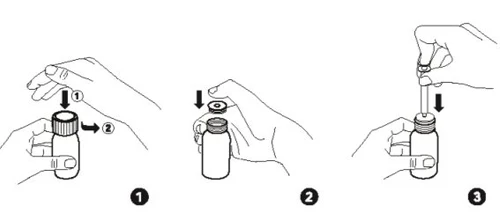
- Open the bottle: Press down on the child-resistant screw cap and turn it counterclockwise (Fig. 1). Note: Keep the screw cap handy so you can close the bottle immediately after each use.
- For first use only: Place the bottle on a flat surface. Firmly press the plastic adapter into the neck of the bottle, if supplied separately (Fig. 2). If the adapter is already attached to the bottle, skip the step shown in Fig. 2.
- Take the syringe and check that the plunger is fully pressed down.
- Hold the bottle upright and firmly insert the dosing syringe into the plastic adapter (Fig. 3).
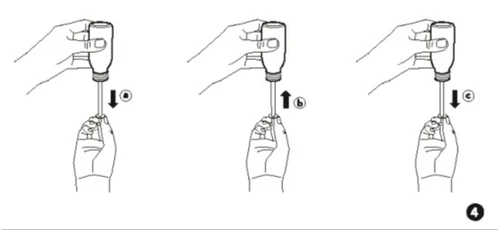
- Turn the bottle and syringe upside down.
- Slowly pull the plunger down to the stop to fill the syringe with the medicine (Fig. 4a). Then, push the plunger fully upward to remove any air bubbles inside the dosing syringe (Fig. 4b).
- Next, slowly pull back the plunger again to the mark corresponding to your required dose (Fig. 4c).
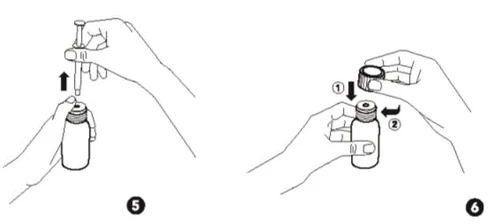
- Turn the bottle with the syringe attached back upright. With your thumb holding the bottle, remove the syringe from the adapter (Fig. 5).
- You can now take your dose directly from the syringe. To do so, remember to sit upright and slowly press the plunger of the syringe to swallow the dose properly. Alternatively, you may mix the dose with a non-alcoholic drink. If you do so, drink the mixture immediately after mixing.
- Close the bottle with the child-resistant screw cap after use. Note: The adapter remains in the bottle (Fig. 6).
- Cleaning: After use, clean the outside of the syringe with a clean, dry cloth.
If you take more Edunix than you should or if someone accidentally takes your oral solution
If you have taken more oral solution than you should, contact your doctor or hospital immediately. In case of overdose or accidental ingestion, contact your doctor or call the Toxicology Information Service; Telephone 91 562 04 20, indicating the medicine and the amount taken.
Individuals who have taken an overdose may feel very drowsy, sick, or dizzy, and may also develop constricted pupils, breathing difficulties, low blood pressure, or pneumonia caused by aspiration of vomit or foreign bodies (symptoms may include shortness of breath, cough, and fever). In severe cases, circulatory collapse or deep unconsciousness (coma) may lead to death. When visiting the doctor, be sure to bring this leaflet and any remaining oral solution to show the doctor.
If you have taken too much oral solution, you must under no circumstances expose yourself to situations requiring high concentration, such as driving a car.
If you forget to take Edunix
If you forget to take a dose, take it as soon as you remember and then continue as before. Do not take two doses within 4 hours. Do not take a double dose to make up for a missed dose.
If you stop taking Edunix
Do not stop taking this oral solution suddenly unless your doctor tells you to. If you wish to discontinue the oral solution, discuss it with your doctor first. Your doctor will advise you on how to do so, usually by gradually reducing the dose to avoid experiencing adverse effects. Withdrawal symptoms such as agitation, anxiety, restlessness, difficulty sleeping, unusual hyperactivity, tremors, or gastrointestinal disorders (e.g., stomach discomfort) may occur if you stop taking this oral solution suddenly.
If you have any further questions about the use of this medicine, ask your doctor or pharmacist.
4. Possible adverse effects
Like all medicines, this medicine may cause adverse effects, although not everyone experiences them.
This medicine may cause allergic reactions (hypersensitivity), which can be serious (anaphylactic reactions). The frequency of these reactions is unknown. Inform your doctor immediately if you experience difficulty breathing, swelling of the eyelids, face, lips, mouth or throat, or any skin rash or itching, especially if it affects your entire body.
Slow and weak breathing (respiratory depression) is the most serious adverse effect of opioid overdose.
As with all strong analgesics, there is a risk of becoming addicted to or dependent on this oral solution.
Very common (may affect more than 1 in 10 people):
- Constipation (your doctor may prescribe a laxative for this problem).
- Feeling unwell.
- Dizziness, drowsiness.
Common (may affect up to 1 in 10 people):
- Malaise (usually resolves after a few days, but your doctor may prescribe a medicine if the problem persists).
- Anxiety, confusion.
- Difficulty sleeping.
- Dry mouth, loss of appetite, stomach pain or abdominal discomfort.
- Headache.
- Feeling weak.
- Itching of the skin.
- Sweating.
- Sudden need to urinate.
Uncommon (may affect up to 1 in 100 people):
- Withdrawal symptoms (see section 3 "If you stop taking Edunix").
- Indigestion, diarrhoea, taste disturbances.
- Depression, feeling of extreme happiness (euphoria), hallucinations, nightmares.
- Blurred vision.
- Agitation.
- Tremor, muscle spasms, tingling or numbness.
- Low blood pressure.
- Difficulty breathing.
- Decreased sexual desire, impotence.
- Skin rash, urticaria.
- Swelling of hands, ankles or feet (fluid accumulation in tissues).
- Difficulty urinating.
- General malaise.
- Tiredness.
- Worsening of liver function tests (in a blood test).
Rare (may affect up to 1 in 1,000 people):
- Aggressiveness.
- Increased drowsiness.
- Lack of energy.
- Fast heart rate, slow heart rate, palpitations.
- Wheezing or difficulty breathing.
- Changes in pancreatic function (in a blood test).
Frequency not known (cannot be estimated from available data):
- Sleep apnoea (interruptions in breathing during sleep).
- Seizures or convulsions.
- Mood changes (dysphoria), restlessness.
- Increased sensitivity to pain.
- Intestinal failure (paralytic ileus).
- Constriction of the pupils.
- Feeling of warmth.
- Uncontrolled muscle movements.
- Itchy skin rash (urticaria).
- Need to take higher doses to achieve the same level of pain relief (tolerance).
- Drug withdrawal syndrome in newborns whose mothers have taken Edunix during pregnancy (see section 2).
If you experience any adverse effect, inform your doctor or pharmacist. This includes adverse effects not listed in this leaflet.
Reporting of adverse effects
If you experience any type of adverse effect, consult your doctor or pharmacist, even if it is a possible adverse effect not listed in this leaflet. You may also report them directly via the reporting system included in the Spanish Pharmacovigilance System for Human Medicines. Website: www.notificaRAM.es. By reporting adverse effects, you can help provide more information on the safety of this medicine.
5. Storage of Edunix
Keep this medicine out of the sight and reach of children.
Do not use this medicine after the expiry date stated on the packaging and label, after EXP. The expiry date is the last day of the month indicated.
Store below 25°C. Keep in the original packaging.
Do not use more than 2 months after first opening the bottle.
Medicines should not be disposed of via wastewater drains or household waste. Dispose of unused medicines and their containers at the SIGRE Point in your pharmacy. Ask your pharmacist how to properly dispose of medicines and containers you no longer need. This will help protect the environment.
6. Contents of the pack and other information
Composition of Edunix
-
The active substance is hydromorphone hydrochloride. Each ml contains 2.6 mg of hydromorphone hydrochloride equivalent to 2.32 mg of hydromorphone.
-
The other components are: methyl parahydroxybenzoate (E-218), sucrose, glycerol 99% (E-422), citric acid monohydrate (E-330), sodium citrate (E-331), and purified water.
Nature of the product and pack contents
A transparent, colourless, slightly viscous solution with a sweet taste and odour. Includes an oral dosing syringe for administration.
The oral solution is packed in brown glass bottles of 20, 50 or 100 ml, closed with a child-resistant screw cap and tamper-evident ring. The bottle is placed in a folding carton together with a 3 ml plastic dosing syringe (graduated in 0.1 ml increments).
Only certain pack sizes may be marketed.
Marketing Authorization Holder and Manufacturer
Aristo Pharma GmbH
Wallenroder Str. 8-10
13435 Berlin
Germany
Further information about this medicinal product is available from the local representative of the Marketing Authorization Holder:
Aristo Pharma Iberia, S.L.
C/ Solana, 26
28850 Torrejón de Ardoz
Madrid, Spain
This medicinal product is authorised in the European Economic Area member states under the following names:
Germany: Hydromorphon Aristo 2.6 mg/ml Lösung zum Einnehmen
Spain: Edunix 2.6 mg/ml oral solution
Malta: Hydromorphone Aristo 2.6 mg/ml oral solution
Date of the most recent revision of this leaflet: December 2025
Detailed information on this medicinal product is available on the website of the Spanish Agency of Medicines and Health Products (AEMPS): http://www.aemps.gob.es/