Ebastine Ratiopharm 20 mg orodispersible tablets EFG
Spain
Table of Contents
- Package leaflet: Information for the user
- Introduction
- 1. What Ebastina ratiopharm is and what it is used for
- 2. What you need to know before taking Ebastina ratiopharm
- 3. How to take Ebastine ratiopharm
- 4. Possible adverse effects
- 5. Conservation of Ebastine ratiopharm
- 6. Contents of the pack and other information
Package leaflet: Information for the user
Introduction
Package leaflet: information for the user
Ebastinaratiopharm 20 mg orodispersible tablets EFG
Ebastine
Read the entire leaflet carefully before you start taking this medicine, because it contains important information for you.
- Keep this leaflet, as you may need to read it again.
- If you have any questions, ask your doctor or pharmacist.
- This medicine has been prescribed for you and you should not give it to others, even if they have the same symptoms, as it may harm them.
- If you experience any adverse reactions, consult your doctor or pharmacist, even if they are adverse reactions not listed in this leaflet. See section 4.
Leaflet contents:
- What Ebastina ratiopharm is and what it is used for
- What you need to know before taking Ebastina ratiopharm
- How to take Ebastina ratiopharm
- Possible side effects
- How to store Ebastina ratiopharm
Pack contents and other information
1. What Ebastina ratiopharm is and what it is used for
Ebastine is an antihistamine that helps relieve allergy symptoms such as sneezing, runny nose, watery eyes, and itchy skin rashes.
In adults and children aged 12 years and over, Ebastina ratiopharm is used to relieve symptoms of seasonal allergic rhinitis and perennial allergic rhinitis, including cases with allergic conjunctivitis.
2. What you need to know before taking Ebastina ratiopharm
Do not take Ebastina ratiopharm
If you are allergic to ebastine or to any of the other ingredients of this medicine (listed in section 6).
Warnings and precautions
Talk to your doctor before starting to take Ebastina ratiopharm if:
- you have low levels of potassium in the blood.
- you are already taking certain antibiotics or medicines used to treat fungal infections: see the section "Taking Ebastina ratiopharm with other medicines" below.
- you have severe impairment of liver function (hepatic insufficiency).
Ebastine may cause dry mouth. Therefore, during prolonged treatment with ebastine, it is important to maintain good oral hygiene (you should brush your teeth twice daily with a fluoride toothpaste) to reduce the risk of dental caries.
Children and adolescents
This medicine should only be given to children aged 12 years and older. Do not administer to children under 12 years of age, as safety and efficacy have not been established in this age group.
Taking Ebastina ratiopharm with other medicines
Tell your doctor or pharmacist if you are taking, have recently taken, or might need to take any other medicines.
Taking Ebastina ratiopharm at the same time as erythromycin (an antibiotic) or ketoconazole, itraconazole (active substances used to treat fungal infections) may lead to higher blood levels of ebastine.
Concomitant administration of ebastine with rifampicin (a medicine for tuberculosis) may result in lower blood levels of ebastine, leading to reduced effectiveness.
It is not recommended to use Ebastina ratiopharm together with clarithromycin or josamycin (antibiotics).
Taking Ebastina ratiopharm with food and drink
You may take Ebastina ratiopharm regardless of meal times.
Pregnancy and breastfeeding
To date, experience regarding fetal safety in humans is limited. For this reason, you should only take this medicine during pregnancy if your doctor considers that the expected benefit outweighs any possible risks.
Do not take Ebastina ratiopharm if you are breastfeeding, as it is unknown whether the active substance passes into breast milk.
If you are pregnant or breastfeeding, think you may be pregnant, or are planning to become pregnant, consult your doctor or pharmacist before using this medicine.
Driving and using machines
Most patients treated with Ebastina ratiopharm can drive or perform other activities requiring good reaction ability. However, as with other medicines, you should assess your individual response after taking Ebastina ratiopharm before driving or performing complex tasks, since some patients may experience drowsiness or dizziness.
Ebastina ratiopharm contains aspartame
This medicine contains 5 mg of aspartame per tablet.
Aspartame is a source of phenylalanine, which may be harmful if you have phenylketonuria (PKU), a rare genetic disorder in which phenylalanine accumulates because the body cannot properly eliminate it.
Ebastina ratiopharm contains lactose
If your doctor has informed you that you have an intolerance to certain sugars, consult with him before taking this medicine.
Ebastina ratiopharm contains sodium
This medicine contains less than 23 mg of sodium (1 mmol) per tablet; this is essentially “sodium-free”.
3. How to take Ebastine ratiopharm
Follow exactly the administration instructions for this medicine as indicated by your doctor or pharmacist. If in doubt, consult your doctor or pharmacist again.
The recommended dose is:
Indication | Age | Dosage |
Allergic rhinitis In case of severe symptoms | Children 12 years and older, and adults | One tablet of Ebastina ratiopharm 10 mg (10 mg of ebastine) daily Two tablets of Ebastina ratiopharm 10 mg or one tablet of Ebastina ratiopharm 20 mg (20 mg of ebastine) daily |
Urticaria | Adults over 18 years | One tablet of Ebastina ratiopharm 10 mg (10 mg of ebastine) daily |
In patients with renal impairment, dose adjustment is not necessary.
In patients with mild to moderate hepatic impairment, dose adjustment is not necessary.
There is no experience with doses higher than 10 mg in patients with severe hepatic impairment; therefore, these patients should not take more than 10 mg per day.
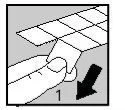
Do not push the tablet out of the blister, as this will crush it.
Each strip contains tablets separated by perforations in blisters. Detach one blister with its tablet along the dotted line (Figure 1).
Carefully remove the peelable foil starting from the corner indicated by the arrow (Figures 2 and 3).
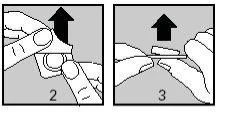
Keep hands dry and remove the tablet from the strip.
Place the tablet on the tongue, where it will disperse. Water or any other liquid is not required.
Ebastine ratiopharm may be taken regardless of meals.
Your doctor will decide the duration of treatment.
If you take more Ebastine ratiopharm than you should
There is no specific antidote for the active substance ebastine.
If you suspect an overdose with Ebastine ratiopharm, inform your doctor. Depending on the severity of intoxication, he/she will initiate necessary measures (monitoring of vital functions, including ECG monitoring for at least 48 hours, symptomatic treatment, and gastric lavage), if required.
If you have taken a higher dose than prescribed by your doctor or in case of overdose, contact your doctor or pharmacist immediately, or call the Toxicology Information Service at telephone number 91 562 04 20, indicating the name of the medicine and the amount taken.
If you forget to take Ebastine ratiopharm
Do not take a double dose to make up for missed doses.
If you have any further questions about the use of this medicine, ask your doctor or pharmacist.
4. Possible adverse effects
Like all medicines, this medicine can cause adverse effects, although not everyone experiences them.
Stop taking Ebastina ratiopharm and contact your doctor immediately or go to the nearest hospital if the following occurs:
- Serious allergic reaction causing swelling of the face, tongue or throat, which may cause difficulty swallowing or breathing.
Other adverse effects include:
Very common (may affect more than 1 in 10 people)
- Headache
Common (may affect up to 1 in 10 people):
- Drowsiness
- Dry mouth
Uncommon (may affect up to 1 in 100 people):
- Sore throat (pharyngitis), nasal discharge (rhinitis), nosebleed
- Abdominal pain, nausea, indigestion
- Weakness (asthenia), dizziness, insomnia
Rare (may affect up to 1 in 1,000 people):
- Nervousness, insomnia
- Altered or decreased sense of touch
- Sensory disturbances
- Palpitations, rapid heartbeat
- Abdominal pain, nausea, indigestion
- Vomiting
- Abnormal liver function test
- Inflammation of the liver
- Problems with bile excretion causing itching, yellowing of eyes and skin (jaundice)
- Rash, itchy rash, skin inflammation
- Menstrual disorders
- Edema (fluid retention in tissues), weakness (asthenia)
- Dizziness
Very rare (may affect up to 1 in 10,000 people):
- Urticaria, eczema
- Painful menstruation
Frequency not known (cannot be estimated from available data)
- Weight gain
- Increased appetite
Reporting of adverse effects
If you experience any type of adverse effect, talk to your doctor or pharmacist, even if it is a possible adverse effect not listed in this leaflet. You can also report them directly via the Spanish Pharmacovigilance System for Human Medicinal Products: www.notificaram.es. By reporting adverse effects, you can help provide more information on the safety of this medicine.
5. Conservation of Ebastine ratiopharm
Keep this medicine out of sight and reach of children.
Do not use this medicine after the expiry date stated on the packaging after EXP. The expiry date refers to the last day of the month indicated.
Store in the original packaging to protect from light.
Medicines should not be disposed of via wastewater or household waste. Unused medicines and their containers should be returned to the SIGRE collection point at your pharmacy. If you have any questions, ask your pharmacist how to dispose of medicines and containers you no longer need. This will help protect the environment.
6. Contents of the pack and other information
Composition of Ebastinaratiopharm
The active substance is ebastine.
Each orodispersible tablet contains 20 mg of ebastine.
The other components are: microcrystalline cellulose, lactose monohydrate, maize starch, sodium croscarmellose, aspartame (E-951), peppermint flavour, colloidal anhydrous silica, and magnesium stearate.
Appearance of the product and contents of the pack
Orodispersible tablet.
White, biconvex, round tablets, engraved with "E20" on one side and smooth on the other.
Available pack sizes: 10, 15, 20, 30, 40, 50, 98 and 100 orodispersible tablets.
Not all pack sizes may be marketed.
Marketing Authorization Holder and Manufacturer
Marketing Authorization Holder
Teva Pharma, S.L.U.
C/ Anabel Segura 11, Edificio Albatros B, 1st floor
Alcobendas 28108 Madrid (Spain)
Manufacturer
Teva Pharmaceutical Works Private Limited Company
Pallagi út 13, 4042 Debrecen
Hungary
This medicinal product is authorized in the European Economic Area member states under the following names:
ES: Ebastina ratiopharm 20 mg orodispersible tablets EFG
IT: Ebakest 20 mg compresse orodispersibili
SE: Ebateva 20 mg munsönderfallande tabletter
Date of the most recent review of this leaflet: September 2023
Detailed information on this medicinal product is available on the website of the Spanish Agency of Medicines and Health Products (AEMPS) http://www.aemps.gob.es/