Dysport 500 U powder for solution for injection
Spain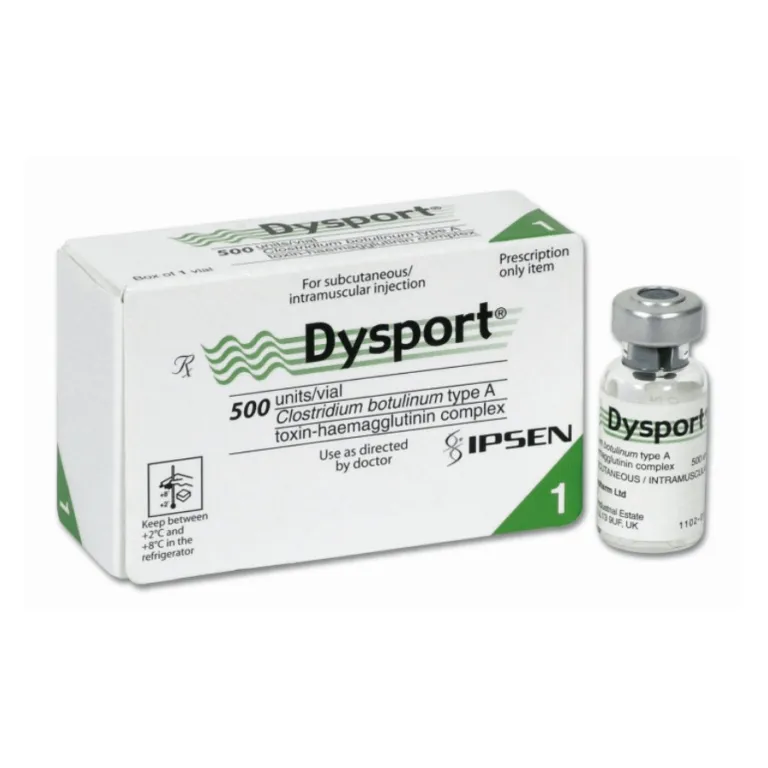
Table of Contents
- Package leaflet: Information for the user
- Introduction
- 1. What Dysport is and what it is used for
- 2. What you need to know before using Dysport
- **Children and adolescents**
- Dysport should only be used in children aged two years and older for the treatment of leg spasticity in children. The safety and efficacy of this medicinal product have not been established for treatment in children for other indications.
- **Pregnancy, lactation and fertility**
- 3. How to use Dysport
- **For the treatment of muscle spasms in the arm after a stroke**
- **For the treatment of leg muscle spasms after embolism**
- 4. Possible adverse effects
- **Spasticity of the arms in children due to cerebral palsy**
- **Treatment of Arms and Legs in Children with Cerebral Palsy**
- 5. Storage of Dysport
- 6. Contents of the pack and other information
Package leaflet: Information for the user
Introduction
Package leaflet: information for the user
Dysport 500 U powder for solution for injection
Complex of type A toxin from Clostridium botulinum
Read the entire leaflet carefully before you start using this medicine, because it contains important information for you.
-
Keep this leaflet, as you may need to read it again.
-
If you have any questions, consult your doctor or pharmacist.
-
This medicine has been prescribed for you only and must not be given to other people, even if they have the same symptoms and signs of illness as you, because it may harm them.
-
If you experience any adverse effects, consult your doctor or pharmacist, even if they are adverse effects not listed in this leaflet. See section 4.
Leaflet contents
- What Dysport is and what it is used for
- What you need to know before using Dysport
- How to use Dysport
- Possible side effects
- How to store Dysport
- Contents of the pack and other information
1. What Dysport is and what it is used for
Dysport is supplied as a powder for solution for injection. Each vial contains 500 units of botulinum toxin type A.
Dysport belongs to a group of medicines called: other peripherally acting muscle relaxants. It is a toxin produced by a bacterium, Clostridium botulinum, which works by blocking nerve impulses to the injected muscles, thereby causing the muscle to stop contracting.
Dysport will be administered by a doctor. In adults, it will be given to control muscle spasms of the eyelids, face, neck, and shoulders, as well as in the arms and legs of people who have had a stroke. In children aged two years and older with cerebral palsy, it will be given to control spasticity in the leg muscles associated with deformity and to control spasticity in the arm muscles.
Dysport is also used in adults for the treatment of urinary leakage (urinary incontinence) due to bladder problems associated with spinal cord injury or multiple sclerosis, in patients who regularly perform clean intermittent catheterization.
2. What you need to know before using Dysport
Do not use Dysport:
- If you are allergic (hypersensitive) to botulinum toxin or to any of the other components of Dysport (listed in section 6).
- If you have a urinary tract infection at the time of receiving treatment for urinary incontinence.
Warnings and precautions:
Consult your doctor, pharmacist, or nurse before using Dysport, especially in the following situations:
-
If you experience difficulty swallowing, speaking, or breathing, contact your doctor immediately or go to the emergency room. In a small number of cases, these adverse effects may be severe or even fatal.
-
If you have previously experienced an adverse reaction to a medicine containing botulinum toxin.
-
If you have a neuromuscular transmission disorder (e.g., myasthenia gravis); this may make you more sensitive to the effect of Dysport, which could result in excessive muscle weakness.
-
If you have weakness or atrophy of the muscles into which your doctor intends to inject the product.
-
If you have problems with prolonged bleeding or have an infection or inflammation in the muscles where Dysport is to be injected.
-
Exercise special caution if receiving treatment for leg muscle spasms due to an increased risk of falls in adults, especially in elderly individuals.
-
If the muscles at the proposed injection sites show signs of wasting.
When Dysport is used in the muscles around the eye, your eyes may become dry (see section 4), which could damage the surface of your eyes. To prevent this, you may need treatment with protective eye drops, ointments, or a protective covering to close the eye. Your doctor will advise you on their use if necessary.
At the time of injection into the bladder to treat urinary incontinence, due to the procedure used for administration, you may experience an uncontrolled reflex reaction of your body (autonomic dysreflexia, for example, excessive sweating, severe headache, increased blood pressure, or pulse rate).
Children and adolescents
Dysport should only be used in children aged two years and older for the treatment of leg spasticity in children. The safety and efficacy of this medicinal product have not been established for treatment in children for other indications.
Use of other medicines:
Inform your doctor or pharmacist if you are taking, have recently taken, or might need to take any other medicines.
You should exercise particular caution if Dysport is administered concomitantly with antibiotics used to treat an infection or with muscle relaxants. Some of these medicines may increase the effect of Dysport.
Pregnancy, lactation and fertility
If you are pregnant or breastfeeding, think you may be pregnant or plan to become pregnant, consult your doctor or pharmacist before using this medicine.
You should not use Dysport during pregnancy unless clearly necessary and the potential benefits outweigh any possible risk to the fetus.
Treatment with Dysport is not recommended during breastfeeding, as it is unknown whether Dysport passes into breast milk.
Driving and use of machines
You may experience transient blurred vision or muscle weakness after treatment with Dysport. If this occurs, do not drive or operate machinery.
Important information about some of the components of Dysport:
This medicine contains human albumin in very small amounts. It meets all current quality and safety requirements; however, the risk of transmission of viral infections cannot be completely ruled out.
3. How to use Dysport
The Dysport vial will be used only for you and solely for one treatment session.
This medicine will always be administered by your doctor; therefore, you must never self-administer it. Your doctor will determine the dose you need, the muscles to be injected, and the number and frequency of injections.
For the treatment of neck and shoulder muscle spasms
The recommended dose is a total of 500 units, which your doctor will divide among the most affected muscles to be injected. Injections will be given approximately every 12 weeks, depending on the duration of the relaxing effect achieved with previous administrations. The maximum dose must not exceed 1000 units.
For the treatment of eyelid and facial muscle spasms
For eyelid spasms, if both eyelids are affected, approximately 40 units will be injected per eye. Injections will be given approximately every 12 weeks, when the relaxing effect begins to wear off. During subsequent visits, the dose may be increased up to a maximum of 120 units per eye. The medicine will be injected under the skin at several points around the eye.
If you have facial spasms, you will be treated as if you had spasms in a single eyelid.
For the treatment of muscle spasms in the arm after a stroke
The recommended dose, which must not be exceeded, is 1000 units; however, if muscles of the shoulder are also injected, the dose may be increased up to 1500 units. Your doctor may divide the total dose among the affected muscles of the arm and shoulder. Improvement in muscle spasms is typically observed within 1 week after administration. Injections may be repeated every 12 to 16 weeks.
For the treatment of leg muscle spasms after embolism
The recommended dose, which must not be exceeded, is 1500 units. The physician may divide the dose among the affected leg muscles. Injections may be repeated every 12 to 16 weeks.
For the treatment of arm and leg muscle spasms
If you need to receive injections in both the arm and the leg during the same treatment session, your physician may divide the dose between your arm and leg, but the total dose must not exceed 1500 units.
For the treatment of leg muscle spasms in children with cerebral palsy
For children aged two years and older: the physician will determine the dose. Dysport is injected into the affected leg muscles. The dose must not exceed 1000 units or 30 units/kg per treatment session, repeated every 16–22 weeks, or when needed, but not sooner than every 12 weeks.
For the treatment of arm muscle spasms in children with cerebral palsy
For children aged two years and older: the physician will determine the dose. Dysport is injected into the affected arm muscles. If treatment is administered in one arm, the dose must not exceed 640 units or 16 units/kg per treatment session, whichever is lower. If treatment is administered in both arms, the dose must not exceed 840 units or 21 units/kg per treatment session, whichever is lower. Muscle spasms should improve within weeks after treatment, and improvement may last up to 34 weeks. Your physician will repeat treatment approximately every 16–28 weeks, or when needed, but not sooner than every 16 weeks.
For the treatment of arm and leg muscle spasms in children with cerebral palsy
If you require injections in both arms and legs during the same treatment session, the physician will determine the dose to be injected into each limb, but the total dose must not exceed 1000 units or 30 units/kg per session, whichever is lower. Re-treatment may be considered no sooner than 12–16 weeks after the previous treatment session.
For the treatment of urinary incontinence
The initial dose administered into the bladder muscle will be 600 units, but your physician may decide to increase the dose to 800 units in subsequent injections.
Dysport will be administered via a procedure called cystoscopy. A lighted instrument will be inserted into the bladder through the opening through which urine is expelled (called the urethra). This allows the physician to view the inside of the bladder and administer Dysport injections into the bladder wall. Dysport will only be administered if you are already performing clean intermittent self-catheterization (CISC). CISC is a procedure in which a catheter (a soft, hollow tube inserted into the urethra to help empty urine from the bladder) is temporarily placed and removed once the bladder is empty. Please ask your physician to explain further details of the procedure.
You must take antibiotics to prevent urinary tract infection. If you are taking anticoagulant medications, your physician will adjust your treatment before and after Dysport injections. You may be given a local or general anesthetic or a sedative before the injections. You will be monitored for at least 30 minutes after the injections. Symptoms usually improve within two weeks, and improvement may last up to 48 weeks. Your physician will repeat treatment as needed, but not more frequently than every 12 weeks.
If you receive more Dysport than you should:
If you receive more Dysport than prescribed, other muscles not injected may begin to weaken. This may not occur immediately. If this happens, inform your physician as soon as possible. If you experience difficulty swallowing, breathing, or speaking, seek urgent medical attention.
In case of overdose or accidental ingestion, contact the Toxicology Information Service at telephone number 91.562.04.20.
If Dysport was not administered:
If you miss your hospital appointment for the next Dysport injection, you will not experience any immediate harm, but you may notice a return of muscle stiffness or spasms that were present before treatment. Consult your physician, who will determine when your next injection is needed.
If you discontinue treatment with Dysport:
The muscle-relaxing effect may eventually wear off, and muscle contractions will return to their pre-treatment state.
If you have any further questions about the use of this product, ask your physician or pharmacist.
4. Possible adverse effects
Like all medicines, Dysport may cause adverse effects, although not everyone experiences them.
If you consider any of the adverse effects you experience to be severe, or if you notice any adverse effects not listed in this leaflet, please inform your doctor or pharmacist.
Contact your doctor immediately or go to the emergency department if:
You experience difficulty breathing, with or without swelling of the face, lips, tongue and/or throat, skin redness or itchy rash (urticaria). You may be having an allergic reaction to Dysport.
Approximately 25% of patients treated with Dysport in the clinical trial program experienced an adverse event.
The frequency of adverse effects is classified as follows:
Very common (may affect more than 1 in 10 people)
Common (may affect up to 1 in 10 people)
Uncommon (may affect up to 1 in 100 people)
Rare (may affect up to 1 in 1,000 people)
Adverse reactions that were general across all indications were as follows:
Common:
- Generalized weakness, fatigue, flu-like syndrome, pain and/or bruising at the injection site
Uncommon:
- Itching
Rare:
- Decreased muscle mass and tone
- Skin rash
The frequency of cases of numbness and loss of muscle mass is unknown (cannot be estimated from the available data).
In addition to the general reactions, the following are specific adverse reactions for each indication:
Cervical dystonia
Very common:
- Difficulty swallowing, dry mouth
- Muscle weakness
Common:
- Headache, dizziness, mild facial nerve paralysis
- Blurred vision, difficulty seeing clearly
- Change in voice tone, breathing difficulty
- Neck pain, muscle and bone pain, muscle pain, pain in hands and fingers, muscle stiffness
Uncommon:
- Double vision, drooping eyelid
- Nausea
- Loss of muscle tissue, jaw muscle disorder
Rare:
- Aspiration
Blepharospasm and hemifacial spasm
Very common:
- Drooping eyelid
Common:
- Facial muscle weakness
- Double vision, dry eyes, excessive tearing
- Eyelid swelling
Uncommon:
- Facial paralysis
Rare:
- Paralysis of eye muscles
- Eyelid folded inward toward the eyeball
Upper limb spasticity in adults
Common:
- Injection site reactions (e.g.: pain, redness, swelling, etc.), weakness, fatigue, flu-like illness
- Muscle weakness, musculoskeletal pain, limb pain
Uncommon:
- Difficulty swallowing
Lower limb spasticity in adults
Common:
- Asthenia, fatigue, flu-like illness, injection site reactions (e.g.: pain, bruising, erythema, itching)
- Falls
- Leg muscle weakness, muscle pain
- Difficulty swallowing
Lower limb spasticity in children due to cerebral palsy
Common:
- Leg muscle weakness, muscle pain
- Urinary incontinence
- Flu-like illness, pain, redness and/or bruising at the injection site, abnormal gait, fatigue
- Falls
Uncommon:
- Tiredness, weakness
Spasticity of the arms in children due to cerebral palsy
Frequent:
- Muscle weakness, muscle pain
- Flu-like symptoms, fatigue, itching, bruising, pain, swelling, or redness at the injection site
- Skin redness
Uncommon:
- Loss of strength, weakness
Treatment of Arms and Legs in Children with Cerebral Palsy
There are no specific findings for the administration of Dysport in the same treatment session for both arm and leg, compared to what is expected when treating the arm or leg separately.
Excessive weakening of the affected muscle and/or localized diffusion of Dysport to other muscles may lead to accidental injuries from falls and abnormal gait.
If any of these effects occur, they would become apparent within a few days after injection and normally resolve within 2 to 4 weeks. If any of these adverse effects become bothersome or concern you, inform your doctor.
Treatment of Urinary Incontinence Due to Uncontrolled Bladder Muscle Contractions
Frequent:
- Blood in urine *
- Constipation
- Bacteria in urine*
- Erectile dysfunction, sometimes known as impotence
- Urinary tract infection*
- Headache
- Fever
Uncommon:
- Numbness
- Muscle weakness
- Pain in the bladder*
- Uncontrolled reflex reaction of your body (autonomic dysreflexia)*
- Inability to empty the bladder (urinary retention)
- Bleeding from the bladder or from the tube that carries urine from the bladder to the outside of the body (urethra)
*This adverse effect may be related to the procedure
Post-marketing Experience
The profile of adverse reactions reported to the Company during post-marketing use of the medicine is consistent with that observed in clinical studies. Hypersensitivity (allergy) has been reported occasionally.
Very rarely, adverse reactions resulting from effects of the toxin at sites distant from the injection site (excessive muscle weakness, difficulty swallowing, aspiration pneumonia which may be fatal) have been reported.
Reporting of Adverse Effects:
If you experience any type of adverse effect, consult your doctor, even if it is a possible adverse effect not listed in this leaflet. You may also report them directly via the Spanish Pharmacovigilance System for Human Medicinal Products: https://www.notificaRAM.es. By reporting adverse effects, you can help provide more information on the safety of this medicine.
5. Storage of Dysport
Store in a refrigerator (between 2°C and 8°C) in the hospital where injections will be administered. Unopened vials of Dysport may be kept at temperatures up to 25°C for a maximum of 72 hours after a single exposure; after this period, unopened vials must be stored in a refrigerator (between 2°C and 8°C) for the remainder of their shelf life. Do not freeze.
Reconstituted solution should ideally be used immediately; however, it may be stored in a refrigerator (between 2°C and 8°C) for up to 24 hours.
This medicine must never be given to patients for their own use or storage.
Keep this medicine out of the sight and reach of children.
Do not use this medicine after the expiry date stated on the packaging after EXP. The expiry date refers to the last day of the month indicated.
Immediately after administration of Dysport, any residual product remaining in the vial or syringe must be inactivated using diluted sodium hypochlorite solution (1% available chlorine). All used materials must then be disposed of according to standard hospital practices. Any spilled Dysport should be rinsed off using an absorbent cloth soaked in diluted hypochlorite solution.
6. Contents of the pack and other information
Composition of DYSPORT
The active substance is: Clostridium botulinum type A toxin complex, 500 units.
The other components are lactose and human albumin.
Appearance of the product and contents of the pack
The Dysport pack contains two vials that hold the white lyophilized powder in tablet form, for reconstitution.
Marketing Authorization Holder and Manufacturer
Marketing Authorization Holder:
IPSEN PHARMA, S.A.U.
Gran Via de les Corts Catalanes 130-136. 08038 Barcelona - Spain.
Manufacturer:
Ipsen Manufacturing Ireland Limited
Blanchardstown Industrial Park
Blanchardstown, Dublin 15, Ireland
Date of the most recent review of this leaflet: December 2025
Detailed and up-to-date information on this medicinal product is available on the website of the Spanish Agency of Medicines and Medical Devices (AEMPS) http://www.aemps.gob.es/.