Dynastat 40 mg powder for solution for injection
Spain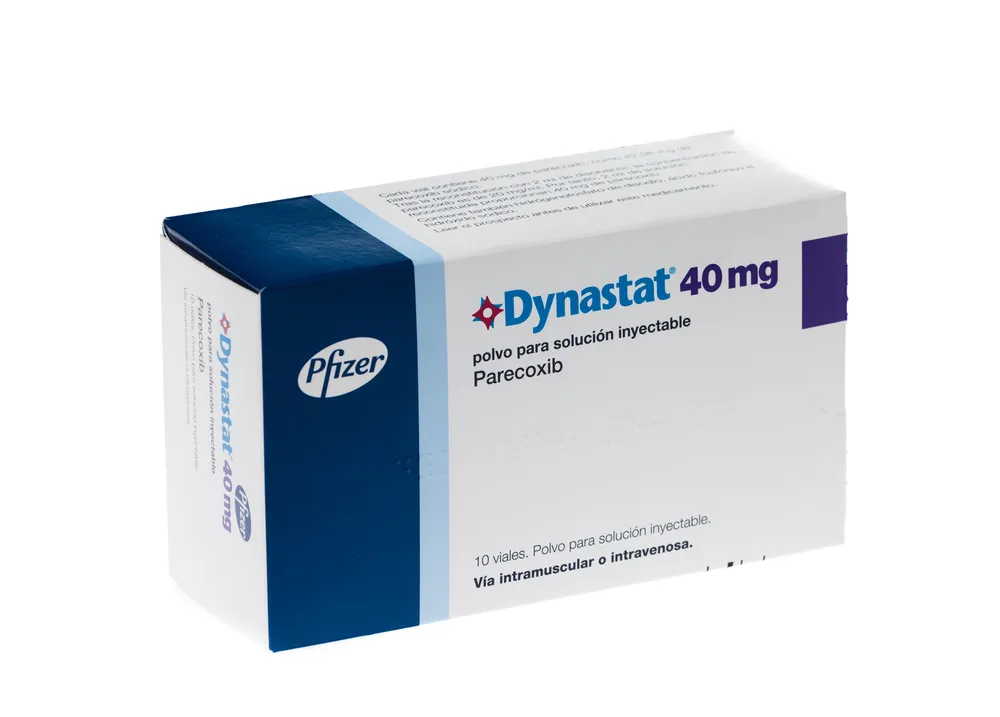
Table of Contents
- Package leaflet: Information for the user
- Introduction
- parecoxib
- 1. What Dynastat is and what it is used for
- 2. What you need to know before using Dynastat
- 3. How to use Dynastat
- 4. Possible adverse effects
- **Uncommon: may affect up to 1 in 100 people**
- **Rare: may affect up to 1 in 1,000 people**
- 5. Storage of Dynastat
- 6. Contents of the container and additional information
Package leaflet: Information for the user
Introduction
Package leaflet: information for the user
Dynastat 40 mg powder for injectable solution
parecoxib
Read the entire leaflet carefully before you start using this medicine, as it contains important information for you.
- Keep this leaflet, as you may need to read it again.
- If you have any questions, consult your doctor or nurse.
- If you experience any adverse effects, consult your doctor or nurse, even if they are adverse effects not listed in this leaflet. See section 4.
Leaflet contents
- What Dynastat is and what it is used for
- What you need to know before using Dynastat
- How to use Dynastat
- Possible adverse effects
- Storage of Dynastat
- Package contents and additional information
1. What Dynastat is and what it is used for
Dynastat contains the active substance parecoxib.
Dynastat is used for the short-term treatment of pain in adults following surgery. It belongs to a group of medicines known as COX-2 inhibitors (short for cyclo-oxygenase-2). Sometimes, pain and inflammation are caused by substances in the body called prostaglandins. Dynastat works by reducing the amount of these prostaglandins.
2. What you need to know before using Dynastat
Do not use Dynastat
- if you are allergic to parecoxib or any of the other ingredients of this medicine (listed in section 6)
- if you have had a severe allergic reaction (especially a serious skin reaction) to any medicine
- if you have had an allergic reaction to a group of medicines called “sulfonamides” (e.g., some antibiotics used to treat infections)
- if you currently have a stomach or intestinal ulcer or gastrointestinal bleeding
- if you have had an allergic reaction to acetylsalicylic acid (aspirin), or to other non-steroidal anti-inflammatory drugs (NSAIDs) (e.g., ibuprofen), or to COX-2 inhibitors. Reactions may include wheezing (bronchospasm), nasal congestion, skin itching, rash, or swelling of the face, lips, or tongue, or other allergic reactions or nasal polyps after taking any of these medicines
- if you are more than 6 months pregnant
- if you are breastfeeding
- if you have severe liver disease
- if you have inflammatory bowel disease (ulcerative colitis or Crohn’s disease)
- if you have heart failure
- if you are about to undergo heart surgery (bypass) or surgery on your arteries (including any coronary arterial procedures)
- if you have diagnosed heart and/or cerebrovascular disease, e.g., if you have had a heart attack, stroke, transient ischemic attack (TIA), or any blockage of blood vessels that has impaired blood flow to the heart or brain, or if you have had surgery to unblock your arteries or a bypass
- if you have or have had problems with blood circulation (peripheral arterial disease).
If any of these apply to you, you will not be given the injection. Tell your doctor or nurse immediately.
Warnings and precautions
Do not use Dynastat if you currently have a stomach or intestinal ulcer or gastrointestinal bleeding
Do not use Dynastat if you have severe liver disease
Consult your doctor or nurse before starting to use Dynastat:
- if you have previously had an ulcer, bleeding, or perforation in the gastrointestinal tract
- if you have ever had a skin reaction (e.g., rashes, hives, welts, blisters, red streaks) to any medicine
- if you are taking acetylsalicylic acid (aspirin) or other NSAIDs (e.g., ibuprofen)
- if you smoke or drink alcohol
- if you have diabetes
- if you suffer from angina, have blood clots, high blood pressure, or high cholesterol
- if you are on antiplatelet therapy
- if you have fluid retention (edema)
- if you have kidney or liver disease
- if you are dehydrated, which may occur if you have had diarrhea, have been vomiting, or have been unable to take fluids
- if you have an infection, as this could mask fever (a sign of infection)
- if you are taking medicines to reduce blood clotting (e.g., warfarin/warfarin-like anticoagulants or newer oral anticoagulants, e.g., apixaban, dabigatran, and rivaroxaban)
- if you are taking medicines called corticosteroids (e.g., prednisone)
- if you are taking a class of medicines used to treat depression called selective serotonin reuptake inhibitors (SSRIs) (e.g., sertraline)
Dynastat may lead to increased blood pressure or worsening of existing high blood pressure, which could increase the risk of side effects related to heart disease. Your doctor may wish to monitor your blood pressure during treatment with Dynastat.
Potentially life-threatening skin rashes may occur with the use of Dynastat, and treatment must be stopped at the first sign of a skin rash, blisters, skin peeling, mucosal lesions, or any other sign of hypersensitivity. If you develop a skin rash, or other signs and symptoms affecting the skin or mucous membranes (such as inside the cheeks or lips), seek urgent medical attention and inform the doctor that you are taking this medicine.
Children and adolescents
Dynastat must not be given to children and adolescents under 18 years of age.
Other medicines and Dynastat
Tell your doctor or nurse if you are taking, have recently taken, or might need to take any other medicines. Medicines can sometimes interact with each other. Your doctor may reduce the dose of Dynastat or of other medicines, or may need to prescribe a different medicine. It is especially important to mention:
- Acetylsalicylic acid (aspirin) or other anti-inflammatory medicines
- Fluconazole – used for fungal infections
- ACE inhibitors, angiotensin II inhibitors, β-blockers, and diuretics – used for high blood pressure and heart problems
- Cyclosporine or tacrolimus – used after organ transplants
- Warfarin – or other warfarin-like medicines used to prevent blood clots, including newer agents such as apixaban, dabigatran, and rivaroxaban
- Lithium – used to treat depression
- Rifampicin – used for bacterial infections
- Antiarrhythmics – used to treat irregular heartbeats
- Phenytoin or carbamazepine – used for epilepsy
- Methotrexate – used for rheumatoid arthritis and cancer
- Diazepam – used for sedation and anxiety
- Omeprazole – used to treat ulcers
Pregnancy, breastfeeding, and fertility
- Dynastat must not be used during the last 3 months of pregnancy, as it may harm the fetus or cause problems during delivery. Dynastat may cause kidney and heart problems in the fetus. It may affect your and your baby’s tendency to bleed and may delay or prolong labor. Dynastat must not be used during the first 6 months of pregnancy unless absolutely necessary and as directed by your doctor. If treatment is needed during this period or while trying to become pregnant, the lowest possible dose should be used for the shortest possible time. If used for more than a few days beyond 20 weeks of pregnancy, Dynastat may cause kidney problems in the fetus, leading to low levels of amniotic fluid surrounding the baby (oligohydramnios) or narrowing of a blood vessel (ductus arteriosus) in the baby’s heart. If treatment is needed for more than a few days, your doctor may recommend additional monitoring.
- If you are breastfeeding, you must not be given Dynastat, as a small amount of Dynastat may pass into breast milk.
- NSAIDs, including Dynastat, may make it more difficult to become pregnant. Inform your doctor if you are planning to become pregnant or if you have difficulty conceiving.
If you are pregnant or breastfeeding, think you may be pregnant, or plan to become pregnant, consult your doctor or nurse before using this medicine.
Driving and using machines
If you feel dizzy or tired after the injection, do not drive or operate machinery until you feel better.
Dynastat contains sodium
This medicine contains less than 1 mmol of sodium (23 mg) per ml; hence, it is essentially “sodium-free”.
3. How to use Dynastat
Dynastat will be administered by a doctor or nurse. They will first dissolve the powder, and then inject the solution into a vein or into a muscle. The injection may be given rapidly and directly into a vein or into an existing intravenous line (a thin tube inserted into a vein), or it may be administered slowly and deeply into the muscle. Dynastat will only be administered to you for a short period and solely for pain relief.
The usual starting dose is 40 mg.
A further dose – of 20 mg or 40 mg – may be given 6 to 12 hours after the first dose.
You must not be given more than 80 mg in 24 hours.
Lower doses may be given to some people:
- People with liver problems
- People with severe kidney problems
- Patients over 65 years of age weighing less than 50 kg
- People taking fluconazole
If Dynastat is used together with strong pain-relieving medicines (called opioid analgesics) such as morphine, the dose of Dynastat will be the same as described above.
If you are given more Dynastat than you should, you may experience adverse effects that have been reported with the recommended doses.
If you have any further questions about the use of this medicine, ask your doctor or nurse.
4. Possible adverse effects
Like all medicines, this medicine can cause adverse effects, although not everyone will experience them.
Stop treatment with Dynastat and inform your doctor immediately:
- if you develop a rash or ulceration that may appear anywhere on your body (e.g., skin, mouth, eyes, face, lips or tongue), or if you develop any other sign of allergic reaction such as skin rash, swelling of the face, lips or tongue, which may cause wheezing, difficulty breathing or swallowing – this occurs rarely
- if you develop blisters or skin peeling – this occurs rarely
- these skin reactions may occur at any time, although they usually appear during the first month of treatment; the reporting frequency of these events appears to be higher with valdecoxib, a medicine related to parecoxib, compared to other COX-2 inhibitors
- if you develop jaundice (your skin or the whites of your eyes turn yellow)
- if you have any signs of stomach or intestinal bleeding, such as black or bloody stools, or vomiting blood
Very common: may affect more than 1 in 10 people
- Nausea (feeling unwell)
Common: may affect up to 1 in 10 people
- Changes in blood pressure (increase or decrease)
- You may have back pain
- Your legs, ankles and feet may swell (fluid retention)
- You may feel numbness – you may lose skin sensitivity to pain and touch
- You may experience vomiting, stomach pain, indigestion, constipation, bloating and gas
- Kidney function tests may show abnormalities
- You may feel agitated or have difficulty sleeping
- Dizziness
- There is a risk of anaemia – changes in red blood cells after surgery that may cause fatigue and breathing difficulties
- You may have a sore throat or breathing difficulties (shortness of breath)
- You may have itchy skin
- You may urinate less than usual
- Dry socket (inflammation and pain after dental extraction)
- Increased sweating
- Decreased potassium levels in blood tests
Uncommon: may affect up to 1 in 100 people
-
Heart attack
-
Risk of cerebrovascular disease, for example stroke, or transient ischaemic attack (temporary reduction in blood flow to the brain) / mini-stroke, or angina, or blockage of blood vessels supplying the heart or brain
-
Blood clots in the lungs
-
Worsening of high blood pressure
-
Gastrointestinal ulcers, chronic acid reflux
-
The heart may beat more slowly
-
Decrease in blood pressure upon standing
-
Blood tests may show abnormalities in liver function
-
May bruise easily due to low platelet count in the blood
-
Surgical wounds may become infected or have abnormal discharge
-
Discoloured skin (bruising)
-
Complications in skin healing after surgery
-
Blood tests may show elevated blood sugar levels
-
Pain or reaction at the injection site
-
Rash, or increased rash with itching (urticarial rash)
-
Anorexia (loss of appetite)
-
Joint pain
-
Elevated enzyme levels in blood tests indicating injury or stress in the heart, brain, or muscle tissue
-
Dry mouth
-
Muscle weakness
-
Ear pain
-
Abnormal abdominal sounds
Rare: may affect up to 1 in 1,000 people
- Rash or ulceration that may appear anywhere on your body (e.g., skin, mouth, eyes, face, lips, or tongue), or other signs of allergic reactions such as skin rash, swelling of the face, lips, and tongue, whistling sound when breathing, difficulty breathing or swallowing (which may be life-threatening)
- Swelling, blistering, or peeling of the skin
- Acute kidney failure
- Hepatitis (inflammation of the liver)
- Inflammation of the throat (esophagus)
- Inflammation of the pancreas (may cause stomach pain)
Not known: frequency cannot be estimated from the available data
- Collapse due to a severe drop in blood pressure
- Heart failure
- Kidney failure
- Rapid or irregular heartbeat
- Difficulty breathing
Reporting of adverse reactions
If you experience any type of adverse reaction, consult your doctor or nurse, even if it is a possible adverse reaction not listed in this leaflet. You may also report them directly via the Spanish Pharmacovigilance System for Human Medicines: www.notificaRAM.es. By reporting adverse reactions, you can help provide more information on the safety of this medicine.
5. Storage of Dynastat
Keep this medicine out of the sight and reach of children.
Do not use this medicine after the expiry date which is stated on the carton and on the label of the vial after EXP. The expiry date refers to the last day of the month indicated.
This medicine does not require special storage conditions prior to reconstitution.
Dynastat should ideally be used as soon as possible after mixing with the solvent, although it may be stored if the instructions at the end of the leaflet are strictly followed. The injectable solution must be a clear, colourless liquid. The solution must not be used if there are particles in the injectable solution or if the powder or solution is discoloured.
6. Contents of the container and additional information
Composition of Dynastat
-
The active substance is parecoxib (as parecoxib sodium). Each vial contains 40 mg of parecoxib as 42.36 mg of parecoxib sodium. When reconstituted with 2 ml of solvent, a concentration of 20 mg/ml of parecoxib is obtained. When reconstituted in a sodium chloride solution of 9 mg/ml (0.9%), Dynastat contains approximately 0.44 mEq of sodium per vial.
-
The other components are:
Disodium hydrogen phosphate
Phosphoric acid and/or sodium hydroxide (for pH adjustment).
Appearance of the product and contents of the container
Dynastat is available as a white to off-white powder.
The powder is contained in colorless glass vials (5 ml) with a stopper, sealed with a purple flip-off cap over an aluminum seal.
Marketing Authorization Holder and Manufacturer
Marketing Authorization Holder: Pfizer Europe MA EEIG, Boulevard de la Plaine 17, 1050 Brussels, Belgium.
Manufacturer: Pfizer Manufacturing Belgium NV, Rijksweg 12, 2870 Puurs-Sint-Amands, Belgium.
Further information on this medicinal product can be requested from the local representative of the Marketing Authorization Holder.
Spain
Pfizer, S.L.
Tel: +34 91 490 99 00
Date of the most recent review of this summary: 01/2024.
Detailed information on this medicine is available on the website of the European Medicines Agency: http://www.ema.europa.eu.
This information is intended for healthcare professionals only
Dosage. The recommended dose is 40 mg administered intravenously (IV) or intramuscularly (IM), followed by additional doses of 20 mg or 40 mg every 6 to 12 hours, as needed, without exceeding 80 mg/day. The IV bolus injection may be given rapidly and directly into a vein or into an existing IV line. The IM injection should be administered slowly and deeply into the muscle. There is limited clinical experience with Dynastat for treatment durations exceeding 3 days. Since the cardiovascular risk of selective cyclooxygenase-2 (COX-2) inhibitors may increase with dose and duration of exposure, they should be used for the shortest possible time and at the lowest effective daily dose. During the post-marketing period, cases of severe hypotension shortly after administration of parecoxib have been reported. Some of these cases occurred without other signs of anaphylaxis. Physicians should be prepared to treat severe hypotension. Administration is by intramuscular (IM) or intravenous (IV) route. The IM injection must be administered slowly and deeply into the muscle, and the IV bolus injection may be administered rapidly and directly into a vein or an existing IV line. Administration routes other than IV or IM Other administration routes different from IV or IM (e.g., intra-articular, intrathecal) have not been studied and therefore should not be used. Solvents for reconstitution This product must not be mixed with other medications. It should only be reconstituted with one of the following:
The following solutions must not be used for reconstitution:
Reconstitution procedure Use an aseptic technique when reconstituting parecoxib lyophilized powder (as parecoxib sodium). 40 mg vial: Remove the purple flip-off cap to expose the center of the rubber stopper of the 40 mg parecoxib vial. Using a sterile needle and syringe, withdraw 2 ml of an appropriate solvent and insert the needle into the center of the rubber stopper, adding the solvent into the 40 mg parecoxib vial. Completely dissolve the powder by gentle agitation and inspect the reconstituted solution before use. The reconstituted solution must not be used if discolored, cloudy, or if particulate matter is observed. The entire contents of the vial should be used for a single administration. If a dose less than 40 mg is required, the unused volume of reconstituted solution remaining in the vial must be discarded. Compatibility of the solution in the IV line Dynastat may precipitate when combined in solution with other drugs; therefore, Dynastat must not be mixed with any other medication, either during reconstitution or injection. In patients where the same IV line is used to administer another drug, the line must be adequately flushed before and after administration of Dynastat with a solution of known compatibility. After reconstitution with appropriate solvents, Dynastat may be injected only via IV or IM routes, or into IV lines infusing the following solutions:
Injection into an IV line infusing glucose 50 mg/ml (5%) in Ringer's Lactate solution or other IV solutions not listed in this section is not recommended, as it may cause precipitation of the solution. The solution is for single use only and must not be refrigerated or frozen. Physical and chemical stability in use of the reconstituted solution has been demonstrated for up to 24 hours at 25°C. Therefore, 24 hours should be considered the maximum validity period for the reconstituted product. However, due to the risk of microbial infection in injectable products, the reconstituted solution should be used immediately unless reconstitution was performed under controlled, validated aseptic conditions. Unless such requirements are met, storage times and conditions prior to use are the responsibility of the user and should generally not exceed 12 hours at 25°C. |