Dynamogén 3 mg/1 g/10 ml oral solution
Spain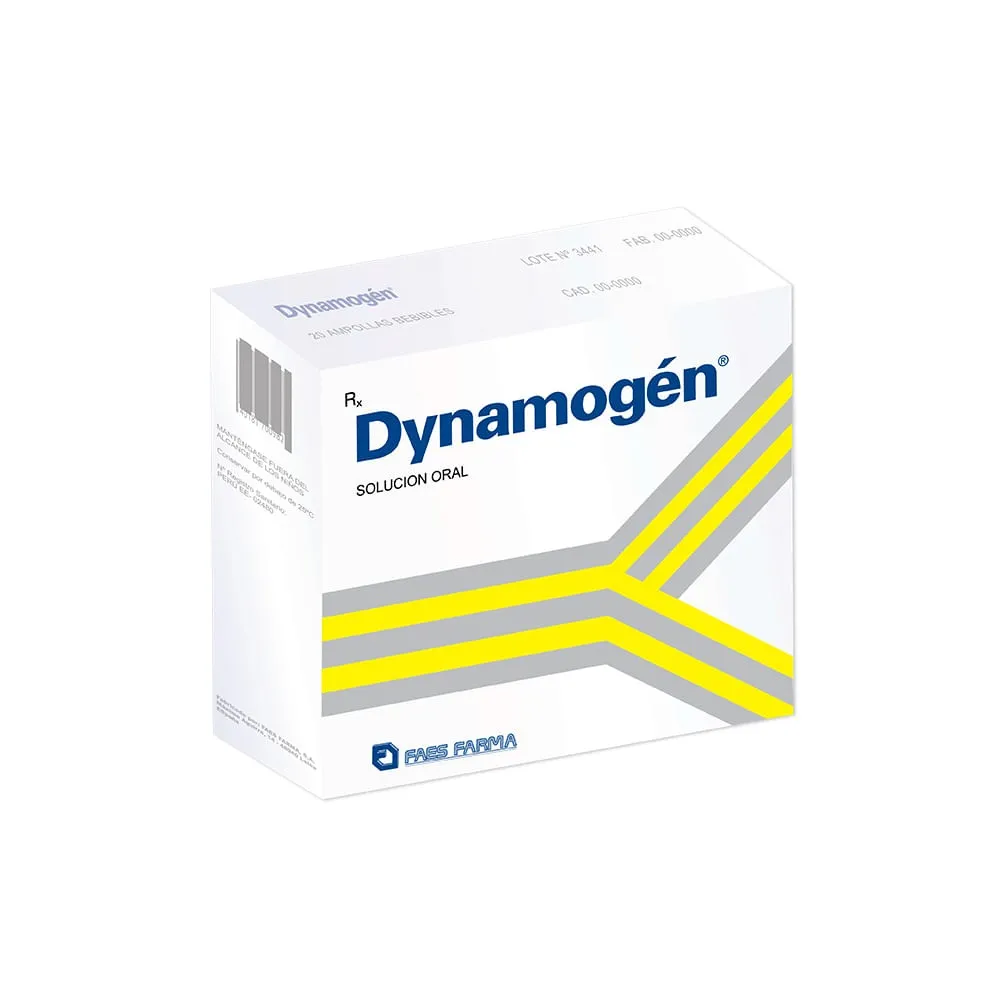
Table of Contents
Package leaflet: Information for the user
Introduction
Package leaflet: information for the user
DYNAMOGÉN 3 mg/1 g/10ml oral solution
?-cyclohexylglycine ciproheptadine/arginine aspartate
Read the entire leaflet carefully before you start taking this medicine, because it contains important information for you.
- Keep this leaflet, as you may need to read it again.
- If you have any questions, ask your doctor or pharmacist.
- This medicine has been prescribed for you only, and you should not give it to other people, even if they have the same symptoms as you, because it could harm them.
- If you experience any adverse reactions, consult your doctor or pharmacist, even if they are adverse reactions not listed in this leaflet. See section 4.
Contents of the leaflet
- What Dynamogén is and what it is used for
- What you need to know before taking Dynamogén
- How to take Dynamogén
- Possible side effects
- How to store Dynamogén
- Contents of the pack and other information
1. What Dynamogén is and what it is used for
Dynamogén belongs to a group of medicines called appetite stimulants.
Dynamogén is indicated for the symptomatic treatment of appetite loss in adults and children over 2 years of age.
2. What you need to know before starting to take Dynamogén
Do not take Dynamogén
- if you are allergic to cyproheptadine, aspartate and arginine, or to any of the other components of this medicine (listed in section 6).
- in children under 2 years of age.
- if you have severe kidney or liver disease.
- during asthma attacks.
- if you are pregnant or breastfeeding.
- if you have glaucoma (increased pressure inside the eye), enlarged prostate, bile bladder or stomach emptying problems, or difficulty urinating.
- if you are taking a type of medicine called "monoamine oxidase inhibitor" (MAOI) for depression or Parkinson's disease.
- if you have porphyria (a rare disorder, usually inherited, in which large amounts of porphyrins are excreted in urine and feces).
Warnings and precautions
Consult your doctor or pharmacist before starting to take Dynamogén.
Do not take this medicine continuously for longer than 8 weeks.
If symptoms worsen or persist after 4 weeks, stop taking the medicine and consult your doctor.
- If during treatment you develop bruising, bleeding, paleness, fever, or sore throat, consult your doctor.
- Consult your doctor if you are taking antibiotics, as antihistamines such as cyproheptadine may mask the early signs of auditory toxicity (ototoxicity) caused by some antibiotics.
- Consult your doctor before taking this medicine if you have high intraocular pressure, an overactive thyroid gland, high blood pressure, heart problems, or asthma.
- Special care should be taken when determining the dose of Dynamogén in children over 2 years of age due to their increased sensitivity to antihistamines.
- Some antihistamines may reduce attention capacity and, in children, may occasionally cause excitement.
- Overdose of some antihistamines in children may lead to nervous system disturbances, respiratory and cardiac arrest, even resulting in death (see section “If you take more Dynamogén than you should”).
Other medicines and Dynamogén
Inform your doctor or pharmacist if you are using, have recently used, or might need to use any other medicine, including those obtained without a prescription.
Consult your doctor if you are taking medicines known as "monoamine oxidase inhibitors" (MAOIs), oral contraceptives, or central nervous system depressants such as alcohol, benzodiazepines, or barbiturates.
Dynamogén may reduce the effect of some antidepressants.
Interference with diagnostic tests: false negatives may occur in allergy tests, and increased blood triglyceride levels may appear. If Dynamogén is administered together with antibiotics, false negative results may occur in vitamin B12 levels and red blood cell count.
Pregnancy and breastfeeding
If you are pregnant or breastfeeding, think you might be pregnant, or are planning to become pregnant, consult your doctor or pharmacist before using this medicine.
Do not use Dynamogén during pregnancy or breastfeeding.
Driving and using machines
Dynamogén may cause drowsiness and thus reduce concentration ability and reflexes, although this effect usually disappears after a few days of continued administration. Therefore, driving vehicles or operating dangerous or precision machinery is not recommended while being treated with this medicine.
Dynamogén contains sucrose, sorbitol (E-420), and amaranth dye (E-123)
This medicine contains sucrose and sorbitol (E-420). If your doctor has informed you that you have an intolerance to certain sugars, consult with him before taking this medicine.
Patients with diabetes mellitus should take into account that this medicine contains 3.575 g of sucrose per 10 ml ampoule.
It may produce a mild laxative effect because it contains 3.41 g of sorbitol per 10 ml ampoule.
Calorific value: 2.6 Kcal/g of sorbitol.
This medicine may cause allergic reactions because it contains amaranth dye (E-123). It may provoke asthma, especially in patients allergic to acetylsalicylic acid.
3. How to take Dynamogén
Follow exactly the instructions for administration of this medicine as given by your doctor or pharmacist. If in doubt, consult your doctor or pharmacist again.
This medicine is administered orally.
The recommended dose is:
Adults and adolescents over 14 years: 1 drinkable ampoule three times a day. Each ampoule contains 2 mg of cyproheptadine, equivalent to 6 mg per day. Daily doses must not exceed 16 mg of cyproheptadine.
Use in children
Children aged 2 to 6 years: 1 drinkable ampoule twice daily (equivalent to a total daily dose of 4 mg of cyproheptadine). Daily doses must not exceed 12 mg of cyproheptadine.
Children over 7 and under 14 years: 1 drinkable ampoule two or three times daily, or divided into several administrations (equivalent to a total daily dose of 4 or 6 mg of cyproheptadine). Daily doses must not exceed 16 mg of cyproheptadine.
Recommended daily doses must not be exceeded.
Method of administration
Ampoules should preferably be administered 30 minutes before main meals. The contents of the ampoule may be taken alone or with water or fruit juice.
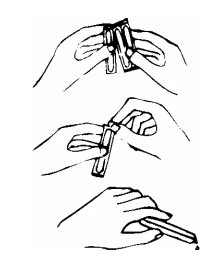
For correct administration of this medicine, follow the instructions indicated below:
top part.
vial and pour the contents into a glass. |
|
If you take more Dynamogén than you should
Overdose of some antihistamines in children may cause hallucinations, decreased nervous system function, seizures, respiratory or cardiac arrest, and may even result in a fatal outcome.
Contact your doctor or pharmacist immediately or go to the nearest hospital emergency department. Take this leaflet with you. You may also call the Toxicology Information Service at Telephone 91.562.04.20, indicating the medication and the amount ingested.
If you forget to take Dynamogén
Do not take a double dose to make up for forgotten doses.
If you stop taking Dynamogén
If you have any further questions about the use of this medicine, ask your doctor or pharmacist.
4. Possible adverse effects
Like all medicines, this medicine may cause adverse effects, although not everyone experiences them.
Adverse reactions are generally mild and transient, and are mainly due to ciproheptadine. Adverse reactions observed with arginine aspartate are primarily gastrointestinal. Anticholinergic effects (dry mouth, constipation, blurred vision, worsening of glaucoma) are more frequent in elderly subjects.
In general, the following adverse effects have been reported after administration of Dynamogén:
Common (may affect up to 1 in 10 people)
Uncommon (may affect up to 1 in 100 people)
Rare (may affect up to 1 in 1,000 people)
Very rare (may affect up to 1 in 10,000 people)
Frequency not known (cannot be estimated from available data)
Blood and lymphatic system disorders
Frequency not known:
- Leukopenia (decrease in white blood cell count), neutropenia (decrease in a type of white blood cells), agranulocytosis (decrease in a type of white blood cells)
- Thrombocytopenia (decrease in platelet count)
- Hemolytic anemia (decrease in red blood cell count)
Immune system disorders
Frequency not known:
- Hypersensitivity to one of the components (tendency to develop allergic reactions). Cases of asthma due to the coloring agent amaranth (E-123), included as an excipient, have been reported in individuals with a history of aspirin allergy.
- Urticaria, edema.
Very rare:
- Angioedema (swelling of the face, tongue, and throat that may cause breathing difficulties)
- Anaphylactic shock (severe allergic reaction)
Metabolism and nutrition disorders
Common:
- Increased appetite/weight gain
Psychiatric disorders
Rare:
- Excitation, nervousness, restlessness
- Mental confusion, hallucinations (visual), and irritability, more frequent in cases of overdose
- Euphoria
Frequency not known:
- Insomnia, agitation, aggressive behavior
- Altered concentration capacity (reduced concentration)
- Memory disturbances (deficit)
Nervous system disorders
Common:
- Sedation or drowsiness, more pronounced at the beginning of treatment
Frequency not known:
- Motor incoordination, tremors
- Orthostatic hypotension (decrease in blood pressure upon changing position)
- Paresthesia (tingling sensation), neuritis (nerve inflammation)
- Headache
- Convulsion (observed in children)
Eye disorders
Frequency not known:
- Mydriasis (pupil dilation)
- Visual accommodation disturbances
Ear and labyrinth disorders
Frequency not known:
- Balance disturbances, dizziness (more frequent in elderly patients), vertigo, lightheadedness
- Tinnitus (ringing or buzzing in the ears)
- Vertigo
Cardiac disorders
Frequency not known:
- Palpitations
- Tachycardia (increased heart rate)
- Extrasystoles (extra heartbeats)
Respiratory, thoracic and mediastinal disorders
Frequency not known:
- Thickening of bronchial secretions
- Dryness of mucous membranes (nasal, pharyngeal)
- Nasal congestion
Gastrointestinal disorders
Common:
- Nausea, vomiting, diarrhea, abdominal pain
Frequency not known:
- Dry mouth
- Epigastric pain
- Constipation
Hepatobiliary disorders
Frequency not known:
- Liver function abnormalities (elevated transaminases)
- Hepatic failure
- Jaundice (yellowing of the skin and eyes)
- Cholestatic and/or cytolytic hepatitis
Skin and subcutaneous tissue disorders
Rare:
- Erythema (redness of the skin)
- Excessive sweating
- Photosensitivity
Renal and urinary disorders
Frequency not known:
- Increased urinary frequency
- Difficulty in urination
- Urinary retention
General disorders and administration site conditions
Frequency not known:
- Fatigue
Reporting of adverse effects
If you experience any type of adverse effect, consult your doctor or pharmacist, even if it is a possible adverse effect not listed in this leaflet. You may also report them directly via the Spanish Pharmacovigilance System for Human Medicines: https://www.notificaRAM.es/. By reporting adverse effects, you can help provide more information on the safety of this medicine.
5. Storage of Dynamogén
Keep this medicine out of the sight and reach of children.
No special storage conditions are required.
Do not use this medicine after the expiry date stated on the container after EXP. The expiry date is the last day of the month indicated.
Medicines must not be disposed of via wastewater or household waste. Dispose of unused medicines and their containers at the SIGRE collection point at your pharmacy. If you are unsure, ask your pharmacist how to dispose of medicines and containers you no longer need. This will help protect the environment.
6. Contents of the pack and other information
Composition of Dynamogén 3 mg/1 g/10 ml oral solution
- The active substances are arginine aspartate and ciproheptadine ?-ketoglutarate. Each 10 ml vial contains 1 g of arginine aspartate and 3 mg of ciproheptadine ?-ketoglutarate (equivalent to 2 mg of ciproheptadine).
- The other components are: sorbitol (E-420) (70% solution), sucrose, potassium sorbate (E-202), raspberry flavour, hydrochloric acid, amaranth dye (E-123), and purified water.
Appearance of the product and contents of the pack
Dynamogén is presented in drinkable vials containing 10 ml of oral solution. Each pack contains 20 vials.
Marketing Authorization Holder
Faes Farma, S.A.
Autonomia Etorbidea, 10
48940 Leioa (Bizkaia)
Spain
Manufacturer
Faes Farma, S.A.
Maximo Agirre Kalea, 14
48940 Leioa (Bizkaia)
Spain
Or
Faes Farma, S.A.
Parque Científico y Tecnológico de Bizkaia
Ibaizabal Bidea, Edificio 901
48160 Derio (Bizkaia)
Spain
Date of the most recent review of this leaflet: February 2024
Detailed and up-to-date information on this medicinal product is available on the website of the Spanish Agency of Medicines and Health Products (AEMPS) http://www.aemps.gob.es/